REVIEW · NEW DELHI
2 nights 3 days trip to Agra and Jaipur
Book on Viator →Operated by India TajMahal Tour operators · Bookable on Viator
Taj Mahal at sunrise is the big prize. I love that this trip is run as a private, door-to-door circuit, and I especially like the early-morning timing built into Agra. You also get a safe-feeling setup, from meeting your chauffeur to being dropped back at the end.
I also like the way the day-by-day plan connects monuments that actually tell a story, not just a photo stop train. In particular, the organization comes up again and again, with guides who explain as you go and pick ups/drop offs that stay on schedule; one name you’ll see mentioned is Sheena Sewal for careful planning and problem-solving.
One thing to plan for: several major sites have admission not included, so you’ll want a little extra budget ready for entrances (Taj Mahal, Agra Fort, and Amer Fort are specifically marked as not included).
In This Review
- Key highlights before you go
- A Practical Look at the Delhi–Agra–Jaipur Heritage Route
- Day 1 in Delhi: India Gate, Gandhi at Raj Ghat, and Mughal Landmarks
- India Gate: a triumphal-arch memorial
- Rashtrapati Bhavan: drive-by context
- Raj Ghat: Gandhi’s black marble platform
- Red Fort: Independence Day symbolism
- Jama Masjid: Shah Jahan’s grand mosque
- Qutub Minar: the UNESCO minaret landmark
- Day 2 in Agra: Sunrise Taj Mahal and Agra Fort’s Mughal Power Base
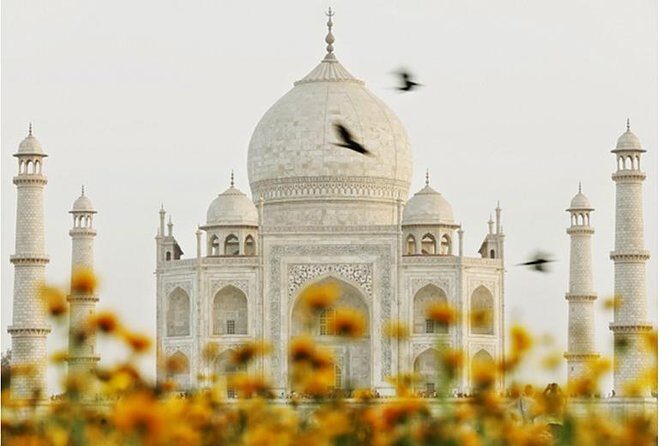
- Taj Mahal just after sunrise: light, calm, and scale
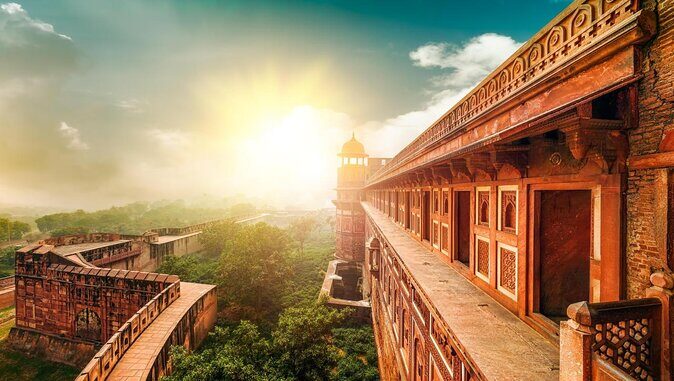
- Agra Fort: a walled city, not just a viewpoint
- Day 3 in Jaipur: Amer Fort to Jantar Mantar (Plus Hawa Mahal Views)
- Amer Fort: Sheesh Mahal mirrors and palace life
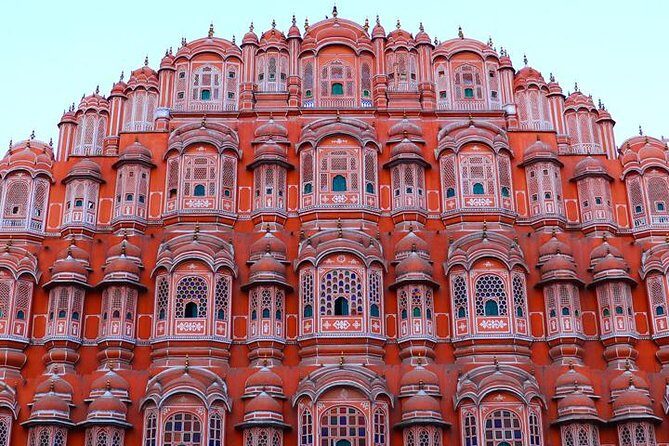
- Hawa Mahal: the famous façade and its later facelift
- City Palace: where the royal family’s story continues
- Jal Mahal: Water Palace on Man Sagar Lake
- Jantar Mantar: the stone sundial and UNESCO astronomy
- Ram Niwas Garden: a calm break with Albert Hall nearby
- What Makes the Organization Work (And Why Safety Feels Real Here)
- Price and Logistics: Is $249.27 Good Value?
- Tips to Make It Feel Smooth Instead of Packed
- Should You Book This Delhi–Agra–Jaipur Heritage Tour?
- FAQ
- What is the duration of this trip?
- Where does the tour start and end?
- Is this tour private?
- What’s included in the price?
- Is the Taj Mahal admission included?
- Is Agra Fort admission included?
- Is Qutub Minar admission included?
- Are any major sites free on this itinerary?
- Is the tour dependent on weather?
- What is the cancellation policy?
Key highlights before you go
- Private chauffeur and local guide time so you’re not stuck in a crowd-only experience
- Sunrise Taj Mahal timing that gives you first light at one of the world’s most visited sites
- A tight Delhi intro with India Gate, Raj Ghat, Jama Masjid, and Qutub Minar in 1 day
- Agra Fort as a contrast to the Taj Mahal, letting you see the Mughal power base
- Jaipur mix of views and instruments with Amer Fort plus Jantar Mantar
- Long-running team feel with people who have been with the company for years, focused on safety and flow
A Practical Look at the Delhi–Agra–Jaipur Heritage Route
This is a 2 nights, 3 days private heritage tour that strings together Delhi, Agra, and Jaipur with private transportation and breakfast included for 2 mornings. Your starting point and end point are the same: back at the meeting point in New Delhi. It’s designed for people who want the classic monuments, but without the hassle of sorting transport, timing, and ticket lines by yourself.
The price is listed at $249.27 per person, and what you’re really paying for is the convenience of a chauffeur-led plan plus the value-add of guided context at key stops. Since admission tickets are not included for multiple monuments, you should think of this as a turnkey route for logistics and interpretation, with entrances as an add-on.
This trip is also listed as mobile-ticket based, which matters in India because it reduces the last-minute scramble. If you’re the type who likes to travel with less mental load, that’s a big plus.
Finally, it’s a private tour, so you only share with your group. That usually means you can move at a more comfortable pace, take photos without fighting for space, and actually listen when your guide explains what you’re seeing.
A few more New Delhi tours and experiences worth a look



Day 1 in Delhi: India Gate, Gandhi at Raj Ghat, and Mughal Landmarks
Delhi can feel overwhelming fast. This first day gives you a structured overview of major sites tied to empire, independence, and Mughal architecture—without dragging you across town aimlessly.
India Gate: a triumphal-arch memorial
You start with India Gate, the memorial to 70,000 soldiers of the British Indian Army who died between 1914 and 1921. It’s designed by Sir Edwin Lutyens, and the design language is part of why I like it: it echoes the feel of famous triumphal arches like the Arch of Constantine style you’ll recognize from Europe. You get a 30-minute photo window, which is about right—enough to walk around, take a few shots, and absorb the scale.
Practical tip: bring something for sun protection. Delhi light can get intense, and you’ll do better if you’re comfortable standing still for photos.
Rashtrapati Bhavan: drive-by context
Next is a drive past Rashtrapati Bhavan, the official residence of the President of India and also known historically as the Viceroy’s House. You don’t go inside here; it’s a short drive-by stop (about 3 minutes). Still, it’s a useful visual anchor because it frames the big ceremonial axis of New Delhi.
If you’re a architecture nerd, this quick stop helps you place what you’re seeing later in the city.
Raj Ghat: Gandhi’s black marble platform
Then you visit Raj Ghat, the memorial dedicated to Mahatma Gandhi. The key detail is that it marks the spot of his cremation on 30 January 1948, and the memorial itself is a black marble platform. You get about 45 minutes, which is good—this is one of those places where you want a little time to lower your speed.
This stop is also a nice tonal shift from grand imperial monuments. It reminds you why so many memorials and public spaces in India carry layered meaning.





Red Fort: Independence Day symbolism
The plan also includes the Red Fort in Delhi, described as the venue where India’s Prime Minister hoists the Indian tricolour on Independence Day (15 August). Even if your time here is more limited, it’s worth understanding the symbolism: this fort is not just old walls, it’s a stage for national identity.
If you want to take photos, aim to do it calmly. The Red Fort area is a classic scene, so you’ll usually find good angles with a little patience.
Jama Masjid: Shah Jahan’s grand mosque
Jama Masjid, also called Masjid e Jahan Numa, is one of the largest mosques in India. Built by Mughal Emperor Shah Jahan between 1650 and 1656, it’s a stop that gives you a sense of Mughal scale and craftsmanship. Your time is short (about 3 minutes).
Because time is limited, go in with a simple plan: look first at the overall massing and courtyard space, then pick one façade angle for photos. You’ll get more out of a quick stop that way.
Qutub Minar: the UNESCO minaret landmark
You end the day at Qutub Minar, part of the Qutab complex and a UNESCO World Heritage Site. It rises about 73 meters, and construction of the first storey began around 1192. You get about 1 hour, and admission is marked not included.
This is one of those monuments where the height hits you in person. If you’re visiting in hot weather, plan to pace yourself and use the shade where you can.
Day 2 in Agra: Sunrise Taj Mahal and Agra Fort’s Mughal Power Base
Agra is where the trip “pays off.” Day 2 is set around two major Mughal monuments, and the pacing is designed so you’re not rushing through the whole day like a sprint.
Taj Mahal just after sunrise: light, calm, and scale
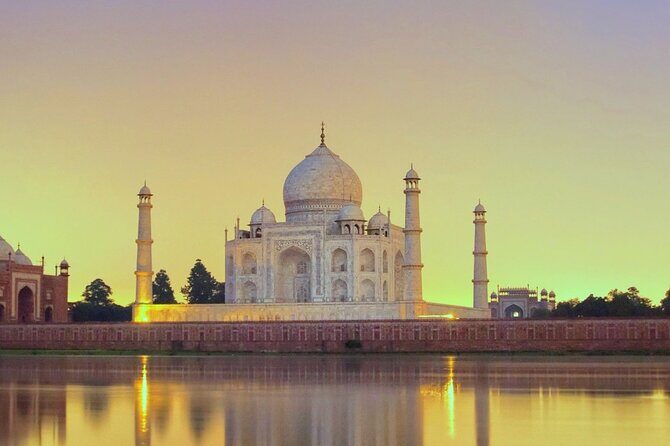
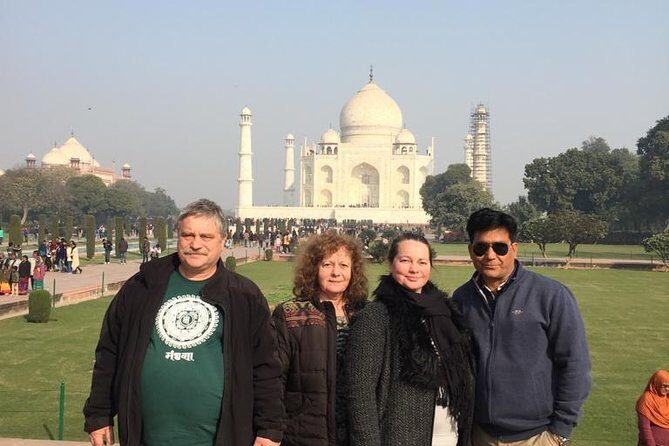
The itinerary calls for visiting the Taj Mahal just after sunrise. The Taj is an ivory-white marble mausoleum commissioned in 1632 by Shah Jahan to house the tomb of his wife Mumtaz Mahal, and it also includes Shah Jahan’s tomb. This complex sits on the south bank of the Yamuna and is set within formal gardens.
You get about 3 hours, and admission is not included. Sunrise timing matters because the color of the marble changes with light, and mornings tend to feel calmer. Even with crowds, early hours usually help you see it more clearly.
Practical tip: wear shoes you can stand in. The Taj Mahal area is easy to photograph but not quick to walk through if you want to notice details like symmetry and layout.
Agra Fort: a walled city, not just a viewpoint
After the Taj, you go to Agra Fort, described as a historical fort about 2.5 km northwest of the Taj Mahal. This is the one-day contrast that I think really improves the trip: the Taj Mahal is romantic and monumental, while Agra Fort is about rule, defense, and daily imperial life.
The fort is a UNESCO-listed site and is described as a walled city. Importantly, it’s noted that it’s the only fort in India where all early Mughal emperors lived. You get about 1 hour, and admission is not included.
For value, this is a strong add-on because it gives you context for why the Taj was built where it was. You start seeing the landscape as a power system rather than a single landmark.
Day 3 in Jaipur: Amer Fort to Jantar Mantar (Plus Hawa Mahal Views)

Jaipur is often sold as shopping and color, but this itinerary leans into the parts that make you understand the city’s design: palaces, scientific instruments, and panoramic vantage points.
Amer Fort: Sheesh Mahal mirrors and palace life
You visit Amer Palace (Amer Fort), which is described as the ancient capital of the state. The plan highlights the Sheesh Mahal, the Hall of Victory glittering with mirrors. You get about 2 hours, and admission is not included.
This is a good place for your photos, but it’s also a good place to slow down. Mirror-work and palace geometry can look like decoration from far away, but up close you start to understand how design was meant to impress—socially and politically.
Hawa Mahal: the famous façade and its later facelift
Next comes Hawa Mahal, the palace made with red and pink sandstone. It sits on the edge of the City Palace complex and extends to the Zenana, meaning women’s chambers. It was built in 1799 by Maharaja Sawai Pratap Singh.
A neat detail included in the tour description: renovation work on the Mahal was undertaken in 2006 after a gap of 50 years, with an estimated cost of Rs 4.568 million. The corporate sector and Unit Trust of India are also mentioned as helping preserve the monuments.
You won’t get much time to understand every carved detail if the day stays packed, so focus on getting a strong view of the façade and the overall shape. Hawa Mahal is one of those monuments where the first look is the main event.
City Palace: where the royal family’s story continues
Then you go to the City Palace of Jaipur. It was established in the era when Jaipur became the seat of power, with Maharaja Sawai Jai Singh II moving his court to Jaipur from Amber in 1727. Today it houses the Maharaja Sawai Man Singh II Museum and continues as the home of the Jaipur royal family.
You get about 1 hour here, and admission is not included. For context, this stop helps you connect what you saw at Amer Fort with the political center of Jaipur.
Jal Mahal: Water Palace on Man Sagar Lake
The plan includes Jal Mahal, the Water Palace located in the middle of the Man Sagar Lake. It was renovated and enlarged in the 18th century by Maharaja Jai Singh II of Amber.
You might mostly see it from outside, depending on how your schedule flows, but even from a distance it’s worth noticing. The palace sits like a visual interruption to the lake—an image that’s become part of Jaipur’s postcard identity.
Jantar Mantar: the stone sundial and UNESCO astronomy
Jantar Mantar is next, and this is one of the most interesting stops on the whole circuit. It’s a collection of nineteen architectural astronomical instruments built by Sawai Jai Singh II, completed in 1734, and it’s UNESCO-listed. The monument includes the world’s largest stone sundial, built to observe astronomical positions with the naked eye.
You get about 45 minutes, and admission is free. If you like your monuments with a brain behind them, this is where Jaipur wins. It’s not only pretty; it’s technical.
Ram Niwas Garden: a calm break with Albert Hall nearby
Finally, you visit Ram Niwas Garden in the heart of the city. The garden covers 33 acres and was built by Maharaja Sawai Ram Singh in 1868. You get about 45 minutes, and admission is free.
The description also notes that Albert Hall Museum (now known as Central Museum) is inside the garden. If your timing allows, you might find it a natural add-on. Even if you don’t go in, the garden gives you a bit of breathing room after palace-heavy days.
What Makes the Organization Work (And Why Safety Feels Real Here)
The pitch of this tour isn’t just monuments; it’s service. The tour description emphasizes a safety-first approach, from the moment you meet your chauffeur to the time you’re dropped back. It also says many chauffeurs and local guides have been with the company since the company was formed.
From the reviews, what stands out is consistency: pick ups and drop offs that are on time, and local guides who explain rather than just stand by. One reviewer specifically credits Sheena Sewal with meticulousness and resourcefulness, and another notes long-term trust in the operator across multiple trips.
That matters because the Delhi–Agra–Jaipur circuit can go sideways when transport and timing are sloppy. When you’re dealing with morning Taj plans, short museum windows, and sites that have variable queues, a well-run schedule reduces stress. You spend more energy looking, less energy figuring out what happens next.
If you’re traveling with kids or family members who don’t want constant navigation, a private setup like this can feel like a win. And if it’s your first time in India, having someone handle the logistics usually makes the trip more comfortable quickly.
Price and Logistics: Is $249.27 Good Value?
At $249.27 per person, this is priced as a midrange private circuit. Here’s what’s clearly included: private transportation, GST, parking fees, and breakfast for 2 days. That’s already worth factoring in, because Delhi traffic plus city-to-city transfer can be costly if you’re constantly grabbing vehicles.
What’s not included (at least for key highlights): admission tickets for several major monuments. The itinerary marks Taj Mahal, Agra Fort, Qutub Minar, Amer Fort, and City Palace as not included. Jantar Mantar and India Gate are free in the plan, and a few other stops are listed as free too.
So the value equation looks like this:
- You’re paying for planning + a private vehicle + guided flow + breakfast.
- You’re paying extra separately for some top-site entrances.
If you already know you’ll want private transport and you don’t want to coordinate timing across cities, this price can feel fair. If you’re the ultra-budget type who’s comfortable building your own schedule, you might spend less by going independent—but you’ll trade away the stress reduction and the time-savings.
Tips to Make It Feel Smooth Instead of Packed
This route is classic, which also means it’s a lot of famous sites in a short time. A few habits make it feel far more enjoyable:
- Start mornings with a clear head. Sunrise Taj is the kind of plan that works best when you’re ready for it, not when you’re running late.
- Wear comfortable, supportive shoes. You’ll do walking at forts, mosques, and museum complexes.
- Bring water and sun protection. Even when some stops are short, you’re outside enough for heat to catch you.
- Dress with respect at religious sites. Jama Masjid is a mosque; keep clothing modest enough that you feel comfortable.
- Use your guide’s context. In places like Jantar Mantar, asking a quick question can turn it from a photo stop into something you actually understand.
If you want a local-food moment, one of the reviews suggests trying dal batti. If you have a little time outside the monument schedule, it’s a good way to round out the experience beyond architecture.
Should You Book This Delhi–Agra–Jaipur Heritage Tour?
Book it if you want:
- a private chauffeur and guided flow that keeps you moving smoothly,
- the sunrise Taj Mahal timing as a priority,
- and a first-timer-friendly circuit that hits the big landmarks without you wrestling with logistics.
Skip or rethink if:
- you’re trying to travel as cheaply as possible and you don’t mind coordinating transport and timing yourself,
- or you dislike itineraries where admission costs for major sites are expected to be handled separately.
Overall, I’d call this a solid choice for people who want the core icons of the Golden Triangle region, but with service that focuses on safety and punctuality and guides who help you understand what you’re seeing.
FAQ
What is the duration of this trip?
It’s a 3-day tour with 2 nights.
Where does the tour start and end?
It starts in New Delhi, Delhi, India, and ends back at the meeting point.
Is this tour private?
Yes. It’s a private tour/activity, with only your group participating.
What’s included in the price?
Private transportation, GST, parking fees, and breakfast (2).
Is the Taj Mahal admission included?
No. Taj Mahal admission is listed as not included.
Is Agra Fort admission included?
No. Agra Fort admission is listed as not included.
Is Qutub Minar admission included?
No. Qutub Minar admission is listed as not included.
Are any major sites free on this itinerary?
Yes. For example, India Gate and Raj Ghat are listed as free, and Jantar Mantar is listed as free.
Is the tour dependent on weather?
Yes. The experience requires good weather, and if it’s canceled due to poor weather, you’ll be offered a different date or a full refund.
What is the cancellation policy?
You can cancel for a full refund if you cancel at least 24 hours in advance of the experience’s start time. Less than 24 hours means no refund.