REVIEW · BANGALORE
World heritage site of Belur & Halebid with temple sculptures
Book on Viator →Operated by 5 Senses Walks · Bookable on Viator
Stonework here almost moves. Belur and Halebid are UNESCO World Heritage sites where Hoysalas-era sculptors turned stone into stories, dancers, and animals you can study for hours. The day is built around two powerhouses: Chennakesava Temple in Belur and the Hoysalesvara complex in Halebid.
I especially love the way the carvings reward close attention. At Belur, you’re looking at moving details like a dancer’s bracelets that can slide up and down, and a ring on a headdress that’s meant to be noticed. Second, I like that the tour doesn’t treat this like a quick photo stop; you get a guided walkthrough of the iconography, including the fact that sculptors sometimes signed their work like artists, using boastful epithets.
The main thing to consider is the early start (7:00 am) and the full-day pace. With about 12 hours on the clock and multiple temple hours, it’s not a “lazy sightseeing” day—bring some patience and good walking socks for standing time.
In This Review
- Key things to know before you go
- Belur and Halebid: Why these UNESCO temples feel like sculpture museums
- Morning Pickup, air-conditioned comfort, and the real meaning of 12 hours
- Stop 1: Entering Belur’s Chennakesava Temple and hunting for the details
- The sculptor signatures at Belur: when artists leave their name in stone
- After the carvings: a practical break with vegetarian South Indian lunch
- Stop 2: Hoysalesvara and Shantalesvara at Halebid—plus the 86-year Nandi
- Nandi, veins, and the way these temples teach you to look
- Guide-led pacing: how the insights make the day worth it
- Price and value from Bangalore: what $170 buys you
- Who this tour fits best
- Should you book Belur & Halebid with 5 Senses Walks?
- FAQ
- FAQ
- What UNESCO sites does the tour cover?
- How long is the tour?
- What time does the tour start?
- Is hotel pickup and drop-off included?
- Is lunch included, and what is it?
- Are entrance tickets included?
- Is the transportation air-conditioned?
- Is this tour private?
- What’s the cancellation policy?
- Is the tour suitable for most travelers?
Key things to know before you go
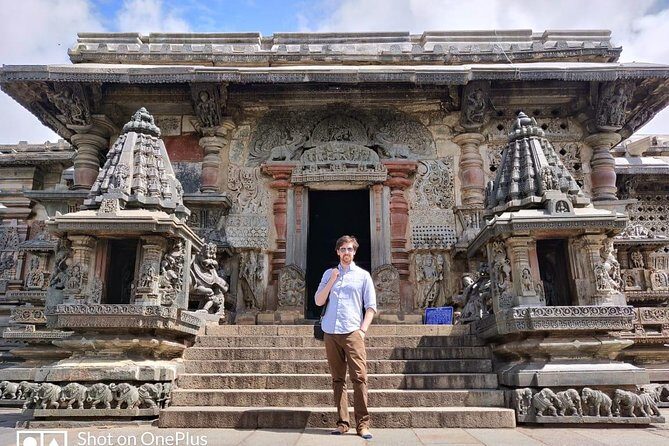
- Belur’s Chennakesava took more than 100 years to build, and the carvings reflect that kind of long-term obsession.
- At Belur, check out the moveable dancer details like sliding bracelets and a ring on a headdress.
- Sculptors’ signatures at Belur can show up in stone, like they’re leaving a personal mark—yes, even in the 12th century.
- After lunch, you head about 16 km to Halebid, where the Hoysalas built two major temple highlights.
- Halebid’s giant Nandi holy bull is tied to a build effort of 86 years, and the face shows graceful vein-like detailing.
Belur and Halebid: Why these UNESCO temples feel like sculpture museums
If you’re the type who loves art that you can walk around and study, this day trip fits you well. Belur and Halebid don’t feel like “ruins.” They feel like a carefully preserved showcase of what 12th-century South Indian stone carving could do—so detailed it becomes hard to believe it isn’t fabric.
Belur’s Chennakesava Temple is famous for animal and human figures carved across walls and halls, including dancers and scenes tied to major Hindu epics. Halebid’s Hoysalesvara and the companion Shantalesvara temples sit in the same UNESCO spotlight, and together they make the Hoysalas look less like a footnote and more like serious masters.
The best part is that the guidance and time inside let you do more than skim. With about two hours at each main stop, you have enough slow-down time to pick out recurring themes—myth stories, dancers, and the way certain figures are given lifelike attention through carving technique.
You can also read our reviews of more historical tours in Bangalore

Morning Pickup, air-conditioned comfort, and the real meaning of 12 hours
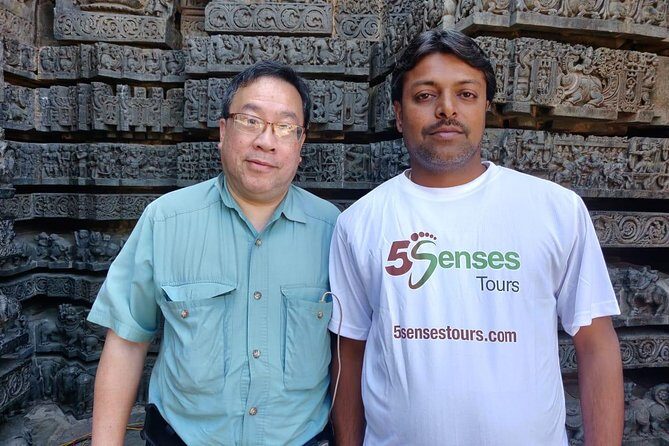
This tour is built for a full day out of Bangalore, starting at 7:00 am. You’ll get hotel pickup and drop-off plus an air-conditioned vehicle—a big deal in India’s heat when you’re spending the day moving between temple complexes.
Think of the schedule as two blocks of serious looking:
- Belur (morning): time inside Chennakesava
- Halebid (after lunch): time inside Hoysalesvara/Shantalesvara plus the big Nandi focus
Then there’s the driving time between the two towns. Since Halebid is about 16 km from Belur, you’re not doing an all-day highway crawl in between stops—you’re mostly using the vehicle to reset and cool down so you can handle long temple stretches.
One more practical point: you get a mobile ticket, and entrance charges are included. That’s one less thing to manage while you’re trying to stay focused on the stonework.
Stop 1: Entering Belur’s Chennakesava Temple and hunting for the details
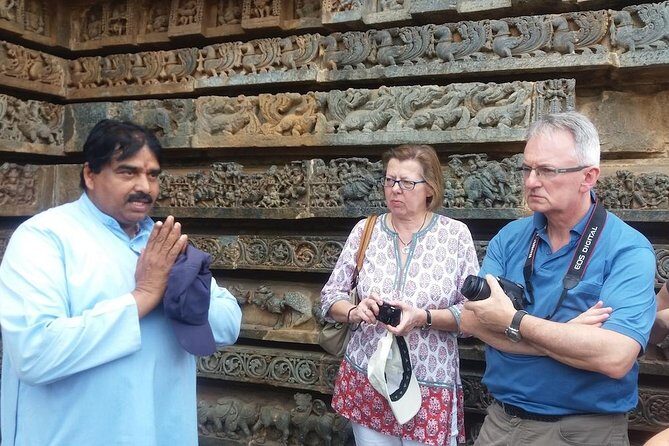
Chennakesava Temple is the star act in Belur. The tour gives you about two hours inside the complex, which is the right amount of time to do more than glance.
Here’s what makes the experience click:
- Incredible wall carving density: You’ll see animals and dancers carved into stone, plus scenes tied to the epics Ramayana and Mahabharata.
- Main hall intensity: The central interior is where you can really feel the scale of the craftsmanship. The carvings are described as fantastic in intricacy, and that’s exactly the right mindset to bring—slow down and let your eyes adjust.
- Tiny “wait, what?” moments: One dancer statue has bracelets on the arms that can be moved up and down. Another dancer’s headdress includes a moveable ring. These aren’t just decorative trivia. They’re clues that the designers wanted you to notice the sculpture as something more interactive than static stone.
I like this stop because it turns your brain from tourist mode into investigator mode. You start asking: How did they think about movement? How did they plan layers of depth? Why are the figures placed the way they are?
The sculptor signatures at Belur: when artists leave their name in stone
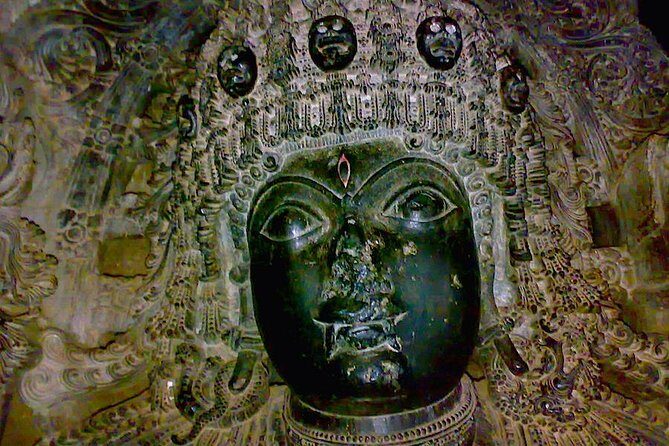
A fun detail that you’ll only appreciate if someone points it out: sculptures at Belur can be signed by the sculptors, like they’re leaving a mark the way painters might. In some cases, it’s even described as a boastful epithet.
That detail changes how you look at the temple. Instead of treating the work as anonymous “ancient art,” you start seeing the human ego and pride that comes through in the carving—an artist saying, in effect, I made this.
In a guided setting, this is the kind of context that keeps you from getting lost in the beauty and missing the meaning. You’re still enjoying the visuals, but you also get a better read on the iconography and craft culture behind it.
After the carvings: a practical break with vegetarian South Indian lunch
By the time you leave Belur, you’ll be ready for a reset. Lunch is included and is traditional vegetarian South Indian, and it’s scheduled before you head to Halebid.
Two things make this meal more useful than it sounds:
- It’s timed so you don’t arrive at Halebid hungry and cranky.
- The tour notes that beverages aren’t included, so you’ll want to budget for drinks separately if you tend to sip a lot in the heat.
This is also where you can recharge your attention. When you head back into a second temple complex, you’ll notice patterns faster—dancers, myth scenes, and how sculpture layout guides your eye.



Stop 2: Hoysalesvara and Shantalesvara at Halebid—plus the 86-year Nandi
Halebid is where the tour shifts from “amazing carvings” to “wow, this is massive.” You spend about two hours in the temple complex dedicated to Hoysalesvara and Shantalesvara, and the highlight described for sculpture-lovers is the giant Nandi.
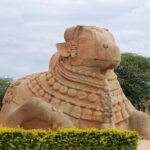
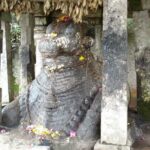
The Nandi statue (the holy bull associated with Lord Shiva) took 86 years to build. That build time isn’t just trivia—it sets a tone. When a project takes that long, you expect obsessive detail, and the tour helps you spot exactly what to look for.
The Nandi’s face includes graceful vein-like detailing, which is the kind of sculptural realism that makes you stop walking and just stand there. It’s not only about scale. It’s about expression and texture.
I also like that Halebid gets treated as more than a one-figure stop. The Hoysalesvara and Shantalesvara temple areas are both part of your guided time, so you see the complex as a planned spiritual and artistic space, not just one photo target.
Nandi, veins, and the way these temples teach you to look
If you only look at one thing per site, you’ll miss half the point. This tour nudges you to look at relationships between details:
- At Belur, dancers and animals are threaded across stone surfaces, and a guided eye helps you interpret what you’re seeing.
- At Halebid, the Nandi becomes your anchor, and the face detailing—especially those vein-like lines—pushes you to notice realism in stone.
This matters because these temples work like visual language. When you understand what you’re looking at, you stop thinking in terms of “cool sculptures” and start thinking in terms of how iconography and craft choices reinforce each other.
The result is that the hour doesn’t disappear. You’re not just passing time until pickup. You’re building a mental map of themes you can keep spotting.
Guide-led pacing: how the insights make the day worth it
This tour includes a guide, and the feedback around the guidance is strong. The core value isn’t just knowing the name of each temple. It’s getting help connecting the carvings to Hindu iconography and recognizing the craftsmanship choices behind the scenes.
For me, that’s what transforms a temple visit from pretty to satisfying. Without guidance, you can spend two hours taking photos and still leave unsure what you actually saw. With guidance, you start to understand how the sculptures communicate stories—especially when you’re given the right little facts, like moveable elements at Belur or the long build effort behind Halebid’s Nandi.
Also, you’re traveling with a calm, decent driver experience. That might sound minor, but when you’re leaving early and returning late, the tone of the trip affects your mood for the whole day.
Price and value from Bangalore: what $170 buys you
At $170.00 per person for roughly 12 hours, you’re paying for more than transportation. Your included cost stack covers:
- Hotel pickup and drop-off
- Air-conditioned vehicle
- Guide
- Entrance charges
- Lunch (vegetarian South Indian; beverages excluded)
- All taxes, fees, and handling charges
- Mobile ticket
- Group discounts (depending on how your booking is set up)
- A private setup for your group (only your group participates)
So what does that mean for value? You’re buying convenience and context. The UNESCO sites can be easy to visit on your own, but you’ll often lose the “why” behind what you’re seeing. Here, you don’t have to manage ticket lines or puzzle out timing between two distant temple complexes.
If you like structure, clear pacing, and a guide who points out the meaningful details, that’s when the price starts feeling fair. If you’re the independent type who enjoys building your own plan and paying separately for everything, you might find it less cost-effective. But the included guide and entrance charges help balance the equation.
Who this tour fits best
This is a strong match if you:
- Want a guided UNESCO temple day without figuring out transport and entry timing
- Enjoy close looking at art—dancers, animals, and myth scenes
- Prefer an organized schedule with pickup and drop-off
- Like learning how craftsmanship choices communicate religious and cultural ideas
It’s also a good option if you’re traveling with people who don’t want a lot of logistics. You get a clear start time, a set lunch plan, and dedicated time blocks for each main complex.
Should you book Belur & Halebid with 5 Senses Walks?
If your goal is to see Chennakesava and Hoysalesvara with enough time to actually notice the carving details, I’d say yes. This kind of tour works best when you slow down and let the guide help you find the standout elements—like the moveable dancer features in Belur and the vein-like sculptural realism on Halebid’s giant Nandi.
I’d pass or reconsider if you hate early mornings, or if you prefer flexible stops and don’t care much about a guided interpretation. It’s a full-day commitment, and it’s meant for serious sightseeing, not wandering.
FAQ
FAQ
What UNESCO sites does the tour cover?
You’ll visit the UNESCO World Heritage sites of Belur and Halebid, focusing on Chennakesava Temple in Belur and the Hoysalesvara temple complex (including Shantalesvara) in Halebid.
How long is the tour?
The tour runs for about 12 hours.
What time does the tour start?
The start time is 7:00 am.
Is hotel pickup and drop-off included?
Yes. Hotel pickup and drop-off are included.
Is lunch included, and what is it?
Yes. Lunch is included as a traditional vegetarian South Indian meal. Beverages are excluded.
Are entrance tickets included?
Yes. Entrance charges are included, and you also receive a mobile ticket.
Is the transportation air-conditioned?
Yes. The tour uses an air-conditioned vehicle.
Is this tour private?
This is described as a private tour/activity, meaning only your group will participate.
What’s the cancellation policy?
You can cancel for a full refund up to 24 hours before the experience’s start time. If you cancel less than 24 hours before, the amount paid isn’t refunded.
Is the tour suitable for most travelers?
The information states that most travelers can participate and that the meeting point is near public transportation.