REVIEW · BANGALORE
World Heritage Hampi & Chitradurga in 2 days from Bangalore+Lunch
Book on Viator →Operated by Bangalore and Beyond · Bookable on Viator
Hampi hits hard in the best way. This fast, well-paced tour links UNESCO World Heritage Hampi with the legendary Chitradurga Fort, using a government-licensed local guide and an air-conditioned car from central Bangalore.
I like that you get a tight mix of famous sights and lesser-known stops, all with admission tickets included at each location. I also really appreciate the practical touches: lunch is included for both days, so you spend less time hunting food and more time seeing temples.
One thing to plan for: this is plenty of walking on rocky terrain under hot sun, and living temples expect covered legs and shoulders. If heat or uneven ground is a deal-breaker for you, this may feel like a lot.
In This Review
- Key highlights you’ll actually care about
- A 2-day plan that trades speed for meaning
- Value and price: what you’re paying for
- Day 1 in Hampi: the living-temple start (Virupaksha and friends)
- Virupaksha Temple: the biggest living heartbeat of Hampi
- Badavi Linga: a Shiva linga that people talk about
- Hazara Rama Temple: Ramayana carvings that reward attention
- Sasivekalu Ganesha: the monolith that feels too big to be real
- Malyavanta Raghunathaswamy Temple at Fatik Shilla: sunset payoff
- Day 2 in Hampi: Vittala, royal spaces, and then Chitradurga
- Vijaya Vittala Temple: Stone Chariot energy
- Lotus Mahal: Zenana enclosure and the royal layout
- Dasara Dibba: where the procession story begins
- Queen’s Bath: royal water, royal rules
- The big change of pace: Chitradurga Fort
- How to handle the heat and the rocky ground
- Group size, guide style, and language options
- Logistics that reduce stress
- Who should book this tour?
- Should you book this Hampi & Chitradurga 2-day tour?
- FAQ
- What time does the tour start in Bangalore?
- Where is pickup and drop-off included?
- How long is the experience?
- Do I get an English-speaking guide?
- Are entrance fees included?
- Is lunch included?
- How many people are in the group?
- Is this tour suitable for children?
- How much walking should I expect?
- Is free cancellation available?
Key highlights you’ll actually care about
- UNESCO Hampi in a compact 2-day format with major temple stops
- Admission tickets included at each listed site, so you avoid add-on surprises
- Small group size (max 10) for easier movement and better guide attention
- AC pickup/drop-off from Central Bengaluru with a licensed local guide
- Chitradurga Fort (Elusuttina Kote) added for a very different kind of history than temple ruins
A 2-day plan that trades speed for meaning
This tour is built for people who want big names and solid context without spending a week slowly figuring things out. You start early from central Bangalore (the day begins at 8:00 am), then you’re on the road in an air-conditioned vehicle before settling into temple time in Hampi.
The big idea is simple: you see the essential Hampi set across day 1 and day 2, then you pivot to Chitradurga Fort so the trip isn’t only about temples. Your guide controls the exact order of visits, so you’re not locked into a rigid checklist if conditions on the ground change.
A small group (up to 10 people) matters more than it sounds. Fewer people mean less waiting at entrances and easier pacing when you’re walking over uneven ground between monuments.
You can also read our reviews of more historical tours in Bangalore

Value and price: what you’re paying for
At $215.32 per person, you’re paying for more than transport. The tour includes:
- Hotel pickup and drop-off from central Bengaluru
- Government-licensed local guide
- Air-conditioned vehicle
- All fees and taxes
- Lunch (2)
What’s not included is also clear: breakfast and dinner are on you, and tips for the driver/guide/other personnel are not part of the price.
For me, the value angle is the combination of guide + included entry + included lunches. In places like Hampi, you can lose time (and money) if you’re improvising tickets and trying to coordinate with multiple ticket counters. Here, you’re basically buying a day that runs on rails.
Day 1 in Hampi: the living-temple start (Virupaksha and friends)
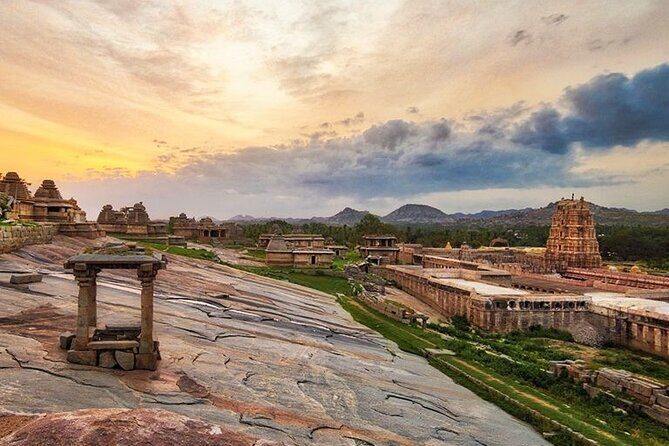
Day 1 is about atmosphere and iconic temple architecture—places that make Hampi feel like more than a pile of old stone.
Virupaksha Temple: the biggest living heartbeat of Hampi
You begin at Virupaksha Temple, described as the biggest living temple in Hampi. The setting is a big part of the experience: you get Hemakuta hill on one side and the Tungabhadra river on the other. Even if you’re not a hardcore temple person, that physical contrast helps you understand why people kept coming back here.
This stop is timed for about 30 minutes, including the included admission ticket. The main drawback is also obvious: living temples can come with real crowds and simple rules. Wear respectful clothing and expect that the focus is devotional, not sightseeing selfies.
Badavi Linga: a Shiva linga that people talk about
Next you’ll see Badavi Linga, described as one of the top Shiva lingas in India. It’s paired in the tour flow with the area’s powerful iconography around Lakshmi Narasimha, so the emotional tone shifts from “big main temple” to “small details with real impact.”
This is a shorter stop (around 15 minutes). You won’t have time to linger like a museum visit, but you will get enough time to look, orient, and understand what makes it special.
A few more Bangalore tours and experiences worth a look


Hazara Rama Temple: Ramayana carvings that reward attention
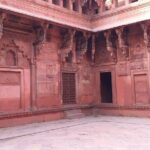
At Hazara Rama Temple, the highlight is the walls covered with hundreds of Ramayana stories carved in stone. This is the kind of place where your eyes have to slow down. You don’t need to memorize the story—your guide helps connect what you’re seeing to the larger idea of Vijayanagara-era devotion and storytelling.
Expect about 15 minutes here. The best way to enjoy it is to pick one section, zoom in with your eyes, and let the rest stay as background. Short stop times are easier when you choose your own “mini mission.”
Sasivekalu Ganesha: the monolith that feels too big to be real
Then it’s Sasivekalu Ganesha, a huge monolithic Ganesh positioned near the foothills of Hemakuta. This stop lasts about 10 minutes, which can feel brief—until you realize the point is mostly visual impact. The scale hits quickly, and you move on before the heat and crowds start draining your energy.
If you’ve ever seen temple images online but wondered how they look in real life, this is one of the better “answer that question” stops on the first day.
Malyavanta Raghunathaswamy Temple at Fatik Shilla: sunset payoff
Day 1 ends with Malyavanta Raghunathaswamy Temple – Fatik Shilla, and the big reason to care is the sunset view from the top. The walk up to the viewpoint is part of the experience, but the tour note is clear: there’s plenty of walking on rocky terrain under hot sun.
This is timed at about 30 minutes, and that longer window matters. You want time to get your footing, pause for the view, and settle your breathing before you look around again.
Day 2 in Hampi: Vittala, royal spaces, and then Chitradurga
Day 2 keeps the Hampi focus but shifts to major Vijayanagara architecture and the palace-world vibe inside the ruins. It’s also a longer-feeling day because you finish with Chitradurga Fort.
Vijaya Vittala Temple: Stone Chariot energy
At Vijaya Vittala Temple, you’ll see key features of Vijayanagara architecture, including the famous Stone Chariot. This is one of Hampi’s most photographed shapes for a reason: in person, you get a better sense of how ornate the work is, even after centuries of wear.
The stop is around 30 minutes with admission included. You’ll get enough time to see the structures from multiple angles, but not enough time to “live there.” If you’re the type who wants to linger, I’d treat this as a strong overview stop with one focused return attempt later in the trip—except your trip is only two days.
Lotus Mahal: Zenana enclosure and the royal layout
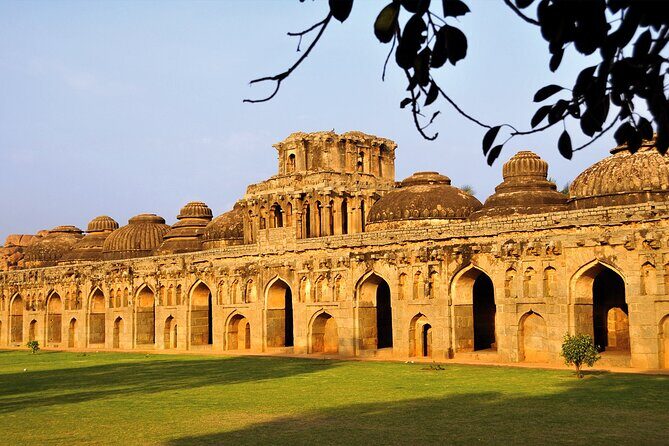
Lotus Mahal is part of the Zenana enclosure, which is where royal ladies’ spaces are associated in the palace complex. The tour specifically highlights Lotus Mahal and the Elephant Stables as principal structures you’ll cover.
This is about 20 minutes. The value here is perspective: Hampi isn’t only temples for public worship. It’s also the remains of planned spaces, with architecture that signals how power lived day to day.
Dasara Dibba: where the procession story begins
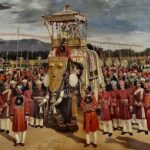
At Dasara Dibba, you’ll be in the King’s enclosure area, now mostly in ruins. The key detail is that this is where the Dasara procession is said to have originated. If you like understanding how traditions connect to architecture, this is the stop that ties stone to a living cultural rhythm.
Plan for about 20 minutes. In a quick tour, this kind of stop is where a guide’s explanation makes the difference between seeing a pile of remains and understanding a meaningful location.
Queen’s Bath: royal water, royal rules
Next is Queen’s Bath, an ornate bath built for the royal ladies during the Vijayanagar regime. You can read it as simple architecture, or you can treat it as a hint about daily life and status: how the rulers designed privacy, hygiene, and ceremony.
This stop is about 15 minutes. It’s short, but it works because the site is visually distinct—once you get your bearings, you know what you’re looking at.
The big change of pace: Chitradurga Fort
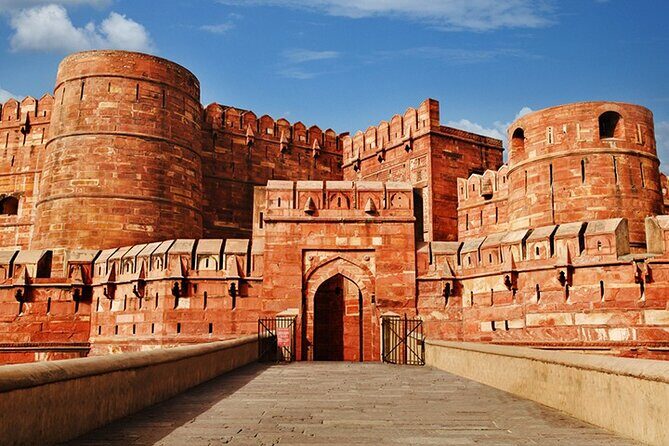
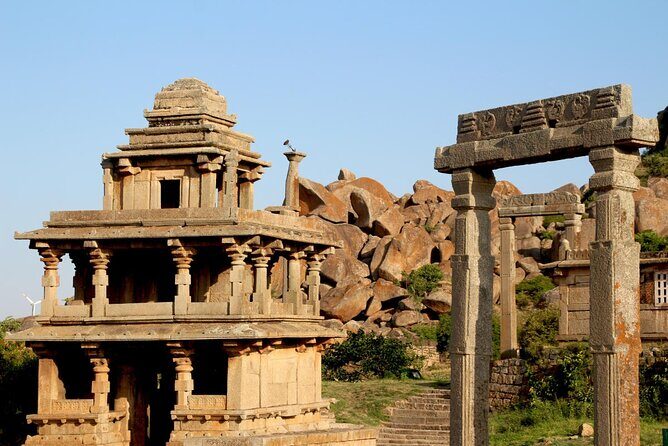
The final highlight is Chitradurga Fort, described as impregnable, photogenic, historic, and mighty in the same breath. Locally it’s known as Elusuttina Kote, which you’ll hear as part of how the guide explains its reputation.
This is around 30 minutes. That half hour is enough to appreciate why the fort structure and defensive design are meant to hold ground, not just impress. Chitradurga gives you a different “lens” on the region’s past: less about temple ritual and more about controlling space and protecting power.
If Hampi is the soft power of devotion and art, Chitradurga is the hard power of fortification.
How to handle the heat and the rocky ground
The tour is upfront about it: plenty of walking on rocky terrain under hot sun. You’ll feel it most on the viewpoint segment and between temple stops where surfaces aren’t smooth like city sidewalks.
Here’s how to make it more comfortable without turning it into a training camp:
- Wear shoes with grip, not sandals.
- Keep legs and shoulders covered for living temples.
- Bring a hat or cap and plan for sun exposure.
- Hydration matters even if the schedule is quick.
Also, this is not positioned for kids below 5 years. That’s about safety and stamina, not “because it’s not kid-friendly.” If your group includes older teens or adults who can handle a few uneven stretches, you’ll likely be fine.
Group size, guide style, and language options

This experience caps at 10 travelers, which keeps it from feeling like a cattle-car. A government-licensed local guide helps you connect details across multiple sites rather than just collecting stamps.
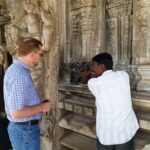
Guide narration can make or break a short tour. In one of the standout notes from past guests, Rama Krishna’s warm conversation and deep knowledge made the experience more enjoyable. That’s the kind of guide impact you should look for: not only what you’re looking at, but why it was built the way it was.
Language support is also a real factor. French, German, and Italian speaking guides are available subject to availability, so if you want a specific language, it’s worth confirming when you book.
Logistics that reduce stress
The practical stuff is handled for you:
- Pickup and drop-off from Central Bengaluru
- Air-conditioned vehicle
- Mobile ticket
- Admission tickets included at each stop
The only real “stress” is the schedule rhythm: you’re moving from site to site with timed visits, and day 1 includes transportation time between stops. If you get impatient waiting on a car, this might annoy you. If you enjoy a structured day with a clear flow, you’ll probably appreciate it.
Also, note that the order of visits and schedules are at the guide’s discretion. That flexibility can be helpful when sun angle, crowds, or site conditions shift.
Who should book this tour?
This fits best if you:
- Want a compact way to see major Hampi highlights plus Chitradurga Fort in two days
- Like having a guide connect carvings, architecture, and religious meaning
- Can handle walking over rocky surfaces and being in the sun for parts of the day
- Prefer a small group (max 10) over a huge bus
It’s less ideal if you:
- Are very heat-sensitive or dislike uneven ground
- Want unhurried museum-style time at each monument
- Need a tour designed for very young children
Should you book this Hampi & Chitradurga 2-day tour?
If Hampi is on your bucket list and you want to do it efficiently without sacrificing context, I think this is a strong booking choice. You get the major temple sequence, then you finish with Chitradurga so the trip feels like more than a one-theme sprint.
My main caution is physical and practical: you’re signing up for real walking in sun on rocky terrain. If you’re prepared—good shoes, covered clothing for living temples, and a realistic pace—this tour offers a lot of sight value for the money, especially because lunches and entry fees are already taken care of.
FAQ
What time does the tour start in Bangalore?
The tour start time is 8:00 am.
Where is pickup and drop-off included?
Hotel pickup and drop-off are included from Central Bengaluru.
How long is the experience?
It runs for 2 days (approximately).
Do I get an English-speaking guide?
The tour includes a government licensed local guide. Language options like French, German, and Italian are subject to availability.
Are entrance fees included?
Yes. All fees and taxes are included, and admission tickets are included for each listed stop.
Is lunch included?
Yes. Lunch (2) is included. Breakfast and dinner are not included.
How many people are in the group?
The tour has a maximum of 10 travelers.
Is this tour suitable for children?
It’s not advisable for children below 5 years. You should have a moderate physical fitness level for the walking.
How much walking should I expect?
There is plenty of walking on rocky terrain under hot sun on both days, including visits to living temples that require legs and shoulders to be covered.
Is free cancellation available?
Yes, you can cancel for a full refund up to 24 hours before the experience’s start time.