REVIEW · JAIPUR
Walking Tour Jaipur India
Book on Viator →Operated by pinkfoots travel · Bookable on Viator
Pink City can feel like a maze. This walking tour helps you turn the maze into a story. You’ll cover Hawa Mahal, the City Palace, Jantar Mantar, and more in about two hours with fun “infotainment” storytelling, not a lecture slog.
I like that the tour is priced for real travelers at about $20, and that you’re not just staring at buildings—you’re learning what to notice as you walk. I also like the small-group feel (up to 20 people) plus the included bottled water and tea with snacks, which keeps the pace comfortable in Jaipur’s heat. One thing to consider: monument entry is not included for several stops, so you’ll need extra cash if you want full access.
In This Review
- Key points before you step into Jaipur’s old town
- Getting Your Bearings in Pink City’s Old Town
- Practical reality check
- Price and Value: What You Pay for (and What Costs Extra)
- Start Point: Hawa Mahal Road and a Simple Two-Hour Loop
- Hawa Mahal (Palace of Wind): More Than Just a Photo Stop
- What to watch for
- Ticket note
- City Palace of Jaipur: Mughal and Rajput Power in One Complex
- Why this stop is worth your time
- Ticket note
- Jantar Mantar: 18th-Century Sky Math at Human Scale
- What you’ll likely appreciate here
- Ticket note
- Isarlat (Sargasuli) Tower: The 140-Foot Pause Between Bazaars
- Why this stop matters for your walk
- Ticket note
- Indian Crafts Bazaar Jaipur Textiles: A Shopping Stop That Still Feels Guided
- How to make this stop work for you
- Giriraj Ji Temple: Color, Character, and a Break From the Main Circuit
- Why this ending lands well
- Included Extras That Make a Two-Hour Walk Actually Comfortable
- Tour Group Size, Comfort, and Safety
- What I’d Bring (So You Don’t Lose Time)
- Who Should Book This Walking Tour
- Should You Book This Jaipur Walk?
- FAQ
- FAQ
- How long is the Jaipur walking tour?
- What does the $20 price include?
- Are monument entry tickets included?
- What are the main stops on the itinerary?
- Where do I meet the tour?
- Is this a large group tour?
- Do I need to bring a ticket?
- What happens if the weather is bad?
Key points before you step into Jaipur’s old town
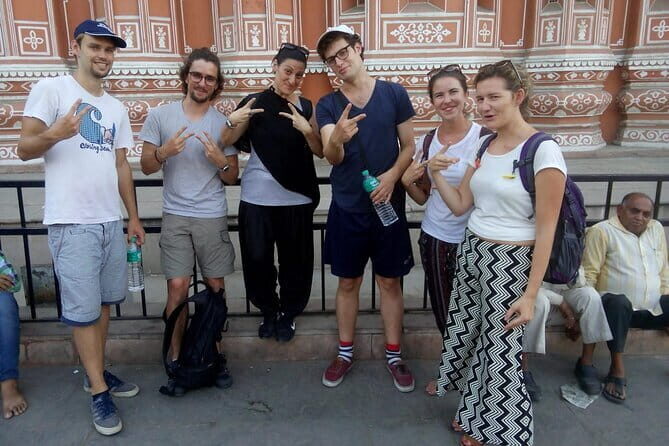
- Mobile ticket + easy start at Hawa Mahal Road, so you can locate the group without stress.
- Big-name sights in one loop: Hawa Mahal, City Palace Complex, Jantar Mantar, Isarlat (Sargasuli).
- Optional ticket spend at most major monuments, so plan a little extra if you want to go inside.
- Tea with snacks included, plus bottled water, which is a practical win on a hot walk.
- Good-weather requirement, so pick a day when the sky cooperates.
Getting Your Bearings in Pink City’s Old Town
This is the kind of walking tour I recommend when it’s your first time in Jaipur and you want a quick, smart orientation. You cover a compact set of landmarks that people come to see for a reason, but the guide’s job is to help you understand what you’re looking at while you’re still close to it.
The tour uses infotainment—stories plus facts, told in a way that keeps you moving and paying attention. That matters because Jaipur can overwhelm you if you only rely on signage. Here, you get context while the buildings are still in front of you.
You’ll also feel the “host energy” of the provider behind the scenes. Reviews for pinkfoots travel describe service that feels warm and safe, and that kind of attitude shows up in a walking tour where you’re trusting someone to keep you on track.
You can also read our reviews of more walking tours in Jaipur



Practical reality check
This is not a “see everything” day. It’s a focused walk—about 2 hours—and it ends back at the same start point. Think of it as your Jaipur warm-up so you can explore deeper afterward.
Price and Value: What You Pay for (and What Costs Extra)
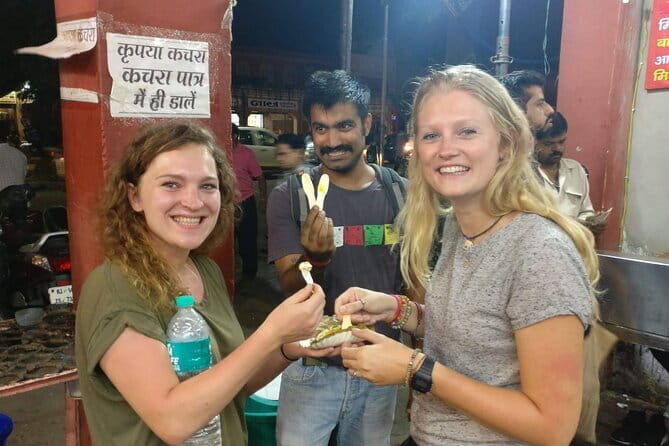
The listed price is $20 for roughly 2 hours. For Jaipur, that’s strong value because you’re getting a guide plus practical extras: bottled water and tea with snacks.
Where you’ll want to do your math is monument entry. The tour notes that any monuments entry tickets are not included, and there’s also guidance that you may need to pay around ₹100 per person at sites if you want tickets. At one point, it also mentions about $10 extra for tickets—so the exact amount can vary by current pricing and what you decide to enter.
My take: at $20, you’re paying mostly for the guide and the route. If you want inside access at major sites, budget extra so you’re not surprised mid-walk. If you’re happy seeing exteriors and photos from the street, you’ll likely keep costs under control.
Start Point: Hawa Mahal Road and a Simple Two-Hour Loop
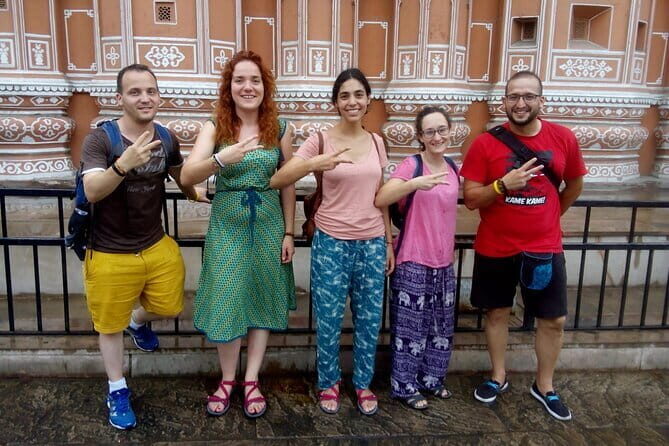
You meet at Hawa Mahal Road, Badi Choupad, J.D.A. Market, Pink City, Jaipur, Rajasthan 302002. The tour ends back at the meeting point, which is a nice detail when you’re trying to coordinate the rest of your day.
The tour is described as near public transportation and suitable for most travelers. It’s also capped at 20 travelers, which helps the experience stay interactive rather than chaotic.
One more thing I like from a logistics standpoint: you get a mobile ticket. That reduces the classic “Where’s my paper ticket?” stress on travel days.
Hawa Mahal (Palace of Wind): More Than Just a Photo Stop
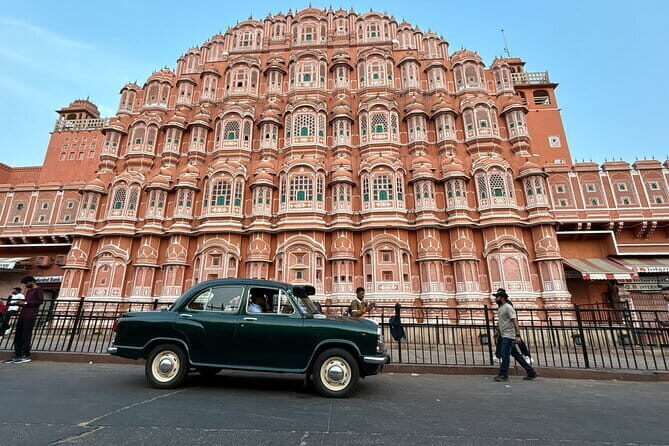
The walk begins at Hawa Mahal, the well-known “Palace of Wind” on the edge of the City Palace complex. You get about 20 minutes here.
From the outside, Hawa Mahal is instantly recognizable: red and pink sandstone, lots of openings, and that famous “honeycomb” look. But the value of a guided stop is learning what those details mean. The tour points out it stretches toward the Zenana, or women’s chambers. Understanding that function helps you stop treating it like a pretty facade and start seeing it as architecture tied to daily court life.






What to watch for
- The way the facade is designed for light and viewing.
- How it relates spatially to the nearby palace area.
Ticket note
Admission isn’t included for this stop, so if you want to enter, you’ll need to pay separately.
City Palace of Jaipur: Mughal and Rajput Power in One Complex
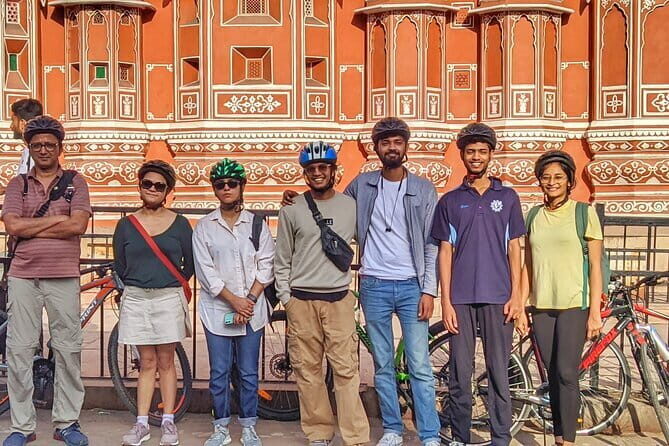
Next up is the City Palace of Jaipur, where the emphasis is on how the palace was conceived and built by Maharaja Sawai Jai Singh II, the founder of Jaipur. You get another 20 minutes, and this stop is described as a fusion of Mughal and Rajput architecture.
The “still home to the last ruling royal family” detail matters because this isn’t just a museum you pass through. It’s a living historical complex. That gives the place an extra layer when you’re standing there in person. You’re not only looking at old stones; you’re seeing how royal legacy continues to shape spaces.
Why this stop is worth your time
- You’ll connect the city’s founding story (through Sawai Jai Singh II) to what you see in front of you.
- The architecture blend gives you something to notice beyond decoration.
Ticket note
The tour says admission tickets are not included here as well, so plan for optional entry if that’s your thing.
Jantar Mantar: 18th-Century Sky Math at Human Scale
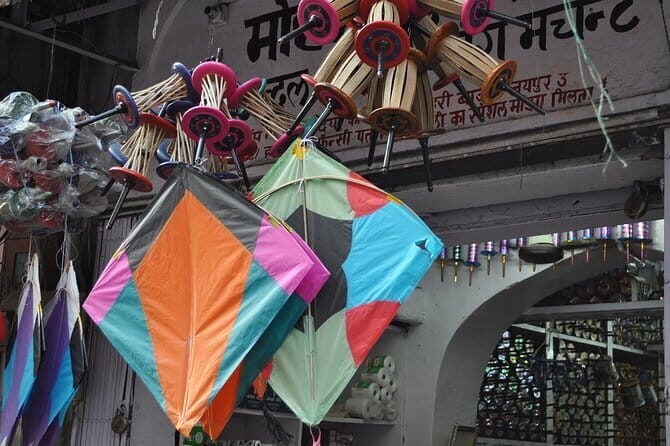
Then you move to Jantar Mantar – Jaipur, completed in 1734 under Sawai Jai Singh II. This stop is often a favorite because it feels clever and physical at the same time. Instead of reading about astronomy, you see structures designed for measuring.
You’re given about 20 minutes. The idea is to understand it as “astronomical innovations of the Rajput era,” not just a collection of unusual shapes. When you know what the tools were used for, the angles and markers start making sense, and the site becomes much more than background scenery.
What you’ll likely appreciate here
- The mix of engineering and observation.
- The way a ruler’s interests shaped public monuments.
Ticket note
As with several big stops, admission tickets aren’t included, so optional entry may require extra payment.
Isarlat (Sargasuli) Tower: The 140-Foot Pause Between Bazaars

After the big-ticket landmarks, you get a more street-level stop: Isarlat, popularly known as Sargasuli, meaning passage to heaven. The tower is described as 140 ft and located near the meeting point of Tripolia Bazaar and Gangori Bazaar, close to Chhoti Chaupar Chowk and Tripolia Gate.
This is a good pacing break. If the earlier stops were about royal power and science, this one is about place. You’re standing where markets meet and daily movement happens, and the tower gives you a visual landmark to orient yourself.
Why this stop matters for your walk
- It helps you “read” the bazaar neighborhood instead of just passing through it.
- It gives you a height reference, which makes the rest of the area feel easier to navigate later.
Ticket note
No monument admission is mentioned as included here, so you’ll want to confirm on the day if you’re hoping to enter.
Indian Crafts Bazaar Jaipur Textiles: A Shopping Stop That Still Feels Guided

Next is Indian Crafts Bazaar Jaipur textile exports, with the stop description referring to Sireh Deori Bazaar Jaipur. This is the one where the tour notes admission is included.
The important word here is practical: this is where you can look at what gets bought and sold right in the old-town rhythm. The note also contrasts it with Hawa Mahal, basically saying this is a useful spot for viewing buying objects and how they’re displayed.
How to make this stop work for you
If you like textiles, this can be a helpful moment to learn what questions to ask and what “quality signals” people use. If you’re not buying anything, it still works because you get a local window into the craft economy.
If you do plan to purchase, keep expectations realistic. This is a bazaar environment, and prices can vary depending on how and what you compare.
Giriraj Ji Temple: Color, Character, and a Break From the Main Circuit
The final scheduled stop is Giriraj ji temple, described as bright and colourful, located on the Agra-Jaipur Road just east of Dausa. You get about 20 minutes here, and this is another stop where the tour indicates admission is included.
Even if temples aren’t your main travel focus, this is a nice shift in tone. The big palaces and science monuments are impressive, but a temple stop adds texture: paint, daily worship energy, and a quieter feel compared to the main landmark cluster.
Why this ending lands well
- It gives you a final “sensory” memory to take away.
- It balances the earlier royal and scientific themes with a religious/cultural stop.
Included Extras That Make a Two-Hour Walk Actually Comfortable
This tour includes:
- Guide
- Bottled water
- Tea with snacks
In Jaipur, those items are more than kindness. They help you stay focused for the full loop. You’re in a walking rhythm for about two hours, and heat can turn “I’ll just look around” into “I need to sit down now.”
Also, tea breaks are a classic travel reset. You get a moment to cool off, ask questions, and regroup before the next landmark.
Tour Group Size, Comfort, and Safety
The maximum group size is 20 travelers, which is small enough for a guide to keep track of people. Reviews for the provider describe trips that feel comfortable and safe, and for this kind of walking tour, that matters. You’re moving through real streets, with real crowds and real traffic—so a steady, organized flow helps you enjoy it rather than manage it.
If you’re a first-timer in Jaipur, this is also a good way to feel less lost. The tour is designed as an induction into the city—getting you oriented fast so your next self-guided walk is easier.
What I’d Bring (So You Don’t Lose Time)
You’ll appreciate packing like a street-walker:
- Sun protection (cap/sunglasses) since the walk is outdoors.
- Comfortable shoes for uneven sidewalks and frequent turns.
- A light layer for morning or late afternoon, depending on when you go.
Also, consider carrying a little extra cash for optional monument tickets. The tour clearly signals that entries are often separate.
Who Should Book This Walking Tour
This works best if you:
- Are visiting Jaipur for the first time and want orientation fast.
- Want a guided mix of landmarks plus stories, not just sightseeing.
- Prefer a short day plan (about 2 hours) over long museum marathons.
- Like practical included perks like water and tea with snacks.
It may be less ideal if you want to spend a long time inside multiple monuments. This itinerary is time-boxed at about 20 minutes per stop, and several sites are exterior-focused unless you add tickets.
Should You Book This Jaipur Walk?
If you’re deciding yes or no, here’s the simple call:
Book it if you want a guided first taste of Jaipur’s old town with a route that makes sense and included comfort items. I think it’s a smart-value option at $20, especially because the stops include major icons like Hawa Mahal, City Palace, and Jantar Mantar plus a couple of local-feeling neighborhood stops.
Skip or reconsider if you already know Jaipur well and you’re only interested in deep, long museum-style time inside monuments. Since tickets are typically extra and the total time is short, it’s better suited to orientation and story-building than to a slow, thorough visit.
FAQ
FAQ
How long is the Jaipur walking tour?
It runs for about 2 hours (approximately).
What does the $20 price include?
The tour includes a guide, bottled water, and tea with snacks.
Are monument entry tickets included?
No. The tour states that monuments entry tickets are not included, and you may need to pay extra (₹100 per person is mentioned) if you want tickets for certain stops.
What are the main stops on the itinerary?
The walk includes Hawa Mahal, City Palace of Jaipur, Jantar Mantar, Isarlat (Sargasuli) Tower, a stop at Indian Crafts Bazaar (Sireh Deori Bazaar), and Giriraj ji temple.
Where do I meet the tour?
You meet at Hawa Mahal Road, Badi Choupad, J.D.A. Market, Pink City, Jaipur, Rajasthan 302002, India.
Is this a large group tour?
No, it has a maximum of 20 travelers.
Do I need to bring a ticket?
You receive a mobile ticket. Confirmation is received at the time of booking.
What happens if the weather is bad?
The experience requires good weather. If it’s canceled due to poor weather, you’ll be offered a different date or a full refund.