REVIEW · AMRITSAR
Wagah Border Flag Retreat Ceremony
Book on Viator →Operated by Travel India With Peace · Bookable on Viator
Wagah is border theatre at full volume. This 3 to 4 hour outing from Amritsar pairs the flag retreat ceremony with real-world context stops, so you understand what you’re seeing instead of just watching the shouting. I really liked the private, hassle-light transport that gets you there without a scramble for local logistics.
Two things I especially enjoyed: your guide’s clear storytelling at the Punjab State War Heroes Memorial & Museum, and the easy timing that keeps the day moving without feeling rushed. One thing to plan for: you’ll do some walking when entering and exiting the border stadium, and you’ll want to carry your passport if you’re a foreign visitor.
In This Review
- Key Points That Make This Tour Worth Your Time
- Wagah Flag Retreat: What You’re Really Paying For
- Getting From Amritsar City Center: Comfort That Actually Helps
- Company Bagh Gardens: A Calm Start Before the Ceremony
- Punjab State War Heroes Memorial & Museum: Context Without the Lecture Tone
- War Memorial Pass-By Moment: Quick Facts With a Purpose
- Pul Kanjri Village: The “Last Village” Feeling
- Entering the Wagah Border Stadium: How to Plan Your Time
- No VIP Privilege Entry: The Honest Tradeoff
- The Guide Matters: What I’d Watch For (Mr Raj’s Example)
- Price and Value: Is $45 Fair for This Day?
- Weather and the Day-of Reality at the Border
- Who Should Book This Wagah Tour?
- Should You Book? My Bottom-Line Take
- FAQ
- What is the duration of the Wagah Border Flag Retreat ceremony tour?
- What sights are included besides the border ceremony?
- Is pickup and drop from my hotel included?
- Are admission tickets included?
- Do I get VIP or privilege entry into the border stadium?
- Do foreign guests need to bring their passport?
- Is there walking involved at the stadium?
- What happens if the weather is poor?
Key Points That Make This Tour Worth Your Time
- Private guide and local logistics: you get help with timing and questions, not just a ride
- War memorial stop with guided context: you’ll know the India-Pakistan story behind the ceremony
- Pul Kanjri visit: a last-village feeling near the border, plus an old Maharaja Ranjit Singh connection
- Comfort included for the ride: A/C transport, bottled water, Wi‑Fi in the car, and an umbrella for weather
- Admission tickets included: less hassle once you’re on-site
- No VIP or privilege entry: you experience the ceremony, just not the special-access version
Wagah Flag Retreat: What You’re Really Paying For
The Wagah ceremony isn’t just a visual show. It’s an organized routine where emotion, pageantry, and national identity play out in synchronized form. If you go expecting silence and solemnity, you’ll be surprised. If you go expecting a staged rhythm and lots of crowd energy, you’ll be exactly on target.
The value here is that the experience isn’t treated like a one-stop photo job. You’re guided from Amritsar with meaningful stops en route, so the ceremony lands with more meaning. That matters, especially for the India-Pakistan context you don’t pick up just by watching flags move.
You can also read our reviews of more tours and experiences in Amritsar.



Getting From Amritsar City Center: Comfort That Actually Helps
Pickup and drop from your hotel inside the city is a big deal in Amritsar. You remove the stress of finding transport, negotiating, and trying to make sense of timing on your own. The trip includes air-conditioned transportation, mineral water bottles, and Wi‑Fi service inside the car, plus an umbrella for rainy or sunny days.
I also appreciate the clear “group size reality.” This is described as a private activity where only your group participates. That usually means less waiting around for other people and more ability for your guide to manage the flow of the day.
One more small but useful note: the tour includes admission tickets for the stops, which keeps the day simpler once you’re at the key locations.
Company Bagh Gardens: A Calm Start Before the Ceremony
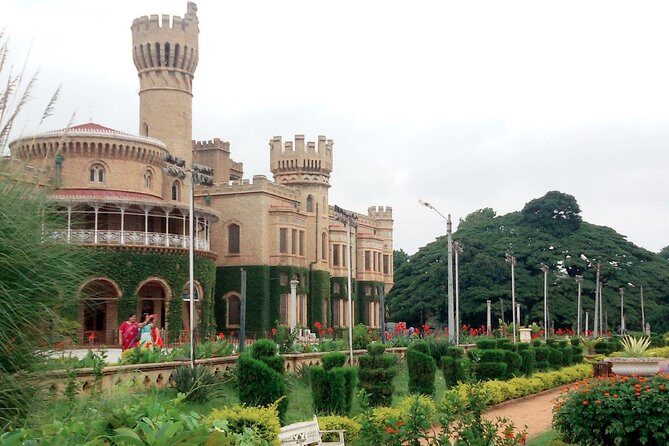
Before you head fully into border territory, you pass Company Bagh and the surrounding area. Gardens like this give you a breather. It’s one of those moments that helps the day feel like more than a single event.
Why this matters: the ceremony is intense. Starting with a calmer setting helps you stay grounded, take a few photos if the timing allows, and get your bearings before you reach the border.
Punjab State War Heroes Memorial & Museum: Context Without the Lecture Tone
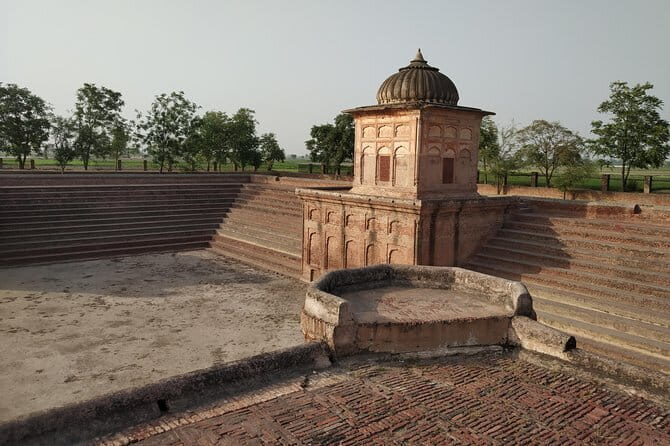
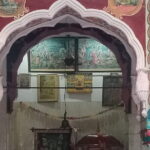
This is where the tour becomes more than entertainment. You stop at the Punjab State War Heroes Memorial & Museum, and your guide explains the fraught history of India-Pakistan relations and the wars that shaped the region.
This is also one of the most praised parts of the overall experience because it turns broad political history into something you can follow. A good guide makes the museum meaningful without turning it into a long classroom session.
I’d treat this stop as your “decoder ring” for Wagah. When you understand the themes—conflict, sacrifice, and how both sides remember history—the ceremony feels less like random spectacle and more like a rehearsed message.
War Memorial Pass-By Moment: Quick Facts With a Purpose
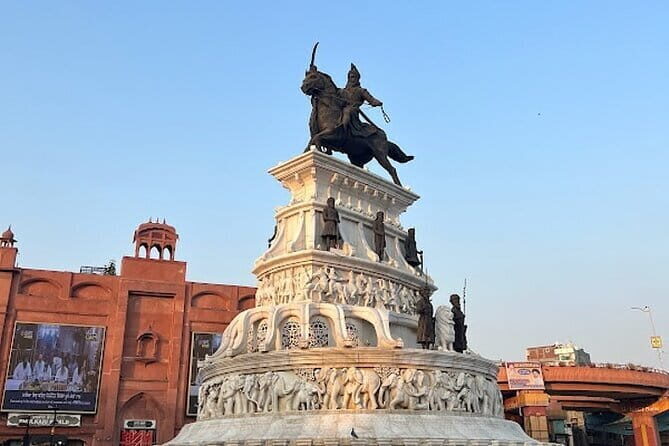
In addition to the museum, you’ll pass by the War Memorial of Punjab. The guide explains the history of the wars between India and Pakistan.
This isn’t likely to feel as time-heavy as a full museum browse. Think of it as a bridge stop: it helps you connect what you saw inside with what you’re about to watch at the border.
If you’re the type who likes a timeline, this works well. If you prefer long reading time, you may want to keep your expectations flexible and rely on your guide’s explanation rather than expecting a self-guided deep study.


Pul Kanjri Village: The “Last Village” Feeling
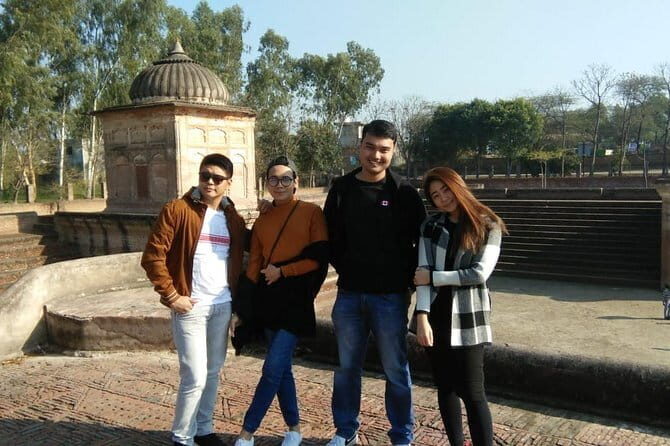
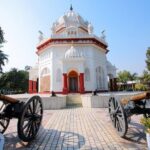
Next comes Pul Kanjri (spelled Pul Kanjri / Pul Kanjari depending on the write-up). It’s described as the last Indian village near the Indo-Pak border. Even if you’ve seen plenty of frontier travel in other countries, there’s something different about a place described this way. The name alone sets a mental boundary.
You also visit a historic building connected to Maharaja Ranjit Singh, described as nearly 200 years old, tied to his love. That kind of detail gives the stop more flavor than a quick roadside photo stop.
The duration is short—about 30 minutes—so you won’t get stuck there all day. It’s just enough time to absorb the setting and learn what makes the place significant.
Entering the Wagah Border Stadium: How to Plan Your Time
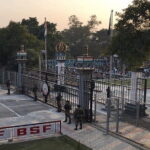
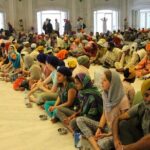
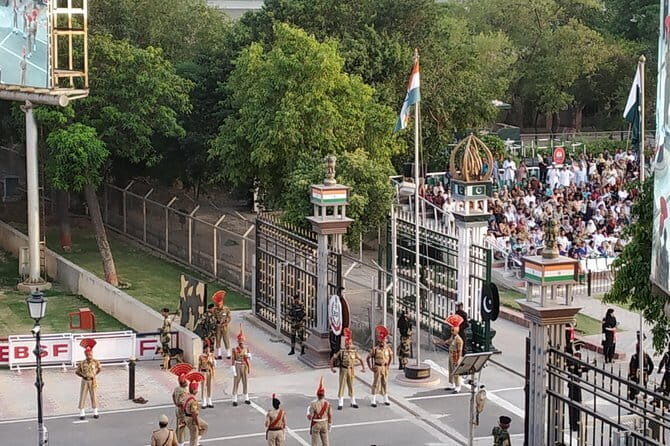
At the border, the main event is the electrifying parade and flag retreat between India and Pakistan. Each side cheers, with synchronized chanting and energetic crowd participation. It’s organized, fast-paced, and loud in a way that sounds bigger than it looks from the outside.
The ceremony portion is listed as about 2 hours, and the whole tour runs roughly 3 to 4 hours total. So yes, the schedule is tight. The upside is that you won’t burn half a day. The trade-off is that you’ll need to be ready when your group is moving.
You should expect walking to enter and exit the border stadium. If you’re sensitive to stairs or long queue lines, plan your day accordingly.
Also, the tour notes something practical and important for foreign visitors: if you’re coming from outside India, you should carry your passport for entry into the Wagah border stadium.
No VIP Privilege Entry: The Honest Tradeoff
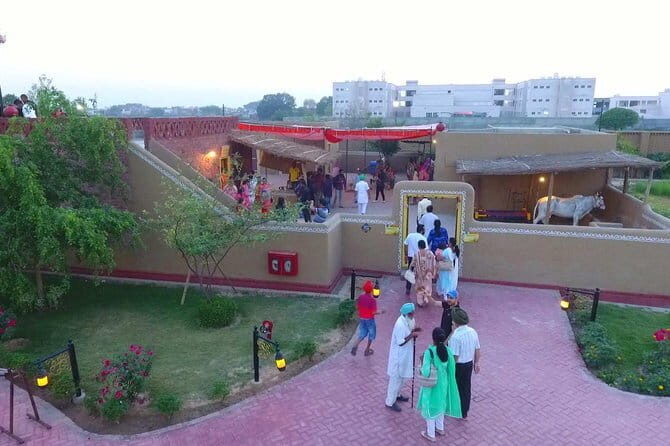
The tour specifically says it does not endorse any VIP or privilege entry inside the Attari-Wagah border stadium. That’s an important detail for value.
What you’re getting is the ceremony experience with a guide and proper logistics, not a special-access ticket category. If your goal is to sit in a premium section with VIP perks, you’ll need a different kind of purchase than this one.
But if you want to see the event and understand it, this setup makes a lot of sense. It keeps the experience focused on what matters: the parade and the story leading up to it.
The Guide Matters: What I’d Watch For (Mr Raj’s Example)
One of the clearest highlights from the experience is the quality of the person managing your day. In the feedback, an assigned driver cum guide named Mr Raj is described as very informative, helpful, and excellent.
That matches the real need for a tour like this. Wagah is intense. Without guidance, you can miss context or waste time trying to figure out what’s happening when. With a good guide, you get smoother flow and better understanding at every stop.
So here’s how you can judge whether the guide will work for you: look for someone who can explain the wars and relations in simple terms and connect that to what you’re about to see. If that’s your style, you’ll likely feel taken care of.
Price and Value: Is $45 Fair for This Day?
At $45 per person, this tour sits in a “reasonable day plan” zone. You’re not just paying for a ticket to a show. You’re paying for a private guide, hotel pickup and drop inside the city, and air-conditioned transport plus the included admission tickets for the key stops.
The value math gets better if you’d otherwise spend time and energy figuring out transport and timing on your own. Wagah isn’t the kind of event where you want to be late or stuck dealing with unclear schedules. This tour is built around reducing that friction.
It also helps that the day includes multiple locations—Wagah, the memorial museum and/or memorial area context, and Pul Kanjri—so you’re not paying $45 for one single photo opportunity.
My only caution on value is this: if you’re someone who wants maximum comfort for minimal walking or you’re tightly limited in mobility, the border stadium entry and exit walking may feel like a mismatch. If that applies, weigh your comfort level first.
Weather and the Day-of Reality at the Border
The experience requires good weather. If it’s canceled due to poor weather, you’re offered a different date or a full refund. That’s very relevant for planning because border ceremonies can’t always proceed normally.
The practical move: treat this tour as a flexible item in your schedule. If you’ve got tight plans later the same day, keep some buffer. An umbrella is included, but “umbrella-able” weather isn’t always the same as ceremony-possible weather.
Who Should Book This Wagah Tour?
This tour fits best if you want:
- A guided, structured way to see Wagah without guesswork
- The India-Pakistan story connected to what you’ll watch, not in a separate reading assignment
- Hotel pickup and A/C transport for a short, efficient outing
It’s also a good pick if you enjoy cultural-political context stops like the memorial museum and prefer explanations you can ask questions about.
If you’re only here for quick, independent sightseeing and you don’t care about the background, you might feel you’re paying for more than you need. But if you do care, this package is built for that curiosity.
Should You Book? My Bottom-Line Take
I’d book this tour if you want the Wagah ceremony plus context, with the logistics handled for you. The combination of private guide service, included admission tickets, and comfortable transport makes it a clean way to do an event that can otherwise feel chaotic.
I wouldn’t book it if VIP-style access is your top priority, because this tour explicitly does not endorse privilege entry. And I’d think twice if walking to and from the stadium is a problem for you.
If you’re in Amritsar and you want one memorable border experience that also makes sense historically, this one is a strong choice.
FAQ
What is the duration of the Wagah Border Flag Retreat ceremony tour?
The tour runs about 3 to 4 hours on average.
What sights are included besides the border ceremony?
You’ll see Company Bagh, the Punjab State War Heroes Memorial & Museum, Pul Kanjri village, and you pass by the War Memorial of Punjab.
Is pickup and drop from my hotel included?
Yes. Pickup and drop are included from your hotel inside the city.
Are admission tickets included?
Yes. Admission tickets are included for the border ceremony and for the Pul Kanjri stop.
Do I get VIP or privilege entry into the border stadium?
No. The tour states they do not endorse VIP or privilege entry inside the Attari-Wagah border stadium.
Do foreign guests need to bring their passport?
Yes. Foreign guests are requested to carry their passport for entry into the Wagah border stadium.
Is there walking involved at the stadium?
Yes. There is an average amount of walking required to enter and exit the border stadium.
What happens if the weather is poor?
The experience requires good weather. If it’s canceled due to poor weather, you’ll be offered a different date or a full refund.