REVIEW · VARANASI
Visit to Death Hotel in Varanasi
Book on Viator →Operated by Tour Varanasi · Bookable on Viator
Death, explained in daylight, in Varanasi. You’ll spend about four hours with a private English-speaking guide at Mukti Bhavan—often called the city’s death hotel—and learn why the sacred city of Varanasi draws people with one very specific intention: to die here for spiritual salvation. It’s a heavy subject, but the way the tour is handled is practical and surprisingly clear, especially when you connect it to the Ganges, the ghats, and the funeral rituals that shape daily life in this city.
I really like two things about this experience. First, you get a private guide who can explain the religious logic behind moksha (salvation) in a way that helps you make sense of what you’re seeing. Second, you get hotel pickup and drop-off by a private vehicle, so you’re not fighting traffic or figuring out timing while you’re trying to understand something intense.
One consideration: Mukti Bhavan may not be open on the day you visit. If there are no patients/residents at the time, your guide may take you instead to Mumukshu Bhavan, which can feel different from what you expected.
In This Review
- Key things to know before you go
- Assi Ghat Start: Why the morning matters
- Visiting Mukti Bhavan, Varanasi’s so-called Death Hotel
- The beliefs behind moksha: what the guide explains
- When Mukti Bhavan is closed: you might visit Mumukshu Bhavan
- Varanasi history in 4 hours: how you get context fast
- Price and value: is $63 per person fair?
- Getting it right on site: clothing and photo etiquette
- Who this tour is for (and who should think twice)
- Should you book this private Death Hotel tour in Varanasi?
- FAQ
- How long is the Death Hotel (Mukti Bhavan) tour?
- What time does the tour start?
- Is hotel pickup included?
- Is this a private tour?
- Do I need to pay admission?
- What should I wear?
- Are photos allowed?
- What if Mukti Bhavan is closed on the day of my visit?
- Can I cancel for a refund?
Key things to know before you go
- A private English-speaking guide keeps the story understandable, not vague.
- Hotel pickup and drop-off reduces stress in Varanasi’s traffic and crowds.
- About 4 hours is long enough for context, short enough to stay flexible.
- Mukti Bhavan rules matter: wear full sleeves, and ask before taking photos.
- Admission is free for the visit, which helps value.
- If Mukti Bhavan is closed, you may be routed to Mumukshu Bhavan instead.
Assi Ghat Start: Why the morning matters
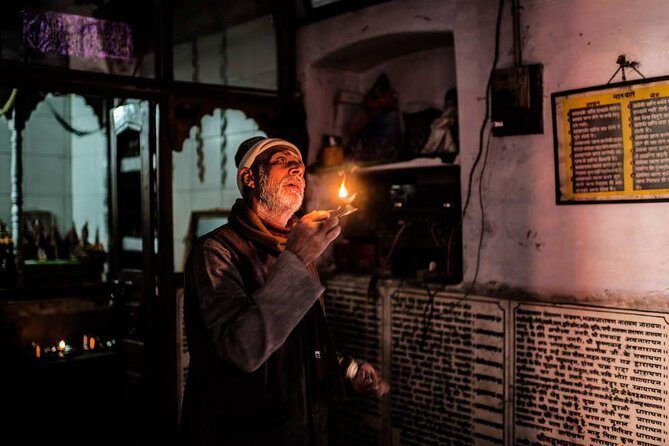
Your experience kicks off around 9:30 am, with pickup from your hotel and a drive into the area that connects with Assi Ghat. Starting in the morning is smart in Varanasi. The light is better for seeing details, and you’ll generally face less chaos than you would later in the day—still busy, but easier to manage when you’re standing close to crowded ghats and religious spaces.
Assi Ghat isn’t just a convenient starting point. It helps frame the whole theme of the day: the Ganges is not background scenery here. It’s the spiritual engine of the city, and it’s the reason so many pilgrims come to bathe and participate in funeral rites. Even if you’re only visiting one place tied to death and salvation, you’ll get the bigger picture faster when the guide ties it back to the ghats and the daily rhythm of Varanasi.
You can also read our reviews of more tours and experiences in Varanasi.

Visiting Mukti Bhavan, Varanasi’s so-called Death Hotel
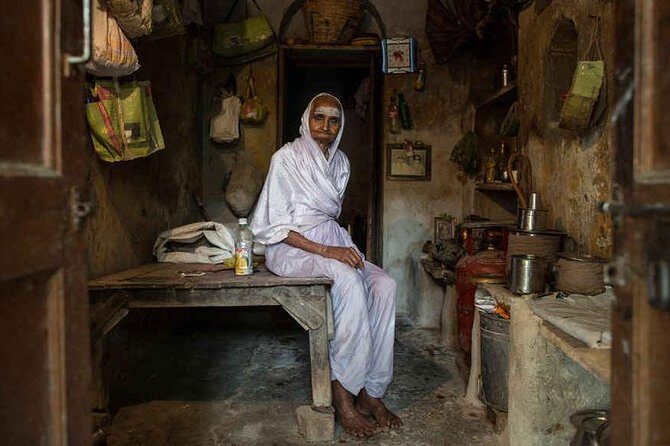
You’re going specifically to Mukti Bhavan—often called a death hotel—even though it’s really better understood as a spiritual accommodation for people who believe dying in Varanasi can lead to liberation from the cycle of birth and death.
The tour doesn’t pretend this is a normal sightseeing stop. Mukti Bhavan is presented as a place where Hindu worshippers come to die with the intention of achieving moksha. The idea is simple in concept: if the soul is helped along at the moment of death, the person’s spiritual journey doesn’t end there. The hard part is the emotional weight. That’s why a private guide matters. You’ll have someone to explain what you’re seeing and why the city’s belief system is organized around this moment.
You’ll also learn a grounding detail that makes the story feel real: Mukti Bhavan has seen 15,000-odd deaths since it began. Whether you agree with the belief or not, that number helps you understand the scale of faith here. This isn’t a small side-room idea. It’s integrated into the city’s spiritual ecosystem, with institutions that have operated long enough for the city’s reputation to spread internationally.
Tip for you: keep your questions respectful and focused on meaning. If you go in expecting a spooky “attraction,” you’ll miss the point. If you go in ready to understand a tradition and its practical realities, you’ll get much more out of the visit.
The beliefs behind moksha: what the guide explains
This tour’s core value is explanation. You’ll hear the religious logic behind the name death hotel and the belief that dying in Varanasi helps the soul escape the repeating cycle of birth and death. The guide frames it in a way that connects intention, ritual, and spiritual outcome.
Here’s the part I’d underline for you: the beliefs are presented as deeply held, but they’re also handled in a way that acknowledges they can be debated. In other words, the tour isn’t asking you to adopt the view on the spot. It’s showing you why people do come, why they believe it works, and why the institution exists at all.
You’ll also get history around why Varanasi became the “holy land” for pilgrims. The city is described as spiritual India at full volume: millions visit for Ganges bathing and funeral rituals, and a smaller but significant subset comes specifically with the intention of dying. That difference matters. It’s not just about visiting a sacred place—it’s about timing your death to match the place’s spiritual meaning.
One practical takeaway: listen for how the guide describes the moment of death as a spiritual priority. That intention-to-die focus can sound strange until you hear it explained as part of a long tradition where the city’s spiritual reputation is believed to affect the soul’s trajectory.
When Mukti Bhavan is closed: you might visit Mumukshu Bhavan
This is the most important “read this twice” part.
On some days, Mukti Bhavan can be shut when there are no patients/residents. If that’s your situation, your guide may take you to Mumukshu Bhavan instead. Mumukshu Bhavan is described as the place where people check in to die when Mukti Bhavan isn’t operating.
So if you’re arriving with a very specific mental picture of Mukti Bhavan as your only destination, you may need to be flexible. The emotional impact can also shift depending on what’s happening that day—quiet, active, empty, or in-between.
The good news: your guide isn’t leaving you stuck. The experience is designed to keep the focus on the religious phenomenon of people coming to die for salvation, even if the exact building changes based on real-time operations.
My advice to you: when you book, understand this is a “death-hotel phenomenon” visit, not a guaranteed one-door photo stop. Going with the right expectations makes the day smoother.
Varanasi history in 4 hours: how you get context fast
The whole tour is about 4 hours (approx.), which is a workable length if you want meaning without burning the entire day. In that time, you’re doing three things:
- You’re getting local religious context for why Varanasi is such a magnet for pilgrims.
- You’re connecting the ghats to the institution (Mukti Bhavan) in a way that makes the city’s worldview easier to follow.
- You’re seeing one place related to death and salvation with a guide to translate what you’re looking at.
Private guiding is what makes this feel efficient. You can ask why the city draws people, how the rituals relate to the soul’s journey, and what the institution’s purpose is—without being rushed by a group schedule that doesn’t match your pace.
Also, keep an eye on who your guide is. In one session, the guide Vimal is mentioned as being especially sensitive and detailed—focused on both the city and the way locals practice their worship. That kind of guide personality changes how “information-heavy” or “human” the day feels. You’ll get better results if you treat the guide as a conversation partner rather than a bus driver with facts.
One small but useful mindset shift: think of this as interpretive travel. You’re not trying to “rate” the belief system. You’re trying to understand how a real city organizes itself around spiritual expectations—especially at the end of life.

Price and value: is $63 per person fair?
At $63 per person, this tour isn’t priced like a pure-ticket museum visit. You’re paying for private access, explanation, and pickup/drop-off.
Here’s how I’d judge value for you:
- You get a personal English-speaking guide. In Varanasi, language gaps can make religious spaces harder to understand. Paying for interpretation is often worth it.
- Transport is included via a private vehicle, which saves you time and hassle.
- Admission is free for the visit, which means your money is mostly going toward guiding and logistics, not entry fees.
Could it be “expensive” if you expected a fast look and exit? Sure. But if you care about understanding the religious idea behind the death hotel name—and you want it done in a respectful, organized way—then $63 can feel like good value for a private, time-efficient morning plan.
Another practical detail: experiences like this are often booked ahead (this one is commonly reserved around 92 days in advance). If your dates are set, booking early can help you lock in the schedule you want.
Getting it right on site: clothing and photo etiquette
You’ll get a few clear instructions before you go, and they’re there for a reason.
- Wear full sleeves clothes. This is specifically requested, so don’t treat it as optional.
- Don’t take photos unless you’re allowed by in-house guests or staff.
In a place focused on death, privacy and respect are not optional. Even if you see people using phones, the rules still apply to you. If you’re not sure, ask your guide first—then follow what staff tell you.
Also, plan to keep your behavior calm. You’re in a spiritual environment that may include people preparing for death and people supporting that process. Your body language matters. Keep it respectful, quiet, and patient.
Who this tour is for (and who should think twice)
This experience is best for you if:
- you like guided context and want the “why,” not just the “what,”
- you’re comfortable with heavy religious themes presented thoughtfully,
- you want a private plan that uses your time in Varanasi efficiently.
You may want to think twice if:
- you’re looking for a typical “attraction” vibe, because this is about real beliefs and real institutions,
- you get uncomfortable with the topic of dying and salvation,
- you need strict certainty that you’ll see one exact building (because Mukti Bhavan can be closed when there are no patients).
And one more thing: this is described as a private tour/activity where only your group participates. That matters. It usually makes it easier to ask questions, manage emotions, and move at a pace that fits your tolerance for an intense subject.
Should you book this private Death Hotel tour in Varanasi?
I’d say book it if you want a guided, respectful explanation of a Varanasi institution tied to moksha—and you’re okay with the fact that the day’s operations can affect which building you see.
Skip it if you want guaranteed access to only one venue with no day-of changes, or if you’d rather avoid discussions around death and spiritual liberation altogether.
If you do book, go in ready to learn, dress appropriately, and treat the visit like a serious cultural encounter—not a quick photo stop. With the private guide and included pickup, it’s one of those rare experiences that can leave you thinking for days, even if you don’t agree with every belief.
FAQ
How long is the Death Hotel (Mukti Bhavan) tour?
It runs for about 4 hours (approx.).
What time does the tour start?
The start time is 9:30 am.
Is hotel pickup included?
Yes. Pickup and drop-off are included, and transport is by a private medium car.
Is this a private tour?
Yes. It’s a private tour/activity, with only your group participating.
Do I need to pay admission?
Admission is listed as free for the visit.
What should I wear?
You’re asked to wear full sleeves clothes.
Are photos allowed?
You should not take photos unless you are allowed for it by in-house guests.
What if Mukti Bhavan is closed on the day of my visit?
Death hostel operations can be shut when there are no patient in the building. If that happens, your guide may take you to the next place where people check-in to die, called Mumukshu Bhavan.
Can I cancel for a refund?
Yes. You can cancel up to 24 hours in advance for a full refund.