Stone carvings hit you fast. This Khajuraho Western Temples walking tour concentrates on the most important UNESCO-listed sites in the complex, so you’re not spending your precious time guessing what to see. I love the way the route moves from the grand Kandariya Mahadeva to smaller shrines like the Devi Mandap, with a guide linking what you see to Jain and Hindu themes. The other big plus is the comfort factor: you get air-conditioned transport plus a bottled water and refreshments, which matters in Khajuraho’s heat.
The one thing to think about is pace. It’s about 4 hours and the tour notes a moderate fitness level, so you’ll want to be ready for steady walking around temple grounds. Also, the Western temples are well-known for detailed, sometimes highly erotic sculptures, so if you’d rather avoid that kind of subject, plan your mindset before you go.
In This Review
- Key things to know before you go
- Why the Western Temples of Khajuraho are the smartest choice
- Hotel pickup, air-conditioned comfort, and a clear 10:00 start
- Kandariya Mahadeva: the temple that sets your expectations
- Devi Jagdambi and Lakshman Temple: big temple energy with different personalities
- Devi Mandap and Varaha Mandap: small shrines, easy-to-miss details
- Chousath Yogini Temple by Shivsagar Lake: 64 yoginis in granite
- Erotic sculptures in Khajuraho: how to see them without getting stuck
- Price and value: what $114 buys you (and what it doesn’t)
- Who this Western Temples tour is best for
- Should you book UNESCO’s Western Temples at Khajuraho walking tour?
- FAQ
- How long is the UNESCO Western Temples walking tour in Khajuraho?
- What time does the tour start?
- Do I get hotel pickup and drop-off?
- Which temples are included in the Western cluster route?
- Is the admission ticket included in the price?
- Is the tour guided?
- How large is the group?
- What’s included in the tour cost?
- Can I cancel and get a full refund?
Key things to know before you go
- A focused Western-temples route that covers major and smaller stops in one 4-hour window
- English-speaking guide time that connects carvings to Jain and Hindu context
- Stops include Kandariya Mahadeva, Lakshman Temple, Devi Mandap, Varaha Mandap, and Chousath Yogini
- Private air-conditioned transport with hotel pickup and drop-off
- Max 8 travelers, which helps the guide keep the pace and questions manageable
- Admission ticket included, so you’re not juggling another purchase during the visit
Why the Western Temples of Khajuraho are the smartest choice
Khajuraho can feel like a scavenger hunt. The monument complex has so many medieval Hindu and Jain temples that your itinerary can get messy fast, especially if you only have a half day. This tour solves that problem by zeroing in on the Western cluster, widely considered the most important group within the larger set.
What I like about this approach is how it shapes your attention. You start with the big statement temple, then you see how the builders worked at different scales. Kandariya Mahadeva is the headline, but the smaller shrines like Devi Mandap and Varaha Mandap help you notice details you might miss if you only chase the most famous facade.
And then there’s Chousath Yogini Temple. It’s dedicated to 64 yoginis and sits in a courtyard on the banks of Shivsagar Lake. That single change of setting, from temple stone density to a more open courtyard feel, makes the whole route easier to process.
You can also read our reviews of more tours and experiences in Khajuraho.



Hotel pickup, air-conditioned comfort, and a clear 10:00 start
The tour starts at 10:00 am in Khajuraho, with pickup from your hotel and transport to the Western cluster. It ends back at the meeting point, so you don’t have to coordinate your return or figure out transit on your own mid-adventure.
This matters more than it sounds. When you’re packing temples into one day, the “time tax” of getting between sites can make the whole plan feel rushed. Here, you get a private air-conditioned vehicle for round-trip comfort, plus bottle of mineral water & refreshments, which is exactly what you want to have in hand before you start walking.
The group size is capped at 8 travelers. That’s a sweet spot for a guided temple route: small enough for real questions, large enough that you’re not stuck in a rigid, one-person-at-a-time rhythm.
Kandariya Mahadeva: the temple that sets your expectations
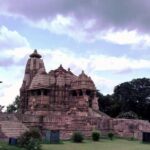
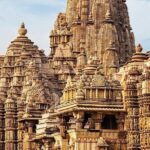
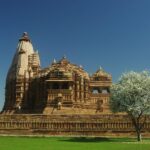
If you’ve got one must-see in Khajuraho, Kandariya Mahadeva is it. This tour treats it like a proper first act because it’s the largest and most magnificent temple in Khajuraho. So even if the carvings are what catch your eye first, you get a framework early on for why the building looks the way it does.
Here’s how to enjoy it: don’t only stare at the most ornate section. Look for patterns that repeat across levels, and then notice where the sculptural detail shifts in complexity. The guide’s explanations about Hindu themes help you connect the stonework to what the temple was meant to communicate, not just to show off craftsmanship.
A helpful detail is that you’re not just going to one temple and leaving. Kandariya Mahadeva becomes your “reference point” for the rest of the Western cluster. After this stop, the smaller shrines don’t feel like interruptions. They feel like variations on a theme.
Possible drawback to keep in mind: because it’s such a visually dense temple, you can burn time if you take ultra-slow photos. If you want a balanced visit, set a rough goal like “one careful look now, then move on.”
Devi Jagdambi and Lakshman Temple: big temple energy with different personalities
After the Kandariya Mahadeva level of scale, the route steps into other major players of the Western group. You’ll also see Devi Jagdambi Temple, which is smaller, and the striking Lakshman Temple—one of the three largest temples of Khajuraho and a key part of the Western cluster.
I like the way this pairing works. Lakshman Temple gives you that large-temple impact again, but Devi Jagdambi helps you experience the contrast. Smaller doesn’t mean less important; it often means the sculptural story is more concentrated, with less “competing architecture.”
Here’s a practical way to think about it: large temples often make you feel overwhelmed at first. Smaller temples help you slow down and focus on specific niches and details. If you’ve ever left a museum knowing you saw a lot but remembering little, this sort of sequencing is how you end up with better recall.
And yes, expect erotic sculptures to be part of the visual conversation. In Khajuraho, that’s not a side show. It’s integrated into the overall sculptural program, which is part of why the UNESCO complex is so famous.
Devi Mandap and Varaha Mandap: small shrines, easy-to-miss details
Between the bigger temples, the tour includes two smaller shrine stops that sit opposite or nearby other major sites: Devi Mandap and Varaha Mandap. Devi Mandap is located opposite the large Lakshman Temple, and Varaha Mandap is another smaller shrine in the same cluster of attention.
This is where a guide becomes more than a nice extra. Without context, you might walk past a smaller mandap and think it’s just a lesser version of the main temples. With context, it starts to read like a purposeful feature in the religious landscape.
Try this approach at these shrines:
- Take a quick first look to see the overall shape.
- Then spend a little longer on decorative elements and any carved figures.
- Let the guide’s explanations do the heavy lifting for what you’re seeing.
Because the tour is time-limited, the smaller mandaps are quick—but that’s also why they’re valuable. They force you to focus. And if you’re the type who loves architecture and everyday-life details, these smaller stops can deliver surprisingly memorable visuals.
Chousath Yogini Temple by Shivsagar Lake: 64 yoginis in granite
The tour ends at Chousath Yogini Temple, dedicated to 64 Yoginis. The temple is built in granite and sits in a courtyard on the banks of Shivsagar Lake. Even if you’re not a temple-architecture expert, this stop often feels different from the rest.
Why? Setting and structure. The courtyard location on the lake makes the experience feel less like you’re trapped in a stone maze and more like you’re moving through a guided sequence of spaces. Granite also changes the look and feel of the sculpture. It’s durable, heavy-feeling, and it makes fine details stand out in a way that can feel almost tactile.
If you’re interested in how medieval builders expressed religious ideas through design, this is a satisfying capstone. The guide’s commentary can help translate the concept of 64 yoginis from a number into an actual visual program you can track as you move.
Also, if you’re a photographer, this is one of the places where your camera can finally catch up. The courtyard and lake-adjacent environment can help you frame the temple without it becoming purely a close-up wall of carvings.
Erotic sculptures in Khajuraho: how to see them without getting stuck
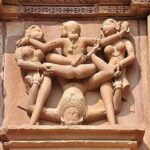
The Western temples are famous for erotic sculptures, and the tour includes UNESCO-listed sites known for this kind of carving. The experience is not about scandal; it’s about how the medieval builders depicted themes of human life, spirituality, and devotion.
Here’s my practical advice for handling it:
- Decide in advance whether you want a historical look or a purely visual look.
- If you’re worried about discomfort, remember you can treat it like art and symbolism rather than personal drama.
- Use the guide’s context. A quick explanation changes how you process what you see.
You’ll likely notice that the erotic elements are part of the broader sculptural system—alongside other figures, patterns, and architectural rhythms. That’s where the UNESCO “why” becomes clearer: the carvings are not random. They are meant to communicate.
Price and value: what $114 buys you (and what it doesn’t)
At $114 per person for roughly 4 hours, this tour is priced in a way that makes sense if you value two things: expert guidance and saved logistics time.
You’re getting:
- English-speaking guide
- Admission ticket included
- Private air-conditioned transport with hotel pickup and drop-off
- Bottle of mineral water & refreshments
- A cap of 8 travelers for a more controlled experience
What’s not included is food and other drinks unless specified. So plan on eating before or after, not during the tour window.
How to judge the value: if you were to DIY this route, you’d still need transport, admissions, and enough temple context to make the carvings meaningful. This package bundles those pieces. And because the route is focused on the Western cluster, you spend less time stuck in decision-making and more time learning what you’re looking at.
Who this Western Temples tour is best for
This is a great fit if you:
- Are visiting Khajuraho for the first time and want a manageable temple plan
- Like architecture, stone carvings, and visual storytelling
- Appreciate when a guide explains how Jain and Hindu themes show up in the artwork
- Prefer small-group pacing over big-bus crowds
It’s also a good choice if you’re time-limited. Four hours can sound short, but it’s long enough to hit the major Western highlights and still have a guide connect the dots.
If you’re hoping to see the entire Khajuraho monument complex in one go, this likely won’t cover everything. It’s built for depth in the Western cluster, not for checking every site across the map.
Should you book UNESCO’s Western Temples at Khajuraho walking tour?
I’d book it if your priority is a well-paced, guided highlight route that helps you understand what you’re seeing without turning your day into a transport scramble. The combination of private air-conditioned pickup, admission included, and a route that includes both big hits (Kandariya Mahadeva, Lakshman Temple) and important smaller shrines (Devi Mandap, Varaha Mandap) makes it a practical way to experience the UNESCO complex.
Skip it or think carefully if:
- You’re very sensitive to explicit erotic imagery in religious art and want to avoid that topic entirely
- You don’t like walking at a moderate pace for a few hours
- You want a self-guided, slow, no-schedule museum-style day
Overall, this tour is built for people who want the Western temples to make sense fast—and who enjoy learning how ancient designers used stone to tell stories.
FAQ
How long is the UNESCO Western Temples walking tour in Khajuraho?
It’s about 4 hours, approximately.
What time does the tour start?
The start time is 10:00 am.
Do I get hotel pickup and drop-off?
Yes. Pickup from your hotel in Khajuraho is offered, and the tour ends back at the meeting point.
Which temples are included in the Western cluster route?
The tour includes major and smaller sites such as Kandariya Mahadeva, Devi Jagdambi Temple, Lakshman Temple, Devi Mandap, Varaha Mandap, and Chousath Yogini Temple.
Is the admission ticket included in the price?
Yes. Admission Ticket is included.
Is the tour guided?
Yes. You’ll have an English speaking guide.
How large is the group?
The maximum group size is 8 travelers.
What’s included in the tour cost?
Included are the English speaking guide, bottle of mineral water & refreshments, and private air-conditioned transport.
Can I cancel and get a full refund?
Yes, free cancellation is offered. You can cancel up to 24 hours in advance for a full refund.