REVIEW · JAIPUR
Jaipur: Full Day Sightseeing Tour By Car & Local Tour Guide
Book on GetYourGuide →Operated by Jaipur Pinkcity Tours · Bookable on GetYourGuide
Jaipur in one day feels doable. This private, air-conditioned full-day tour strings together the city’s most famous sights in a smart order, with a local guide who explains what you’re seeing as you go.
I love the mix of stops: Amber Fort and the stepwell at Panna Meena ka Kund give you both royal power and practical engineering. I also like that the day ends with Jantar Mantar, where your guide connects Jaipur’s monuments to real astronomy, including the world’s largest stone sundial.
One thing to consider: it’s a packed 8 hours, and entry tickets aren’t included, so you’ll want to budget extra once you arrive at each site.
In This Review
- Key highlights worth knowing
- Jaipur’s one-day flow: AC comfort plus a guide who connects the dots
- Hawa Mahal windows and Panna Meena ka Kund: two kinds of “view”
- Amber Fort: Hindu-Mughal fusion, red sandstone, and 90 minutes that actually count
- Jal Mahal on Man Sagar Lake: a scenic pause that resets your eyes
- Lunch and shopping time: you get an actual break, not just more monuments
- City Palace and Jantar Mantar: royal power meets ancient astronomy
- Gaitor Ki Chhatriyan to Royal Gaitor Tombs: the calm ending with carved domes
- Price and ticket reality for about $8: strong value with one catch
- Should you book this Jaipur full-day sightseeing tour?
- FAQ
- How long is the Jaipur full-day sightseeing tour?
- Is this tour private?
- Are entry tickets included?
- What sights are included in the day?
- What languages are available for the live guide?
- Is the tour wheelchair accessible?
Key highlights worth knowing
- Hawa Mahal’s hundreds of windows are easier to appreciate when your guide explains who used them and why
- Panna Meena ka Kund shows Jaipur’s water wisdom right beside the big forts
- Amber Fort gets a focused 1.5 hours, with time for guided context (not just photos)
- Jal Mahal is a quick, scenic pause over Man Sagar Lake—perfect for a breather
- City Palace + Jantar Mantar cover two sides of Jaipur: royal life and scientific thinking
- Royal Gaitor Tombs close the day quietly, with carved domes and a chance to slow down
Jaipur’s one-day flow: AC comfort plus a guide who connects the dots
This tour is designed for people who want the “big Jaipur” in one day without playing logistics roulette. You get hotel pickup and drop-off, plus an air-conditioned sedan/SUV and parking handled for you. That matters, because Jaipur’s attractions sit in different zones and you don’t want to waste prime sightseeing hours negotiating transport.
The guide is the real multiplier. Instead of you reading plaques and guessing, you get an organized walk-through of each landmark’s purpose—royal, spiritual, architectural, or scientific. That’s why the day feels coherent: Amber Fort isn’t just a fort, Hawa Mahal isn’t just a pretty façade, and Jantar Mantar isn’t just a pile of stones.
It’s also a private group. In practice, that usually means less waiting around and more room to ask questions. People who get guides like Akram, Imran, Tahir, or Ashraf (names you’ll see repeatedly in the experience) tend to describe the same theme: they take time, keep things patient, and adjust when someone needs a slower pace—useful if you’re traveling with older family members or a child who moves on their own schedule.
You can also read our reviews of more guided tours in Jaipur


Hawa Mahal windows and Panna Meena ka Kund: two kinds of “view”
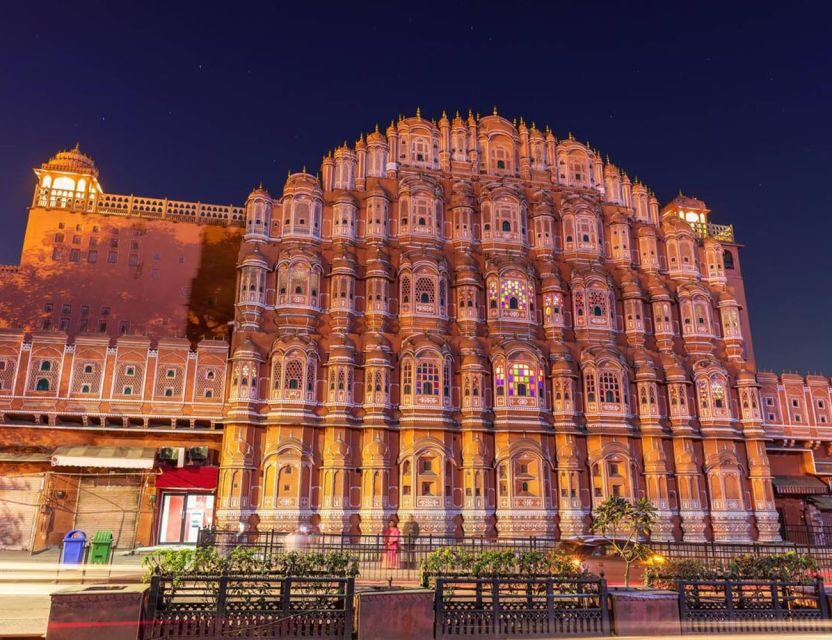
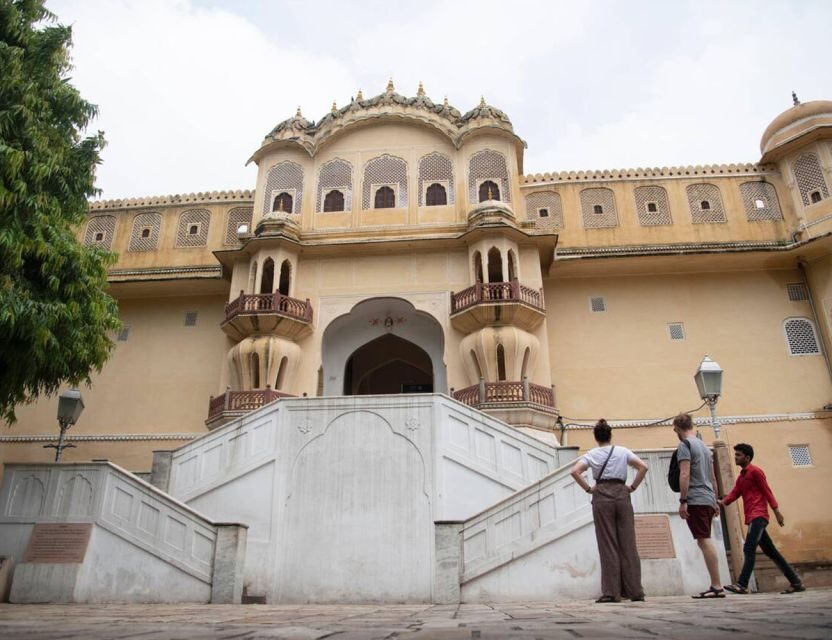
You start with Hawa Mahal (Palace of Winds), and it’s a great opener. The five-story façade is covered in hundreds of windows, built by Maharaja Sawai Pratap Singh. Your guide frames what you’re looking at: these windows were designed so royal women could observe life below while staying unseen—an architectural trick that’s hard to notice if you only treat it as a photo stop.
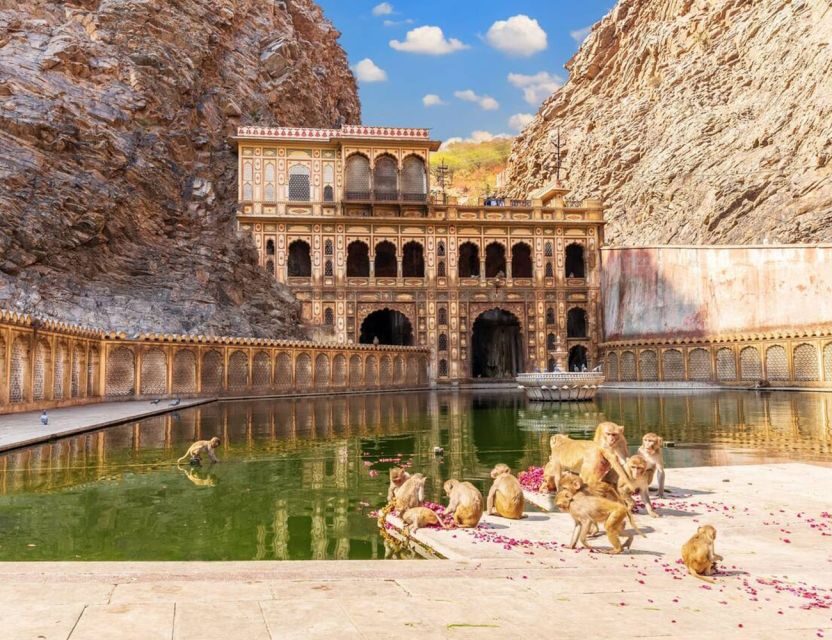
After that, you head to Panna Meena ka Kund, a 16th-century stepwell near Amber. This is one of the stops I’d call “quietly impressive.” It’s symmetrical, with tiered staircases and a clear story about water conservation—very practical, very old, and very Jaipur. The setting helps too: you get a backdrop of forts and sandstone shapes, so you’re not just looking at a structure, you’re seeing how the city solved everyday problems.
If you like architecture that has a job (not just a look), you’ll probably enjoy this pairing. Hawa Mahal is about controlled visibility. Panna Meena ka Kund is about controlled water. Two different needs, both solved with design you can actually see.
Amber Fort: Hindu-Mughal fusion, red sandstone, and 90 minutes that actually count
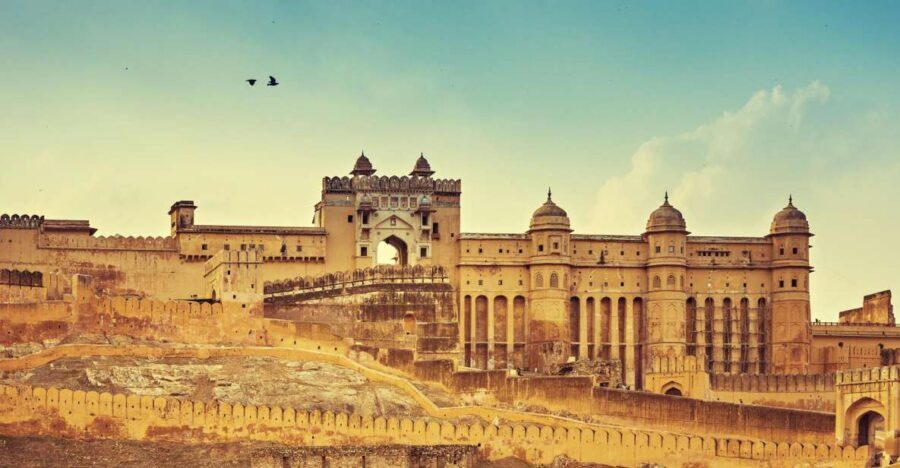
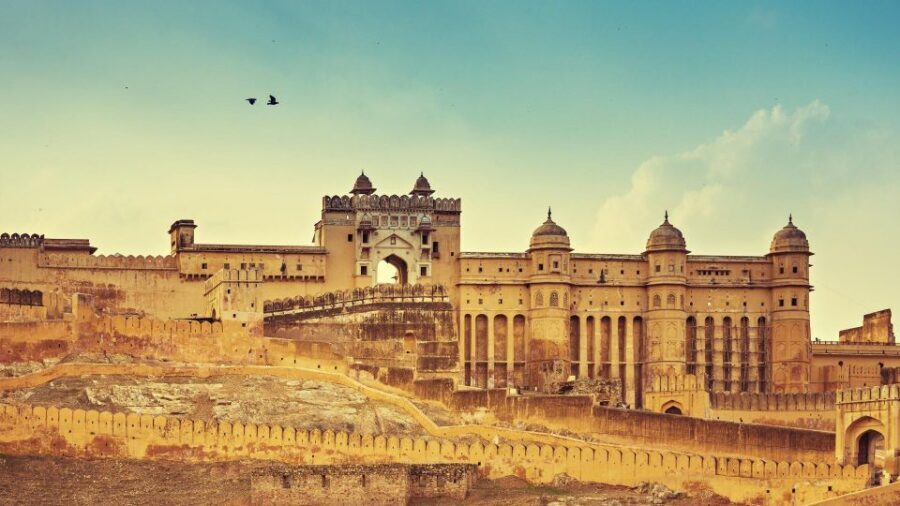
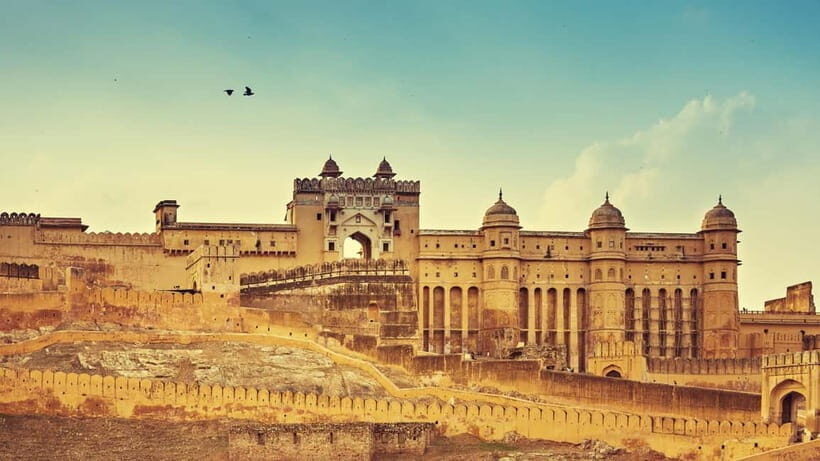
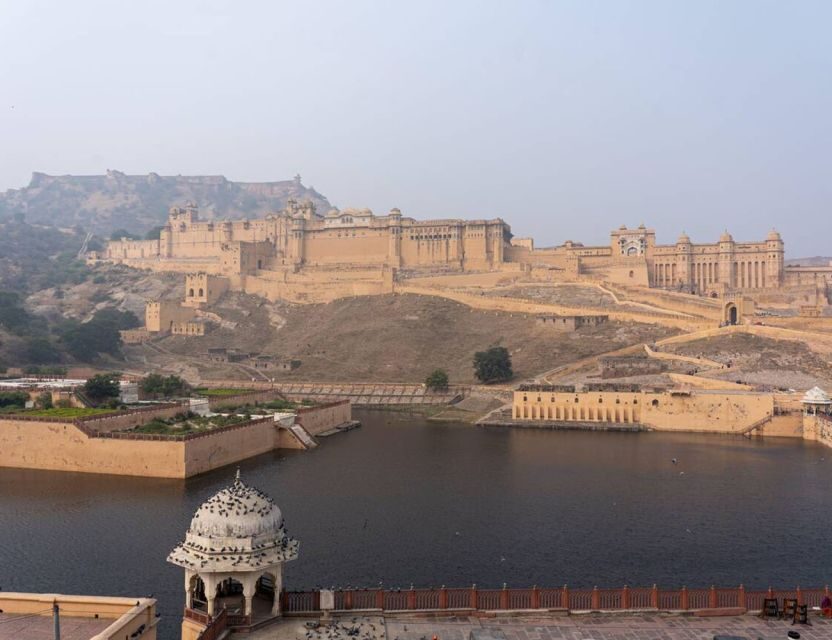
Next up is Amber Fort, perched on the Aravalli hills outside Jaipur. The fort is described as a fusion of Hindu and Mughal architectural styles, built from red sandstone and white marble. Your guided time here is 1.5 hours, which is a sweet spot: long enough to understand the key elements, but short enough that the day doesn’t collapse into one huge slog.
This is where the tour becomes more than sightseeing. Amber Fort connects to Rajasthan’s royal lifestyle, and your guide’s explanations help you see the “why” behind the walls and courtyards. That includes the way materials and style communicate status and power, not just aesthetics.
A practical tip: wear sports shoes. Even if the walking is manageable, forts and historical sites usually mean uneven stone and lots of stopping for photos. Also bring sunglasses and sunscreen—you’ll be in open areas through parts of the day.
Jal Mahal on Man Sagar Lake: a scenic pause that resets your eyes
Then comes Jal Mahal, the Water Palace on Man Sagar Lake. It’s an 18th-century structure made from striking red sandstone, and the defining feature is the illusion of a palace floating on water. Your stop is built as a view-and-breathe moment (about 30 minutes).
I like this part because it gives your brain a reset. After forts and window façades, water views feel like a palate cleanser. Also, the contrast is satisfying: Amber Fort is heavy and monumental, while Jal Mahal reads as delicate and reflective, even though it’s still very much Rajput design.
One reality check: this is positioned as a pause for a serene view, not a “spend hours exploring inside.” So treat it like what it is—an atmospheric break that keeps the day balanced.
Lunch and shopping time: you get an actual break, not just more monuments
Midday, you’ll have lunch for about an hour. Since meals aren’t included, plan to eat something that matches your energy level. The timing is helpful because it prevents the classic mistake of trying to power through the whole day on snacks.
Then there’s shopping time for about an hour. This is the segment that can feel either fun or stressful depending on your expectations. If you like textiles, jewelry, or souvenirs that aren’t the same five items everywhere, this is your window. If you dislike sales pressure, set your own boundaries early and move with purpose—your guide can usually help you shop more calmly since they’re there to interpret what you’re seeing.
The best use of this stop is simple: recharge your energy, refill your water, and decide how many photo stops you’ll actually want later. A day like this gives you a lot of “wow” moments; your job is pacing.
A few more Jaipur tours and experiences worth a look




City Palace and Jantar Mantar: royal power meets ancient astronomy
After the break, you hit City Palace, the heart of Jaipur’s royal heritage. This complex was constructed by Maharaja Jai Singh II and blends Rajasthani and Mughal architecture. Expect courtyards, museums, and the residence of the former royal family.
What I like here is that City Palace is both a home and a museum. Even without going deep into every room, your guide can connect the architecture to court life—who lived where, how the palace functioned, and why Jaipur’s rulers commissioned so much building in the first place.
Then you finish with Jantar Mantar, a UNESCO World Heritage astronomical observatory built by Maharaja Sawai Jai Singh II. This is where Jaipur’s intelligence shows up in stone. You’ll see the world’s largest stone sundial and a collection of unique instruments used to study celestial bodies.
If you’re the type who normally skips astronomy lectures, don’t. Your guide’s job is to translate the purpose into something you can understand quickly. You’re not expected to memorize names; you’re meant to see how geometry and timekeeping were built into the city.
If there’s one reason people love this tour format, it’s this sequence. You experience power (palaces, forts, carved stone) and then you experience measurement—how rulers tracked the sky.
Gaitor Ki Chhatriyan to Royal Gaitor Tombs: the calm ending with carved domes
The route includes a photo stop at Gaitor Ki Chhatriyan and then a guided visit to Royal Gaitor Tombs. These tombs are an 18th-century burial site of Jaipur’s royals, known for delicate carvings and domed pavilions.
This ending works because it’s quieter than the earlier crowd-leaning sights. After hours of sandstone and monuments, you get a slower, reflective atmosphere. It’s also a good place to look at craft details—carvings and dome shapes—without feeling rushed.
If your feet are tired (they will be), this segment gives you a chance to stand, breathe, and let the day settle. You’ll likely appreciate it more because you’ve already learned the royal context earlier.
Price and ticket reality for about $8: strong value with one catch
The headline price is $8 per person for an 8-hour private tour with hotel pickup/drop-off, transportation in an air-conditioned vehicle, an authorized guide, parking fees, fuel, and bottled water. That’s the value story: the cost covers the hardest parts of the day—getting you around and keeping the experience guided.
The one catch is entry tickets aren’t included. Since major stops like Amber Fort, City Palace, and Jantar Mantar typically require tickets, you’ll need to pay those separately on the ground. The good news is the tour includes skip-the-ticket-line, which helps you lose less time to queues, but you still should expect to cover admission fees.
So how do you judge whether the deal is real? For me, it comes down to three things:
- You’re getting an AC car for a full day, not a “hop around by whatever is available” situation
- You’re getting a professional guide who explains each site’s purpose
- You’re getting major landmarks in one route, which is what saves money compared to paying for separate tours
When these are in place, $8 starts to look like a bargain. When entry fees push your total higher, you’ll still likely feel you got your money’s worth because the day is tightly planned.
Should you book this Jaipur full-day sightseeing tour?
If you want an efficient, well-paced intro to Jaipur—Amber Fort, Hawa Mahal, Jal Mahal, City Palace, Jantar Mantar, and the Gaitor tombs—this tour format is a smart choice. The private car and the guided explanations are the big wins, and the itinerary is built to keep variety flowing: architecture, water engineering, royal life, and science.
I’d pass or think twice if you strongly prefer slow, unhurried museum time, because this is a packed day. Also note it isn’t listed as suitable for wheelchair users and it does mention limits like no large bags and no glass objects.
FAQ
How long is the Jaipur full-day sightseeing tour?
The duration is 8 hours, with a full day of visits and guided time at each stop.
Is this tour private?
Yes. It’s listed as a private group.
Are entry tickets included?
No. Entry tickets are not included, though the tour offers skip-the-ticket-line.
What sights are included in the day?
You visit Hawa Mahal, Panna Meena ka Kund, Amber Fort, Jal Mahal (view), City Palace, Jantar Mantar, and Royal Gaitor Tombs, plus a photo stop at Gaitor Ki Chhatriyan.
What languages are available for the live guide?
The tour offers live guidance in English, French, German, Hindi, Italian, Japanese, Portuguese, Russian, and Spanish.
Is the tour wheelchair accessible?
It’s not suitable for wheelchair users.