REVIEW · VARANASI
Private Half-Day Tour in Sarnath from Varanasi
Book on Viator →Operated by Keeper Landwey · Bookable on Viator
Sarnath history fits in four hours. I love the way the guide ties together Dhamek Stupa and Chaukhandi Stupa into one clear Buddhist story, and I love that the half-day plan also includes the Sarnath museum with stand-out artifacts. One consideration: you’ll hit multiple stops in a tight window, so you’ll want sensible shoes and a willingness to move at a steady pace.
This is a private tour for a single group, with pickup anywhere in Varanasi (even the airport) and drop-off back to your chosen spot. The $46 per person price looks fair because entrance fees, parking/tolls/fuel, and bottled water are included, not something you have to juggle mid-day. It’s a smart choice when you want Sarnath without turning the trip into an all-day marathon.
In This Review
- Key things to pay attention to on this Sarnath tour
- Why Sarnath still matters when you only have half a day
- Price and what you actually get for about $46
- Pickup, timing, and how the 4-hour flow feels in real life
- Dhamek Stupa: from pre-Buddhist tumuli to a chaitya
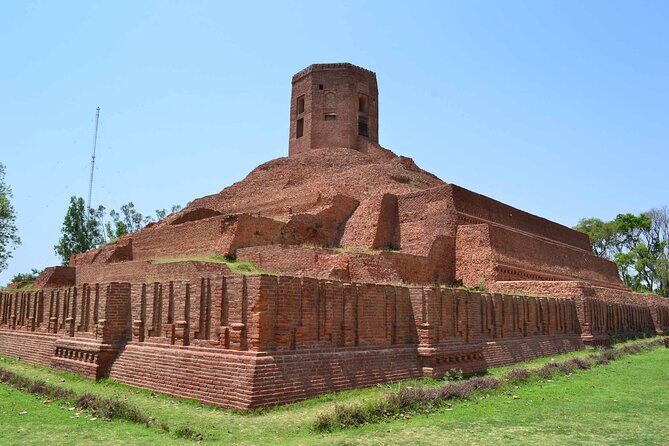
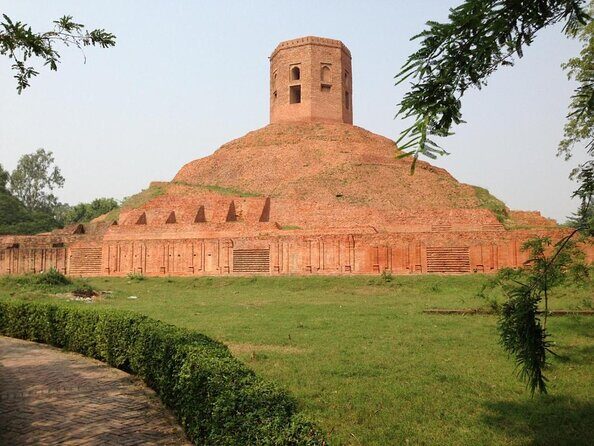
- Chaukhandi Stupa: a relic shrine shaped from burial mounds
- Tibetan Temple: modern monasteries in the Sarnath setting
- Sarnath Archaeological Museum: Gupta-period preaching and Ashoka’s Lion Capital
- How the private guide makes the whole experience click
- What to do with your time in Varanasi before and after
- Who this private Sarnath tour is best for
- Should you book this private half-day Sarnath tour?
- FAQ
- How long is the Private Half-Day Tour in Sarnath?
- What does the tour cost per person?
- Is pickup and drop-off included?
- Is this tour private?
- Which attractions are included?
- Are entrance fees included?
- Is bottled water provided?
- What photo ID do I need?
- Is free cancellation available?
Key things to pay attention to on this Sarnath tour
- Door-to-door pickup and drop-off in Varanasi makes the day feel easy from minute one
- Dhamek Stupa + Chaukhandi Stupa in one loop, with context that makes both sites click
- Tibetan Temple (20th century) shows how Tibetan, Chinese, and Japanese monastic communities shaped the area
- Sarnath Archaeological Museum includes major finds like Gupta-period Buddha preaching scenes and Ashoka’s Lion Capital
- Private guide + private vehicle means your group sets the pace within the half-day format
Why Sarnath still matters when you only have half a day
Sarnath is one of those places where the time period isn’t just history on a plaque. It’s the kind of setting where a few key buildings can help you understand why Buddhism spread, how early communities worshiped, and how later cultures kept returning to the same ground.
What I like about doing it as a half-day private tour is that you don’t lose the thread. A good guide helps you connect the dots between the stupas and the museum, so you’re not just seeing stones and sculpture. You’re also learning the “why” behind each stop—especially at Dhamek Stupa, which has roots that reach earlier than the classic Buddhist era, and at Chaukhandi Stupa, which is tied to relic-veneration traditions.
The other advantage is pacing. Sarnath is close enough to Varanasi that a 35-minute drive each way keeps the day efficient, and the tour stays around four hours total. That means you can still have time for dinner plans back in Varanasi without feeling like you’ve been on the go since breakfast.
You can also read our reviews of more private tours in Varanasi


Price and what you actually get for about $46
At $46 per person, this tour is positioned for value in a very practical way: it’s not just a driver and a route. Entrance fees for the included sites are part of the package, along with bottled water, parking, tolls, and fuel. Those add up fast if you’re doing it independently.
It’s also private, so you’re paying for something more than sightseeing—you’re paying for a guide who can explain what you’re looking at as you go. In the feedback I’ve seen from past visitors, the guide’s on-the-spot explanations were a major reason people rated the experience highly, especially around the historical background of the main places visited.
One more value point: the tour includes pickup and drop-off to anywhere in Varanasi. That matters because it reduces hassle. You’re not negotiating meeting points at busy landmarks or hoping you picked the right rickshaw route.
If you’re the type of person who can read signs and walk slowly, you might feel the schedule is a bit tight. If you like guided interpretation and a structured plan, this price-to-time ratio works well.
Pickup, timing, and how the 4-hour flow feels in real life
The day starts with pickup from your chosen location or the airport in Varanasi. Then you drive toward Sarnath, which takes about 35 minutes. That’s a relief if you’re trying to manage jet lag, a tight itinerary, or multiple bookings in the same day.
From there, the tour runs through five main stops, with each site getting roughly 40 minutes. Dhamek Stupa and Chaukhandi Stupa both include admission, and the Tibetan Temple and the Archaeological Museum also include admission. The driving legs bookend the experience, with about 35 minutes from Varanasi to Sarnath and about 35 minutes back again.
You’ll want to plan your expectations: four hours with five stops means you’ll be moving in a steady rhythm. You’ll get enough time to see the main features and absorb key context, but you won’t have the option to linger for an hour in one spot unless your group is running ahead.
Before you go, keep one practical item ready: bring valid photo ID (you can keep it in your mobile) for monument entry. This is one of those small details that can save you stress when you arrive.
Dhamek Stupa: from pre-Buddhist tumuli to a chaitya
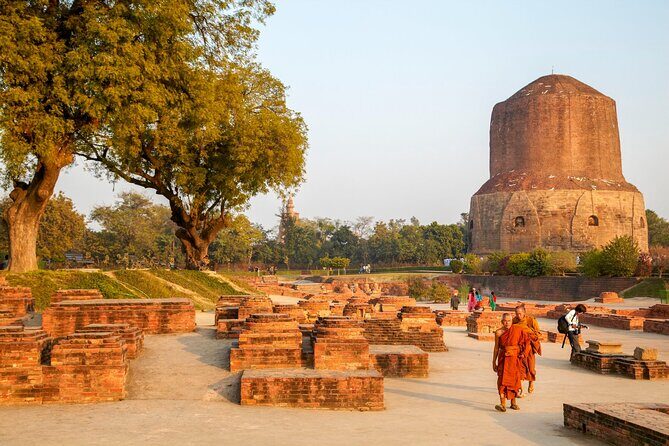
Dhamek Stupa is the kind of stop where a little context makes a big difference. The site’s story stretches back even before the fully developed Buddhist phase. Dhamek Stupa originated as pre-Buddhist tumuli—burial mounds—linked with ascetics.
Here’s the standout detail: ascetics were buried in a seated position, and that seated burial practice is called chaitya. When you hear that word in the right context, you start to look at the stupa with different eyes. It’s not only an architectural landmark; it’s a cultural marker for how people honored spiritual lives long before the familiar Buddhist monuments took full form.
What you’ll do with your time here is fairly straightforward: you’ll visit the stupa and take in the scale, then let the guide connect its features to the broader evolution of worship practices. The admission is included, and the time on-site is about 40 minutes, which is usually enough to see the main structure and follow the explanation without rushing through it.
A practical tip: Dhamek Stupa is one of the places where your “look around” instinct matters. Even when time is limited, try not to focus only straight ahead. The stupa’s role as a shrine is the theme—so rotating your viewpoint helps your brain understand the purpose of the space.
Chaukhandi Stupa: a relic shrine shaped from burial mounds
Next comes Chaukhandi Stupa, another Buddhist stupa with a layered origin. Like Dhamek, it evolved from burial mounds. That shared theme is important: it shows you that early Buddhist sacred spaces didn’t appear out of nowhere—they built on existing ways of marking reverence and honoring the dead.
The reason Chaukhandi is especially worth your attention is what it became. This stupa serves as a shrine for a relic of the Buddha. In other words, it isn’t just a monument to the idea of Buddhism—it’s tied to physical tradition, the concept that meaningful objects and remains could be protected and venerated.
Because your admission is included here too, you can spend more energy on understanding than on logistics. With about 40 minutes, you’ll likely have enough time to see the stupa itself and take in your guide’s explanation of how “burial mound → relic shrine” shaped the site’s identity over time.
A consideration: when you see two stupas back-to-back, they can start to blur in your mind. If that worries you, ask your guide a quick comparison question early on—something like how the two sites differ in purpose or what “relic” means in this context. You’ll remember the distinctions after that.
A few more Varanasi tours and experiences worth a look

Tibetan Temple: modern monasteries in the Sarnath setting
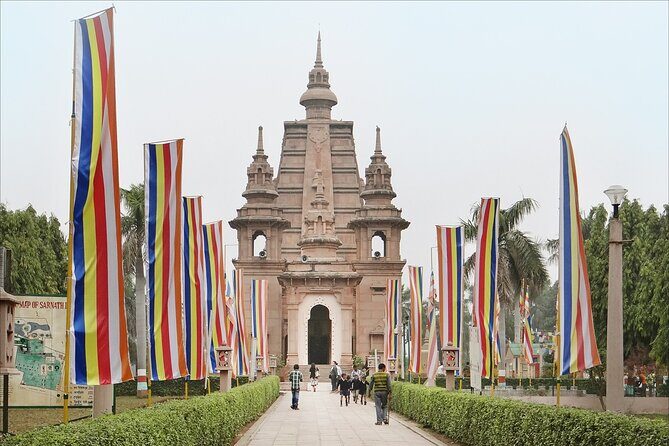
Not all of Sarnath is ancient stones. The Tibetan Temple stop adds a different angle: 20th-century Buddhist architecture built and maintained by Tibetan, Chinese, and Japanese monks.
This is a good moment in the itinerary because it shows continuity. You’re not only learning how things looked centuries ago—you’re seeing how later Buddhist communities practiced, built, and kept traditions alive in the same region.
The temple houses a statue of Shakyamuni Buddha (the Buddha figure), which makes the visit feel more devotional than purely archaeological. With about 40 minutes here, you can take in the atmosphere, appreciate the distinct style of the temple complex, and reset your brain before the museum.
If you’re the type who likes variety in a day—one stop that feels historical, one that feels spiritual, one that feels educational—this Tibetan Temple is a smart pivot point. It also gives your legs a chance to slow down compared to the more “structure-focused” stupa stops.
Sarnath Archaeological Museum: Gupta-period preaching and Ashoka’s Lion Capital
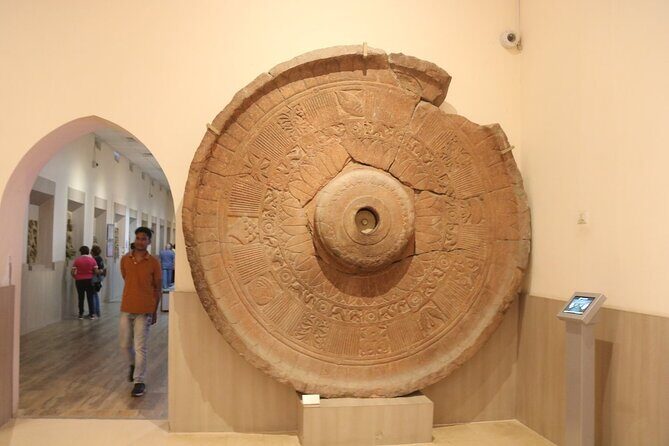
If you want the day’s biggest payoff for understanding, make this museum the anchor in your mind. The museum is where the story of Sarnath becomes tangible: artifacts, inscriptions, and sculpture help you connect text and worship to real objects.
You’ll have about 40 minutes here, and the collection includes notable items such as:
- Images of Buddha preaching from the Gupta period
- The Lion Capital of Ashoka
- Artifacts that include figures of birds and other sculptural pieces
- Artifacts and scriptures dated back to the 3rd century
Those examples matter because they show different layers of time. You’re not only seeing early Buddhist material; you’re also seeing how later periods interpreted, represented, and preserved key ideas.
If you’ve ever felt museum fatigue—too many rooms, too much to read—this stop can still work because the tour is guided. A good guide helps you focus on what’s meaningful, so you’re not wandering like a lost student.
Practical nudge: spend a few minutes early in the museum deciding what you most want to understand—Ashoka’s Lion Capital, the preaching scenes, or the older scripture references. Once you choose a focus, the rest of the exhibits start to feel more organized.
How the private guide makes the whole experience click
This tour stands or falls on explanation, not just sites. In the feedback from previous visitors, the guide’s ability to give detailed history of the main places visited is repeatedly mentioned. That makes sense: Dhamek Stupa and Chaukhandi Stupa can look similar at a glance, and the museum can feel overwhelming unless someone helps you prioritize.
With a private setup, you can also ask quick questions as you go. That’s one of the best parts of doing this with a guide instead of DIY: you can respond to your own curiosity in real time.
There’s also a “real-world” benefit worth mentioning. The tour operator has been responsive on WhatsApp when issues come up. So if you run into a timing mismatch, a pickup confusion, or you need a quick clarification, it’s helpful to know support is reachable in a channel that’s easy to use during travel days.
Think of your guide as your translator between what you see and what it means.
What to do with your time in Varanasi before and after
Because this tour is designed around a half-day, it fits nicely into a bigger Varanasi plan. You’ll spend roughly the morning or afternoon in Sarnath, then return to your chosen location in Varanasi with wonderful memories and a finished itinerary.
Before you go, I’d plan something low-key in Varanasi—especially if you’re arriving from somewhere else. After you return, you’ll likely feel ready for a meal and a slower pace.
One practical note: the tour provides bottled water, which helps you stay comfortable during the drive and between stops. Still, wear light layers and comfortable shoes. You’re on your feet at multiple sites for about 40 minutes each.
If you enjoy planning around themes, pair Sarnath with a Varanasi evening plan that focuses on reflection and atmosphere, not heavy logistics. This tour gives you plenty to think about.
Who this private Sarnath tour is best for
This experience fits best if you want:
- Guided interpretation rather than solo wandering
- A focused half-day plan that covers the major Sarnath stops
- Door-to-door convenience from anywhere in Varanasi
- Entrance fees handled for you
You might especially enjoy it if you’re curious about how early Buddhist sites developed from earlier burial traditions and how later periods and communities—like the Gupta era and modern Tibetan/Chinese/Japanese monastic builders—left their mark.
It’s less ideal if you hate time limits. Since the tour is set to about four hours and hits five stops, you’ll be happiest if you’re okay with “see the main things well” rather than “spend hours in one place.”
Should you book this private half-day Sarnath tour?
I’d book it if you want a smooth, guided path through Sarnath’s biggest spiritual and museum highlights—without the stress of figuring out transport, admissions, and timing.
It’s also a good pick if you value explanations that connect the dots. Dhamek Stupa and Chaukhandi Stupa have deep origins and different roles, and the museum is where the artifacts help you lock in what you learned outside.
Skip it or consider extending your time elsewhere if you’re the type who needs long pauses to absorb a site at your own pace. In a half-day format, you’ll get the core experience, but not an ultra-slow, hour-by-hour version.
FAQ
How long is the Private Half-Day Tour in Sarnath?
It runs for about 4 hours (approx.), including travel time from Varanasi.
What does the tour cost per person?
The price is $46.00 per person.
Is pickup and drop-off included?
Yes. Pickup is offered from any location or airport in Varanasi, and the driver drops you back to your preferred location.
Is this tour private?
Yes. It’s private, and only your group participates.
Which attractions are included?
You visit Dhamek Stupa, Chaukhandi Stupa, the Tibetan Temple, and the Archaeological Museum in Sarnath.
Are entrance fees included?
Yes. Entrance fees of all attractions are included.
Is bottled water provided?
Yes, bottled water is included.
What photo ID do I need?
Carry all travelers’ valid photo ID (you can keep it in your mobile) for monument entry.
Is free cancellation available?
Yes. You can cancel up to 24 hours in advance for a full refund.