REVIEW · MUMBAI
Private Guided Open Jeep Tour in Fort & Colaba
Book on Viator →Operated by M/s Khaki Tours · Bookable on Viator
Some cities make you walk; Mumbai rewards the ride. This private open Jeep tour threads together Fort and Colaba’s best buildings and street scenes, with heritage stories timed to where you are. I like the photo-ready architecture stops and the fact it’s a private setup, so the pace and questions match your group. One thing to consider: it’s an open vehicle, so wind, sun, and rain can matter.
You’ll cover a tight circuit in about 2 hours 30 minutes, from Town Hall area viewpoints to the market and harbor-adjacent streets, finishing back at the meeting point. I also like that you’re not just sightseeing landmarks—you’re being guided through Mumbai’s shift from its earlier islands-and-fishing-village roots to what it became as India’s commercial capital. The main drawback is the weather factor: the operator can reschedule if conditions aren’t good for an outdoor ride.
In This Review
- Key highlights to know before you go
- Why an Open Jeep Changes Fort & Colaba Sightseeing
- Khaki Tours and the “Heritage Evangelism” Mission
- Your Private Route: From Town Hall to the Fort Edge
- Town Hall and Horniman Circle: Civic Architecture With Perspective
- Kala Ghoda Art District: Architecture Meets Street Texture
- Gateway of India and Oval Maidan: The City’s Big View Moment
- CST Precinct and Crawford Market: Where Mumbai Moves at Speed
- Dhobi Talao and DN Road: Everyday Heritage and Street Work
- Ballard Estate and Hutatma Chowk: From Old Forms to New Pressure
- Price and What $59.26 Buys You in Real Terms
- Best Time Windows and Weather Reality for an Open Jeep
- Who This Tour Fits Best (and Who Might Want a Different Style)
- Should You Book This Open Jeep Tour in Fort & Colaba?
- FAQ
- How long is the Private Guided Open Jeep Tour in Fort & Colaba?
- Where does the tour start and end?
- Is this tour private?
- How many people fit in one vehicle?
- Is hotel pickup included?
- What’s included in the ticket price?
- What should I know about weather?
- Are smoking or drinking allowed during the tour?
Key highlights to know before you go
- Open Jeep urban safari feel: see streets and facades with the wind-in-your-hair vantage that’s hard to get on foot.
- A heritage-focused host: stories connect buildings, street names, and the city’s evolution, not just facts on a sign.
- Photo planning along the route: each stop is chosen for architecture angles and street-level scenes.
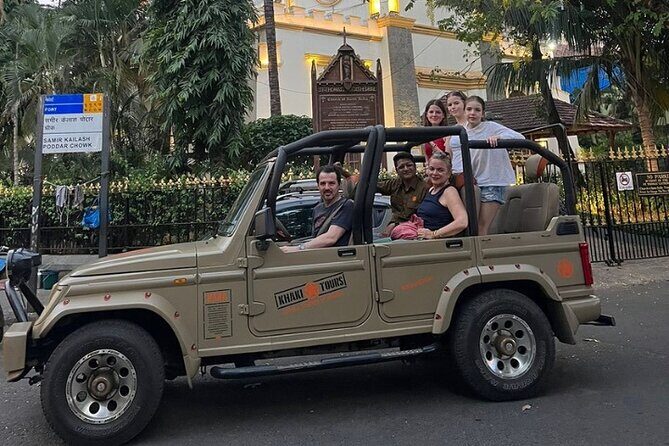
- Private group flexibility: one vehicle fits up to 5 guests plus host and driver, so you’re not squeezed into a crowd.
- A compact 2.5-hour loop: you get a lot of variety without losing half a day to transit.
Why an Open Jeep Changes Fort & Colaba Sightseeing

Fort and Colaba are perfect for a Jeep because they mix styles fast. You’ll see heavy stone institutional buildings, colonial-era edges, and busy street life in one ride window. In an open vehicle, you get a street-level view that feels different from a bus window. The best part is how natural photo angles happen when you can move your head and frame the scene like you’re exploring on your own—just with a guide steering the timing.
This tour is built as an urban safari rather than a checklist. That matters because the route is designed to help you notice patterns: how waterfront trade turned into administrative power, how markets shaped everyday life, and how the city expanded outward from its earlier geography. If you’re the type who likes understanding why a place looks the way it does, this ride format supports that.
Also, it’s private. That means you can pause for better views, ask follow-up questions, and keep the energy in sync with your group. One vehicle holds up to 5 guests plus the host and driver, so you’re not competing for the same curbside moment.
You can also read our reviews of more guided tours in Mumbai


Khaki Tours and the “Heritage Evangelism” Mission

This experience is run by M/s Khaki Tours, an association of heritage enthusiasts who organize walks, jeep rides, cruises, day trips, children’s workshops, photo walks, and food walks. Their stated mission is Heritage Evangelism—making local heritage feel fun, reachable, and alive instead of stuck behind a lecture.
That shows up in the way the ride is described: hosts aim to “transport you” from modern Mumbai back toward the earlier seven islands of Bombay using stories and movement. You’re not just passing monuments; you’re being coached on how to read the city as a layered place where old and new keep stacking.
The guide also brings people into the story. Mumbai’s evolution here isn’t framed as a single timeline event. It’s told as a mix of roots, trade, and cultures that became visible on streets and in lanes. That tone is especially useful in Fort and Colaba, where the architecture can feel grand while the street life around it stays intensely human.
If you care about context, this kind of mission-driven hosting tends to make the ride stick. You remember the city more like a place you understand than a place you passed through.
Your Private Route: From Town Hall to the Fort Edge
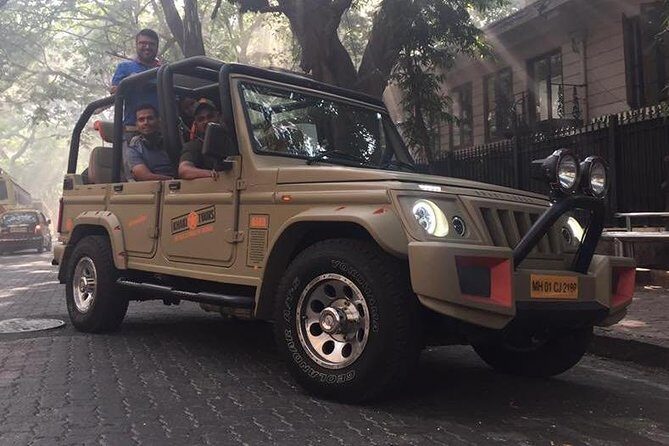
The tour starts at the Asiatic Society meeting point (Town Hall area, Shahid Bhagat Singh Rd in Fort) and ends back there. Your loop includes Town Hall & Horniman Circle, then continues through Kala Ghoda, Gateway of India, and onward to several major heritage-and-market zones before finishing at Hutatma Chowk.
Here’s what makes this opening section valuable. Town Hall and Horniman Circle are all about the “power-and-public space” feeling of old Mumbai. Even if you’ve seen photos online, seeing the facades and the street layout in person helps you grasp how planning and institutions shaped the area’s identity. This is where the ride starts giving you visual anchors—big architectural frames and recognizable civic spaces that you’ll later compare with the more street-heavy parts of the route.
Practical note: because your meeting point is central and the experience has near public transportation access, you can keep your own morning plan simple. But still arrive about 10 minutes early so you’re ready when your Jeep is called.
Town Hall and Horniman Circle: Civic Architecture With Perspective
The Town Hall and Horniman Circle stop is your “orientation” moment. You start here because the architecture is strong enough to explain how Fort became a formal center. These buildings tend to feel imposing, but the guide’s job is to make that scale legible: why these designs were chosen, what they signaled, and how that links to the city’s evolving role.
This is also a good segment for your camera because the streets offer clean, structured framing. In many parts of Mumbai, crowds and angles compete. Here, you often get more geometry—corners, arcs, and symmetrical views—so your photos look like you planned them, even if you didn’t.
If you’re traveling with someone who gets bored by “history talk,” this is still the right opening because the setting makes it feel like architecture safari time rather than a classroom. You’re moving, listening, and looking at the same time.
Kala Ghoda Art District: Architecture Meets Street Texture
Next you’re in the Kala Ghoda Art District. The value of this stop isn’t just that it’s artsy. It’s that it’s a transition zone. The streets and building styles help you feel the shift from civic grandeur into a more mixed neighborhood vibe—where street-level details start to matter as much as the big structures.
Kala Ghoda is also useful because it’s a photo stop with variety. You can capture architectural edges, facades, and street corners without needing to sprint between locations. The open Jeep keeps you from losing the street texture while you’re still getting wide views.
This is where I’d pay attention to the small signage, building faces, and street patterns your host points out—because later, when you reach markets and daily-life corners, those cues help you understand what you’re seeing. In other words, Kala Ghoda gives you the reading glasses for the rest of the ride.
You can also read our reviews of more private tours in Mumbai

Gateway of India and Oval Maidan: The City’s Big View Moment
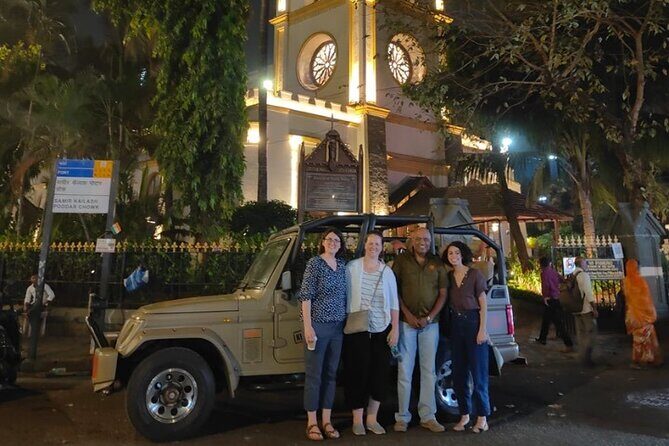
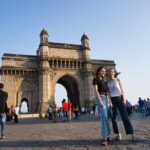
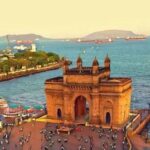
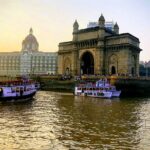
Then it’s Gateway of India and Oval Maidan. This is the part most people recognize, and that recognition is helpful because it sets your “scale meter.” The guide can connect what you see with how Mumbai grew from earlier geographic roots toward a much larger identity.
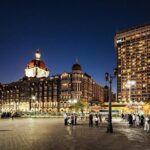
At Gateway of India, the experience leans into that classic waterfront drama. Even if you’re not a dedicated “harbor person,” the architecture and its surrounding open space make the area feel like a stage set. Oval Maidan adds breathing room and helps you understand how open public spaces interact with surrounding landmark buildings.
This segment tends to work especially well for first-time visitors or people who want an efficient overview. You’re getting the famous names while still learning what they mean in the broader city story.
And yes, this is a strong photo stretch. The sky, the open space, and the landmark geometry can make images look crisp even when the city around you is active.
CST Precinct and Crawford Market: Where Mumbai Moves at Speed
The route keeps a brisk tempo, and that’s a feature. You’ll head into the CST precinct and then to Crawford Market. This is a shift from large “view” spaces into a more daily-life energy.
CST precinct areas (around central rail-linked heritage zones) help you understand how Mumbai’s transport and commercial patterns feed into street life. Crawford Market adds a different kind of heritage feeling: not monuments as static objects, but marketplaces as living systems. You get to see how architecture and commerce share the same space and how those rhythms shape what people notice and buy and carry through the day.
This section is also a reminder that Mumbai’s story isn’t only told in grand buildings. Markets and movement are part of the city’s identity. If your idea of culture is only museum culture, this part can widen it fast.
Photo-wise, markets and precinct streets can be more chaotic for framing. The open Jeep helps because you can catch wider scenes without having to squeeze through dense foot traffic. Still, come with the mindset that some photos will be street snapshots, not postcard perfection.
Dhobi Talao and DN Road: Everyday Heritage and Street Work
After the markets, you’ll ride past Dhobi Talao and then along DN Road. These areas tend to feel like the city’s working layer—where history is present in how people use space and how routine continues under changing circumstances.
Dhobi Talao is a name that often sounds unfamiliar until you see it in context. The real value here is how your host connects the visible street life with Mumbai’s longer patterns. The stories are what make the ride feel purposeful, because the streets themselves carry the evidence.
DN Road continues that theme. It’s the kind of corridor where architecture and commerce overlap, and the vibe tends to be practical and constant. This part is great if you want your Mumbai photos to include more than monuments—if you want a sense of how the city feels when it’s doing what it does every day.
One caution: because you’re riding and listening, you’ll want to keep one hand free for your camera and be ready for brief stop-and-go moments. It’s not a slow sightseeing stroll; it’s an open Jeep city sweep.
Ballard Estate and Hutatma Chowk: From Old Forms to New Pressure
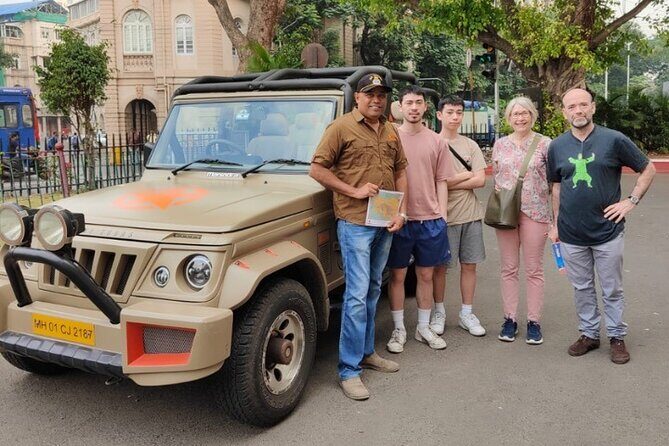
The final set of stops includes Ballard Estate and Hutatma Chowk. This is where you start seeing the city’s layers as contrasts. Ballard Estate helps you notice how Mumbai’s commercial and planning evolution shows up in built form. Then Hutatma Chowk brings you back to a major public-space node where the city feels like it’s always in motion.
I like this ending because it doesn’t leave you in a single mood. The ride started with civic grandeur, moved into art-district texture, hit waterfront landmark drama, and then shifted into market-and-working-street reality. Ending at Hutatma Chowk gives you a sense of return to a central heartbeat.
It’s also a helpful wrap-up for questions. If you’ve been thinking about how the city changed, this is where your host can tie together the route’s “before and after” logic: how Mumbai’s earlier geography and roots connected to the commercial capital identity you see today.
The tour ends back at the meeting point, so you’re not stuck figuring out a complicated new location at the end.
Price and What $59.26 Buys You in Real Terms
At $59.26 per person for a 2 hours 30 minutes private open Jeep tour, the question isn’t just whether it’s affordable. It’s what you’re getting that you can’t easily replicate on your own.
You’re paying for three big things:
- A customized vehicle and a host who guides your route and timing.
- All taxes, fees, and handling charges are included, which removes guesswork.
- Bottled water is included, and you’re on a route that’s built to cover multiple landmark types quickly.
The tour also offers group discounts, and the vehicle capacity is up to 5 guests plus the host and driver. That private setup can be especially good value if you’re traveling as a small group that wants control over pacing.
Could you do parts of this route by taxi or public transit? Sure. But the ride’s edge is that it compresses heritage context into a single 2.5-hour loop while you keep a consistent vantage point from the Jeep.
If you want a “start-to-finish guided Mumbai” experience without hiring separate guides for different neighborhoods, this pricing structure makes more sense.
Best Time Windows and Weather Reality for an Open Jeep
The tour runs at numerous morning and afternoon times, which is great because Mumbai’s light changes fast and your photos will benefit from choosing a slot that fits your schedule.
Still, the experience depends on good weather. If conditions are bad, the organizer can reschedule. And since the Jeep is open, you should plan for wind and sun during dry spells. If it’s humid or rainy, your comfort depends on the day’s conditions more than on the itinerary.
My practical advice: pick a time that matches your energy. If you’re a morning person who likes crisp visibility, go earlier. If you prefer softer daylight for photos and a calmer vibe, an afternoon departure may suit you better. You can’t outsmart the forecast, but you can choose the slot that gives you the best odds.
Who This Tour Fits Best (and Who Might Want a Different Style)
This is a strong choice if you:
- Want a private experience with a host and driver rather than a crowd.
- Care about architecture and city evolution, not only landmark names.
- Prefer seeing multiple neighborhoods in a short window without constant walking.
- Like photos and want angles you can get from an open Jeep.
It may be less ideal if you:
- Want a slow, stop-forever walking tour.
- Are extremely sensitive to weather, since it’s an open ride.
- Need hotel pickup and drop-off, because hotel pickup isn’t listed as included and the tour meets at Asiatic Society.
One more note: smoking and drinking are strictly prohibited during the experience, so plan accordingly if your group includes people who like to bring alcohol for “the vibes.”
Should You Book This Open Jeep Tour in Fort & Colaba?
I’d book this if you want a fast, guided architecture-and-heritage circuit in Mumbai’s core neighborhoods without losing time. The private setup, the open Jeep viewpoint, and the way the host ties together civic sites, art areas, waterfront landmarks, markets, and working-street districts is what makes it work.
I’d think twice if you’re traveling during rough weather windows or you hate being outside. Also, if you’re expecting your hotel to pick you up, confirm your exact arrangement ahead of time because the meeting point is clearly set at Asiatic Society and the end is back there.
If your group is small, this tour can feel like a tailored city safari rather than a mass sightseeing run. And if you get Sagar, an architecture and history expert named in the experience, you’ll likely love how the buildings are explained—turning a ride through Fort into something you can actually “read.”
Overall: for value, photos, and practical pacing, this is an easy yes for most people planning a first or second visit to Mumbai.
FAQ
How long is the Private Guided Open Jeep Tour in Fort & Colaba?
It runs for about 2 hours 30 minutes.
Where does the tour start and end?
It starts at the Asiatic Society meeting point at Town Hall (Shahid Bhagat Singh Rd, Fort, Mumbai) and ends back at the same meeting point.
Is this tour private?
Yes. It’s a private tour, so only your group participates.
How many people fit in one vehicle?
One vehicle can accommodate up to 5 guests in addition to the host and the driver.
Is hotel pickup included?
Hotel pickup and drop-off is not listed as included. The tour meets at Asiatic Society and ends back at the meeting point.
What’s included in the ticket price?
Included items are all taxes, fees and handling charges, a specially customised vehicle, a tour host, and bottled water.
What should I know about weather?
The experience requires good weather. If it’s canceled due to poor weather, the organizer may reschedule or offer a full refund.
Are smoking or drinking allowed during the tour?
No. Smoking and drinking are strictly prohibited.