REVIEW · NEW DELHI
5-Days Private Luxury Golden Triangle Tour Agra Jaipur New Delhi
Book on Viator →Operated by Golden Triangle Tours India · Bookable on Viator
Golden Triangle in five days is a lot easier than it sounds. You get a private vehicle with a driver and local guides, so you spend less time figuring out logistics and more time seeing sights that matter.
Another thing I like: it’s built around smart pacing and guided stops, from Mughal-era landmarks in Delhi to major UNESCO sites in Agra and Jaipur—without feeling like you’re herding cats.
What really sells this trip is the way it treats the Taj Mahal. You’ll do a sunset-area Taj Mahal viewing and also a sunrise Taj Mahal visit, giving you two totally different moods of the same marble icon. And on top of that, you get a guided Old Delhi experience with an Old Delhi Rickshaw Ride, which is where the day-to-day energy of the city actually hits.
One consideration: the sightseeing entrance fees aren’t included in the base price, and the tour lists a monument entrance ticket of $90 per person (plus meals and tips). It’s still good value, but you should budget for it and expect a tight schedule with lots of driving.
In This Review
- Key points before you book
- Why this private Golden Triangle feels easier than DIY
- Day 1 Delhi: Mughal tombs, Qutub Minar, and Old Delhi by rickshaw
- Humayun’s Tomb (about 1 hour)
- Qutub Minar (about 30 minutes)
- Red Fort (about 1 hour)
- Lotus Temple (about 30 minutes, free admission)
- Jama Masjid (about 30 minutes, free)
- India Gate + Agrasen Ki Baoli (both quick, free)
- Old Delhi Rickshaw Ride (about 1 hour, free)
- Day 2 Agra: Fort, gardens, Baby Taj, then sunset Taj Mahal
- Drive to Agra
- Agra Fort (about 1 hour, entrance not included)
- Mehtab Bagh (about 30 minutes, entrance not included)
- Itmad-ud-Daula (about 1 hour, entrance not included)
- Taj Mahal Sunset View Point (about 2 hours)
- Day 3 sunrise Taj and the route toward Jaipur
- Taj Mahal sunrise (about 2 hours)
- Fatehpur Sikri (about 1 hour, free)
- Chand Baori stepwell (about 30 minutes, entrance not included)
- Drive to Jaipur and hotel check-in (about 5 hours)
- Day 4 Jaipur palaces: Amber, City Palace, Jantar Mantar, and Hawa Mahal
- Panna Meena ka Kund (about 15 minutes, free)
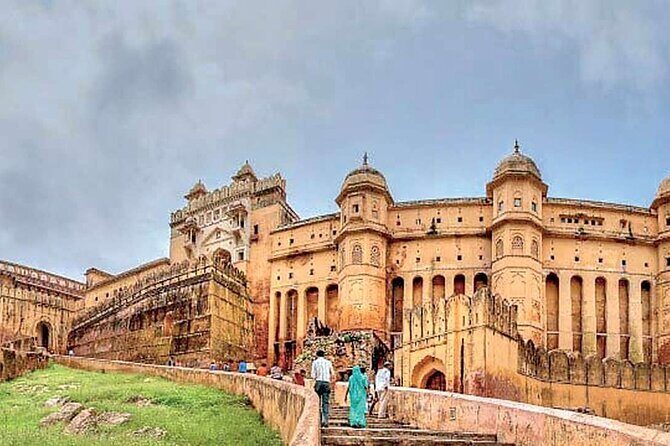
- Amber Palace (about 2 hours, entrance not included)
- Jal Mahal (about 15 minutes, entrance not included)
- City Palace (about 1 hour, entrance not included)
- Jantar Mantar (about 1 hour, entrance not included)
- Hawa Mahal (about 30 minutes, entrance not included)
- Albert Hall Museum (about 15 minutes, entrance not included)
- Day 5 Jaipur temples and the drive back to Delhi
- Birla Mandir Temple (about 30 minutes, free)
- Monkey Temple / Galtaji (about 30 minutes, free)
- Drive back to Delhi (about 5 hours)
- Price and entrance fees: what $205.72 really buys
- Hotels, room sharing, and what “private” means here
- Who should book this Golden Triangle private tour
- Should you book this 5-day private Golden Triangle tour?
- FAQ
- What places are included in the 5-day Golden Triangle route?
- Is pickup and drop-off included?
- Are entrance tickets included in the price?
- Does the tour include accommodation?
- What about meals during the trip?
- Is this a private tour or will I be mixed with other groups?
- What is the cancellation policy?
Key points before you book
- Private car + English-speaking local guides: less stress, fewer missed turns, and better explanations at each stop.
- Sunrise and sunset Taj Mahal: two lighting styles, two atmospheres, and a better shot at avoiding the most crowded moments.
- Entrance fees handled by your guide: you’re guided on buying tickets so you avoid long ticket lines.
- Old Delhi by rickshaw: a fun, practical way to experience Chandni Chowk’s lanes without spending hours negotiating.
- 4 nights in 4- or 5-star hotels (optional upgrade wording): your stay is included if you choose the hotel option.
- Twins-sharing rooms by default: useful to know up front if you’re traveling as a group and need specific room counts.
Why this private Golden Triangle feels easier than DIY

The Golden Triangle loop—Delhi, Agra, Jaipur—is one of the most popular circuits in India. That popularity comes with crowds, traffic, and a lot of decision-making if you’re doing it yourself. Here, the big win is simple: you have a private car with a driver for the full stretch and local guides for the sightseeing days.
In practice, that means you can follow the route without constantly checking maps, haggling for transport, or timing everything around ticket lines. Your guides also help you understand what you’re seeing at Humayun’s Tomb, Qutub Minar, Agra Fort, Amber Palace, and the rest—rather than just snapping photos and moving on.
There’s also a comfort angle. This tour is described as private and includes personal care and attention, which usually translates to fewer awkward “wait here” moments. You also get complimentary mineral water per day, which sounds small until you’re doing long days in Delhi and Agra heat.
You can also read our reviews of more private tours in New Delhi


Day 1 Delhi: Mughal tombs, Qutub Minar, and Old Delhi by rickshaw
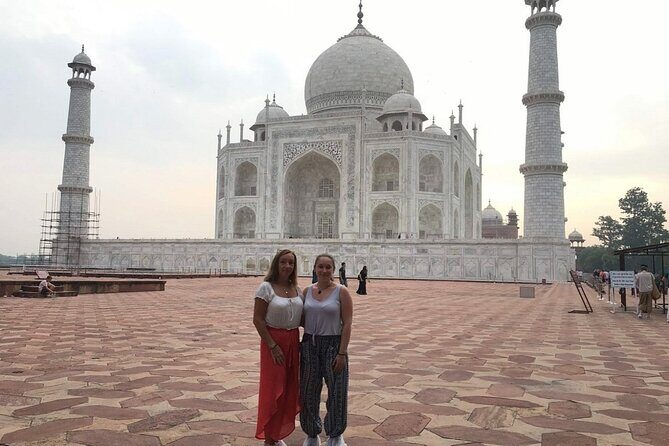
Day one is a classic Delhi mix: Mughal power, Sultanate geometry, then the city’s religious and street-market pulse.
Humayun’s Tomb (about 1 hour)
Humayun’s Tomb is a great way to start because it sets the Mughal tone for the whole trip. It’s tied to Mughal Emperor Humayun and was commissioned by his wife, Empress Bega Begum (mid–late 1500s era). You’ll get time to walk through the complex and get your eye in for how these monumental gardens are laid out.
Watch for: tickets aren’t included for this stop, so plan for an entrance fee day.
Qutub Minar (about 30 minutes)
Qutub Minar is famous for a reason—the tower is part of the Qutub complex, and it’s listed as a UNESCO World Heritage Site. Even if you’re not a deep architectural person, the scale of it hits fast.
Tradeoff: you’ll have a short window here. It’s enough for the essentials, but if you love slow museum-style pacing, you may want a longer visit another day.
Red Fort (about 1 hour)
The Red Fort is tied to Mughal emperors for nearly 200 years, and it’s also home to museums inside. It’s a big stop, but the time window is reasonable if your plan is to keep moving through Delhi.
A few more New Delhi tours and experiences worth a look




Lotus Temple (about 30 minutes, free admission)
The Lotus Temple is a Bahá’í House of Worship and is free, so it’s a nice “reset” in the day. The shape alone makes it memorable, and the setting gives you a breather from the more fortress-and-tomb style sightseeing.
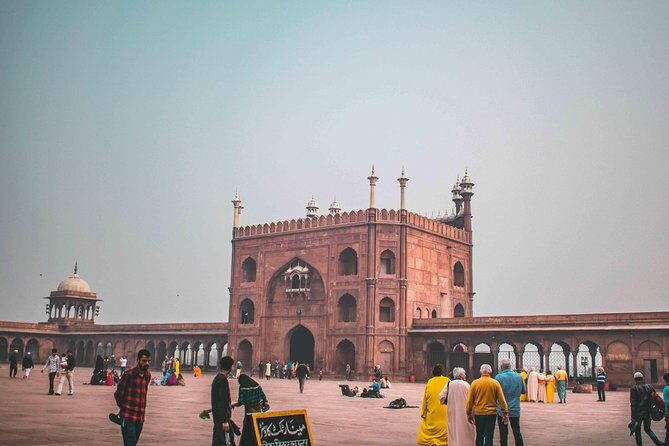
Jama Masjid (about 30 minutes, free)
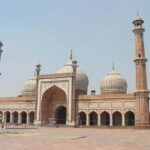
Jama Masjid is one of the largest mosques in Delhi. Even with a short visit, you’ll feel how central it is to the city. Because it’s free and scheduled as a short stop, it’s also efficient.
India Gate + Agrasen Ki Baoli (both quick, free)
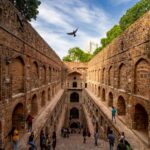
India Gate is a war memorial and a common picnic spot—so it’s lively in a very normal, everyday way. Then Agrasen Ki Baoli gives you something quieter: step wells. Step wells are one of those things that can look like “just another ancient structure” until you see one up close and realize how clever the engineering and water use is.
Old Delhi Rickshaw Ride (about 1 hour, free)
This is one of the most fun segments because it puts you directly into Old Delhi’s market lanes around Chandni Chowk. The rickshaw ride helps you cover narrow streets without doing the physical and timing stress of navigating them on foot.
Practical note: this is a good time to focus on photos and sensory details—spices, jewelry, textiles—because the whole point is that you experience the lanes, not just look at a monument.
Day 2 Agra: Fort, gardens, Baby Taj, then sunset Taj Mahal

Agra is the Golden Triangle’s main event, but the day is more than the Taj Mahal. You’re seeing how Agra’s Mughal landscape works before the big finale.
Drive to Agra
After breakfast, you check out and head to Agra via an expressway route. In a tour like this, that’s a win: long-distance driving is always better when you aren’t managing stops and routing yourself.
Agra Fort (about 1 hour, entrance not included)
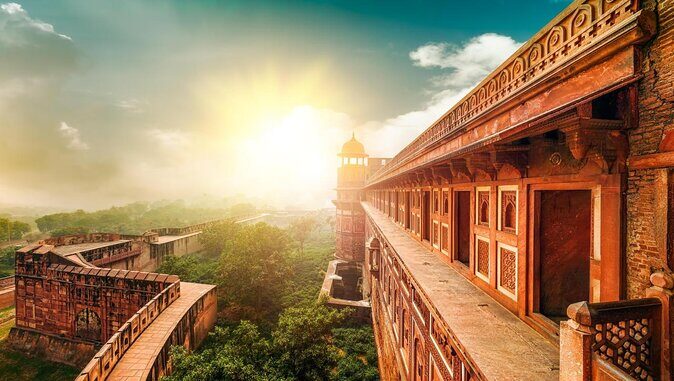
Agra Fort is described as a massive fort built during Akbar’s era, using red sandstone. It includes palaces and key sections tied to Mughal administration. It’s the kind of site where the walls alone teach you that this wasn’t a “weekend palace.” This place is power and control made visible.
Mehtab Bagh (about 30 minutes, entrance not included)
Mehtab Bagh is a garden across the river, associated with Mughal-era planning and restored to its former glory over time. It’s especially useful on a day like this because it adds contrast: you get greenery and river views before the white marble showpiece.
Itmad-ud-Daula (about 1 hour, entrance not included)
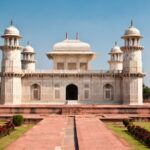
This is often called the Baby Taj. The point of including it is smart: it gives you another Mughal masterpiece with a different scale and vibe. It’s a great way to appreciate the Taj Mahal style without treating it like the only marble monument worth seeing.
Taj Mahal Sunset View Point (about 2 hours)
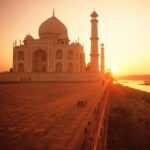
Then comes the sunset plan—two hours at a Taj Mahal sunset-view location across the river, away from the densest crowd pressure. Sunset matters here because the marble’s color shifts and the shadows change. It’s also where the day can feel genuinely magical because the lighting does the work for you.
Tip for your comfort: sunset in North India can swing from warm to cool quickly, so bring a light layer even if it feels hot earlier.
Day 3 sunrise Taj and the route toward Jaipur
Day three is the day you either love early mornings—or you learn to love them because the reward is real. You start with the Taj Mahal again, but at sunrise.
Taj Mahal sunrise (about 2 hours)
This visit is timed for the sunrise experience, with the Taj described as an ivory-white marble mausoleum commissioned by Shah Jahan in 1632. Sunrise is a different kind of experience than sunset: the light is softer, and you often get calmer moments around the complex.
Reality check: it’s still a major attraction, so keep your expectations practical. You’re going for atmosphere and lighting, not a “private gallery.”
Fatehpur Sikri (about 1 hour, free)
Fatehpur Sikri is described as the City of Victory and served as the Mughal Empire’s capital for about a decade. It’s a UNESCO-level stop for many itineraries for a reason: it’s big and historically layered. You get an hour—enough for highlights and key structures, not enough to wander for days.
Chand Baori stepwell (about 30 minutes, entrance not included)
Chand Baori is a stepwell in the village of Abhaneri. Stepwells are visually hypnotic, especially when you see the repeated geometry. This stop is short on purpose, which keeps the day from collapsing under its own weight.
Drive to Jaipur and hotel check-in (about 5 hours)
Then you hit the road and arrive in Jaipur, check in, and overnight. The schedule here is clear: you’re trading extra sightseeing time for transit time, so you can still fit the main Jaipur highlights on day four.
Day 4 Jaipur palaces: Amber, City Palace, Jantar Mantar, and Hawa Mahal
Jaipur day is the most “big-ticket” day of the itinerary. The pace is brisk, but you’re hitting the major icons plus one or two curveballs that show how Jaipur’s design thinking worked.
Panna Meena ka Kund (about 15 minutes, free)
You start with a quick visit to Panna Meena ka Kund, a step well near Amber Fort. It’s short but useful because it breaks up the palace-heavy flow and keeps you grounded in local geography.
Amber Palace (about 2 hours, entrance not included)
Amber Palace is the former capital area until 1728. It’s described as a two-hour guided tour of palaces, squares, and monuments built by Raja Man Singh I. This is one of those places where the details reward a guided explanation. It’s also a good place to slow down a little and look up—design and materials are part of what makes it special.
Consideration: this is not a short “photo stop.” It’s a real visit, and it’s worth wearing comfortable shoes.
Jal Mahal (about 15 minutes, entrance not included)
Jal Mahal is the palace floating on Man Sagar Lake, and the stop is a quick photo opportunity. This is one of the classic “look, snap, move on” moments. It’s quick, but it also gives you a visual break.
City Palace (about 1 hour, entrance not included)
City Palace is described as Jaipur’s administrative and ceremonial seat, constructed in 1721. You’ll spend about an hour exploring it with a guide—enough to get the big picture of how power, display, and daily life overlapped in royal spaces.
Jantar Mantar (about 1 hour, entrance not included)
Jantar Mantar is a UNESCO World Heritage Site with nineteen architectural astronomical instruments built in 1734. This is where Jaipur becomes more than palaces: it’s science made visible in stone. If you like the idea that old-world astronomy wasn’t just “books,” this stop lands well.
Hawa Mahal (about 30 minutes, entrance not included)
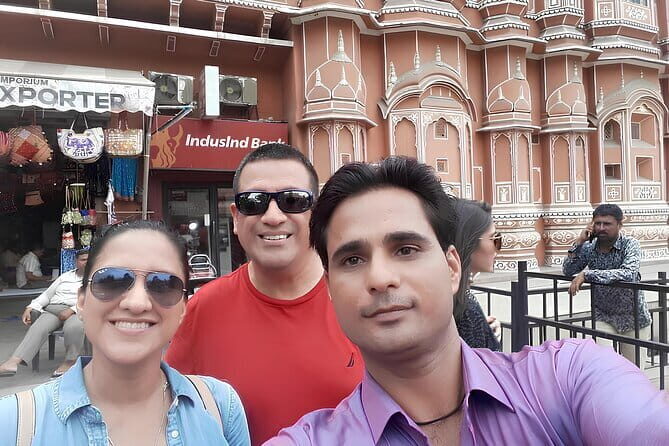
Hawa Mahal—Palace of Breeze—is five-storey pyramidal-shaped and made of red and pink sandstone. The time is short, but it’s worth it for the façade. It’s also one of those photo spots where the guide’s context helps you see why it was designed the way it was.
Albert Hall Museum (about 15 minutes, entrance not included)
Albert Hall Museum is the oldest museum in Rajasthan, functioning as the State Museum of Rajasthan. In this itinerary it’s a short stop, so think of it as a “taste” rather than a full museum day.
Day 5 Jaipur temples and the drive back to Delhi
Day five is lighter on monumental touring and more about finishing with calm spiritual stops before the long return drive.
Birla Mandir Temple (about 30 minutes, free)
Birla Mandir is famous for its intricate latticework in white marble. It’s dedicated to Lord Vishnu. It’s free admission, and the layout makes it a good closing stop because it feels less like a checkpoint and more like a place people actually use for worship.
Monkey Temple / Galtaji (about 30 minutes, free)
Monkey Temple (Galtaji Temple) is described as a buzzing tourist place in Jaipur, also known as the Abode of Monkeys, with three sacred pools of water. In a short time, you’ll still get the feel of the place—and you’ll understand why people remember it.
Practical note: this stop is exactly the kind of place where you should keep your valuables secure and your phone ready, because the energy here is real.
Drive back to Delhi (about 5 hours)
Finally, you’ll drive back to Delhi and get dropped off at the airport, hotel, or another desired location in the city (as arranged). This return segment is long, so if you’re the type who gets travel-stiff, plan an easy evening afterward.
Price and entrance fees: what $205.72 really buys
At $205.72 per person, the base price covers the core logistics and guided experience: private air-conditioned transportation with driver, pickup and drop-off, and local guiding for sightseeing. It also includes complimentary mineral water and breakfast if you choose the hotel option.
But you should treat it as a “framework” price, not an everything-in-one bundle. The tour lists entrance fees as not included, with a monument entrance ticket listed at $90 per person. Meals are also listed as not included, along with travel insurance, flights/trains, and tips.
If you’re budgeting, a realistic way to look at it is:
- Base tour + monument entrance ticket
- Add meals you choose during the trip
- Add your own travel insurance and any international/domestic flight costs
- Add driver/guide tips (not included)
Even with those extras, this tour can still be good value if you want the comfort of private transport and the structure of guided visits. The main cost savings are time and reduced hassle. You’re paying to avoid the mental load of planning and coordinating three cities.
Hotels, room sharing, and what “private” means here

This tour offers 4 nights accommodation when you book with the hotel option (the tour description also references 4- or 5-star stays). The important detail is how rooms work: rooms are generally twin-sharing by default. If you book as a group of three, triple-sharing is the default arrangement unless you pay an additional charge to get two rooms.
So if you care about sleeping arrangements, check that before you lock it in.
Also, because it’s a private tour, “only your group will participate.” That matters. With a group-only private setup, your time isn’t at the mercy of random strangers moving slowly through ticket lines.
Finally, the provider states that you’ll have a fully vaccinated private driver and private guides, which is a comfort factor even if you don’t usually think about it.
Who should book this Golden Triangle private tour
This is a strong fit if you:
- Want a guided experience across Delhi, Agra, and Jaipur without constantly planning transport.
- Prefer private pacing over hopping between buses and trains.
- Like the idea of seeing the Taj Mahal twice in different light.
- Appreciate that your guide helps with entrance tickets so you can avoid long ticket lines.
It may not be ideal if you:
- Hate early starts (sunrise Taj means you’ll be up early).
- Want lots of free time to wander independently in each city.
- Are trying to keep costs rock-bottom, because entrance fees and meals are extra.
Should you book this 5-day private Golden Triangle tour?
If you want the Golden Triangle experience with less friction, I’d book it. The mix of private driving, local guiding, and two Taj moments is the core reason. You also get practical help with tickets, and your hotel is set up for you when you choose that option—check-in is typically smooth because the stays are arranged in advance.
If your budget is extremely tight, or you’d rather spend your mornings slower and more spontaneous, you might prefer a more flexible plan and pay for guiding only where you want it. But for most people who want a smart, well-organized route across three major cities, this tour is the kind of setup that makes India feel manageable without sanding off the magic.
FAQ
What places are included in the 5-day Golden Triangle route?
The tour includes stops in Delhi, Agra, and Jaipur, with sightseeing such as Humayun’s Tomb, Qutub Minar, Red Fort, Lotus Temple, Jama Masjid, India Gate, Agrasen Ki Baoli, and an Old Delhi Rickshaw Ride in Delhi. In Agra you visit Agra Fort, Mehtab Bagh, Itmad-ud-Daula, and a Taj Mahal sunset viewing. In Jaipur you see Panna Meena ka Kund, Amber Palace, Jal Mahal, City Palace, Jantar Mantar, Hawa Mahal, Albert Hall Museum, and on the final day Birla Mandir and Monkey Temple.
Is pickup and drop-off included?
Yes. You get hotel or airport pick-up and drop-off, and the tour starts at Indira Gandhi Intl Airport, New Delhi. It ends back at the meeting point.
Are entrance tickets included in the price?
Entrance fees are not included. The tour lists a monument entrance ticket for $90.00 per person. The guide will help you buy entrance fees at monuments so you don’t have to wait in queues.
Does the tour include accommodation?
Accommodation is included as 4 nights if you book the option that includes hotels. The tour description also references 4- or 5-star accommodations.
What about meals during the trip?
Meals are not included. The tour includes breakfast (4) only if you choose the hotel option.
Is this a private tour or will I be mixed with other groups?
This is a private tour. Only your group will participate.
What is the cancellation policy?
You can cancel for a full refund if you cancel up to 24 hours in advance of the experience start time. The tour also notes that it requires good weather, and if it’s canceled due to poor weather you’ll be offered a different date or a full refund.