REVIEW · NEW DELHI
Private 4-Day Tiger Safari & Golden Triangle Tour from Delhi
Book on Viator →Operated by Golden Triangle Tours Of India · Bookable on Viator
Delhi to tiger country in four days is a fast ride. What makes this tour work is the mix of Golden Triangle landmarks plus the one big wildlife moment in Ranthambore, all tied together with private transfers and licensed guides at the sites you care about.
I like that you can shape the trip with different booking options, from guide-only to adding a private car and then stepping up to 4- or 5-star hotels. That flexibility matters because it changes how much of your time is spent moving versus actually looking, asking questions, and taking it in.
One thing to watch: the headline price does not include most monument entry fees and meals. If you don’t budget for those up front, the tour can feel a bit pricier once you’re actually inside ticket gates.
In This Review
- Key highlights that actually matter
- Value and price: what you’re really paying for
- Day 1 in Delhi: Qutub Minar to Chandni Chowk, with a real-world break for lunch
- Sunrise Taj Mahal and Agra Fort: two UNESCO hits before you switch to safari mode
- Ranthambore tiger safari: when timing and a naturalist guide do the work
- Jaipur in the afternoon and evening: fort views plus city gems at your own pace
- Jaipur Day 4: Amber Fort, Jal Mahal, City Palace, Jantar Mantar, and Hawa Mahal
- Getting there and getting around: private car comfort, shared safari reality
- Guides, timing, and small rules that affect your day
- Hotel options: where the 4-star and 5-star choices change your comfort
- Should you book this private Delhi–Agra–Ranthambore–Jaipur tour?
- FAQ
- What booking options are available for this tour?
- Are hotel stays included, and how many nights?
- What’s included in the Ranthambore safari?
- What extra costs should I plan for besides the main price?
- Is the Taj Mahal always open on this schedule?
- What happens on Mondays in Delhi?
- Do I need cash for tickets?
- Are drones allowed during the tour?
Key highlights that actually matter

- Private car options (when selected) with a driver, plus an easier Delhi pickup/drop-off setup.
- Sunrise Taj Mahal with a guided visit and an early start (timing may shift in winter fog).
- Morning shared canter tiger safari with an English-speaking naturalist guide in Ranthambore.
- A full Delhi Old-and-New mix: Qutub Minar, Humayun’s Tomb, and Chandni Chowk in one day.
- Jaipur’s “great hits”: Amber Fort, City Palace, Jantar Mantar, Hawa Mahal, plus stepwell and lake views.
Value and price: what you’re really paying for
This tour is priced at $62.33 per person, which sounds budget-friendly until you check what’s not included. Meals are listed at $30 per person, and monument entry tickets are also listed at $30 per person. That means your realistic total depends on your comfort level with ticket costs and how many museums/forts you actually want to enter (some stops are free, some are not).
So where does the value come from? Three places:
First, you’re buying time. Golden Triangle itineraries can turn into a logistics puzzle when you’re doing it alone. Here, you get organized transfers across cities and a plan that doesn’t leave you guessing what to do next.
Second, you’re buying guidance. Licensed guides are included at the key sites you named in the itinerary, including the big-ticket monuments like Taj Mahal and the forts in Agra and Jaipur. You’ll get better context than wandering around with only a guidebook.
Third, you’re buying a wildlife-focused day that’s timed for the morning safari. In Ranthambore, early departures matter. This tour builds that in without making you coordinate a safari from scratch.
If you’re the kind of traveler who likes structure but still wants control, the optional add-ons are a smart choice. The tour lets you pick a simpler version (guide only) or a more hands-on one (car + hotel), and that can keep your costs aligned with what you care about most.
You can also read our reviews of more private tours in New Delhi


Day 1 in Delhi: Qutub Minar to Chandni Chowk, with a real-world break for lunch

Day one is designed as a “best of Delhi” sampler, but it’s not random. You start with major heritage sites and then pivot into Old Delhi’s market energy.
Qutub Minar is a standout for first-timers because it’s not just a tall monument. You can spend time on the details—carvings, proportions, and the look of the complex. You’re given about an hour, which is enough to see it without feeling rushed.
Then comes Lotus Temple, famous for its calm vibe and inclusive approach. It’s also quick (about 30 minutes) and good for resetting your eyes after Qutub Minar’s stonework.
India Gate is your open-air pause. It’s a war memorial from 1931, and the design by Sir Edwin Lutyens gives it that clean, dignified feel. The visit is short, but it helps you get your bearings in New Delhi.
Next you get a scenic pass by Rashtrapati Bhavan, which is useful even if you’re not going inside. You’re seeing the layout of government Delhi without adding more tickets or time pressure.
Agrasen ki Baoli is one of those spots that feels quieter than the headline monuments. It’s a stepwell, and the atmosphere is a welcome break from the big crowds you’ll hit later.
Humayun’s Tomb gives you a Mughal landmark with a guided visit of about an hour. This is one of those places where having a guide helps you notice what makes it important.
Finally, Chandni Chowk is where the day gets real. You’ll walk through Old Delhi’s market lanes—spices, dried fruits, jewelry, traditional clothing—and it’s a fun contrast to the formal monuments earlier. You’ll also enjoy lunch at a local restaurant, which is a practical move because it keeps you from hunting for food after a long morning.
The day ends with the drive to Agra after lunch via the expressway, then hotel check-in and free time.
What to consider: By the time you finish the Old Delhi market walk, you’ll likely be tired. If you love photos, you’ll want good walking shoes. If you hate crowds, you’ll still get value here, but you should expect the market to be busy.
Sunrise Taj Mahal and Agra Fort: two UNESCO hits before you switch to safari mode
Day two is basically built around two heavyweights in Agra, then a transfer that puts you close to Ranthambore.
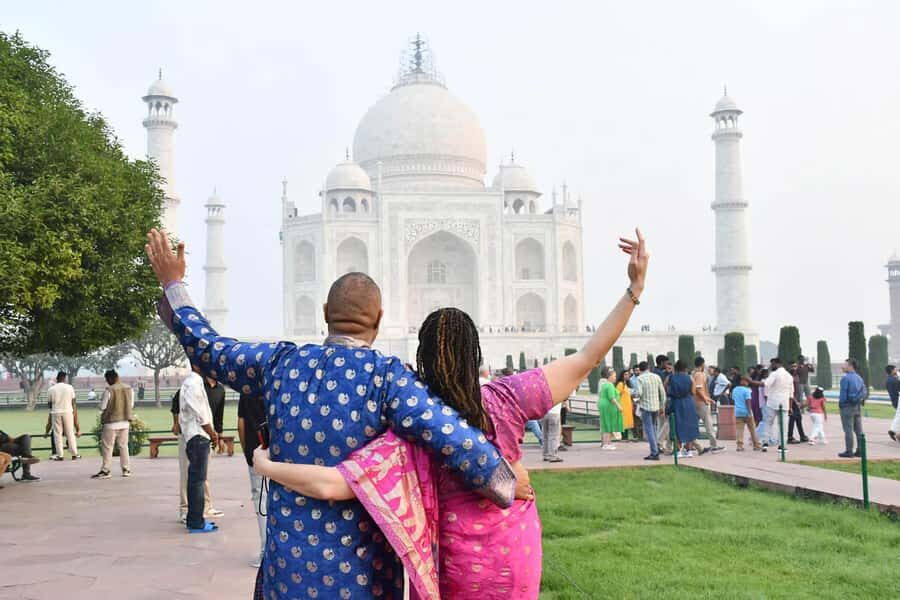
The day starts with a sunrise Taj Mahal visit, with a guided tour of about two hours. Timing is the key detail here. Sunrise light changes the mood of the marble, and the early start also tends to help with crowds. There’s one seasonal note: in winter months, fog can shift the sunrise visit to daytime. So if you’re traveling in December–January, don’t plan on a perfect first-light photo every day—roll with the adjusted timing.
After Taj Mahal, you move to Agra Fort, also UNESCO-listed, with about two hours for exploration and historical context from your guide. This is a different kind of experience than the Taj—more fortress spaces, courtyards, and the feeling of power and defense.
Then you head toward Ranthambore, checking into your chosen hotel along the way. The transfer is a meaningful chunk of the day (the schedule gives it time to settle in), so your best use of the evening is simple: relax, eat when you’re hungry, and get ready for an early safari start the next morning.
A small detail worth noting: You’ll be doing a lot of “major monuments” close together. That’s great for seeing the highlights, but it also means you’ll benefit from pacing yourself. If you feel like you’re rushing, slow down at the courtyards and vantage points instead of trying to “finish” the sites.
Ranthambore tiger safari: when timing and a naturalist guide do the work
This is the emotional center of the trip: a morning safari in Ranthambore National Park with a trained naturalist guide. The safari block is about three hours, and the itinerary includes the admission portion for the safari experience.
A key point for expectation-setting: tiger sightings aren’t guaranteed. What is guaranteed is the structure that gives you the best odds—an early start and a guide who understands how to read the park.
You’ll be on a morning shared canter safari. That’s important. Shared canter rides mean you’re not in a fully private vehicle for the wildlife portion. The trade-off is that it’s typically the standard, efficient way to get into the park with the required vehicle style.
The guide for the safari is English-speaking, which helps a lot when you’re trying to understand animal behavior and what the driver is responding to. It also helps you ask questions in real time instead of guessing.
What I like here is how this day balances intensity with space. You’re going early for wildlife, but you’re not stuck in a car all day afterward. After the safari, you continue on to Jaipur.
Practical tip: Pack for early mornings. Ranthambore safari days can feel cool before they warm up, especially around dawn.
Jaipur in the afternoon and evening: fort views plus city gems at your own pace
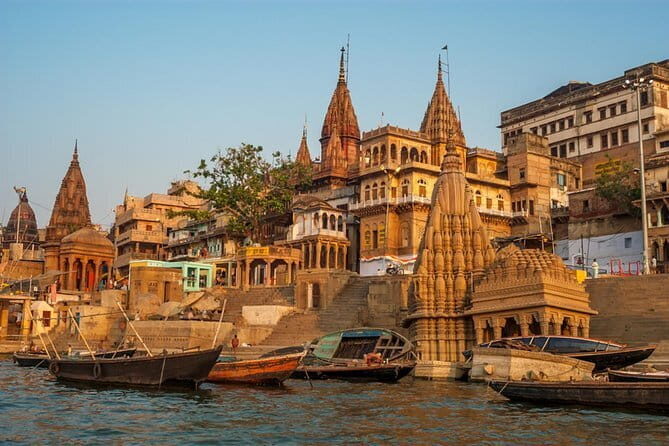
After Ranthambore, you transfer to Jaipur and have time to check in and then explore at your own pace. That free time is valuable because Jaipur can move quickly when you’re with a group. Having a few hours on your schedule means you can shop, snack, or simply take a break without feeling like you missed a “required” stop.
Even though the next day includes the major sights, this arrival evening helps you acclimate to Jaipur’s pace and colors. You’ll also be better positioned for an active fourth day if you’re not starting from zero after a long travel day.
A few more New Delhi tours and experiences worth a look






Jaipur Day 4: Amber Fort, Jal Mahal, City Palace, Jantar Mantar, and Hawa Mahal
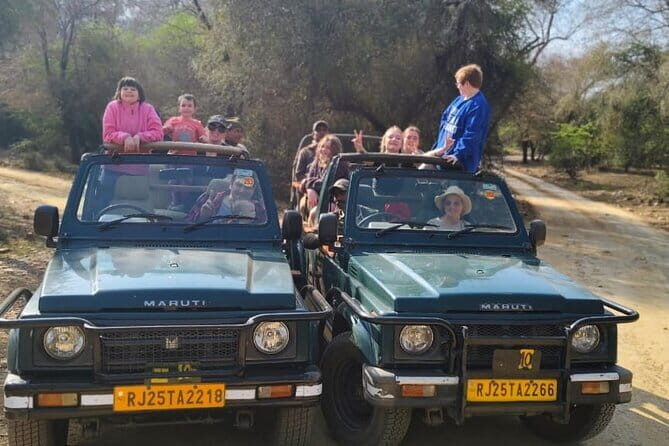
Day four is full—yet it’s built around a logical flow: stepwell history, Amber’s architecture, lake views, then city monuments.
You start at Panna Meena ka Kund, a historic stepwell near Amber Fort. It’s short (about 15 minutes), but it’s an interesting contrast to the palace-heavy sights. Stepwells are part of India’s practical water culture, and they’re often easier to enjoy when you’re not stuck in ticket line pressure.
Then you visit Amber Fort with about two hours. This is one of Jaipur’s signature sites, and it’s the moment where the “wow” factor shows up through fort walls, courtyards, and the feel of royal power. Entry tickets are not included, so keep that in mind for budgeting.
Next is Jal Mahal, the palace in the middle of Man Sagar Lake. You get about 30 minutes here, which is about right for soaking in the view and taking photos. Even if you don’t go deep into interior details, the exterior view is the main reason to stop.
Then you hit City Palace (about one hour). The combination of Mughal and Rajput elements is what you’re looking for, plus artifacts in the museum portion. This is the stop where a guide really helps you connect architecture to story.
After that, Jantar Mantar gets its own hour. It’s UNESCO-listed and filled with ancient astronomical instruments built by Maharaja Sawai Jai Singh II. You don’t need to be a science nerd to enjoy it; what you’ll notice is how structured and intentional everything looks. If you like practical design, this is a satisfying stop.
Then you visit Gaitore Ki Chhatriyan, the royal cremation site, with about 30 minutes. The cenotaphs show traditional Rajput architecture, and it’s one of the more reflective stops of the day.
Finally, you end with Hawa Mahal (Palace of Wind). It’s around 30 minutes, and the tour guide helps capture photos so you can get the classic angles without awkward pacing.
Once the Jaipur sightseeing finishes, you either drive back to Delhi (about four hours) or choose a drop-off at Jaipur Airport for a smoother departure.
What to consider: Day four is packed with ticketed sights. If you’re sensitive to long days, consider doing fewer of the optional photo stops and focus your time on Amber Fort, City Palace, and Jantar Mantar.
Getting there and getting around: private car comfort, shared safari reality
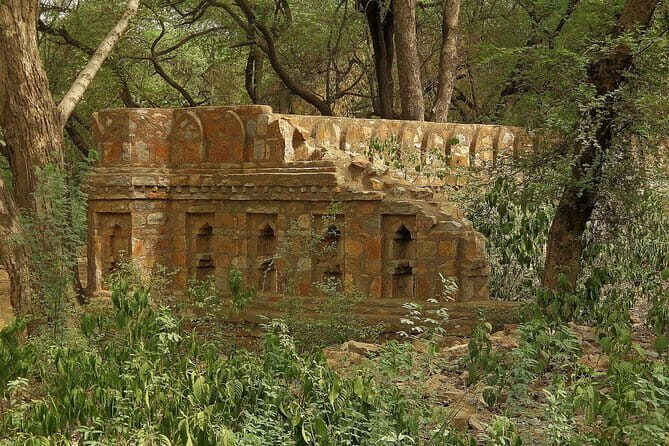
This tour is private in the sense that only your group participates. But transportation details vary by party size:
- For 1–2 guests, you get a three-seater sedan like Toyota Etios or similar.
- For 3–5 guests, a six-seater wagon like Toyota Innova or similar.
- For 6–10 guests, a ten-seater van (Tempo Traveler).
If you choose the option with car, you’re also getting hotel or airport pickup and drop-off in Delhi. That matters because Delhi is big and traffic can scramble your schedule fast. Having a driver reduces the stress of coordinating time slots and getting to the right starting point.
On the wildlife side, remember the safari is shared canter. That doesn’t ruin the experience—it just means you’ll be part of the park session with other safari groups. The guide’s ability to communicate in English helps you get the information you need despite the shared format.
Guides, timing, and small rules that affect your day
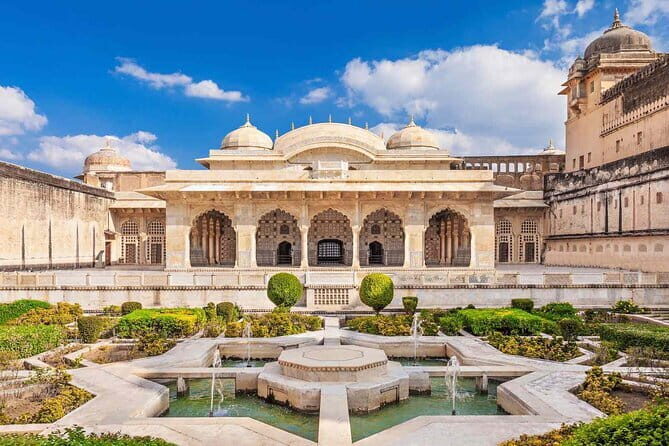
Guides are a big part of why this format feels smooth. The tour includes guides at the major sites, and that’s where context comes in. One detail from a past experience sticks with me: Saif was noted as a great guide in Agra, which is exactly what you hope for when you’re standing in front of Taj Mahal and Agra Fort and want more than a basic overview.
A few other timing and access points you should keep in your mental checklist:
- The Taj Mahal is closed on Fridays.
- Red Fort and Lotus Temple in Delhi are closed on Mondays. On that day, the plan swaps in Gurudwara Bangla Sahib instead.
- Photography is allowed, but drones are not permitted.
- In foggy winter conditions, sunrise timing may shift.
Also, because some sites may not accept credit cards, it’s smart to carry cash in INR for monument tickets and any small extras.
Hotel options: where the 4-star and 5-star choices change your comfort
The tour includes hotel accommodation for 3 nights only if you choose a package with hotels. Breakfast is included on those hotel nights. If you choose guide-only, you’ll be responsible for your own lodging and meals.
This matters because the trip is built around early starts (especially for the safari and sunrise Taj Mahal). A good night’s sleep can make the difference between enjoying the day and feeling like you’re counting hours until the next rest stop.
If you’re upgrading from 4-star to 5-star, what you’re really paying for is comfort on the two city transfer nights and your Ranthambore base. It’s not adding more sights; it’s reducing fatigue.
And if you travel during the holiday season, note that mandatory gala dinner charges apply during New Year’s Eve and Christmas (December 24 to January 5) as per hotel policy.
Should you book this private Delhi–Agra–Ranthambore–Jaipur tour?
I’d book this if you want a structured whirlwind that still feels personal—especially if you care about three things: major monuments with guides, an early tiger safari day, and a smooth flow across cities without hours of planning.
Skip it or adjust expectations if:
- You hate ticket budgeting and prefer fully included entry fees.
- You want a fully private safari vehicle (this uses shared canters).
- You’re traveling around Friday in a way that would conflict with Taj Mahal closures, and you don’t like adapting.
One simple way to make the decision: budget for monument tickets and meals before you compare totals with other tours. If the final number still feels right, this itinerary is a solid value because it combines high-impact sights with a wildlife day that doesn’t require you to become an expert in Indian logistics overnight.
FAQ
What booking options are available for this tour?
You can choose from four options: Guide Only, Guide + Car, Guide + Car + 4-Star Hotel, or Guide + Car + 5-Star Hotel.
Are hotel stays included, and how many nights?
Hotel accommodation for 3 nights is included only if you select a hotel package. Daily breakfast is included when you choose the hotel option.
What’s included in the Ranthambore safari?
The tour includes morning shared canter safaris in Ranthambore, and the safari admission is included. Bottled drinking water is also provided.
What extra costs should I plan for besides the main price?
Meals are listed as $30.00 per person, monument entry tickets are listed as $30.00 per person, and tips for the guide and chauffeur are not included.
Is the Taj Mahal always open on this schedule?
No. The Taj Mahal is closed on Fridays. Timing can also shift during winter fog season for sunrise visits.
What happens on Mondays in Delhi?
On Mondays, Red Fort and Lotus Temple are closed. The plan includes Gurudwara Bangla Sahib instead.
Do I need cash for tickets?
It’s recommended to carry cash in INR because some sites may not accept credit cards.
Are drones allowed during the tour?
No. Drones are not permitted, but photography is allowed at the sites.