REVIEW · NEW DELHI
Private 3-Day Golden Triangle Tour: Delhi, Agra & Jaipur by Car
Book on Viator →Operated by Golden Triangle Tours Of India · Bookable on Viator
Delhi-Agra-Jaipur in just 3 days.
What makes this private Golden Triangle setup interesting is the choice you get: you can go with guide-only, private car, or add hotel nights at different comfort levels, all while keeping a pace that feels human. You’ll see the big-name sights, but the structure is built around fewer hassles—hotel or airport pickup, set transfers by car, and licensed local guides to explain what you’re looking at.
I like that the day-by-day plan is tightly organized without feeling rushed. I also love the included extras that reduce friction, like the Taj Mahal shuttle from the parking area and a rickshaw ride through Old Delhi’s lanes.
One consideration: monument entrance fees are not included (listed at $70 per person), so the real price is the base tour plus entrances, and you’ll want to carry cash in INR because some sites don’t take credit cards.
In This Review
- Key highlights worth planning around
- Golden Triangle by private car: what you gain (and what you won’t)
- Day 1 in Delhi: Qutub Minar, Lotus Temple, then Old Delhi
- Qutub Minar: the opener you can’t skip
- Lotus Temple: calm contrast in the middle of the city
- The drive-by section: Mughal and New Delhi landmarks without losing time
- Old Delhi by rickshaw and on foot: Chandni Chowk to Jama Masjid
- Khari Baoli: spice market atmosphere in a short stop
- Day 2: Taj Mahal at sunrise, plus Agra Fort and the Baby Taj
- Taj Mahal sunrise: why early matters
- Agra Fort: history with scale and structure
- Itmad-ud-Daulah (Baby Taj): smaller, more intricate
- Agra lunch break, then transfer to Jaipur
- Day 3 in Jaipur: Jaigarh, Hawa Mahal, City Palace, and Jantar Mantar
- Jaigarh Fort: big walls, Aravalli views
- Hawa Mahal: quick but worth it
- City Palace: the royal base in the middle of the city
- Jal Mahal: the photo stop with a calm pause
- Jantar Mantar: the observatory that ties it together
- Return to Delhi (or drop at Jaipur Airport)
- Guide quality and the little details that change your day
- Price and logistics: the real budget picture
- Who should book this tour, and who might not love it
- Should you book this Private 3-Day Golden Triangle by Car?
- FAQ
- What does the tour price include?
- How much are monument entrance fees?
- Are there any site closures that affect the itinerary?
- Do I get pickup from my hotel?
- Is this tour private?
- What vehicle will I use?
- Can I change the itinerary?
- Is the booking refundable?
Key highlights worth planning around
- Private timing flexibility: no fixed group schedule pressure.
- Taj Mahal logistics: included battery shuttle saves time and walking from the parking area.
- Old Delhi mix: Chandni Chowk plus Jama Masjid and Khari Baoli in one flow.
- Licensed local guides: you’ll get on-the-ground context (some guides, like Sanjiv, are specifically praised for history plus humor).
- Driver + vehicle fit: sedan, SUV, or Tempo Traveler based on group size, with bottled water included.
- Comfort upgrades possible: choose hotel nights (2 nights) and daily breakfast when you select the hotel option.
Golden Triangle by private car: what you gain (and what you won’t)
A Golden Triangle tour can go two ways: either you feel like you’re stuck in a conveyor belt, or you get time to stand still and actually look. This format leans toward the second option. You travel by private, air-conditioned vehicle with pickup and drop-off across Delhi, Agra, and Jaipur, and you’re paired with a government-approved local guide for sightseeing.
The “private” part matters more than people think. Between Delhi traffic, queue lines, and monument travel distances, a group bus schedule can turn your day into a constant sprint. Here, transfers are designed as point-to-point drives with downtime built in—like relaxing after arriving in Agra, then starting the Taj day early, then getting transferred to Jaipur for an overnight.
You’re also not forced into one single comfort level. The tour can be adjusted to match your budget and style—whether that means guide + car only, or adding 4- or 5-star hotel nights. That’s a real advantage if you’re traveling with different preferences in your group.
If you’re the type who hates surprises, one more thing to know: the itinerary is structured, but it is adjustable. You can request changes—add or remove monuments, and modify sightseeing even after booking—so you’re not locked into a rigid route.
You can also read our reviews of more private tours in New Delhi


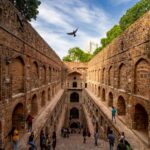
Day 1 in Delhi: Qutub Minar, Lotus Temple, then Old Delhi
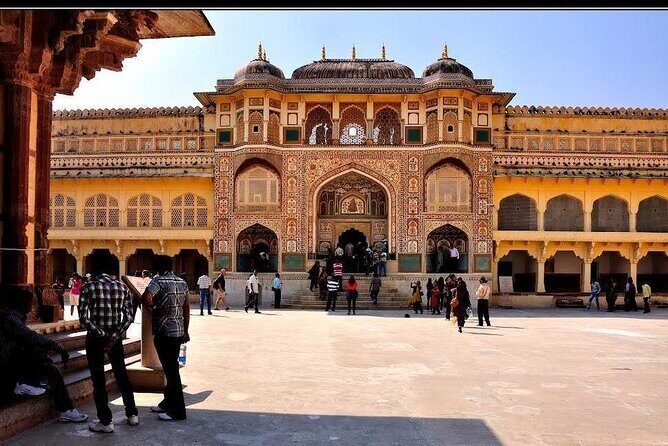
Your first day starts with pickup in the Delhi region, generally between 8 AM and 11 AM. That pickup window is practical because it avoids the ultra-early start that makes Day 1 feel like punishment.
Qutub Minar: the opener you can’t skip
Your morning begins at Qutub Minar, a UNESCO site and one of Delhi’s most iconic landmarks. The stop is set for about an hour, and that length works well here: you can see the main structure, take in the details, and still have enough energy for the rest of the day. Entrance fees aren’t included, so keep that budget in mind early.
Lotus Temple: calm contrast in the middle of the city
Next up is the Lotus Temple, a Bahá’í House of Worship known for its lotus-inspired design (completed in 1986). It’s a lighter stop (around 30 minutes) and it’s free to enter, so it’s a good “breather” before Old Delhi. If your timing hits a Monday, this site is closed, and the route adjusts to Gurudwara Bangla Sahib instead—so you won’t lose the day’s religious architecture focus.
The drive-by section: Mughal and New Delhi landmarks without losing time
You’ll also do a series of drive-pasts that help you understand Delhi’s layers: the Red Fort (built 1639–1648), the Tomb of the Unknown Soldier (built in 1921 for 13,300 Indian soldiers from World War I), and the New Delhi government layout designed in 1929 by Sir Edwin Lutyens and Herbert Baker. You also pass the Parliament House (India’s bicameral legislature).
Drive-bys aren’t everyone’s favorite part, but they’re a smart way to get context without wasting your limited time on extra queues.
A few more New Delhi tours and experiences worth a look





Old Delhi by rickshaw and on foot: Chandni Chowk to Jama Masjid
After the drive section, you’ll have a break for local cuisine recommendations, then head into Old Delhi at Chandni Chowk. This is the “you’re in the real Delhi now” part of the tour. The stop is planned for about an hour, and you’ll be walking narrow streets with shops selling spices, dry fruits, silver jewelry, saris, and traditional sweets.
One of the better inclusions here is the rickshaw ride through the historic lanes. It’s not just a ride—it’s a time-saver that helps you get the feeling of the area without wearing yourself out before Jama Masjid.
Then comes Jama Masjid, India’s largest mosque, built in 1656 with work by 5,000 artisans under Shah Jahan. It’s scheduled for about an hour, but entrance fees are not included. If you’re sensitive to crowd crushes, plan to take slow steps and let your guide guide you to the best viewing spots.
Khari Baoli: spice market atmosphere in a short stop
You end the day with Khari Baoli, described as Asia’s largest wholesale spice market. The stop is around 30 minutes and free, and it’s perfect for a quick sensory reset. Even if you don’t buy anything, it helps you understand why Old Delhi has a reputation for food and trade culture.
Finally, you drive to Agra (about 3 hours) and are dropped at your hotel so you can rest for the Taj day.
Day 2: Taj Mahal at sunrise, plus Agra Fort and the Baby Taj
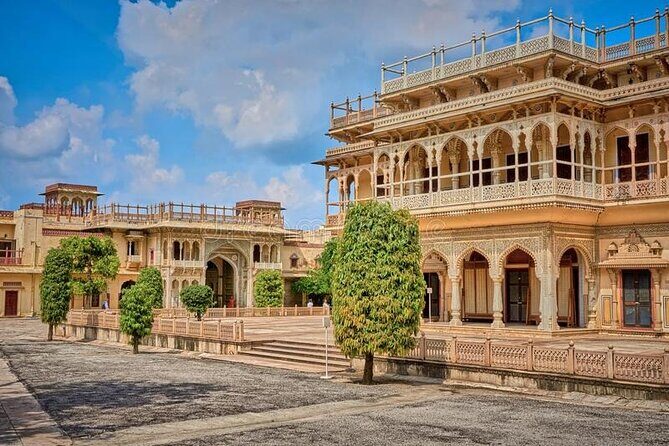
Day 2 is where the Golden Triangle earns its name.
Taj Mahal sunrise: why early matters
You’re set up for a morning visit to the Taj Mahal with a sunrise plan. The scheduled visit is around two hours, and entrance fees are not included.
The part you’ll appreciate most is the included battery-operated shuttle from the Taj parking area to the monument and back. It keeps the stop from becoming an exhausting walk, especially if you’re arriving while it’s still cool and the crowd energy is building.
The Taj Mahal is also closed on Fridays. If your dates land on a Friday, the route adjusts: the order shifts so you still get the best chance to see it. Your guide will adapt the plan so you’re not stuck missing your main target.
Agra Fort: history with scale and structure
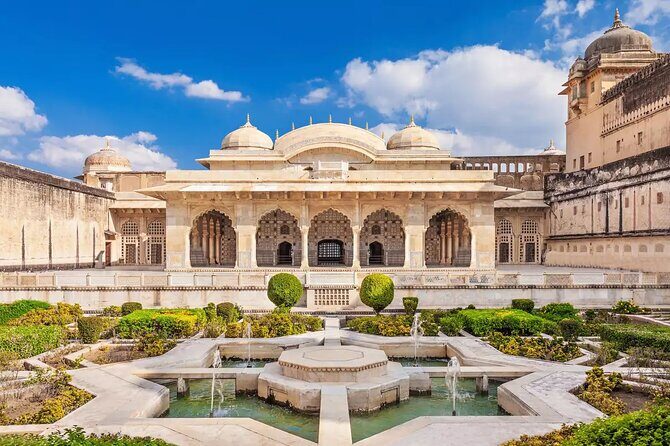
After the Taj, you go to Agra Fort, a UNESCO World Heritage Site dating back to the 17th century. The itinerary gives about an hour here. You’ll see courtyards, palaces, and pavilions while your guide shares what the spaces were for in Mughal times.
This is a good pairing with the Taj because you’ll stop thinking of the Taj as a standalone icon. Instead, it becomes part of a fortified capital story.
Itmad-ud-Daulah (Baby Taj): smaller, more intricate
Then comes Itmad-ud-Daulah, often called the Baby Taj. The stop is about 30 minutes and entrance fees are not included. It’s scheduled for a shorter time on purpose: it’s detailed, but it’s not meant to swallow your entire day.
If you like architecture details and decorative inlay work, this is a strong “second look” after the Taj’s larger scale.
Agra lunch break, then transfer to Jaipur
Agra’s schedule includes a 1-hour food break with restaurant recommendations and then a drive to Jaipur (around 4 hours). You’ll be transferred to your hotel for overnight, so you start Day 3 fresh rather than arriving in Jaipur and trying to tour immediately.
Day 3 in Jaipur: Jaigarh, Hawa Mahal, City Palace, and Jantar Mantar
Jaipur is built for visual impact, and Day 3 is arranged to cover that in a logical order: forts and viewpoints first, then the iconic palace façade, then the city complex and the observatory.
Jaigarh Fort: big walls, Aravalli views
Your first Jaipur stop is Jaigarh Fort, built in 1726 by Maharaja Sawai Jai Singh II. The itinerary allows around two hours. It sits on the Aravalli hills, and the design was meant for defense. If you enjoy “how and why” architecture, this is a solid start because it gives you a sense of strategy, not just decoration.
Hawa Mahal: quick but worth it
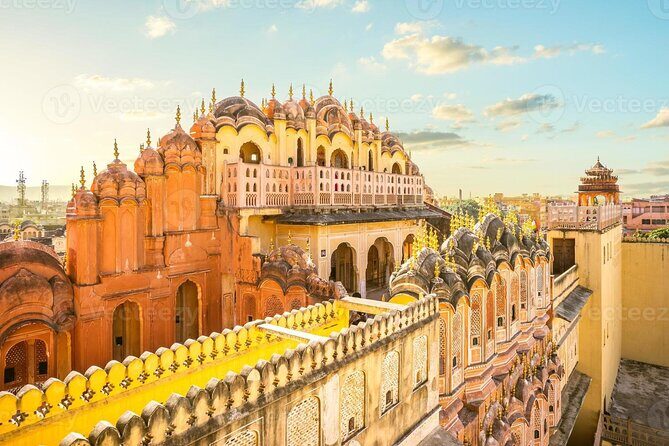
Next is Hawa Mahal (Palace of Wind), the famous five-story façade with 953 jharokhas (intricately carved windows). The stop is about 30 minutes and entrance fees are not included.
This is a “see it, understand it, move on” site. The best value is learning what it allowed royal women to do and how the building worked with street life outside.
City Palace: the royal base in the middle of the city
Then you’ll visit the City Palace of Jaipur, scheduled for about one hour. It’s in the heart of Jaipur and once served as the seat of the Maharaja. Today, parts of the complex operate as a museum.
Even with just an hour, it’s a strong anchor stop because it turns the royal aesthetic into an actual timeline of rule and space.
Jal Mahal: the photo stop with a calm pause
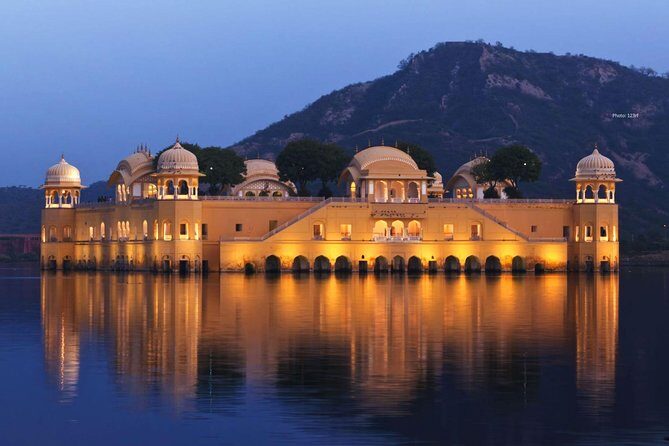
You also include Jal Mahal, the 17th-century palace in the middle of Man Sagar Lake. Entrance is marked free in the itinerary, and the stop is about 30 minutes. It’s not a long linger type of place on this schedule, but it gives your day a softer rhythm and a scenic break.
Jantar Mantar: the observatory that ties it together
Finally, you end with Jantar Mantar, a UNESCO World Heritage Site and one of the best-preserved ancient observatories in India. The stop is around 30 minutes and entrance fees are not included.
This is where Jaipur’s “science meets design” side comes through. If you’ve been enjoying the geometry of forts and palaces, you’ll likely appreciate the observatory as a different kind of precision.
Return to Delhi (or drop at Jaipur Airport)
After sightseeing, you begin the comfortable drive back to Delhi (about 4 hours). If it suits your plans, you can also choose a drop-off at Jaipur Airport.
Guide quality and the little details that change your day
In a tour like this, the big monuments are guaranteed. The real difference is how the day feels in between.
I’d pay attention to the guide style, because several guides linked to this type of tour have been praised for making the story stick. For example, Sanjiv is noted for being well-versed and adding humor, which helps when you’re walking through serious, heavy sites like forts and tombs. Other names that show up in feedback include Kamal, Anil, Madhan, and driver Khan—often with notes about friendliness, organization, and safe, punctual driving.
Practical inclusions also matter:
- Bottled mineral water during all journeys keeps basic comfort handled.
- All parking, tolls, fuel, and taxes are covered, so you’re not stuck negotiating on the road.
- Your vehicle size adjusts to your group: sedan for 1–2 guests, SUV for 3–5, Tempo Traveler for 6–10. This can save you from the cramped feeling that ruins long transfer days.
Also, the itinerary has built-in replacements for closures. Taj Mahal closure on Fridays shifts the route order; Red Fort and Lotus Temple closures on Mondays trigger the Gurudwara Bangla Sahib option. That’s not just a rule. It’s a stress reducer.
Price and logistics: the real budget picture
The listed price is $56.74 per person for the private 3-day Golden Triangle by car. That’s the base tour rate and it includes a lot of what typically costs extra in India: pickup and drop-off in Delhi/Agra/Jaipur, private transportation, 2 nights of accommodation if you choose the hotel option, daily breakfast with the hotel option, private licensed guides, and a couple of key logistics wins like the Taj shuttle and the Old Delhi rickshaw ride.
But you do need to add:
- Entrance fees to monuments: $70 per person (not included)
- Gratuities (optional)
So plan for a combined starting point around $126.74 per person, plus gratuities and any hotel-date extras that come from selecting a specific comfort level or room arrangement.
If you like control and you’re comparing to cheaper group tours, this option usually wins when you value:
- private timing,
- less back-and-forth,
- and the guide’s help navigating sites efficiently.
If you’re trying to minimize cash spending and you don’t care about private transfers, then a very low-cost alternative might look tempting—but you’d likely trade away the comfort and organization that make a short 3-day plan actually work.
One more practical note: credit card acceptance isn’t guaranteed at every monument. Bring cash in INR for entrance fees. Your guide can help you find nearby ATMs if you need one.
Who should book this tour, and who might not love it
This is a strong fit if you want a short Golden Triangle that still feels thoughtfully paced. It’s especially good for:
- couples and small groups who don’t want to share transport schedules,
- first-timers who need a guide to connect the dots at Taj Mahal, Agra Fort, and Jantar Mantar,
- travelers who prefer a clear route with room to adjust,
- anyone who wants hotel comfort for two nights without arranging trains or drivers separately.
It may feel less ideal if:
- you’re traveling ultra-budget and hate paying entrance fees on top,
- you want to spend long hours inside each complex beyond the scheduled time blocks,
- you dislike guided walking (though the stops are timed reasonably).
If you’re a solo woman traveler, this format has been described as safe and professional in feedback, with attention paid to driver and organizer conduct.
Should you book this Private 3-Day Golden Triangle by Car?
Yes—if your priority is a stress-free, private Golden Triangle with the main sites covered in 3 days and with real logistical support (especially the Taj shuttle and guided transitions). The base rate looks fair for what you get, but do budget for the $70 entrance fees per person so you’re not surprised.
Before you book, I’d do one quick decision check: are you comfortable carrying cash for entrance fees, and do you want the hotel nights included? If both are yes, this is the kind of tour that keeps your time for the sights, not for the headaches.
FAQ
What does the tour price include?
It includes hotel or airport pickup and drop-off in Delhi, Agra, and Jaipur, private air-conditioned transportation, 2 nights of accommodation (based on the option you select), daily breakfast when you choose the hotel option, private sightseeing with government-approved local guides, a rickshaw ride through Old Delhi, the Taj Mahal battery shuttle service, bottled mineral water during journeys, parking fees/tolls/fuel/taxes/service charges, and personalized assistance.
How much are monument entrance fees?
Entrance fees are not included and are listed as $70 per person for monuments.
Are there any site closures that affect the itinerary?
Yes. The Taj Mahal is closed on Fridays, and if your dates include a Friday the route will be adjusted. Red Fort and Lotus Temple are closed on Mondays, and Gurudwara Bangla Sahib will be visited instead.
Do I get pickup from my hotel?
Yes. Pickup is offered from your hotel or any location in Delhi, Noida, Gurugram, Ghaziabad, or Faridabad between 8 AM and 11 AM. Airport pickup and drop-off can also be arranged on request if you share flight details in advance.
Is this tour private?
Yes. It’s private, and only your group participates.
What vehicle will I use?
For 1–2 guests it’s an air-conditioned sedan (Toyota Etios or similar). For 3–5 guests it’s an air-conditioned SUV (Toyota Innova or similar). For 6–10 guests it’s an air-conditioned Tempo Traveler van.
Can I change the itinerary?
The tour is fully customizable. You can request itinerary changes—add or remove monuments, or modify sightseeing—even after booking.
Is the booking refundable?
No. The experience is non-refundable and cannot be changed for any reason.