REVIEW · NEW DELHI
Palaces and Forts of Royal Jaipur over 2 days from Delhi by private car
Book on Viator →Bookable on Viator
Jaipur hits fast when you start at 7 a.m. This tight 2-day route from Delhi strings together forts and palaces that feel different from one stop to the next, plus major architectural stops that explain how Rajasthan ruled and imagined the world.
I love the mix of big sights and clear time windows: Amber Fort and Nahargarh Fort are built for views, while Jantar Mantar is the odd one out in a great way—science in stone. I also like that you’re not stuck guessing; a guide is included, and the experience is made easier by guides such as Neeraj and Balwinder, who know how to keep history from turning into a lecture.
One consideration: some entrances are included (Amber, Nahargarh, Jantar Mantar), but Hawa Mahal and Jal Mahal are not. Also, breakfast is included while food and drinks are not, so you’ll want to budget meals and water for the drive-heavy day.
In This Review
- Key highlights worth planning for
- Two days from Delhi: why this Jaipur route works
- Day 1: Amber Palace at noon, with Maota Lake views
- Hawa Mahal in 30 minutes: what to look for in the honeycomb facade
- Nahargarh Fort: defense, 1857 history, and Pink City views
- Day 2: Jal Mahal at Sagar Lake, the Water Palace illusion
- Jantar Mantar: seeing astronomy as real stone machinery
- The guide and driver factor: why it changes everything
- Price and value: what you’re paying for at $333.34
- Practical tips for this exact 2-day rhythm
- Who this tour suits (and who might want something else)
- Should you book this Jaipur forts and palaces tour?
- FAQ
- What time does the tour start?
- How long is the tour?
- Is hotel pickup and drop-off included?
- Do I need to buy tickets for all the sights?
- Is overnight accommodation included?
- Is breakfast or other meals included?
- Is this a private tour?
Key highlights worth planning for
- Early start from Delhi: a 7 a.m. departure helps you make the most of daylight in Jaipur
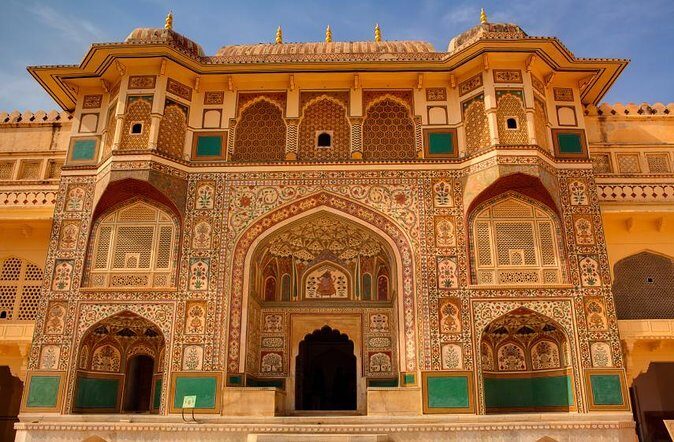
- Amber Fort’s palace-fort combo: red sandstone and white marble, with Maota Lake views
- Hawa Mahal’s 953 jharokas: short visit, but you’ll know exactly what to spot fast
- Nahargarh Fort on the ridge: big overlooks plus a surprising 1857 connection
- Jal Mahal at Sagar Lake: the Water Palace effect is all about timing and light
- Jantar Mantar’s Smarat Yantra: a giant stone sundial and a working idea of astronomy
Two days from Delhi: why this Jaipur route works
If you’re coming from Delhi and you only have a couple of days, Jaipur can either feel rushed—or it can feel satisfying. This plan is built for that middle ground. You’re not trying to cram in every temple or market stall. You’re focusing on the monuments that define the city: defense, royal display, and the strange math of the night sky.
The private car matters here. It keeps the schedule tight without making you deal with public transport at odd times. Hotel pickup and drop-off are included, so you can start moving right from where you’re staying.
And yes, it’s a long day on both days, but the structure helps: each stop is timed so you see the main features without losing hours to wandering.
You can also read our reviews of more private tours in New Delhi


Day 1: Amber Palace at noon, with Maota Lake views
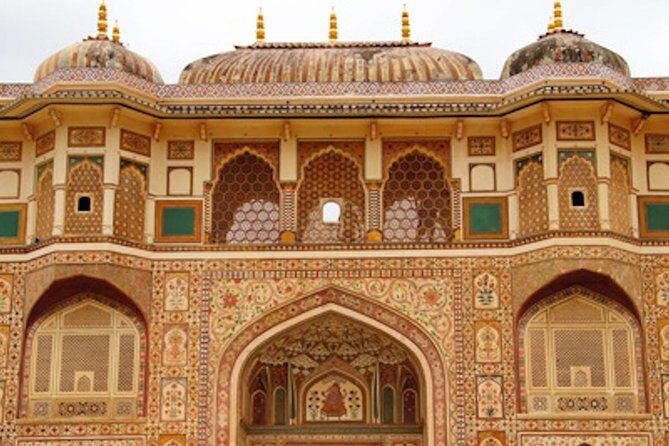
Your day begins with a drive out of Delhi at 7 a.m. After the ride, the first real payoff is Amber Fort (also called Amber Palace), arriving around noon. Amber is a strong opener because it’s both a fort and a palace, built with red sandstone and white marble. That color combo isn’t just pretty—it’s part of the visual language of royal power in Rajasthan.
The fort was built by Raja Man Singh I and completed by Mirja Raja Jai Singh. You’ll notice the scale of the fort walls right away. They’re the reason Amber feels like a stronghold rather than just a building. Inside, the details shift from defensive to decorative, including intricate wall paintings and frescos made with precious gems and jewels. Even if you don’t know the stories yet, the effect is clear: this was meant to impress.
One practical bonus: you get a fantastic view over Maota Lake from the fort. That perspective helps you understand why Amber was strategically placed, and it makes the photos easier. You’re not fighting for angles as much because the setting gives you natural framing.
Possible drawback: since this is arriving around midday, the light can be harsh. If you’re serious about photos, aim to spend extra time early inside for shaded corridors, then use the open areas for wider views.
Hawa Mahal in 30 minutes: what to look for in the honeycomb facade
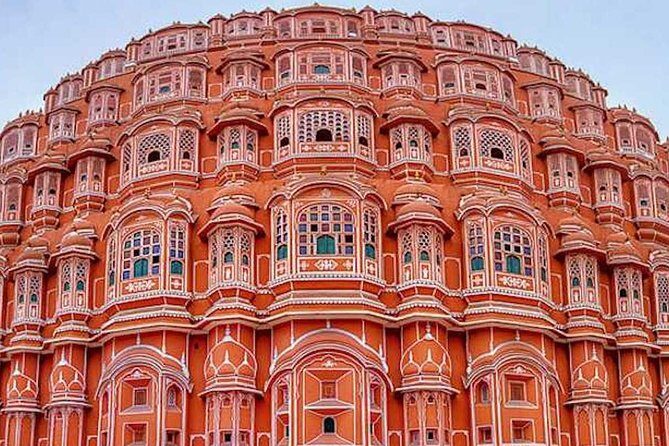
After Amber, you’ll head to Hawa Mahal (Palace of Wind). This stop is shorter—about 30 minutes—and that’s exactly why it works in a tight itinerary. Hawa Mahal is one of those sights where the main drama is visible fast.
It was built in 1798 by Maharaja Sawai Pratap Singh. The building is designed like a five-storied honeycomb, with 953 small windows called jharokas. The lattice work on the facades is the star, and your best strategy is simple: don’t get lost in the maze of repeating patterns. Pick a few windows and focus on the craftsmanship and geometry.
A neat detail: the architecture is described as representing the crown of Lord Krishna. You’ll also hear the famous design claim that the palace stays filled with a cool breeze regardless of the season. Even without testing the airflow yourself, you can see the logic—those numerous openings are meant to move air through the structure.
What to budget: admission is not included for this stop. Plan to add the ticket cost so you don’t get stuck deciding on the spot.
Nahargarh Fort: defense, 1857 history, and Pink City views
Next up is Nahargarh Fort, about an hour. Nahargarh (the Abode of Tigers) was built by Jai Singh II to tighten the defenses of the city. The fort story doesn’t just stay military, though.
There’s also a notable historical connection: it served as a safety shelter for the wives of British Army officers during the Sepoy Mutiny in 1857. That’s the kind of detail that makes a fort feel more human, not just stone and walls.
The location helps too. Nahargarh sits on a rocky ridge of the Aravalli Hills, and that elevation gives you a striking view of Jaipur’s pink landscape. This is where the day’s theme shifts from royal interiors to the bigger picture—how the city is laid out and how the forts watched over it.
Tip that saves time: don’t plan to linger everywhere. Pick two or three key viewpoints, then walk back through the routes that connect them. You’ll get a better sense of the ridge line rather than collecting random shots.
Nahargarh’s admission ticket is included, so you can focus on time and viewpoints rather than managing costs here.
Day 2: Jal Mahal at Sagar Lake, the Water Palace illusion
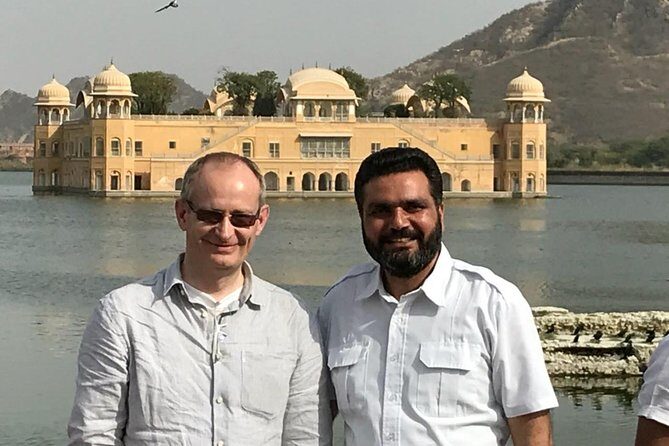
Day two starts with Jal Mahal, the Water Palace. This is arguably one of the most scenic sights in Jaipur. The palace is set in Sagar Lake, and it has that signature “floating palace” look—low-rise walls in light sand color rising out of deep blue water.
It used to be a shooting lodge for the Maharajah, which adds a subtle layer to what you’re seeing. It’s not just a pretty structure; it’s tied to the lifestyle of rulers who used these sites for leisure and display.
You’ll likely spend about 30 minutes here. That might feel short, but the point of Jal Mahal is immediate: the visual contrast between stone and water does most of the work. If you want photos, try to walk to spots that give you a straight-on view of the palace walls rather than shooting from too close.
What to budget: admission is not included for Jal Mahal. Also remember that food and drinks are not included, so keep an eye on what you’ll need for the rest of the day.
A few more New Delhi tours and experiences worth a look





Jantar Mantar: seeing astronomy as real stone machinery
To end the Jaipur visit, you’ll go to Jantar Mantar. This astronomical observatory was built by Sawai Jai Singh in 1730. It holds 19 architectural instruments used to correct astronomical tables about planetary positions.
Here’s why this stop feels refreshing if you’ve already seen fort walls and royal facades. Jantar Mantar takes the same idea—power and knowledge—but it shows it in measurements and models. Instead of defending a city, it aimed at understanding the sky well enough to make predictions more accurate.
The highlight is Smarat Yantra, described as the world’s biggest stone sundial. It’s the kind of object that makes you pause and realize: this was meant to work. When you look at the size and angle, you can understand how rulers took science seriously, not just as a footnote.
This stop lasts about an hour, and admission is included. That makes Jantar Mantar a strong value closer at the end of the day—you don’t have to plan extra entry tickets to enjoy the core learning moment.
The guide and driver factor: why it changes everything
For monuments like Amber and Jantar Mantar, a guide isn’t just “nice.” It’s how you turn carvings and geometry into something you can remember.
The strongest pattern from prior experiences is guide quality. Guides such as Neeraj are described as friendly and good fun, and Balwinder is mentioned as making the tour enjoyable while knowing his history. That kind of delivery matters because Jaipur can throw details at you quickly—architecture, symbolism, and dates—and a good guide helps you connect the dots without dragging the pace.
The driver also affects your stress level. A courteous, safe driver is more than comfort; it keeps you arriving with energy for the next climb, viewpoint, or walk. For a 2-day plan that starts early and moves all day, that’s a real part of the value.
Price and value: what you’re paying for at $333.34
At $333.34 per person, this tour is priced for a private-car, two-day format with a guide and included admissions at three major sites. You’re not just paying for entry fees. You’re paying for two big things you’ll feel on the ground:
1) Transportation plus time efficiency
Private car with hotel pickup and drop-off means you’re not losing half-days sorting out rides.
2) A guided route with included entrances
Amber Fort, Nahargarh Fort, and Jantar Mantar have admission tickets included. Hawa Mahal and Jal Mahal don’t, but the included mix still covers a lot of the “must-see” effort.
Then there’s the included overnight accommodation and breakfast. That takes pressure off your planning. You get a proper rest point between days rather than trying to hop back to Delhi the same evening.
The main cost swings you should plan for are straightforward: meals and drinks aren’t included, and two entrances aren’t included. Once you account for those, the price feels more reasonable because the biggest time sinks and biggest “named sights” are already handled.
Practical tips for this exact 2-day rhythm
This itinerary is structured for momentum. Here’s how to make it feel smooth instead of hectic.
- Start your day ready for sun and steps: Amber and Nahargarh involve walking and viewpoints. Comfortable shoes matter more than you think.
- Have a ticket plan for what’s not included: Hawa Mahal and Jal Mahal admission tickets aren’t included, so budget for them ahead of time.
- Plan for meals like a grown-up adult: food and drinks aren’t included, even though breakfast is. Bring a plan for lunch and a simple dinner option in your hotel area if you like keeping logistics easy.
- Use the short stops well: Hawa Mahal is about speed—spot the jharokas and lattice work, then move. Jal Mahal is about the illusion—get a clear view and don’t waste time walking in circles.
- Let the guide keep pace with your energy: if you’re tired, ask the guide to focus your attention on the top details. That’s often the best use of a 30-minute stop.
Who this tour suits (and who might want something else)
This works best if you want classic Jaipur highlights without building a do-it-yourself schedule from scratch. It’s a strong fit for first-timers who still want quality time at the key monuments.
It’s also a good match for people who like fort-and-palace variety: Amber’s artistic opulence, Hawa Mahal’s window maze, Nahargarh’s ridge views, Jal Mahal’s water illusion, then Jantar Mantar’s science stop.
If you’re the type who hates crowds or needs slow museum pacing, this may feel tight. The plan is focused, and each stop is timed.
Should you book this Jaipur forts and palaces tour?
I’d book this if your goal is simple: see the best-known Jaipur monuments with less friction, in a private-car format, and with a guide to translate what you’re seeing. The included admissions at Amber, Nahargarh, and Jantar Mantar make it feel like a real tour rather than a bus-and-pray sightseeing day.
I’d think twice if you don’t want to handle extra entrances for Hawa Mahal and Jal Mahal, or if you’d rather have food included so you can stop thinking about logistics. Also, because it’s a fast 2-day loop from Delhi, you’ll want to accept that you’re there for key stops, not deep wandering.
If you’re trying to make Jaipur count in a short window, this route is one of the more sensible ways to do it. You’ll come away with forts you can picture, palaces you can name, and a surprising ending at Jantar Mantar that doesn’t feel like the same kind of sightseeing twice.
FAQ
What time does the tour start?
The tour starts at 7:00 am.
How long is the tour?
It’s listed as 2 days (approx.).
Is hotel pickup and drop-off included?
Yes. Hotel pickup and drop-off are included.
Do I need to buy tickets for all the sights?
No. Admission tickets are included for Amber Palace, Nahargarh Fort, and Jantar Mantar. Admission is not included for Hawa Mahal and Jal Mahal.
Is overnight accommodation included?
Yes. Overnight accommodation is included.
Is breakfast or other meals included?
Breakfast is included. Food and drinks are not included.
Is this a private tour?
Yes. This is a private tour/activity, and only your group will participate.