REVIEW · NEW DELHI
Most Popular Delhi Tour – Best of Old Delhi & New Delhi in One Day
Book on Viator →Operated by When in India Tours · Bookable on Viator
Old Delhi can overwhelm you fast, so this plan helps you get your bearings fast. In one day you’ll see the main contrasts of Delhi, from Jama Masjid and Chandni Chowk lanes to New Delhi’s big monuments like Humayun’s Tomb and Qutub Minar. I love that the tour uses the right transport for each neighborhood, so you’re not stuck fighting traffic in Old Delhi. I also like that your guide connects the dots between ancient, medieval, and modern city life instead of making you read a guidebook. The main drawback: monument entry charges and meals cost extra, so check your budget before you go.
You’re picked up from your hotel in an AC car, then dropped back about 8–9 hours later. Wear comfortable shoes and dress appropriately for religious stops, because you’ll be walking and you’ll also be visiting places of worship.
In This Review
- Key Highlights You’ll Care About
- Why One-Day Delhi Really Works (Old vs New in 8 Hours)
- Hotel Pickup and the Transport Switch That Makes It Feel Effortless
- Old Delhi’s Core Stops: Jama Masjid to Red Fort, Explained by Your Guide
- What to watch for
- The Cycle Rickshaw Lanes: Chandni Chowk, Kinari Bazaar, and Dariba Kalan
- The practical side of rickshaws
- Places of Worship: Hindu, Jain, Christian, Sikh, and More in One Route
- Havelis and Old Architecture: Mughal-Era Details You Can Actually See
- UNESCO Day Anchors: Humayun’s Tomb and Qutub Minar
- Humayun’s Tomb (UNESCO)
- Qutub Minar (UNESCO)
- One-day reality check
- Lutyens’ Delhi Icons: India Gate, Raj Ghat, and Presidents House (Outside)
- Price and Value: What $141.67 Covers (and What Costs Extra)
- What to Bring and How to Dress for Religious Stops and Old-Lane Walking
- Who Should Book This One-Day Delhi Old + New Tour?
- Should You Book This Tour?
- FAQ
- What’s the duration of the tour?
- Where does the tour start?
- Is hotel pickup and drop included?
- Do I need to buy tickets for monuments?
- Is food included?
- What transportation is used in Old Delhi?
- What language will the guide speak?
- What’s the meeting point like?
- What should I wear?
- What if I need to cancel?
Key Highlights You’ll Care About
- Cycle rickshaw time in Old Delhi so you can move through narrow lanes where cars can’t go
- Real Old-to-New contrast with Old Delhi bazaars and New Delhi UNESCO monuments in the same day
- Humayun’s Tomb and Qutub Minar as the big UNESCO anchors of the itinerary
- Market stops that feel specific, not generic like Khari Baoli spice market and Dariba kalan silver street
- Outside views for major New Delhi landmarks like Presidents House, plus India Gate and Raj Ghat
Why One-Day Delhi Really Works (Old vs New in 8 Hours)
Delhi is split into two very different worlds, and this tour is built to show you both without wasting your day. Old Delhi is traditional: narrow streets, active bazaars, and religious landmarks you’ll see while people go about daily life. New Delhi feels modern and planned, with wide roads and government-style architecture.
The smartest part of the schedule is the balance. You start in Old Delhi first—when your legs are fresh—and then you shift to New Delhi monuments later, where the walking is easier to manage. It’s also ideal for first-timers who want an overview. You’ll come away with a mental map of where things are, what each area is known for, and how Delhi’s layers of time overlap.
One more thing I like: the tour sets expectations clearly that Delhi has a long, complicated past—built and destroyed multiple times—so your guide can explain what you’re seeing in front of you, not just list dates.
A few more New Delhi tours and experiences worth a look



Hotel Pickup and the Transport Switch That Makes It Feel Effortless
The day starts with a hotel pickup in an AC sedan, with a start time listed around 9:00 am (some plans prefer about 8:30 am). Either way, it’s timed so you can reach Old Delhi before the day gets too hot and before crowds get too chaotic. Your driver handles the driving and parking, and you get round-trip transport included.
Then comes the key transport idea: Old Delhi’s narrow lanes aren’t made for cars. That’s why the tour uses cycle rickshaws inside Old Delhi. You’ll get a slower, human-paced view of the streets that feels like how the city actually functions, with storefronts close to the road and people right in your line of sight.
The handoff is also practical. You spend enough time moving through Old Delhi to feel the neighborhoods, then you leave the toughest streets behind and return to your car for New Delhi. That pacing matters when you only have one day.
Old Delhi’s Core Stops: Jama Masjid to Red Fort, Explained by Your Guide
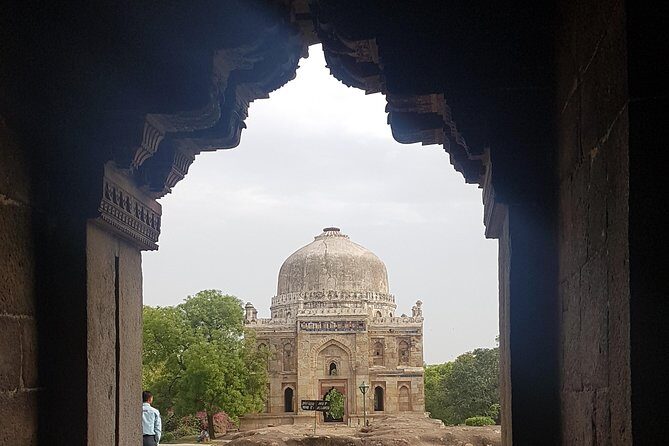
Old Delhi begins with a major anchor: Jama Masjid. This is the kind of place where you can’t fully understand it without hearing context, because the scale and the flow of visitors make it feel alive. Your guide is there to explain what you’re looking at and why the mosque matters in the city’s everyday rhythm.
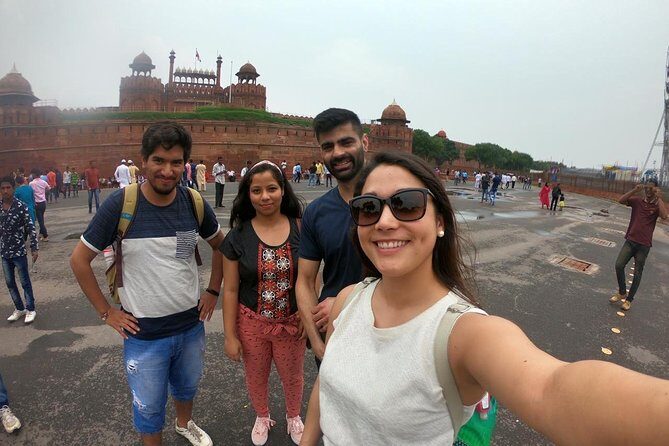
From there, you’ll work your way through the classic Old Delhi spine. The itinerary includes historic highlights such as the Red Fort and the Town Hall area. Even when you aren’t going deep into every single site, the combination is useful. You get a sense of the monumental structures alongside the street-level city that surrounds them.
One big advantage: you don’t need to play “figure it out” with a guidebook. Your guide’s job is to give the historical and cultural insights while you’re actually standing in the right place. That’s what makes the time feel worth it.
What to watch for
Old Delhi is active and you’ll be moving between sites, plus there are religious spaces involved. Give yourself time for short pauses for photos and questions, and don’t try to treat this like a speed-run.
The Cycle Rickshaw Lanes: Chandni Chowk, Kinari Bazaar, and Dariba Kalan
If you want one part of this tour that feels truly special for a one-day visit, it’s the cycle rickshaw stretch through the old lanes around Chandni Chowk. This is where the city’s texture shows up: tight street corners, layered storefronts, and people doing everyday business.
Your route also includes market-style streets with distinct identities:
- Khari Baoli, Asia’s largest spice market, is a sensory stop where you’ll see the spice trade as a real industry, not a tourist prop.
- Kinari bazaar is known for traditional outfits and wedding market items—great if you’re curious about what locals buy for big life moments.
- Dariba kalan is the famous silver street. You get a clear visual of how craft and retail shaped the neighborhood economy.
The tour also mentions visiting heritage havelis with Mughal architecture. Depending on timing and access, you may either go inside or drive past, but the point is the same: Old Delhi isn’t only monuments and mosques. It’s also about the older residential architecture and how wealthy families lived and displayed their status.






The practical side of rickshaws
Cycle rickshaws are part of why the tour works. You’re not fighting traffic or forced into long detours. Instead, you travel in the lane system that makes Old Delhi feel like Old Delhi. Just remember: you’re on your feet some of the time, and you’ll want comfortable shoes for the walking between stops.
Places of Worship: Hindu, Jain, Christian, Sikh, and More in One Route
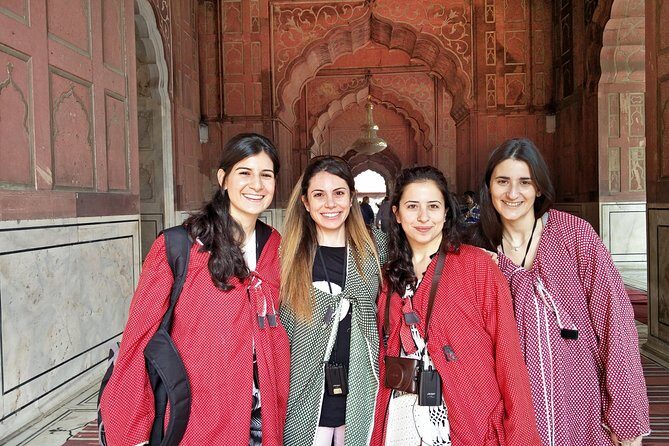
A big reason this tour feels like more than a checklist is how it weaves different religious landmarks into the day. Along the way you’ll see worship places such as a Hindu Temple, a Jain Temple, a Christian Baptist Church, Fatehpuri Mosque, and a Sikh Temple.
That mix is powerful because Delhi isn’t one single story. It’s many communities living near each other, shaped by geography, history, and migration. Seeing these sites in the same route gives you a clearer sense of how Old Delhi’s streets function as shared space.
Before you go, plan your clothing accordingly. The tour notes that you’ll visit religious places, so dress appropriately. If you’re unsure, go conservative: shoulders covered, legs covered, and comfortable layers in case indoor spaces require more modesty.
Havelis and Old Architecture: Mughal-Era Details You Can Actually See
Old Delhi architecture can be hard to notice if you’re moving too fast. This tour helps because it slows down around the areas where the craftsmanship shows up.
The itinerary includes “Heritage Havelis with original Mughal architecture.” In practical terms, that means you’re looking for the carved facades, the patterns, and the building proportions that reflect Mughal-era influences. Depending on your day, you might go inside some havelis, or you may simply view them closely from the street or pass by in the car.
Either approach still helps you understand what people mean when they say Old Delhi is layered. It isn’t just one style; it’s a mix of times living on top of each other. A short look at havelis can give you that “oh, that’s why it looks like that” moment that makes the rest of the day click.
UNESCO Day Anchors: Humayun’s Tomb and Qutub Minar
After Old Delhi, New Delhi kicks in. This is where the skyline shifts into wide avenues and the monuments start looking like landmarks you’d recognize even from photos.
Humayun’s Tomb (UNESCO)
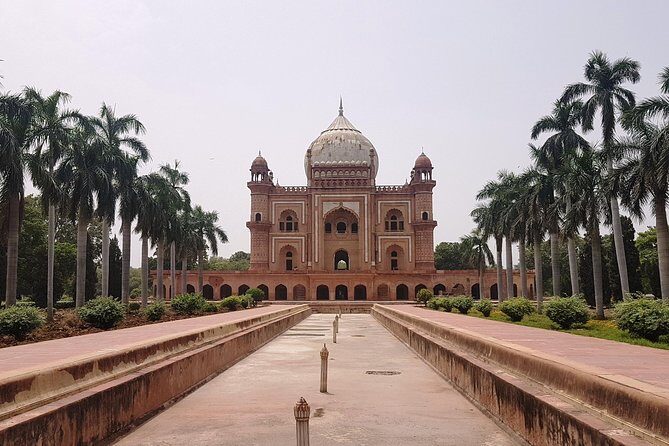
Humayun’s Tomb is a UNESCO World Heritage site and is described as an inspiration for the design of the Taj Mahal. It’s also noted as the first garden-tomb in India and is a burial site of a Mughal emperor. Even if you’ve seen images before, the tomb works better when you understand its function: it’s designed as both memorial and planned space.
Qutub Minar (UNESCO)
Next is Qutub Minar, another UNESCO World Heritage site. The tour calls it the Victory Tower, built around 1200 AD, and notes it as one of the tallest and most famous towers in the world. This is a stop where your guide’s explanation makes a difference—how it was built, why it became a landmark, and how it fits into Delhi’s older layers of power.
One-day reality check
UNESCO sites can mean more time spent inside or watching entrances and rules. Still, these two stops are the correct choice for a first-time overview because they anchor the day in architecture you can visualize and remember.
Lutyens’ Delhi Icons: India Gate, Raj Ghat, and Presidents House (Outside)
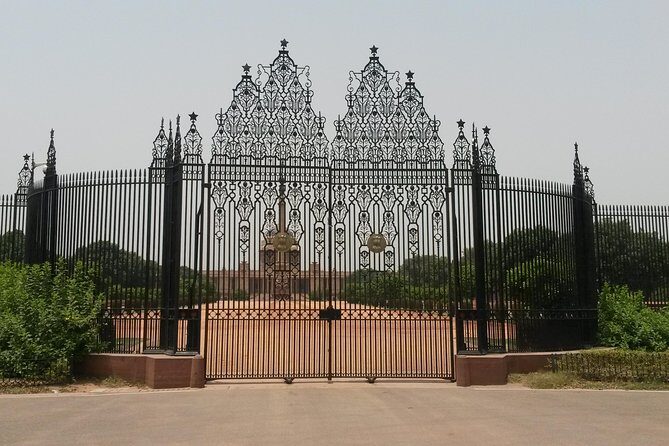
Once you’ve moved from UNESCO gardens and towers, the itinerary shifts to classic New Delhi memorial and civic landmarks.
Raj Ghat is the burial place of Mahatma Gandhi. The tour notes its name loosely translates as Kings Bank. This stop is more about atmosphere and meaning than big photo moments, so treat it like a reflective pause in the middle of a busy day.
Then you’ll see India Gate, described as a national war memorial built in memory of 90,000 soldiers who died during World War I. It’s also noted as one of India’s biggest war memorials. It’s a strong way to understand why public space and monuments matter in New Delhi.
Finally, Presidents House is included as an outside visit only. It’s described as one of the largest residences of any head of state, in terms of size and magnificence, and it’s the official home of the President of India. Even without going inside, the scale helps you understand how New Delhi was designed as a seat of government.
Price and Value: What $141.67 Covers (and What Costs Extra)
This tour is priced at $141.67 per person for an about 8-hour day, with hotel pickup and drop included. That matters because Delhi traffic and distances can easily eat a full day even if you know what you want to see. Here, you’re paying for transport, driver support, guide interpretation, and the planning that strings everything together.
Included items:
- Bottled water
- English speaking guide
- Trained driver
- Pick & drop, air-conditioned vehicle
- Parking and fuel charges
Not included:
- Food
- Monument entrance charges
- Shopping (if any)
- Gratuities (optional)
So the best way to think about value is this: you’re paying for time-saving logistics and for a guide to interpret the city while you’re in the right place. If you plan to visit paid sites anyway, you’ll be paying those fees whether you do a tour or not. The tour cost covers the “how to do it without chaos” part.
If you’re budget-minded, plan to budget extra for entry fees and one or two meals/snacks. The included bottled water helps, but don’t assume lunches are covered.
What to Bring and How to Dress for Religious Stops and Old-Lane Walking
This day mixes car rides, rickshaw movement, and walking. The tour explicitly advises comfortable shoes and appropriate clothes for religious places. That’s not a small note—Old Delhi involves footwear that you can walk in on uneven ground.
I’d also suggest you carry:
- A light layer (air-conditioning + open weather can feel like a temperature swing)
- A small bag for water and any souvenirs you might pick up
- Something to keep sun off your face (hat or sunglasses), especially in the morning-to-midday hours
You’ll also want to be ready for a photo-heavy day. Old Delhi rewards attention to detail—shop signs, carved facades, and street life. New Delhi rewards patience at viewpoint-style monuments like Humayun’s Tomb and Qutub Minar.
Who Should Book This One-Day Delhi Old + New Tour?
This tour fits you best if:
- You’re visiting Delhi for the first time and want a clear overview fast
- You like guided context as you walk through historic areas
- You want Old Delhi’s markets without doing the planning yourself
- You’re okay with paying extra for monument entries and meals
It may not be your best match if you’re a hardcore monument devotee who wants long, slow stays at fewer places. This itinerary is more about contrast and getting your bearings than spending hours at one single site.
Also, the tour notes “most travelers can participate.” Still, if you’re very sensitive to crowded streets or long walking days, plan your pace and ask your guide to help you manage stops.
Should You Book This Tour?
I think it’s a strong booking for most first-timers because it hits the core “Old vs New Delhi” experience in one day, with the right vehicle strategy. The cycle rickshaw portion through the lane system is the kind of thing that’s hard to recreate on your own without time and local know-how. Add the UNESCO anchors—Humayun’s Tomb and Qutub Minar—and you get a day with enough variety to justify the upfront cost.
Book it if you want structure, transport, and guided storytelling. Consider alternatives only if you already know exactly which monuments you want to prioritize and you’d rather spend a full day at fewer stops.
FAQ
What’s the duration of the tour?
It’s listed as about 8 hours (approximately), with drop-off back to your hotel after 8–9 hours from pickup time.
Where does the tour start?
The start time is listed as 9:00 am, and pickup is offered from your Delhi hotel.
Is hotel pickup and drop included?
Yes. Pick & drop from your hotel is included, along with an air-conditioned vehicle and parking/fuel charges.
Do I need to buy tickets for monuments?
Monument entrance charges are not included, so you should expect to pay extra for entries where required.
Is food included?
Food is not included.
What transportation is used in Old Delhi?
The tour uses cycle rickshaws in Old Delhi because motor vehicles can’t go inside the narrow streets.
What language will the guide speak?
The tour includes an English speaking guide.
What’s the meeting point like?
Pickup is from your hotel, and the additional info notes near public transportation (no specific street address is provided in the details).
What should I wear?
Wear comfortable shoes and appropriate clothes, since you’ll visit some religious places.
What if I need to cancel?
This experience is non-refundable and cannot be changed for any reason. The amount paid will not be refunded if you cancel or request an amendment.