REVIEW · NEW DELHI
2-Day Golden Triangle Tour to The Taj Mahal, Agra and Jaipur from Delhi by Car
Book on Viator →Operated by Nikita Holidays · Bookable on Viator
Early mornings, big monuments, zero stress. This 2-day Golden Triangle run strings together Taj Mahal and Jaipur’s top sights with a private guide, private air-conditioned driving, and entrance fees handled for you. I also like that you get a full included night in Jaipur plus practical extras like bottled water in the car and a golf cart ride at the Taj. The main catch is simple: it’s a packed schedule with long stretches behind the wheel, and traffic can stretch the day.
Day 1 starts with pickup at 7:00am and a roughly 3-hour drive to Agra, so you’re moving fast from the moment you arrive. The second day keeps the pace up with a 7:30am breakfast-and-checkout flow and then a morning push for Jaipur landmarks. If you’re expecting a slow, lazy sightseeing trip, this one isn’t that.
Still, the structure is what makes it feel good value. You’re not juggling tickets, finding meeting points, or figuring out logistics between cities. You do have to be okay with early starts and “go-see, go-photo, go-next” pacing, plus lunch is included but can’t be guaranteed as a highlight every time.
In This Review
- Key things to know before you go
- The 2-day Golden Triangle pace: what you gain (and what it costs)
- Delhi pickup and the drive to Agra: how to start the trip right
- Taj Mahal in Agra: the included timing, access, and photo payoff
- Agra Fort: why this stop adds depth to the Taj
- Lunch in Agra and the jump to Jaipur: managing the long middle
- Jaipur on Day 2: Hawa Mahal first thing at 8am
- Amber Fort: the big fort moment with a smart morning flow
- City Palace and Jantar Mantar area: where Jaipur’s rulers lived
- Optional textile and carpet craft stop: a useful pause if you shop
- The Jaipur hotel night: included comfort, variable quality
- Private guide and car: why this arrangement usually feels worth it
- Price and value: is $224 a fair deal for 2 days?
- The main considerations: early start, long drives, and lunch variation
- Who this tour suits best (and who should think twice)
- Should you book this 2-day Golden Triangle drive?
- FAQ
- What time is pickup in Delhi?
- How long is the tour?
- Is the Taj Mahal visit and admission included?
- Do I get a hotel night in Jaipur?
- Are meals and water included?
- Is cancellation free, and what about special gala dinners?
Key things to know before you go
- Private guide + entrance fees handled: You spend time looking, not queue-wrangling.
- Jaipur hotel night included: You get an actual overnight in Rajasthan instead of rushing through with no rest.
- AC private car with water: Long drives feel more manageable.
- Golf cart ride at Taj Mahal: A small thing that saves time and effort.
- Two meal stops included: Lunch happens twice; you can plan around it.
- Dress smart casual: You’ll be asked to match a modest, visitor-friendly style at sites.
The 2-day Golden Triangle pace: what you gain (and what it costs)
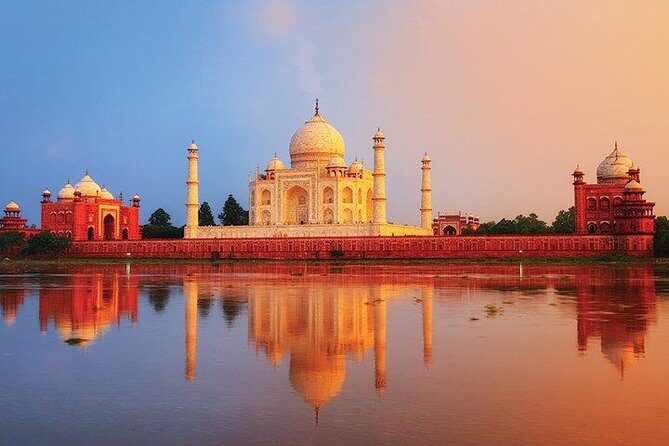
This tour is built for travelers with limited time. In 2 days you cover three big names: Agra and its Mughal icons, then Jaipur and its royal-era architecture. That speed is the entire point, and it’s why the experience can feel either perfectly efficient or slightly intense.
What you gain is obvious: you see the big-ticket monuments without spending your precious first days in India figuring out transport and ticketing. The day is organized by time blocks—Taj Mahal first, then Agra Fort, then a lunch break, then the drive west to Jaipur. On Day 2 you roll into Hawa Mahal and Amber Fort in the morning and finish with City Palace and time permitting a textile/craft stop.
The tradeoff is time. Even with an air-conditioned private vehicle, you’re still spending hours traveling. Plus, the schedule depends on traffic, since transfer durations are approximate. If you’re the type who needs breathing room between sights, you might feel the squeeze. If you like a focused checklist approach—see it, learn it, photograph it—this tour fits.
A few more New Delhi tours and experiences worth a look


Delhi pickup and the drive to Agra: how to start the trip right
Pickup is at 7:00am from your hotel, the airport, or a railway station in Delhi, Noida, or Gurugram. That early start is part of the design. You drive to Agra via the express highway, and the transfer time is about 3 hours, depending on the day.
For me, the biggest value here is that the tour is private. You’re not squeezed into a multi-stop shuttle with strangers’ timing problems. You also get bottled mineral water during the journeys, which matters when you’re doing a long-day circuit.
Practical tip: plan to travel light and keep a small day-bag accessible. You’ll need it for sun protection, a refillable bottle (even if water is provided), and anything you’ll want during the quick photo stops. This is the kind of trip where you don’t want to be digging through luggage every time you stop.
Taj Mahal in Agra: the included timing, access, and photo payoff
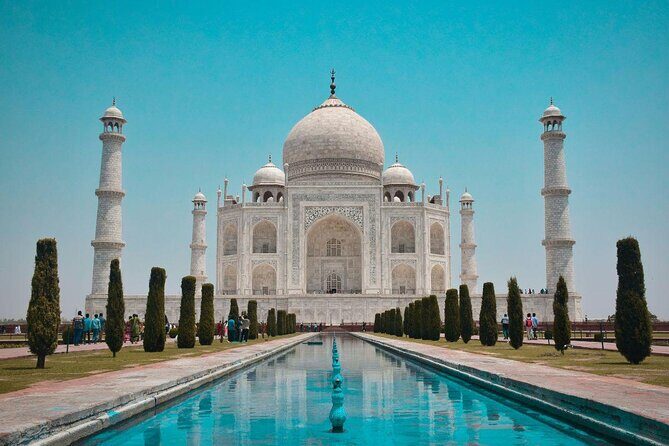
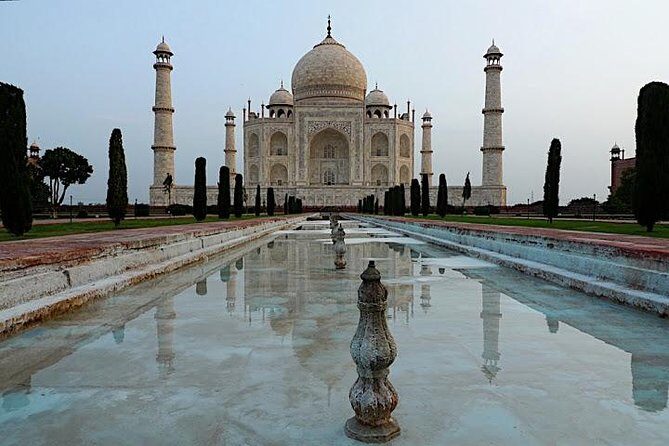
Taj Mahal is the star, and you’re given a focused visit with admission included and an allotted time of about 2 hours. You’ll meet your guide after arriving in Agra, and then you’ll tour the monument with explanations as you go.
A helpful detail included in this specific tour is the golf cart ride to and from the Taj Mahal in Agra. This matters more than it sounds. You save energy for looking and photographing rather than spending it on long walks at a site where crowds and pathways can slow you down.
What makes Taj Mahal special is not just the marble and symmetry—it’s how the whole complex is designed to pull you through a sequence of views. With a private guide, you’re more likely to catch the subtle angles people miss when they rush. This is where having a guide who can point out the best perspective makes a real difference, not just for photos, but for understanding what you’re looking at.
Dress and behavior tip: keep your outfit smart casual (the tour specifies smart casual). Comfortable shoes help too, since you’ll be standing and moving around even if much of your effort is saved by the golf cart.
Agra Fort: why this stop adds depth to the Taj
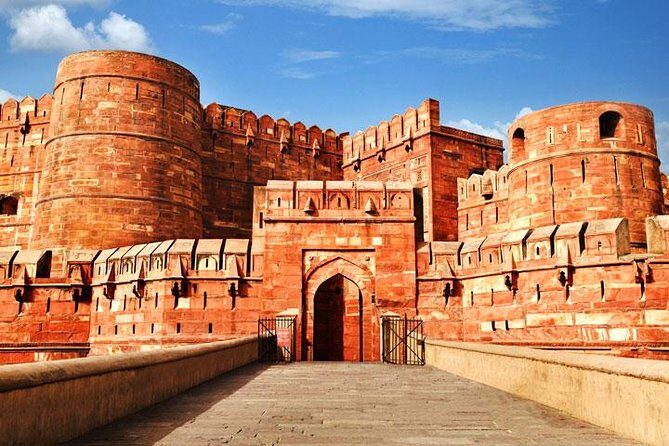
Right after Taj, the itinerary shifts to Agra Fort. It’s also an UNESCO World Heritage site, with admission included and about 1 hour allotted.
Agra Fort often gets less attention than the Taj Mahal, but that’s exactly why it’s worth going. Taj Mahal is a masterpiece of memory and emotion. Agra Fort is the fortress context—the power base around which rulers operated. You get a change of pace: courtyards, mosques, and the “how did empire work here?” feeling.
The fort was built by Emperor Akbar in 1565 A.D, and it’s made of red sandstone. Even if you’re not a hardcore architecture nerd, you’ll likely appreciate the way the fort’s layout frames views and pathways differently than the Taj complex does. It turns your trip from a single-icon photo stop into something more grounded.
Possible drawback: 1 hour goes quickly at a large site. If you love forts and want to read every inscription and detail, you may wish the time were longer. Still, the guide time plus the proximity to the Taj route makes it efficient.
Lunch in Agra and the jump to Jaipur: managing the long middle
After Agra Fort, you get a lunch break. Lunch is provided at a local restaurant, and the itinerary gives time as a transition point before you drive to Jaipur.
The practical reality: included lunch is convenient, but restaurant choice can vary in quality. Some trips run smoothly with good food and clean service; others can feel like a quick stop rather than a culinary highlight. I’d treat lunch here as “fuel,” not “destination dining.”
Then the day continues: you drive to Jaipur, the Pink City. It’s a long westbound transfer, and this is where the air-conditioned car and bottled water do their quiet work. You’ll arrive ready to hit the next day’s sights, rather than spending your whole Day 1 hunting for dinner plans or finding transport.





Jaipur on Day 2: Hawa Mahal first thing at 8am
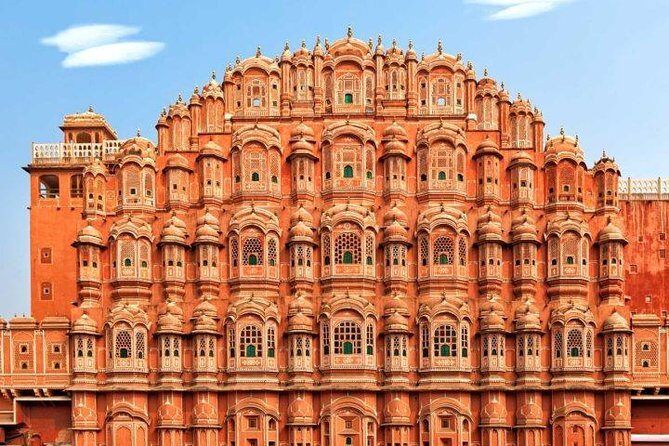
On Day 2, breakfast comes first, then check out from the Jaipur hotel. You start sightseeing at 7:30am and are on the road to Jaipur sights. The itinerary’s first major photo stop is at 8:00am at Hawa Mahal.
Hawa Mahal, Palace of Wind, is built in 1799 by Maharaja Sawai Pratap Singh, and it’s one of those buildings that looks like a decorative backdrop—until you realize how functional it was. It’s basically a façade designed for ventilation and for allowing royal women to observe life while staying behind the screen-like structure.
You get about 30 minutes here, with a free admission ticket. That timing is a win: start early to reduce crowd crush, then move on before the day gets too thick. Even if you’re not a “front façade” person, you’ll likely appreciate how it frames people and city movement.
Quick style note: keep your smart casual look. The Jaipur sites are visitor-friendly, but the expectation is tidy, modest clothing.
Amber Fort: the big fort moment with a smart morning flow
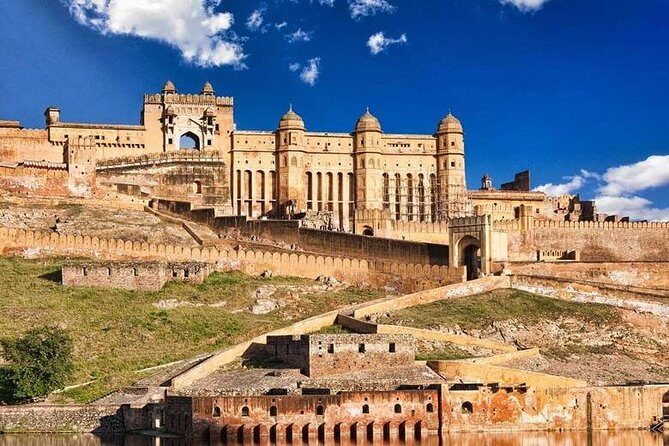
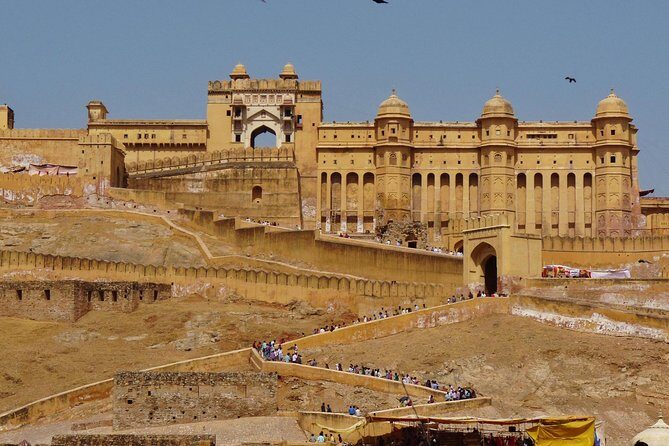
After Hawa Mahal, you head to Amber Fort (also called Amber Palace). The fort once served as the capital for the Kachhwaha clan before Jaipur became official capital in 1727. You’re given about 2 hours, and admission is included.
There’s also a photo stop at Jal Mahal on the way. That’s the classic “water palace” view—something you can grab on the move without turning it into its own half-day project. It’s a good use of time: quick visuals, then back to the real focus.
Amber Fort is the type of monument that rewards a slower walk, but 2 hours still works if your guide helps you prioritize. If you want the best experience, pay attention to the guide’s pace: you’re there for the fort’s overall layout and the story behind it, not just one spot for photos.
What I like about scheduling Amber Fort after Hawa Mahal is simple: your eyes adjust as you transition from palace façade to a more expansive fortified complex. You don’t feel like you’re seeing the same visual again and again.
City Palace and Jantar Mantar area: where Jaipur’s rulers lived
After lunch, you continue to the City Palace of Jaipur. This is the principal residence of the ruling family historically, and part of it is now a museum. Your time here is about 1 hour 30 minutes, with admission included.
City Palace is less about one photo angle and more about layers—rooms, courtyards, and the sense that you’re walking through an evolving royal complex. Even if you only absorb a few key points, the setting helps you understand why Jaipur’s identity is so tightly connected to its royal planning.
The itinerary also references Jantar Mantar, a stone observatory. The schedule doesn’t guarantee a full extended visit here, but it’s part of the City Palace area flow. If your guide gives you a strong explanation, you’ll probably leave with a better sense of how the site relates to timekeeping and scientific curiosity in that era.
Optional textile and carpet craft stop: a useful pause if you shop
The plan includes time permitting a cottage industry stop specializing in hand-woven carpets and textiles. This is not just a sales stop by default—it can also be a chance to see how silk carpets are handmade, which gives context if you’re curious about the craft process.
Still, I’ll be honest about the tradeoff: if you hate shopping detours, this portion might feel like extra time pressure. If you do enjoy artisan work, it can be one of the more memorable “hands-on” sides of Jaipur beyond the big monuments. Keep your expectations flexible and treat it as a cultural add-on.
The Jaipur hotel night: included comfort, variable quality
A hotel night in Jaipur is included, with breakfast included, and rooms are typically on a twin-sharing basis. The exact hotel can vary, and from the way people describe the stay, it can range from very nice to merely good enough.
If having a comfortable bed and a quiet bathroom is your priority, it’s worth checking the hotel name included with your booking details once you confirm. One reported example from past stays is Lemon Tree Premier in Jaipur, which sounds like a more solid step up. But because hotel quality isn’t guaranteed in every description, I’d choose this tour knowing you’re paying for the sight-heavy itinerary, not for a luxury resort experience.
Private guide and car: why this arrangement usually feels worth it
This tour is private, which means your guide and driver are focused on your group’s pace. That’s not just comfort. It’s also time efficiency. A good guide can keep you moving at the right speed, handle entry processes smoothly, and highlight the best photo angles so you’re not wandering.
The included guide service is also tied to learning value. You’re not only seeing monuments—you’re getting explanations during each stop, and the tour is designed around those moments: Taj Mahal, then Agra Fort, then Hawa Mahal, then Amber Fort, then City Palace.
The car experience matters too. You’re traveling in an air-conditioned vehicle with mineral water during journeys. Past experiences also note clean cars and steady comfort. That’s a big deal in India road travel: it reduces fatigue so you can still enjoy standing, walking, and photographing.
One more practical detail: pickups include airport and railway station pickup, which is useful if you land or arrive in Delhi and want to start immediately.
Price and value: is $224 a fair deal for 2 days?
At $224 per person, this is positioned as a mid-range “everything handled” route: private transport, professional live guide, monument entrance fees, two lunches, breakfast, a Jaipur hotel night, bottled water, and a golf cart ride at the Taj Mahal.
To judge value, focus on what’s included:
- Major entrances are included across Taj Mahal, Agra Fort, Amber Fort, and City Palace.
- Guide time is included on both days.
- Lodging is included for one night in Jaipur with breakfast.
- Meals and water are included for practical needs.
- Golf cart rides at the Taj reduce hassle.
What’s not included:
- Drinks
- Gratuities (recommended)
- Any special gala dinner at the hotel on Christmas Eve or New Year Eve (not included and charged extra)
For many travelers, the biggest “hidden savings” comes from not having to buy separate tickets for each site or negotiate transport between cities while you’re jet-lagged and still learning how India works. When you add up those time costs, $224 can feel reasonable for a tight schedule.
If you’re the kind of traveler who likes to DIY everything—local buses, independent ticket purchases, and no hotel included—this might not be the cheapest route. But if you want a smooth, guided, time-efficient Golden Triangle, this price structure makes sense.
The main considerations: early start, long drives, and lunch variation
If I had to highlight the three things most likely to affect your enjoyment, they’d be:
- Early pickup and packed days: you start at 7:00am and keep moving.
- Traffic risk: transfer times are approximate, and long drive days can test patience.
- Included lunch variability: lunch is provided, but quality can range.
The good news is that the essentials are there: AC transport, bottled water, and a structured plan. If you keep a calm attitude about timing, you’ll spend less energy worrying and more energy absorbing the sights.
Who this tour suits best (and who should think twice)
This tour is a great fit if you:
- Have only a short time in India and want a strong first pass through Agra and Jaipur
- Prefer private transportation and a guide over DIY navigation
- Care about seeing the major monuments without dealing with tickets and logistics
It may be less ideal if you:
- Want a relaxed pace with long free afternoons
- Hate anything that resembles a shopping or textile stop, even if it’s time-permitting
- Need lots of downtime between sights
Should you book this 2-day Golden Triangle drive?
I’d book it if your goal is a focused, guided Golden Triangle with hotel and entrances handled, and you’re comfortable with early mornings and a full schedule. The included Jaipur hotel night, private guide, entrance fees, and Taj Mahal golf cart rides make it feel built for convenience, not just sightseeing.
I’d skip it or consider alternatives if you’re sensitive to long drives, want guaranteed top-tier dining, or need lots of flexible time once you arrive in each city.
If you do book, do one small thing that pays off: plan your days around the monument timing. Bring sun protection, wear comfortable shoes, and keep your expectations aligned with a “see the best, learn the key points, move on” style of travel. That’s when this tour really hits its stride.
FAQ
What time is pickup in Delhi?
Pickup starts at 7:00am from your hotel, airport, or railway station in Delhi, Noida, or Gurugram, or another desired pickup location.
How long is the tour?
The duration is approximately 2 days, with transfer times varying depending on traffic conditions.
Is the Taj Mahal visit and admission included?
Yes. Taj Mahal is included with admission ticket access, and there is also a golf cart ride to and from the Taj Mahal in Agra.
Do I get a hotel night in Jaipur?
Yes. The tour includes one night of accommodation in Jaipur (twin sharing) with breakfast included.
Are meals and water included?
Breakfast is included (with the hotel). Lunch is included twice, and bottled mineral water is provided during the journeys. Drinks are not included.
Is cancellation free, and what about special gala dinners?
You can cancel for a full refund up to 24 hours in advance of the experience start time. Also, any mandatory gala dinner on Christmas Eve or New Year Eve at the hotel of stay is not included and is charged extra.