REVIEW · NEW DELHI
2 Days Private Delhi & Agra Tour with Taj Mahal from Delhi by Car
Book on Viator →Operated by Keeper Landwey · Bookable on Viator
Two days. One big transformation. This private Delhi-to-Agra trip is built around the sunrise Taj Mahal and a chauffeured car that keeps you moving without the usual hassle. I also like how it bundles major Delhi stops with Old Delhi in a tight loop, so you’re not spending half your time figuring out logistics. The main drawback to plan around: monument entrance fees are not included, and the Delhi-to-Agra drive makes the schedule feel efficient.
You’ll start in New Delhi with UNESCO sites and iconic landmarks, then ride through Old Delhi on a tuk-tuk. The next morning, you’re up early for the Taj timing, followed by Agra Fort and Itmad-ud-Daulah, often called the Baby Taj. If your goal is maximum highlights with minimal stress, this one makes sense.
In This Review
- Key highlights to know before you go
- A smart 2-day plan: Delhi first, then Agra at first light
- Day 1 Delhi power hits: Qutub Minar, Lodhi Garden, and Humayun’s Tomb
- Lotus Temple, big government buildings, and Jama Masjid in one day
- Old Delhi the fun way: tuk-tuk ride, Khari Baoli spices, and Bangla Sahib
- Getting to Agra and choosing the right hotel night
- Taj Mahal at sunrise: timing, comfort details, and who to ask for
- Agra Fort and Itmad-ud-Daulah: the second-day payoff beyond the main gate
- Price and value: what $93 covers, and how to plan for entrances and tips
- Private car logistics: pickup areas, group sizes, and time pressure
- Who should book this Delhi and Taj Mahal private tour
- Should you book it?
- FAQ
- What is included in the tour price?
- How much are entrance fees?
- Does the tour include a hotel stay in Agra?
- Is pickup available from my hotel?
- What time is the Taj Mahal visit?
- Is Taj Mahal open every day?
- If my trip starts on Thursday, does the itinerary change?
- How long is the drive between Delhi and Agra?
- Is free cancellation available?
Key highlights to know before you go

- Sunrise Taj Mahal: early start, included battery van from parking to the gate
- Old Delhi by tuk-tuk: you’ll ride through the busy bazaars with explanations from your guide
- UNESCO pairing in Delhi: Qutub Minar, Humayun’s Tomb, and more Mughal-era stops
- Agra depth on Day 2: Agra Fort plus Itmad-ud-Daulah, not just the one postcard
- Strong guide options for the Taj: ask for Maahi for the Agra/Taj portion if it’s available
- Private door-to-door feel: hotel/airport pickup and drop-off in Delhi and Agra
A smart 2-day plan: Delhi first, then Agra at first light

This tour is designed for people who want the highlights but hate the usual “half-day wasted between transit and tickets” feeling. You get a private air-conditioned car with a professional chauffeur, plus private local guides for the sightseeing. That matters because Delhi and Agra aren’t just monuments you walk into. They’re cities with stories, layouts, and strict timing. With a good guide, you get the context fast and spend your energy on the places that actually reward your time.
The rhythm is also practical. Day 1 focuses on Delhi sights and ends with a hotel night in Agra. Day 2 is built around the Taj Mahal at sunrise, then it continues to Agra Fort and Itmad-ud-Daulah before returning you toward Delhi (or dropping you at Agra airport if that’s your setup).
One small note before you book: Taj Mahal is closed every Friday, so your dates need to be flexible around that. Also, if your tour starts on a Thursday, the order flips (Agra on Day 1 and Delhi on Day 2). That’s not a problem, just something to confirm so the sunrise plan still works for you.
You can also read our reviews of more private tours in New Delhi


Day 1 Delhi power hits: Qutub Minar, Lodhi Garden, and Humayun’s Tomb
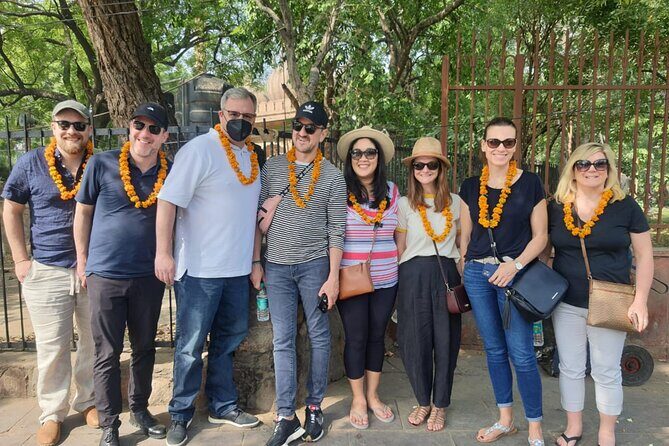
Your day starts at Qutub Minar, a UNESCO World Heritage Site dating back to the 12th century. This is one of those places where the architecture does half the talking for you. The minaret’s geometry and Indo-Islamic design mix feel both monumental and precise, and your guide will help you read the details instead of just snapping photos and moving on.
Next comes Lodhi Garden, a calmer break from the traffic and street noise. It’s a landscaped garden area with grand tombs that point to Delhi’s Mughal legacy. It’s short on time, but it works well as a reset. If you’re sensitive to long days on the feet, this is the kind of stop that keeps the day from turning into pure sprinting.
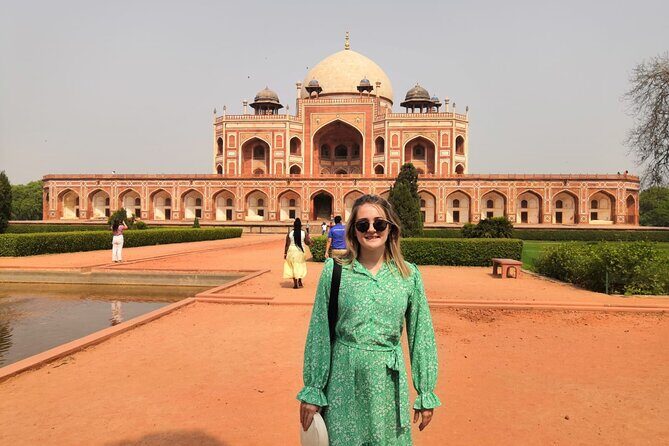
Then you visit Humayun’s Tomb, another UNESCO highlight and known as the first garden tomb of India. This is a key stop if you want to understand why later Mughal architecture looks the way it does. The gardens, the symmetry, and the overall “planned landscape” approach create a sense of intention. Even if you’re not an architecture person, the guide explanations make it easier to see patterns instead of random beauty.
Entrance fees apply here (like many stops on the route), so if you’re budgeting, keep your money thinking switched on. The good news is the tour handles the day flow: meet guide, go place to place, then you’re off again.
Lotus Temple, big government buildings, and Jama Masjid in one day

After Humayun’s Tomb, you’ll head to the Lotus Temple, famous for its flower-like shape and quiet atmosphere. It’s a Bahá’í House of Worship, and the mood here is noticeably different from the tomb-and-minaret stops. This is one of the better palate cleansers in Delhi because it’s about stillness, not speed.
From there, the tour includes driving past several major landmarks: the Parliament House and President House (originally built as the Viceroy’s residence, now known as Rashtrapati Bhavan). You don’t need hours here. Passing by gives you a sense of scale and helps you connect the city’s layers: ancient monuments, then modern state power right alongside.
You’ll also have time around Connaught Place, where your guide will recommend places to eat. This is helpful because Connaught Place can be touristy, but it’s also where you can find both vegetarian-friendly options and familiar international food if you need a break from Indian spices.
Then comes Jama Masjid, India’s largest mosque, with a long 1-hour stop for walking the red sandstone courtyard. This is where Delhi’s energy becomes very real. Plan to take your time in the courtyard and let your guide explain what you’re looking at. Even if you’ve visited other mosques, this one has its own pace.
Old Delhi the fun way: tuk-tuk ride, Khari Baoli spices, and Bangla Sahib
After Jama Masjid, you don’t just keep marching. You sit back and take a tuk-tuk ride through Old Delhi, riding past colorful, busy bazaars while your guide explains how these markets function for locals. This is one of the smartest parts of the day because it reduces walking fatigue while still letting you feel the neighborhoods.
Then you hit Khari Baoli, the famous spice market in Chandni Chowk. The whole point here is sensory. You’ll get to see the spice stalls up close and learn practical facts about how spices are used. Even if you don’t buy anything, it’s a memorable stop because it connects the smells you’ll notice in Indian cooking to the actual ingredients.
You’ll wrap the Delhi sightseeing with Gurudwara Bangla Sahib, a prominent Sikh shrine. It has deep spiritual significance, and your guide will share the connection to the eighth Sikh Guru and an episode involving healing during a cholera epidemic. This stop often provides a quieter ending to Day 1, which is important because Day 2 is an early start.
At the end of the day, you drive about 3 hours to Agra and drop you at your hotel. You’ll want the rest, because sunrise doesn’t wait for your sleep schedule.
Getting to Agra and choosing the right hotel night

Your Day 1 finish is deliberate: one night in Agra (with options for 3-, 4-, or 5-star hotel stay if you choose that add-on). A hotel upgrade can matter here, but it’s not required for the sightseeing to work. What matters most is that you get a good night’s rest before the sunrise Taj timing.
Since you’re moving in a private setup, your hotel drop-off in Agra is part of the value. Instead of “good luck finding your way,” you arrive with a driver and a plan.
You’ll also want to think about two date-specific issues. First, Taj Mahal is closed every Friday. Second, on December 24 and 31, hotel stays fall under blackout dates and require a mandatory gala dinner costing USD 99 per person if you book accommodations those nights. If your travel dates touch those days, double-check early so there are no surprises.
A few more New Delhi tours and experiences worth a look






Taj Mahal at sunrise: timing, comfort details, and who to ask for
Day 2 starts with the main event: Taj Mahal at sunrise. The timing is the whole idea. You’re there when the air is cooler and the light does a lot of the heavy lifting. The Taj Mahal itself is the white marble mausoleum built by Shah Jahan in 1630 for Mumtaz Mahal, and you’ll get a 3-hour window to take it in.
A practical detail I appreciate: the tour includes a battery van ride from the parking area to the gate. That saves energy and helps you avoid unnecessary walking early in the morning.
Where you really gain with this tour is the guide layer. Multiple people highlighted the impact of specific Taj guides and even requested names ahead of time. If the option is available, I’d specifically try to request Maahi for the Agra/Taj portion. The feedback I saw also pointed to guides like Shadiq and Sadiq Hussain as standout choices, with a focus on both history and photo-friendly guidance. That combination matters because the Taj is so visually dominant that without framing tips and timing advice, you can end up just taking pictures at random angles.
Also bring your patience for entry. You’ll need valid photo ID (a mobile photo ID works, as long as it’s valid) for monument entry.
Agra Fort and Itmad-ud-Daulah: the second-day payoff beyond the main gate
After the Taj, you continue to Agra Fort, another UNESCO World Heritage Site built in the 17th century. This fort feels different from the Taj immediately. Instead of white marble romance, you get massive fort walls, courtyards, and palace pavilions that show how power was organized and displayed. You’ll have about 1 hour here, which is enough for the big highlights without turning it into a history lecture you didn’t ask for.
Next is Itmad-ud-Daulah, often called the Baby Taj. It’s famous for its white marble work and intricate pietra dura inlay. This is one of the best “second bite” experiences because it’s still visually stunning, but it’s less overwhelming than the main Taj. You’ll get to slow down and notice details—especially the craftsmanship—without the same level of pressure.
Then the tour starts moving you back toward Delhi, with about 3 hours of travel time. If you have a flight or want the drop to Agra airport, the tour can do that too.
Price and value: what $93 covers, and how to plan for entrances and tips
At USD 93 per person, you’re paying for a private, guided, two-day loop with transportation plus a hotel night in Agra when that option is selected. For many travelers, the value isn’t just the sightseeing list. It’s the reduced friction: pickup and drop-off in both cities, a chauffeur who handles the driving, and guides who keep the day moving.
What’s not included is important to budget up front: entrance fees are listed as USD 49 per person. That fee typically covers monument access, so if you’re comparing tour prices, make sure you account for entrances on both days. Also plan for tips for your guides and driver. That’s not a “gotcha,” it’s just the reality of a private setup—your service team is investing time with you.
The tour also includes a few comfort upgrades that add up: bottled mineral water during journeys, parking fees, tolls, and fuel/taxes. Those are the kinds of line items that can make a “cheap” option turn expensive once you start adding up small costs.
If you’re sensitive to costs, here’s the simple budgeting logic:
- Add USD 93 for the tour
- Add USD 49 for monument entrances
- Then add some amount for guide/driver tipping based on your comfort level and service quality
Private car logistics: pickup areas, group sizes, and time pressure
You can be picked up from anywhere in Delhi, Noida, Gurugram, Ghaziabad, or Faridabad. That wide pickup area is helpful if you’re staying outside the city center. It also means you don’t have to build a day around finding a meeting point.
The tour is private, so you’re not sharing the car with strangers. Car type varies by group size, ranging from a four-seater sedan up to larger vans for bigger parties. If you’re traveling with more people, the private setup can be genuinely cost-smart compared with doing everything separately.
The trade-off is pace. This is a short-trip tour. You’ll be moving efficiently from stop to stop, and the day will feel full even with private transport. If you want slow mornings, long museum wandering, and extra time for photos at every angle, you might find this route a bit tight. But if you’re the type who likes structure and getting the most out of limited time, this format is built for you.
Who should book this Delhi and Taj Mahal private tour
This tour is a great fit if:
- You want sunrise Taj Mahal without DIY planning
- You care about major Delhi monuments plus Old Delhi market time
- You’re traveling with family or a small group and want private transport
- You like having a guide who can help you understand what you’re seeing and where to stand for photos
It may not be ideal if:
- You need flexible pacing and lots of downtime between sights
- You’re traveling on a Friday (Taj Mahal is closed that day)
- You’re allergic to early starts, because sunrise is the point of the whole experience
Also, if you can, think about guide requests. The Taj portion seems to benefit a lot from the right guide. One of the strongest pieces of advice from people who did this trip is to ask for Maahi for the Agra/Taj portion, and otherwise look at guide options like Shadiq or Sadiq Hussain when available.
Should you book it?
Yes, if your goal is a high-signal two days: Delhi’s top sights, Old Delhi on a tuk-tuk, and Agra’s biggest monuments with Taj Mahal timed for sunrise. You’ll get good transport comfort, private guides, and a setup that protects your time.
Before you book, do three quick checks: confirm your dates (avoid Friday for the Taj), estimate the total cost with the entrance fees, and plan your hotel night so you can handle the early start. If those boxes work for you, this tour is an efficient, satisfying way to see the Delhi-Agra highlights without the stress spiral.
FAQ
What is included in the tour price?
The tour includes breakfast, a private air-conditioned car with professional chauffeur, hotel or airport pickup and drop-off in Delhi and Agra, private sightseeing with government-approved local guides, a tuk-tuk ride in Old Delhi, a battery van ride at the Taj Mahal from parking to the gate, bottled mineral water during journeys, and all parking fees, tolls, fuel, and taxes.
How much are entrance fees?
Entrance fees to monuments are listed separately at USD 49 per person.
Does the tour include a hotel stay in Agra?
Yes, it includes one night of accommodation if you book the option with the hotel. The hotel star level can be 3-, 4-, or 5-star.
Is pickup available from my hotel?
Pickup is offered from anywhere in Delhi, Noida, Gurugram, Ghaziabad, or Faridabad, and the tour also includes hotel/airport pickup and drop-off in Delhi and Agra.
What time is the Taj Mahal visit?
The Taj Mahal is visited early in the morning for sunrise, with a 3-hour stop.
Is Taj Mahal open every day?
No. Taj Mahal is closed every Friday.
If my trip starts on Thursday, does the itinerary change?
Yes. If the tour starts on Thursday, Day 1 is the Agra tour and Day 2 is the Delhi tour.
How long is the drive between Delhi and Agra?
The drive is listed as about 3 hours each direction within the itinerary flow.
Is free cancellation available?
Yes. You can cancel up to 24 hours in advance for a full refund. If you cancel less than 24 hours before the experience starts, the amount paid is not refunded.