REVIEW · NEW DELHI
New Delhi : Private 3 Days Golden Triangle Tour
Book on Viator →Operated by ITS Holidays · Bookable on Viator
Early starts, world-class sights, zero stress.
This private 3-day Golden Triangle run strings together New Delhi, Agra, and Jaipur with a tight schedule that keeps you moving without feeling rushed. I like that you get hotel pickup and drop-off plus a dedicated driver and guide, so the logistics don’t eat your vacation. I also like the pacing: you see Delhi’s key Mughal-era landmarks on Day 1, then hit the big-ticket sights in Agra on Day 2, and finish with Jaipur’s forts and palace views.
There’s a trade-off: the day-by-day rhythm starts early (pickup at 6:00 am), and not every monument entry is included. Plan on budgeting for monument fees and being ready for some driving between cities.
In This Review
- Key highlights at a glance
- The Value Question: What You Really Get for $200
- Your First Morning in New Delhi: Monuments, Covers a Lot, Keeps It Simple
- India Gate: A straightforward, moving introduction to Delhi
- Qutub Minar and the Qutb complex: UNESCO gravity in stone
- Humayun’s Tomb: Mughal elegance with strong “why it matters” energy
- After Delhi, the drive to Agra: where the trip starts to feel cinematic
- Day 2 in Agra: Taj Mahal First, Then Fort and Fatehpur Sikri
- Taj Mahal: the main event, with time to actually look
- Agra Fort: Mughal power, not just postcard views
- Fatehpur Sikri: a whole city built around a monumental gateway
- Day 3 in Jaipur: Amer Fort Heights, Palace Facades, and Astronomical Geeking
- Amer (Amer Fort): the hilltop fort experience
- Jal Mahal: quick, scenic, and photogenic
- Hawa Mahal: the Palace of Wind and its window wall
- City Palace: the seat of Jaipur’s rulers
- Jantar Mantar: stone instruments for measuring the world
- Back to Delhi: your trip ends on the road
- Hotels, Guides, and the “Smooth Day” Factor
- What to Pack and How to Handle the Daily Pace
- Who This Tour Fits Best (and Who Might Want Something Different)
- Should You Book This Private 3-Day Golden Triangle?
- FAQ
- How long is the Private 3 Days Golden Triangle Tour?
- Where does the tour start and end?
- What time is pickup?
- What’s included in the price?
- What’s not included?
- Is this a private tour?
- Are monument tickets included?
- Is there a mobile ticket?
- What if weather is poor?
Key highlights at a glance
- 6:00 am start with pickup: you waste less daylight on waiting around.
- Private transport, private tour: your group stays together for clean timing.
- Driver Amar and strong guiding: multiple notes point to a smooth, friendly experience and good explanations.
- Two breakfasts included: you’re fed before the major sightseeing blocks.
- Delhi + Agra + Jaipur in 3 days: a classic route, but organized in a practical order.
The Value Question: What You Really Get for $200
At $200 per person, this tour is priced like a sensible “do it all for me” package, not a bare-bones ticket. You’re paying for the pieces that usually cause friction on the Golden Triangle: pickup, transport between cities, and guided time at the main sights.
The inclusions matter. You get private vehicle transport, a driver/guide, a local guide, and bottled water. Two breakfasts are included, which helps you stay on schedule when days run long.
The one big “watch this” item is that monument fees are not included. The itinerary shows a mix of entries marked free and not included, but the overall package clearly lists monument fees as not part of the price. So if you’re budgeting, don’t assume every stop means no paid entry.
You can also read our reviews of more private tours in New Delhi


Your First Morning in New Delhi: Monuments, Covers a Lot, Keeps It Simple
The experience begins in New Delhi with a 6:00 am pickup, which is early—but it’s also why the itinerary can fit so much into three days. After pickup and transfer to the hotel, you freshen up and then start sightseeing.
Delhi on Day 1 is built around three pillars: the ceremonial center, then two major UNESCO-listed/culturally significant sites, then a drive toward Agra. You’re not just “seeing famous names”—you’re walking the story of Delhi’s layers, from imperial showpieces to Mughal-era architecture.
India Gate: A straightforward, moving introduction to Delhi
India Gate is a war memorial on Rajpath, set along Delhi’s grand ceremonial axis. It’s a good first stop because it’s easy to orient yourself in the city. You get a quick sense of the scale of Delhi’s planned areas before you move into older, more atmospheric sites.
Potential drawback: this is more of a landmark stop than a long, immersive experience. If you want lots of guided time everywhere, treat it as a warm-up rather than the emotional centerpiece.
Qutub Minar and the Qutb complex: UNESCO gravity in stone
Qutub Minar (part of the Qutab/Qutb complex) is one of the most recognizable monuments in Delhi, and it’s UNESCO-listed. It’s a powerful place to see up close because it’s not a “single photo spot.” The complex is the point, and the minaret gives you a real sense of how ambitious early architecture was.
The tour schedules about two hours here, which is a reasonable chunk for photos, orientation, and guided context.
Humayun’s Tomb: Mughal elegance with strong “why it matters” energy
Humayun’s Tomb is the Mughal Emperor Humayun’s tomb, built starting around 1569–70, commissioned by his wife Empress Bega Begum. It’s also a place where design details feel intentional, not decorative.
The itinerary gives you around two hours. That’s long enough to slow down, look beyond the main structure, and understand the Mughal approach to symmetry and garden-space planning (even if you don’t do “museum mode”).
A few more New Delhi tours and experiences worth a look





After Delhi, the drive to Agra: where the trip starts to feel cinematic
Later, you drive to Agra, check in, and overnight there. For many people, the drive is where the vibe shifts from administrative capital energy into the romance-and-legacy zone people came for. You’ll get a hotel base for the next morning’s big sights.
Day 2 in Agra: Taj Mahal First, Then Fort and Fatehpur Sikri
Agra day is the heart of the Golden Triangle for most first-timers. The schedule puts you at the Taj Mahal after breakfast, then continues with Agra Fort and Fatehpur Sikri.
This order makes practical sense. Taj Mahal is the signature. Agra Fort and Fatehpur Sikri are heavier on history and architecture, so you want them once your day is already rolling.
Taj Mahal: the main event, with time to actually look
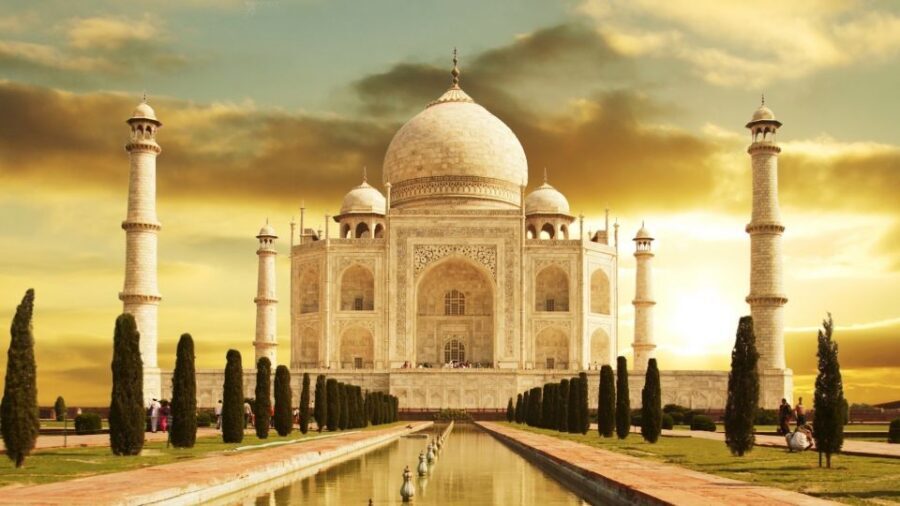
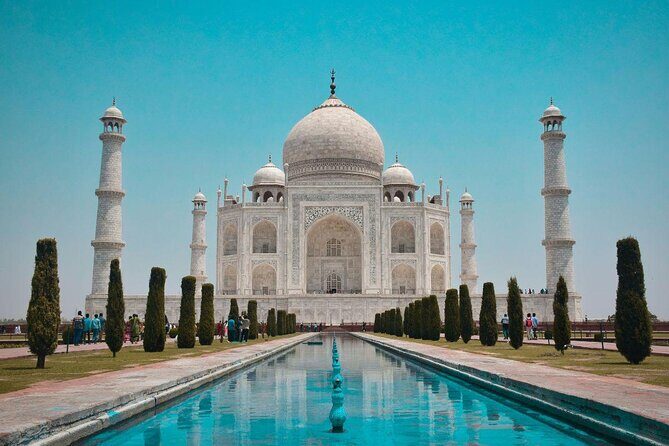
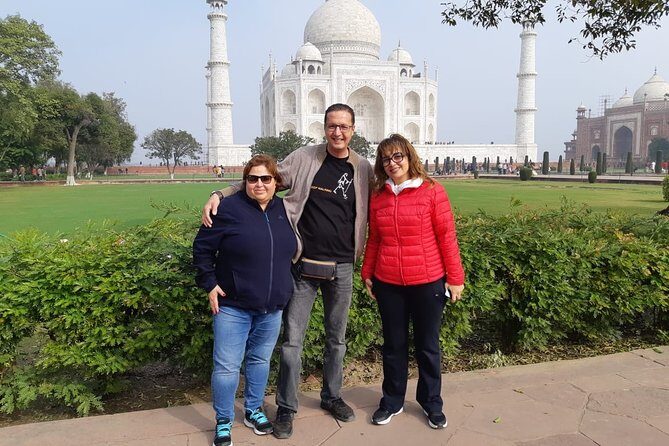
The itinerary includes a Taj Mahal visit with a short entry block and then a longer sightseeing window. It’s described as a 17th-century monument built by Emperor Shah Jahan as a memorial for Mumtaz Mahal.
Even if you’ve seen images a thousand times, the key experience is perspective. The Taj Mahal is best when you can stand back, walk slowly, and notice how the setting and white marble tones change as you move. The tour’s time allocation is designed for that kind of viewing.
Watch this: entry fees are listed as not included for at least part of the Taj Mahal schedule. Budget for tickets so you don’t end up stuck outside waiting.
Agra Fort: Mughal power, not just postcard views
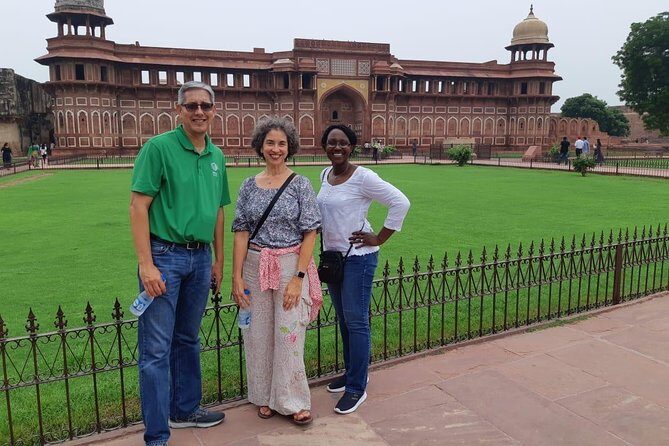
Agra Fort was built in 1565 A.D. and is linked to Akbar. If the Taj feels like poetry, Agra Fort is more like architecture with a backbone—solid, strategic, and built to impress.
The tour gives about an hour. That’s enough for a focused visit without turning the fort into a marathon.
Fatehpur Sikri: a whole city built around a monumental gateway
Fatehpur Sikri is described as a small city west of Agra with red sandstone buildings clustered near the center. You’ll see the major gateway areas, including Buland Darwaza, and get a sense of the wider complex.
It also references several notable features:
- Jama Masjid mosque
- Tomb of Salim Chishti
- Diwan-E-Khas hall with a carved central pillar
- Jodha Bai Palace mixing Hindu and Mughal styles
- Panch Mahal overlooking the site
You’re scheduled for about three hours, and that’s important. Fatehpur Sikri isn’t one stop. It’s a place where you need time to connect the dots between structures and courtyards.
Potential drawback: this is a long day on top of the Taj and Agra Fort. If you’re sensitive to heat or fatigue, pace yourself and take water breaks (the tour includes bottled water, which helps).
Day 3 in Jaipur: Amer Fort Heights, Palace Facades, and Astronomical Geeking
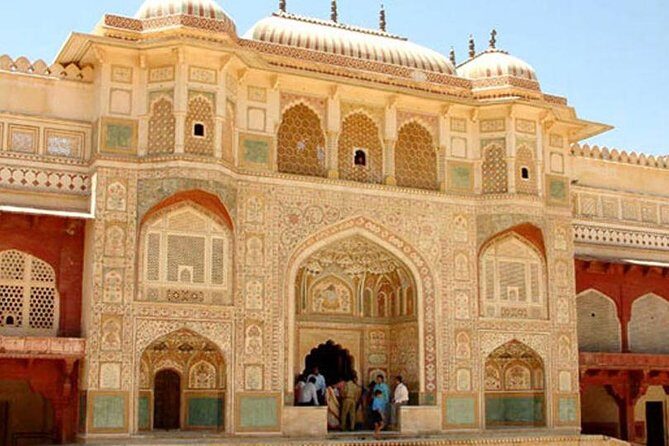
Jaipur Day 3 is structured to hit the most recognizable “pink city” visuals—then add in the less-obvious intellectual side with Jantar Mantar.
Amer Fort, Jal Mahal, Hawa Mahal, City Palace, Jantar Mantar: it’s a full deck. The big advantage of this schedule is that each stop has a different kind of appeal. One is about elevation and fort life, one is about a lake palace image, one is about windows and feminine quarters, one is about the ruling family complex, and one is about stone instruments built for measuring the sky.
Amer (Amer Fort): the hilltop fort experience
Amer Fort is located in Amer, about 11 kilometers from Jaipur. It sits high on a hill, and the itinerary treats it as a principal tourist attraction, with about two hours allotted.
This is one of those stops where you can get a lot out of simply looking. From the fort’s location, you understand why rulers wanted height and visibility. It also fits well as a morning activity before the city gets louder and hotter.
Jal Mahal: quick, scenic, and photogenic
Jal Mahal is a palace in the middle of the Man Sagar Lake. The description notes that the palace and lake were renovated and enlarged in the 18th century by Maharaja Jai Singh II of Amber.
The scheduled time is about 30 minutes, so it’s more of a break-in-the-middle-and-camera-ready stop. It works best if you want a pause between bigger fort and palace complexes.
Hawa Mahal: the Palace of Wind and its window wall
Hawa Mahal is described as being made of red and pink sandstone, built in 1799 by Maharaja Sawai Pratap Singh. It’s positioned on the edge of City Palace and stretches to the women’s chambers (zenana).
This stop is ideal if you like architecture details. The outside facade is the headline, and the layout has a clear function in mind, not just decorative beauty.
City Palace: the seat of Jaipur’s rulers
City Palace includes Chandra Mahal and Mubarak Mahal, along with other buildings. It was the seat of the Maharaja of Jaipur and connects to the Kachwaha Rajput clan.
The time on this stop is short in the schedule, listed around a couple minutes for one line, but realistically the experience is more than that. In practice, you’ll use your guide to focus on what’s most important so you don’t feel like you’re just standing in a doorway and leaving.
Jantar Mantar: stone instruments for measuring the world
Jantar Mantar is a UNESCO World Heritage site with nineteen architectural astronomical instruments, built by Sawai Jai Singh II and completed in 1734. The itinerary notes the world’s largest stone sundial.
This is the kind of stop people often skip because it sounds technical. But it’s also a fun reset: you get to see how early scientists translated sky patterns into built forms. If you like architecture and logic, this is one of the most rewarding stops of the day.
Back to Delhi: your trip ends on the road
In the later afternoon, you drive back to Delhi. On arrival, your driver drops you at your location or at the airport. That makes the end of the trip smoother if you’ve booked onward travel the same day.
Hotels, Guides, and the “Smooth Day” Factor
The package promises stay in a hotel described as best of class, plus great hospitality and delectable food. While the exact property isn’t named here, the value signal is that the tour tries to remove the uncertainty you’d face if you booked each leg yourself.
Two things repeatedly stand out from the experience style: on-time pickup/drop-off and strong guidance. The driver Amar is specifically called out in feedback, along with tour guides who explain the sights well. That matters because Delhi, Agra, and Jaipur can feel like a blur if you’re not sure what you’re looking at.
I like that this is set up as a private tour. You’re not sharing the day with strangers who want different photo stops. That usually means the guide can pace your group better, and the schedule stays clean.
What to Pack and How to Handle the Daily Pace
This itinerary moves you through big-ticket sights and long stretches of road. It’s not slow travel; it’s smart, efficient travel.
Here are practical ideas that fit the schedule:
- Bring a light layer and something for sun cover. You’ll be outside in multiple cities.
- Plan for extra time at high-demand photo points. The tour covers multiple stops, so you’ll want to move steadily.
- Keep a bit of cash or card buffer for monument tickets. Since entry fees are not included, you’ll want options.
- If you get heat fatigue, treat the Jal Mahal stop and any short breaks as recovery time.
Also, bottled water is included, which helps you stay functional without hunting for drinks between sites.
Who This Tour Fits Best (and Who Might Want Something Different)
This is a great match if you’re:
- Doing your first Golden Triangle trip
- Traveling as a couple or family and want less planning stress
- Happy with an early start to see major sights efficiently
- Interested in guided context, not just walking into monuments on your own
It may be less ideal if you:
- Hate early mornings (pickup is at 6:00 am)
- Want to keep everything flexible day-to-day
- Don’t want to pay extra for monument entry fees
Should You Book This Private 3-Day Golden Triangle?

If you want a clean, well-structured route from New Delhi to Agra to Jaipur—without the hassle of arranging transport and guides—this is an easy yes. The strongest reasons to book are simple: private transport, on-time pickup/drop-off, and guidance that helps you understand what you’re seeing (especially around the major Mughal-era sites and Jaipur’s standout architecture).
My advice: book it if you’re comfortable adding monument tickets to your budget and you don’t mind a busy schedule. If those two points sound like your idea of fun, you’ll get a lot of iconic India in three days without the usual logistical headaches.
FAQ
How long is the Private 3 Days Golden Triangle Tour?
It runs for about 3 days, covering New Delhi, Agra, and Jaipur.
Where does the tour start and end?
It starts in New Delhi and ends back at the meeting point in New Delhi, with drop-off at your location or airport after the final drive.
What time is pickup?
Pickup starts at 6:00 am.
What’s included in the price?
The tour includes hotel pickup and drop-off, fuel surcharge, bottled water, driver/guide, local guide, private tour, transport by private vehicle, and breakfast (2).
What’s not included?
Food and drinks, any personal expenses, and monument fees are not included.
Is this a private tour?
Yes. It’s listed as a private tour/activity, and only your group participates.
Are monument tickets included?
The overall info says monument fees are not included. The itinerary also shows some stops marked as free and others not included, so you should plan to pay for at least some entries.
Is there a mobile ticket?
Yes, the tour includes a mobile ticket.
What if weather is poor?
This experience requires good weather. If it’s canceled due to poor weather, you’ll be offered a different date or a full refund.