REVIEW · NEW DELHI
New Delhi: Guided Night Photography & Heritage Tour of Delhi
Book on GetYourGuide →Operated by Explore Routes · Bookable on GetYourGuide
Delhi at night turns monuments into photo gold. This guided night photography + heritage route is built around seeing Delhi’s tombs and shrines after dark, with your smartphone or digital camera doing most of the work. I like that the guide’s stories help you look at the buildings with context, not just as pretty silhouettes.
Second, I really appreciate the food stops—Delhi’s kebab culture is the kind of detail you only notice when you’re moving through real neighborhoods. You’ll get Seekh Kebabs with Rumali rotis for dinner, plus a street-food-style tasting along the way. If your idea of a night tour is only photos, this one gives you a full evening, not just a march of landmarks.
One thing to plan around: this tour involves walking and isn’t suitable for people with mobility impairments. You’ll also need to follow a basic dress code (no short skirts, no sleeveless shirts), which matters at religious sites.
In This Review
- Key highlights you’ll feel in real life
- Night in Delhi: why this tour makes photos easier
- Meeting at Jor Bagh and getting the group moving fast
- Mughal monuments under lights: the heritage park + Sabz burj stop
- Safdarjung Tomb: your first real night-photo anchor
- Tuk-tuk transfers keep the pace fun (and your feet happy)
- The “secret” stop and on-foot time: where the night story grows
- Nizamuddin area: kebabs, Rumali rotis, and the kind of dinner you remember
- Hidden local stop and tasting: the food side of “night Delhi”
- Gurudwara Bangla Sahib at night: a different kind of architecture
- Your finish: drop-offs near Nizamuddin Dargah
- Price and value: why $38 can make sense for 3 hours
- Who this tour suits best (and who should skip it)
- Should you book this Delhi night photography tour?
- FAQ
- Where does the tour start?
- How long is the tour?
- Is the tour offered in English and other languages?
- How big is the group?
- What food is included?
- Do you get around by walking only?
- Where do you get dropped off?
- What should I bring?
- Is there a dress code?
- Is it suitable for mobility impairments?
Key highlights you’ll feel in real life
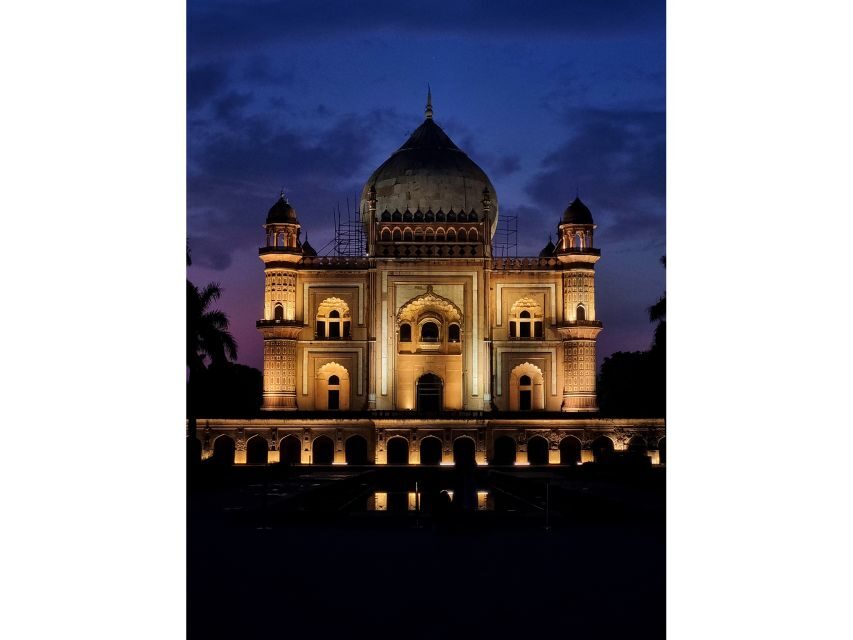
- Monuments lit up at night, so photos look dramatic without special gear
- A small group (up to 6), which keeps the pace friendly and the guide’s attention closer
- Tuk-tuk rides that break up the walking and make the route more fun
- Kebab dinner with Rumali rotis, plus a tasting stop on the move
- Two major religious stops in the Nizamuddin area and at Gurudwara Bangla Sahib
Night in Delhi: why this tour makes photos easier
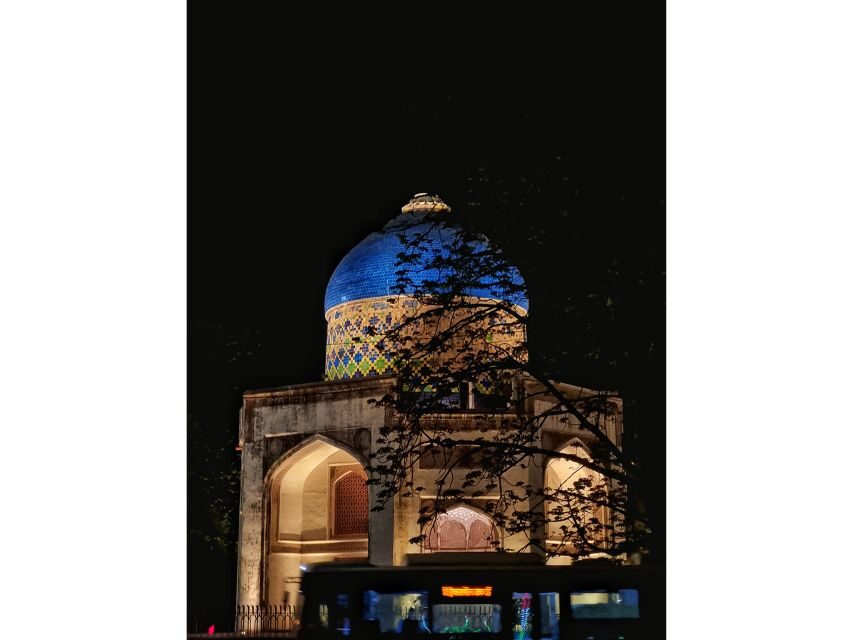
Night photography in Delhi sounds intimidating—until the places are already lit for you. This tour is paced so you’re stopping at monuments and shrines when lighting is at its best, which means you don’t spend the whole time hunting for angles. You’re also not alone; the guide helps you understand what you’re looking at and where to stand.
What I like most is the balance between structure and freedom. The stops are timed (so you know you’ll actually get pictures), but you still have a chance to take your shots at your own pace. If you’re using a phone, you’ll get the chance to experiment with framing and steadying your camera hand—because you’ll be there long enough for a few tries.
The other win is safety and flow. Night walking in a big city is a different experience, and the route is designed with short transfers (tuk-tuk) and group movement. In at least one booking, the guide even arranged help getting back via an Uber, which tells you the team is thinking beyond just dropping you at the last stop.
You can also read our reviews of more guided tours in New Delhi

Meeting at Jor Bagh and getting the group moving fast
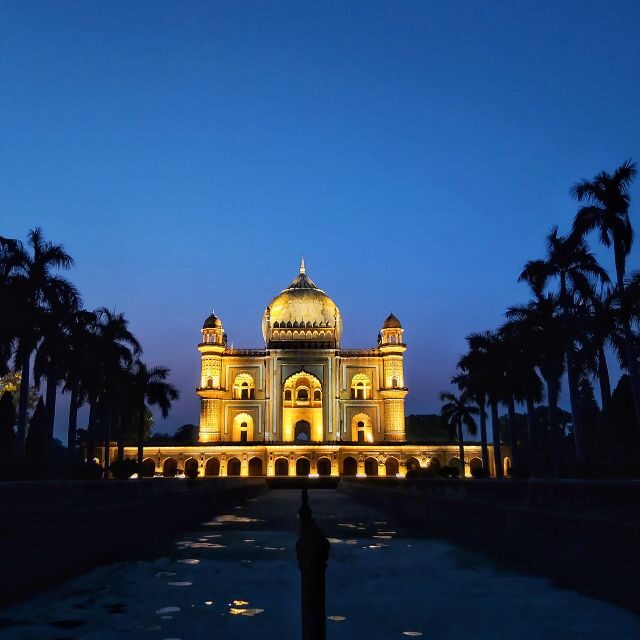
Your tour starts at Jor Bagh Metro Station, Gate No 2. You’ll want to show your booking QR so you can get matched to your group quickly and start on time. The meetup point matters here because the first part is timed for night viewing, and delays early on can compress the rest of the route.
This is a small-group experience capped at 6 participants. That small size changes the vibe. You can ask questions without shouting, the guide can manage pauses for photos, and you’re less likely to feel like you’re being dragged from one spot to the next.
Bring your passport (yes, it’s listed). It’s one of those practical reminders for India that can be easy to overlook—so pack it in a secure place before you head out.
Mughal monuments under lights: the heritage park + Sabz burj stop
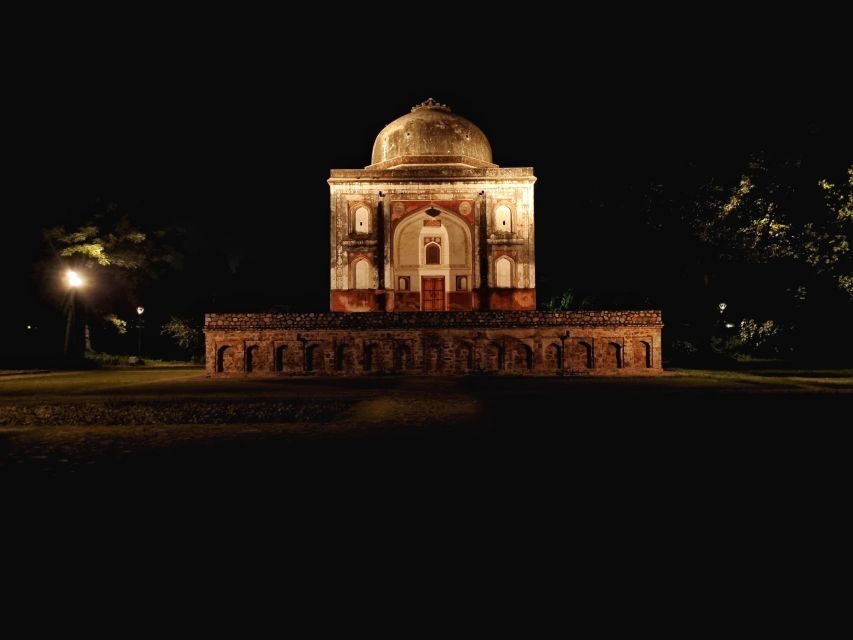
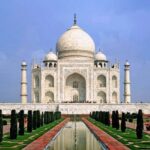
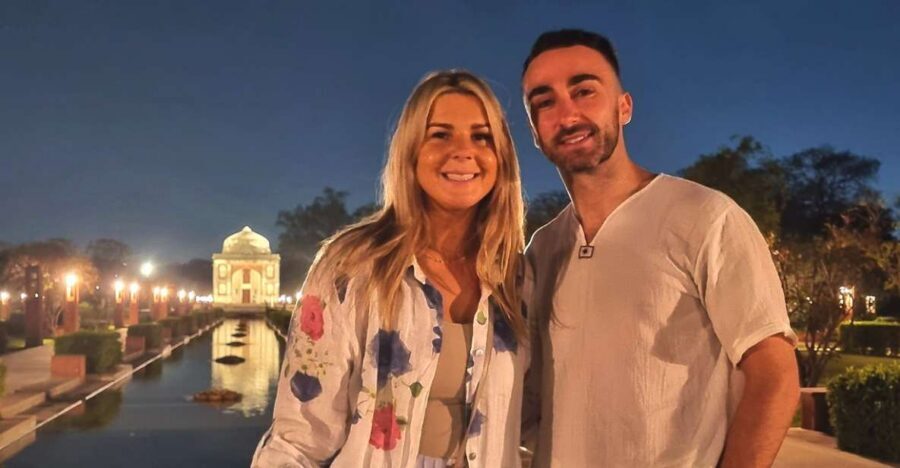
After you meet, the tour moves into a 16th-century heritage park complex with 15 Mughal-era monuments, including 6 UNESCO World Heritage sites. Seeing Mughal architecture with night lighting is a totally different experience than seeing it in daytime glare. Details like arches, domes, and carved stone surfaces become more about shadows and contrast—great for photos and easier for your eyes to separate forms.
You’ll get time for guided viewing and photo stops. That matters because night photos often fail for one simple reason: you didn’t know where the key features were. With a guide’s context, you’re more likely to aim at the right elements instead of just catching a wide shot.
Then you’ll head to the Sabz burj roundabout, described as an effortless landmark you’ll be amazed by at night. This is the kind of stop that’s especially good for phone cameras: roundabouts and illuminated facades often give you clean compositions even without perfect equipment.
Safdarjung Tomb: your first real night-photo anchor
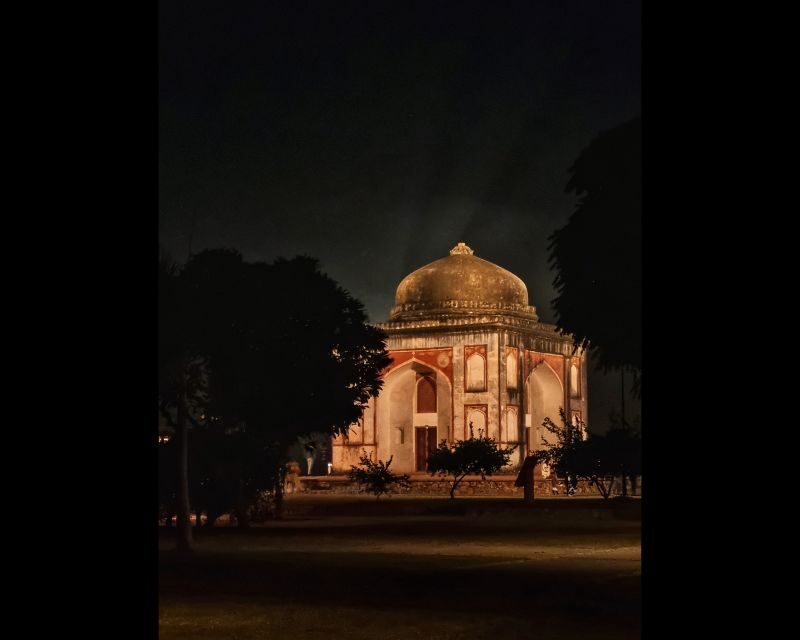
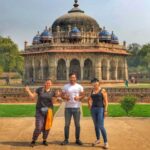
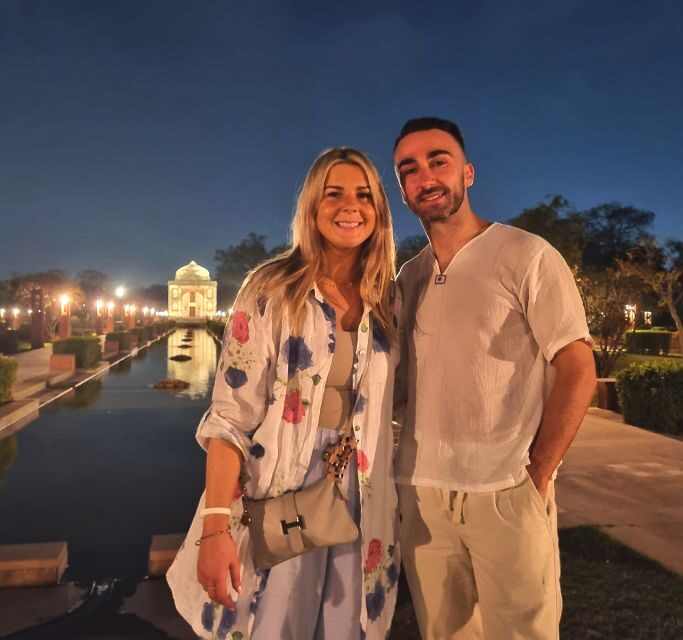
One of the clearest photo moments comes at Safdarjung Tomb. You’ll have a focused block for a photo stop plus a guided visit, with walking time built in (about 30 minutes). Safdarjung Tomb is also a great test for your setup, because you can try a few approaches: wide framing for the monument silhouette and tighter framing for decorative details.
Here’s how to make this stop work for you:
- Use the monument itself as your focus point, and let the surroundings blur slightly.
- If you’re on a phone, try stabilizing your elbows against something solid when possible.
- Don’t rush. The lighting changes the way you perceive texture—so take at least a couple shots from the same spot, then move.
This is also where you’ll start feeling the tour’s tone: guided enough to give you context, but relaxed enough to let you slow down for pictures.
Tuk-tuk transfers keep the pace fun (and your feet happy)
You’ll take a tuk-tuk ride early in the evening, then another later. The point of these short transfers isn’t just transportation. It’s pacing. In a 3-hour tour, you want a rhythm: walk, photograph, learn, then reset.
The tuk-tuk segments also help you see more without feeling like a commuter bus ride. And because it’s part of the experience, you get a little extra Delhi flavor right away—sounds, street life, and the way routes connect different neighborhoods.
For people who struggle with long, continuous walking, tuk-tuk breaks are the difference between a tour that feels energetic and one that feels exhausting. Still, this one isn’t designed for mobility limitations, so if that’s your situation, you’ll want to skip it.
You can also read our reviews of more historical tours in New Delhi


The “secret” stop and on-foot time: where the night story grows
Between larger anchors, the tour includes time for a secret stop with photo, guided tour, and walking (around 40 minutes), then additional on-foot walking (about 10 minutes). This is the part of the night tour that often becomes the most memorable, because it’s not as obvious as a main-ticket monument.
What you’re really doing here is learning how Delhi’s heritage shows up in small, overlooked corners. When the guide shares what to look for, these stops turn into practical photo knowledge: how to find symmetry, how to frame from street level, and how to read architectural cues even when you only have a few minutes.
You’ll also get real conversation time. That social piece matters because night tours are more than sightseeing—they’re a chance to connect with how locals understand the places you’re seeing.
In the best versions of this tour, the guide’s background makes a difference. In one recent booking, Shahzeb was praised for giving strong historical context, and the street-food-style portion also landed well for the group.
Nizamuddin area: kebabs, Rumali rotis, and the kind of dinner you remember
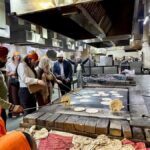
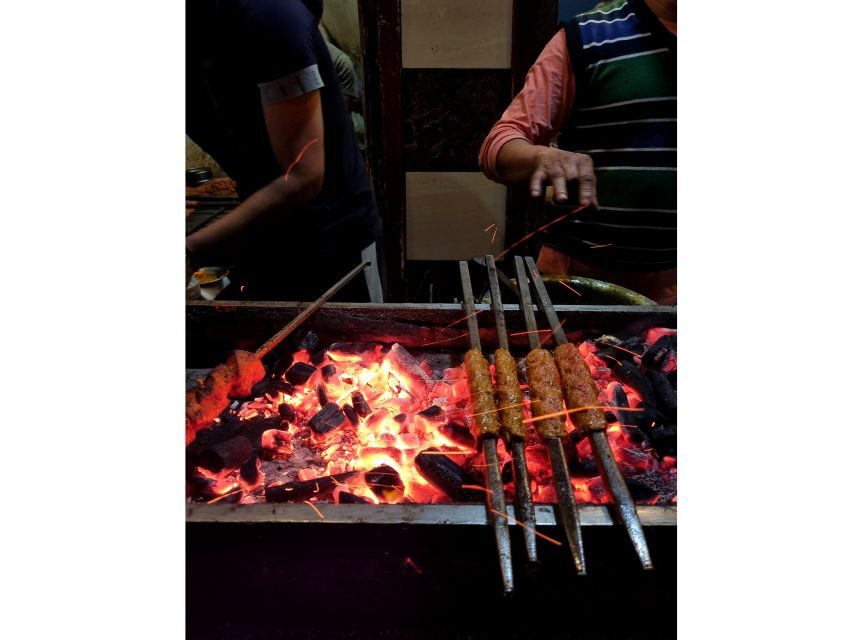
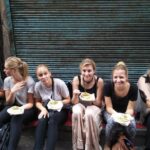
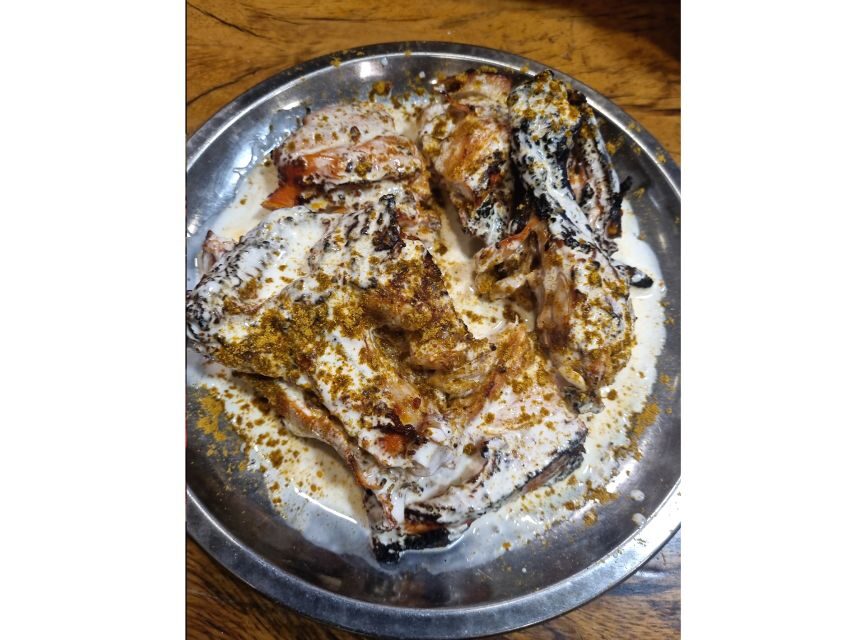
The tour spends time in the Nizamuddin area, where you’ll have dinner focused on Delhi’s famous kebab culture. You’ll stop to indulge in Seekh Kebabs, served with Rumali rotis (and a soft beverage is included).
This dinner isn’t a random restaurant stop. It’s positioned as part of the neighborhood experience. When you eat in the middle of a heritage walk, you remember the night as a whole, not as separate pieces.
A practical note: kebabs are usually best when you eat them hot and fresh. So don’t plan on taking a ton of extra photo time while the food is waiting. Eat first, then photograph if you want a few quick shots after.
If you care about authenticity, this is one place to lean in. One booking specifically highlighted that the guide offered more street-food authenticity on another night tour, and that same guide felt like a safe, thoughtful presence during this experience.
Hidden local stop and tasting: the food side of “night Delhi”
There’s another food moment built into the route, described as a walk plus food tasting and passing by a local spot (around 30 minutes). This is the “taste and see” segment, where the goal is to sample flavors that match the neighborhood you’re moving through.
Why it’s valuable: photography teaches you to look, but tasting teaches you to remember. You’ll likely associate the smell and spice with the exact streets you were walking on. And for many people, that’s what turns a sightseeing evening into a real story.
If you have food restrictions, it’s smart to plan ahead, because the tour is set up with specific food inclusions. The only guaranteed inclusions listed are dinner (kebabs + Rumali rotis), a soft beverage, and the tasting segment.
Gurudwara Bangla Sahib at night: a different kind of architecture
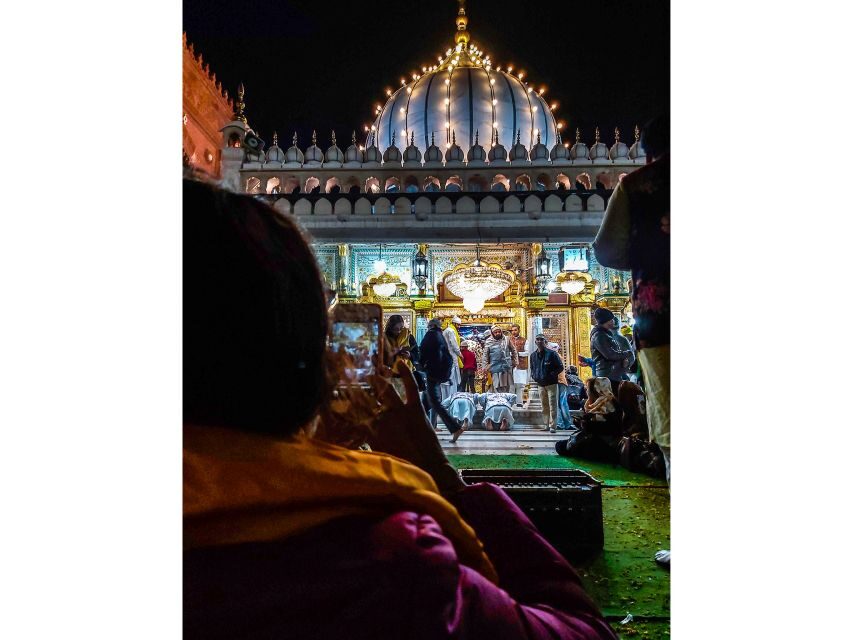
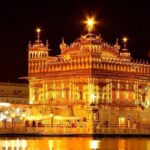
Later, you’ll stop at Gurudwara Bangla Sahib for a photo stop plus guided viewing (about 30 minutes). This is a big shift in atmosphere. Mughal tombs and shrines feel like one language of Delhi; a major gurudwara feels like another.
Expect a guided visit that helps you understand what you’re seeing, not just photograph it. Nights make religious architecture feel more calm and human-scale. The lighting and reflections tend to create a gentle glow, which can be easier to work with than harsh daytime shadows.
Dress code matters most here. Short skirts and sleeveless shirts are not allowed on this tour, and it’s your job to keep clothing respectful so you can move in comfortably and avoid awkward interruptions.
Your finish: drop-offs near Nizamuddin Dargah
You end with two drop-off locations: Hazrat Nizamuddin Aulia Dargah and Nizamuddin Dargah Sharif. That’s a convenient way to finish if you’re staying in or near the Nizamuddin area. It also gives you a chance to keep exploring on your own while the night is still young.
Think about your onward plans before you book. Since you’re dropped at dargah areas, it’s worth knowing how you’ll travel back from there if you’re headed elsewhere.
In one praised experience, the guide also helped with getting an Uber back to a hostel. That kind of support is a good sign if you want a smoother ending to the evening.
Price and value: why $38 can make sense for 3 hours
This tour costs $38 per person and runs 3 hours, with a small group of up to 6. For a night experience in Delhi, the value is in what you get included: monument visits at night, tuk-tuk rides, dinner, and a soft beverage.
Here’s the practical math your brain will appreciate:
- You’re not just paying for walking. You’re paying for night access/time at multiple heritage points.
- Transport isn’t extra. Tuk-tuk rides are part of the schedule.
- Food is included, including a proper sit-down dinner of Seekh Kebabs with Rumali rotis.
If you’ve ever done a tour where you pay for sights but still have to hunt for dinner, this one is different. The feeding-at-night approach saves time and makes the evening feel complete.
Who this tour suits best (and who should skip it)
This is a great fit if you:
- Want night photography practice with a plan
- Like guided storytelling that helps you identify what you’re seeing
- Enjoy food stops that feel connected to the route
- Prefer a small group over crowds
It may not be ideal if you:
- Have mobility impairments, since it’s not suitable
- Need a fully seated or low-walking experience
- Might struggle with the dress code restrictions
Also, you’ll get the most enjoyment if you’re comfortable taking photos in a moving group setting. This is not a private, slow photo shoot with long stays at each wall. It’s a focused evening with momentum.
Should you book this Delhi night photography tour?
If you want a 3-hour plan that covers major sights, gives you photo-friendly stops, and feeds you kebabs, I’d say yes—this is the kind of tour that saves you from wandering in the dark without direction. The small group size helps, and the guide names praised in recent bookings (like Faizy and Shahzeb) hint at the real strength: context plus calm control of the route.
Only skip it if the walking pace would be an issue for you, or if you don’t want a structured schedule. If you’re flexible, follow the dress expectations, and come ready to shoot with your phone or camera, this tour is a strong value at $38.
FAQ
Where does the tour start?
You meet your guide at Gate No 2, Jor Bagh Metro Station.
How long is the tour?
The tour duration is 3 hours.
Is the tour offered in English and other languages?
Yes. The live tour guide speaks English and German.
How big is the group?
It’s a small group, limited to 6 participants.
What food is included?
Dinner includes Seekh Kebabs with Rumali rotis, plus a soft beverage. There’s also a food tasting stop.
Do you get around by walking only?
No. The tour includes tuk-tuk rides as well as walking.
Where do you get dropped off?
You have two drop-off locations: Hazrat Nizamuddin Aulia Dargah and Nizamuddin Dargah Sharif.
What should I bring?
The tour lists passport as something to bring.
Is there a dress code?
Yes. Short skirts and sleeveless shirts are not allowed.
Is it suitable for mobility impairments?
No. It is not suitable for people with mobility impairments.
If you tell me your travel dates and whether you’re using a phone or a camera, I can help you plan how to approach the night photos (settings, how to manage low light, and what to focus on at each stop).