REVIEW · NEW DELHI
New Delhi: Akshardham Temple Tour with Water and Light Show
Book on GetYourGuide →Operated by Sameday Taj Mahal · Bookable on GetYourGuide
Delhi does drama with devotion. This Akshardham Temple tour mixes classic city sights with immersive temple exhibits, then tops it off with the Sahaj Anand Water Show.
I especially liked two things: the way the guide helps you understand what you’re seeing (from carvings to story screens), and the sheer scale you notice the moment you arrive at Akshardham. The skip-the-line setup also saves time when security and crowds get sticky.
One heads-up: Akshardham has strict rules once you’re inside—phones and cameras are not allowed—so if your plan is photo after photo, you’ll need to adjust fast.
In This Review
- Key highlights worth planning around
- How the 3–5 Hour Format Works in Real Delhi Traffic
- India Gate and Rajpath: A Quick Intro Before Akshardham
- Akshardham’s Scale Hits You First, Then It Explains Itself
- Inside the Temple Circuit: Sahajanand Darshan, Neelkanth Darshan, Sanskruti Darsham
- Sahajanand Darshan: values in multimedia form
- Neelkanth Darshan: a trek across India’s geography
- Sanskruti Darsham: history, culture, and the cultural boat ride
- The Sahaj Anand Water Show: Lasers, Jets, and Sound at Night
- Guides Make the Difference: From Anmol to Jassi to Ronak
- Price and Value: Is $21 a Smart Deal?
- Rules That Matter: Phones, Clothing, Pets, and Monday Closures
- Who This Tour Suits Best (and Who Might Want Another Plan)
- Should You Book This Akshardham Water-and-Light Tour?
- FAQ
- How long is the Akshardham Temple tour with the water and light show?
- Where does the pickup happen?
- What language is the live tour guide available in?
- Are phones allowed inside the temple?
- Is Akshardham Temple open every day?
- Is the water and light show included?
Key highlights worth planning around
- Sahaj Anand Water Show timing: a 24-minute light-and-water presentation in the evening
- Darshan exhibits: Sahajanand, Neelkanth, and Sanskruti Darsham explained in a way you can follow
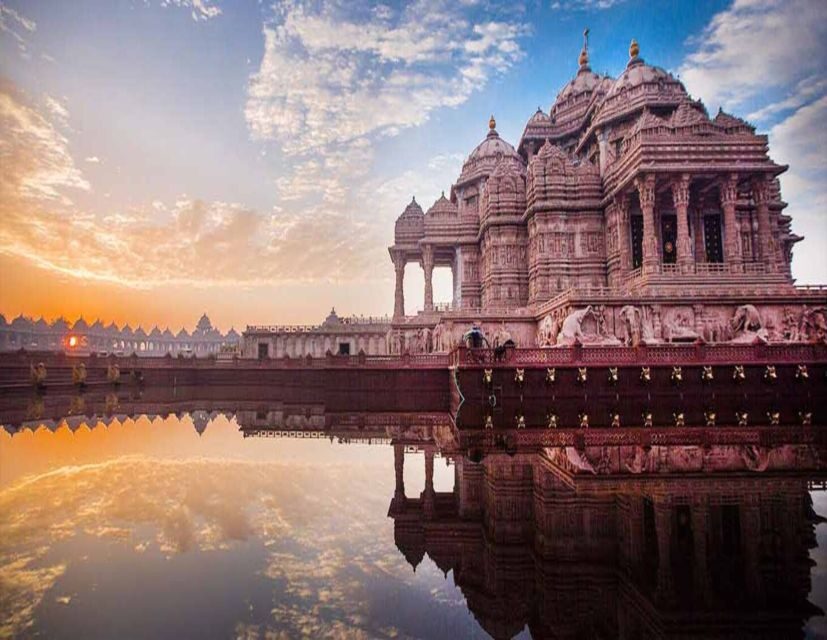
- Temple craftsmanship at full scale: 20,000 gods and goddesses carved into the walls
- Cultural boat ride: a 12-minute ride through Vedic-era history and traditions
- You control your start point: pickup from hotels, airports, or stations across Delhi NCR
- Guides help you beat confusion: clear instructions for entry and viewing
How the 3–5 Hour Format Works in Real Delhi Traffic
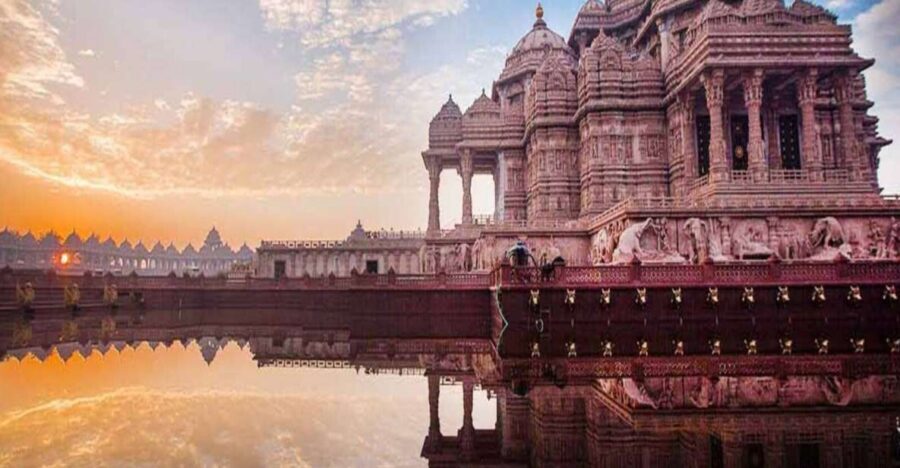
This isn’t an all-day marathon. The tour runs about 3 to 5 hours, which is exactly what you want in Delhi if you’re trying to see something meaningful without losing your entire afternoon to traffic.
You’ll get hotel pickup (or pickup from the airport or station) in a private car, and the route typically begins with a quick orientation walk around central landmarks. You end back at your hotel. One practical benefit: with a driver handling navigation, you don’t waste mental energy figuring out where to go next, especially as daylight fades and lines start forming.
If you’re arriving fresh—airport to hotel to Akshardham—this tour can give you an immediate “I’m in Delhi now” moment. Some departures start around 4 p.m., which is a comfortable balance: enough time to explore before the show and not so late that you feel rushed.
A few more New Delhi tours and experiences worth a look


India Gate and Rajpath: A Quick Intro Before Akshardham
Before you reach the temple complex, you start with a classic Delhi walk that helps you get your bearings.
- India Gate: the war memorial and a major landmark that locals treat like a daily reference point. It’s a simple stop, but it sets the scene.
- Rajpath: a ceremonial avenue leading toward government buildings.
- Rashtrapati Bhavan and Parliament House (outside views only): you can’t enter, but you can admire the grand frontage and understand why this area matters.
Why this works: you’re not stuck only in one religious site for your entire visit. You get a taste of the city’s layout and symbolism first, then the day shifts into spiritual storytelling at Akshardham.
Akshardham’s Scale Hits You First, Then It Explains Itself
Akshardham is the kind of place where you feel the architecture before you even read the signs. The complex is known for its massive presence and detailed craftsmanship, including 20,000 gods and goddesses carved into the walls.
You’ll likely notice three things right away:
- The temple’s overall “wow” scale.
- The careful detailing that rewards slow looking.
- How the complex is set up like a journey, not just one building you speed through.
Plan your mood for this part. The temple is peaceful, but it’s still security-controlled and rule-heavy. That’s where a good guide matters—people report that guides help manage the protocols smoothly, so you don’t waste time panicking at checkpoints.
Also, remember this important scheduling fact: Swaminarayan Akshardham Temple is closed every Monday. If your dates include Monday, don’t assume you can swap it on the fly.
Inside the Temple Circuit: Sahajanand Darshan, Neelkanth Darshan, Sanskruti Darsham
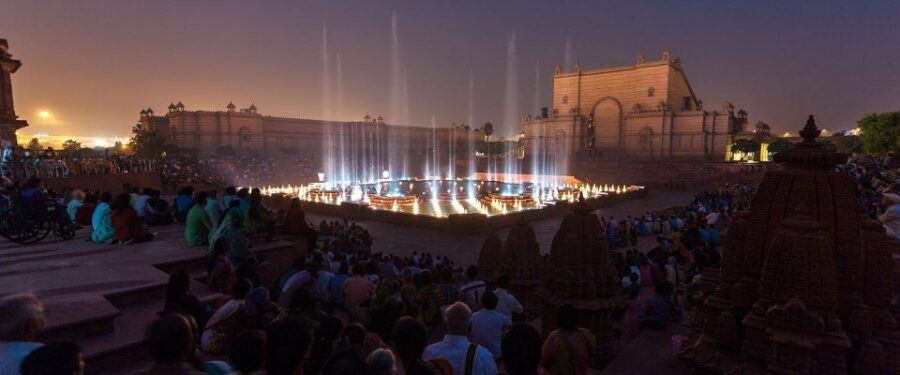
Akshardham’s main advantage isn’t just what it looks like—it’s how it tells a story while you’re inside.
Sahajanand Darshan: values in multimedia form
This section uses exhibits and multimedia technologies to convey core values—things like non-violence, perseverance, prayers, morality, and family harmony. Even if you don’t know the language or religious background, the structure is designed to guide you through the themes step-by-step.






Neelkanth Darshan: a trek across India’s geography
Neelkanth Varni is presented as an epic journey—about 12,000 kilometers across the Indian subcontinent. You follow the story from the northern Himalayas down toward the warmer southern coasts. The focus here is the moral weight of sacrifice and service, plus ideas around faith and the soul.
I like this part because it turns a concept you may have heard about into something you can actually picture. If your brain likes narratives, you’ll probably enjoy the way the exhibits connect place and meaning.
Sanskruti Darsham: history, culture, and the cultural boat ride
Sanskruti Darsham leans into culture through a 12-minute cultural boat ride. You’ll move through an overview of ancient Indian history and the lifestyle of the Vedic era.
The boat ride also includes references like:
- Passing by the oldest university (as part of the story presentation)
- Watching a portrayal of eye surgery happening more than a thousand years ago
- Highlighting India’s contributions to the world
Is it “academic history”? It’s more like a curated story format. Still, it’s one of the best “reset your eyes” moments in the temple complex—especially if you feel tired from walking and reading.
The Sahaj Anand Water Show: Lasers, Jets, and Sound at Night
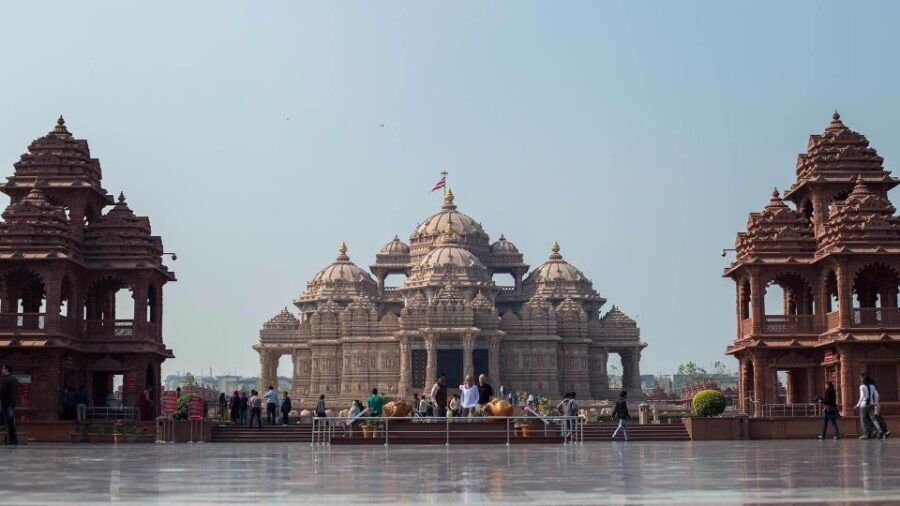
If you’re deciding whether to prioritize this tour, the easiest answer is simple: the Sahaj Anand Water Show is the big finale.
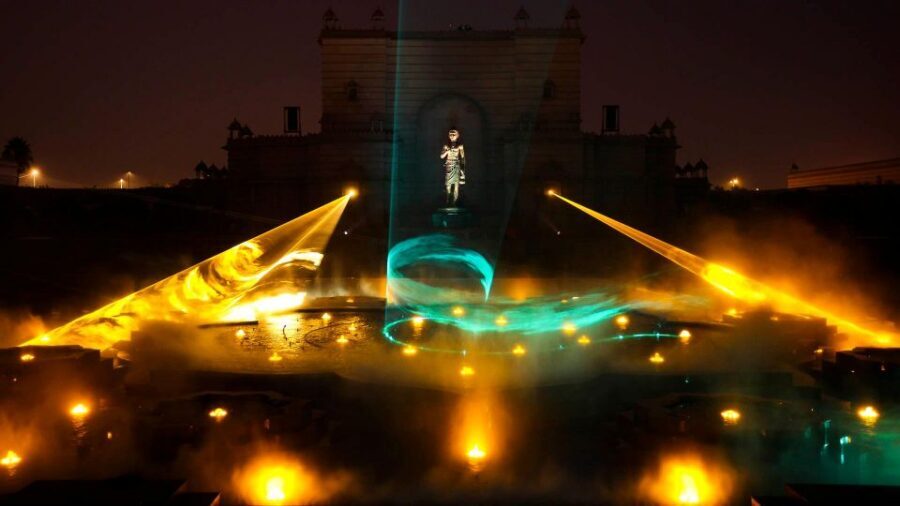
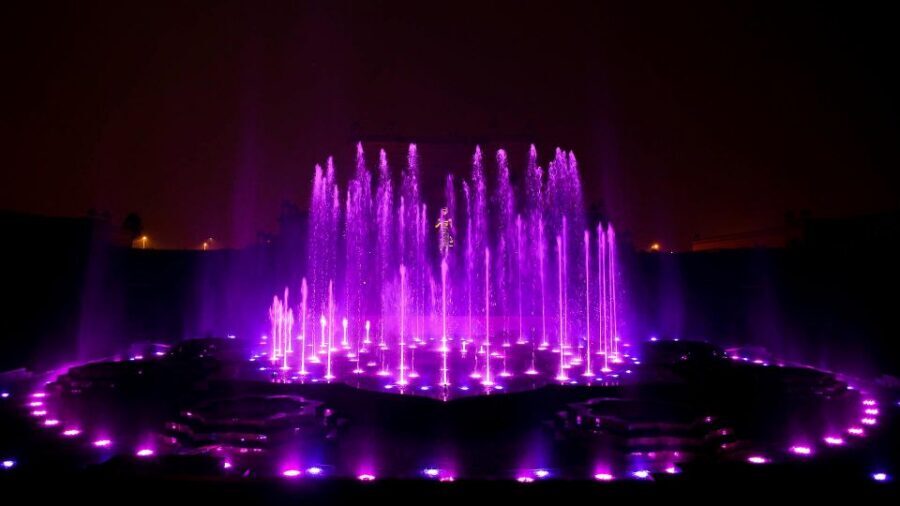
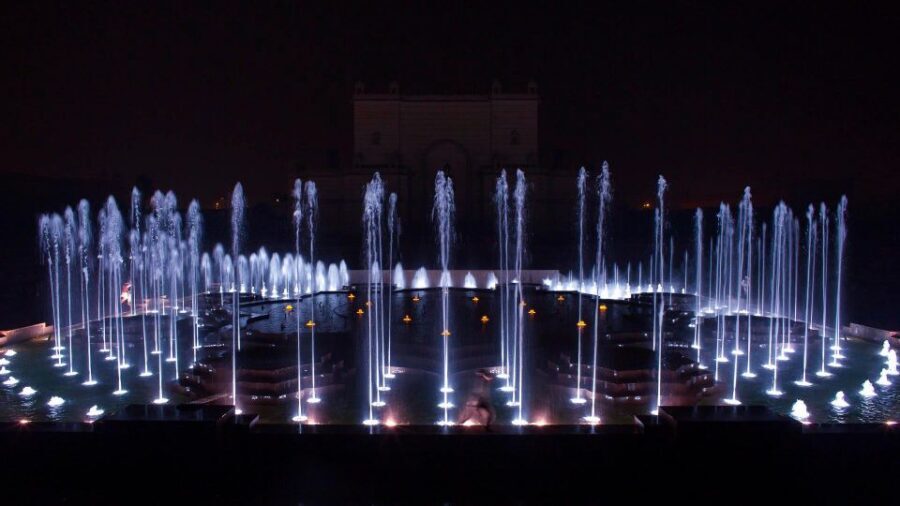
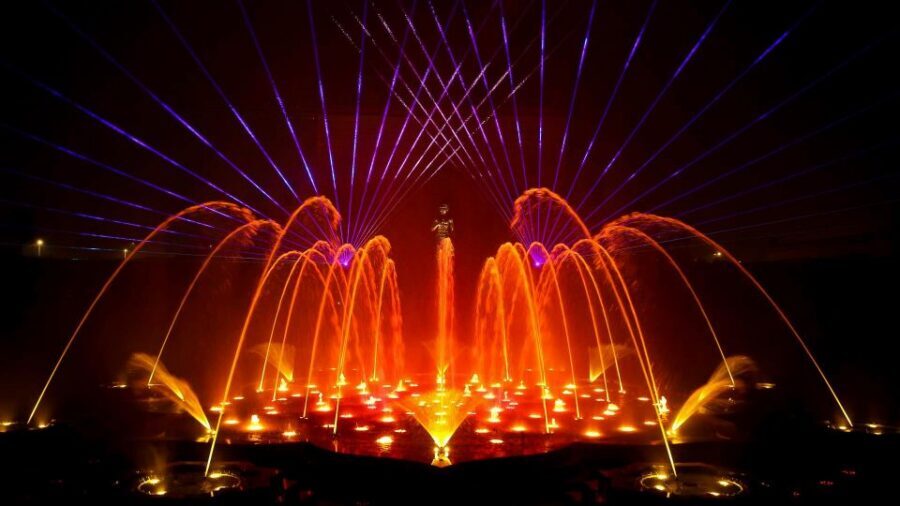
This is a 24-minute presentation based on the Kena Upanishad. It combines:
- Multi-color lasers
- Video projections
- Underwater flames
- Water jets
- Surround sound
What makes it worth the time isn’t only the effects. It’s the pacing and the way the show ties back to the earlier exhibits. You go from story rooms during the day to a stage show at night, and it creates a full arc.
One practical note: phones aren’t allowed inside, and some visitors mention cameras being restricted too. That changes how you watch—in a good way. You’ll spend more time tracking the motion and sound rather than stopping for photos.
Guides also seem to help people find good viewing positions. Several mentions include that the guide knew where to stand for the best view, so don’t treat this as a drop-in event where you wing it.
Guides Make the Difference: From Anmol to Jassi to Ronak
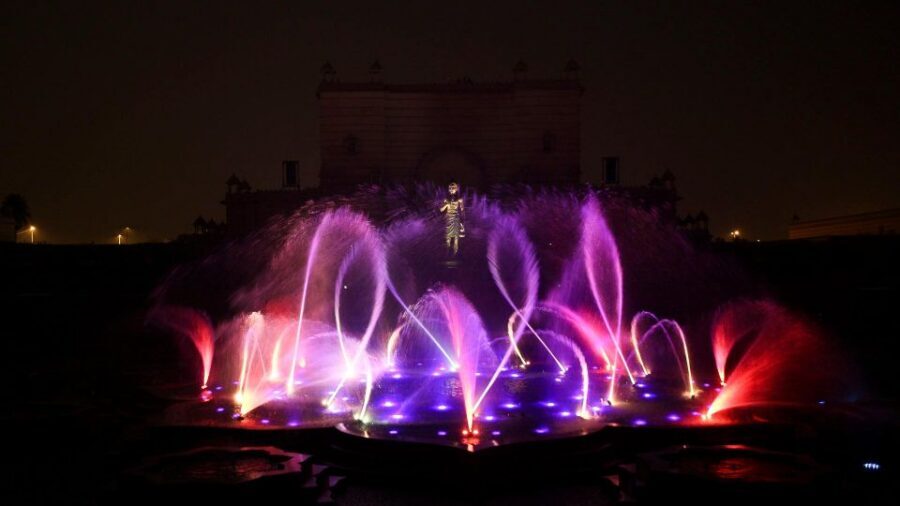
A temple complex this structured can feel confusing if you’re rushing. The guide role is what turns it from sightseeing into a meaningful experience.
Depending on your language preference (English, Spanish, or French), you may be paired with guides like Anmol, Jassi, Ronak, Mr. Singh, SK, Anas, Vivek Mathur, or Nagendra Singh. These names come up in different bookings, and the consistent theme is how they explain what you’re seeing.
Here’s what you can look for when you meet your guide:
- Clear explanations as you move between areas
- Help navigating entry/security steps without drama
- Translations or support so the show makes sense
- A relaxed pace so you’re not sprinting from one display to the next
If you’re traveling solo, this part matters even more. People specifically say they felt safe and cared for while following the rules inside.
Price and Value: Is $21 a Smart Deal?
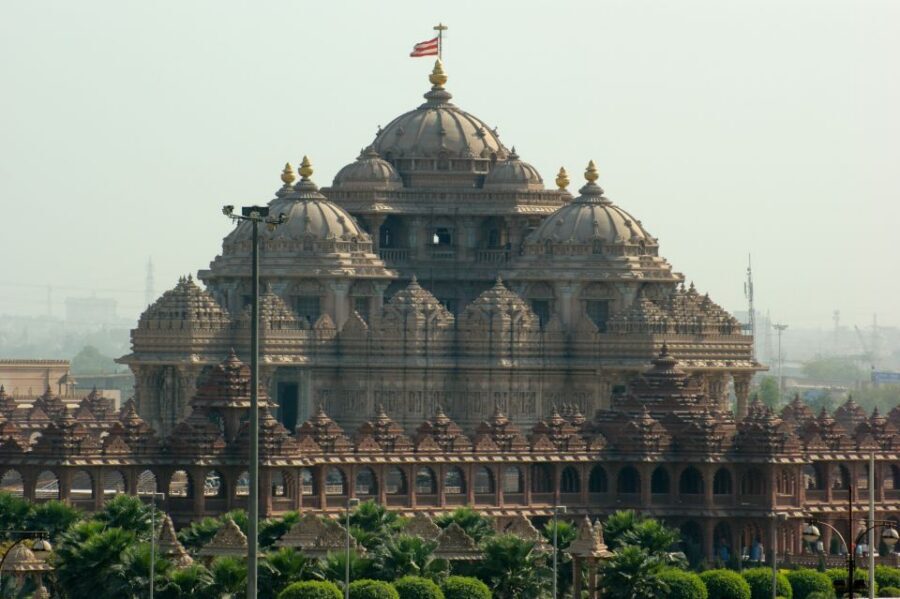
At $21 per person for a 3–5 hour experience, the value comes from the combination—not just one item.
You’re paying for:
- Private car transportation
- Hotel pickup and drop-off
- A professional tour guide
- Parking fees and taxes
- A water bottle
- And a ticket if the ticket option is selected
- Plus skip-the-line entry via a separate entrance
In a city like Delhi, convenience is real money. You’re not trying to line up alone, interpret security instructions alone, or negotiate the timing of the evening show on your own. The driver component alone often prevents a day from turning into stress.
Also, this is a good “first Delhi” activity. Several people describe it as an early-day introduction or a way to break up the monotony after airport travel.
If you like structure—someone else handles the moving parts—this price can feel like a bargain. If you prefer total independence, you might feel limited by the fixed visit flow and show timing.
Rules That Matter: Phones, Clothing, Pets, and Monday Closures
This is the section that saves your time.
Akshardham has clear restrictions:
- Phones are not allowed inside (and some people note cameras can be restricted too)
- Short skirts are not allowed
- No alcohol or drugs
- Pets are not allowed
- The temple is closed every Monday
Before you go, do a quick prep:
- Wear something you’re comfortable in that also follows the clothing rule (avoid short skirts).
- Expect you won’t be photographing most of the interior experience, so plan to watch and listen instead.
- Don’t bring anything prohibited that would delay entry. If you’re unsure, ask your guide before you arrive at security.
Yes, it’s strict. But it’s also part of why the experience feels calm once you’re inside.
Who This Tour Suits Best (and Who Might Want Another Plan)
You’ll likely love this tour if:
- You want a spiritual and cultural visit without spending a full day
- You appreciate context, stories, and guided meaning
- You’re excited about the Sahaj Anand Water Show finale
- You’d rather ride with a private driver than tackle Delhi routing solo
It might be less ideal if:
- You mainly want photos and you’re unhappy about the no-phone (and possible camera) rules
- You’re visiting on a Monday and need the temple itself to be the main goal
- You’re hoping for a flexible schedule that changes hour by hour on demand
That said, the private format still gives you a smoother experience than trying to coordinate everything yourself.
Should You Book This Akshardham Water-and-Light Tour?
I’d book it if your goal is a balanced Delhi evening: city landmarks first, then deep temple storytelling, ending with a show that actually feels like an event—not just another attraction.
Do it especially if:
- You want an efficient 3–5 hour experience
- You’re traveling with limited time
- You’d benefit from a guide’s help with entry rules and interpretation
- You care about the 24-minute Sahaj Anand presentation
Just don’t assume it’s a photo tour. If you go expecting phones and cameras, you’ll feel annoyed. If you go expecting lights, sound, and story-based exhibits, you’ll have a much better time.
FAQ
How long is the Akshardham Temple tour with the water and light show?
The duration is listed as 3 to 5 hours, depending on your starting time and how the schedule flows that day.
Where does the pickup happen?
Pickup is included from your hotel, airport, or any desired location in New Delhi, Gurugram, Noida, or the airport.
What language is the live tour guide available in?
The live tour guide is available in English, Spanish, and French.
Are phones allowed inside the temple?
Phones are not allowed inside, and camera use is restricted according to what some visitors experienced.
Is Akshardham Temple open every day?
No. Swaminarayan Akshardham Temple is closed every Monday.
Is the water and light show included?
Yes. The highlights include the Sahaj Anand Water Show, a 24-minute light and water presentation in the evening.