REVIEW · JAIPUR
Indian Cooking Class with Local Family in Jaipur
Book on Viator →Operated by Dine N Demo (Cooking Demonstration With Local Family) · Bookable on Viator
Cooking with Jaipur’s family makes dinner personal. In Jaipur, Dine-N-Demo brings you into a home kitchen where you start with ingredients and spices, then learn five common recipes step by step. I like the local family angle and the way the lesson feels grounded in real daily cooking.
Second, you get a neighborhood vegetable market moment to pick ingredients you might not normally grab. The session also includes vegetarian and non-vegetarian selections, so you can match what you eat to what you enjoy. The only drawback to note: three hours moves quickly, so you’ll leave with practical skills to repeat, not an hours-long deep course in one dish.
With a welcome on arrival, a small group (up to 10), and a complete dinner with non-alcoholic drinks included, this is one of those experiences that feels like good value and good company at the same time.
In This Review
- Key highlights you’ll care about
- Why This Jaipur Cooking Class Feels Like a Home Visit
- The 3-Hour Flow: Market Picks, Spices, and Five Recipes
- What You Actually Learn: Spice Guidance You Can Reuse
- Dinner with Non-Alcoholic Drinks: The Meal Is Part of the Lesson
- Vegetarian and Non-Vegetarian Selections in One Session
- Price and Value: What $22.46 Buys You in Jaipur
- Where You’ll Meet and When It Runs in Jaipur
- Should You Book This Jaipur Cooking Class with Local Family?
- FAQ
- Where is the meeting point for the cooking class?
- How long is the Indian cooking class in Jaipur?
- How many people are in the group?
- What’s included in the price?
- Are there vegetarian and non-vegetarian options?
- Is there a market visit during the class?
- How many recipes will I learn?
- What are the daily operating hours?
- Is free cancellation available?
Key highlights you’ll care about
- Small group, max 10 people: less waiting, more attention in a home-style setting
- Neighborhood vegetable market: choose ingredients (including unusual ones) early in the class
- Hands-on learning for five common recipes: spice-focused guidance as you cook
- Complete dinner included: you eat what you made, plus non-alcoholic drinks
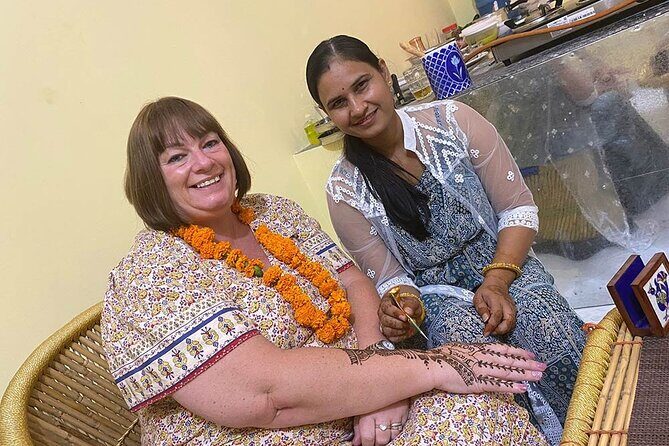
- Hosts who feel welcoming: Dheeraj and Supriya are named in the best-loved accounts
Why This Jaipur Cooking Class Feels Like a Home Visit
Jaipur food lessons can split into two types: big school classes, or smaller, personal experiences that feel like you’ve been invited inside. This one leans hard toward the second style. You’re not just watching someone cook—you’re learning in a local family home, where everyday habits matter more than showmanship.
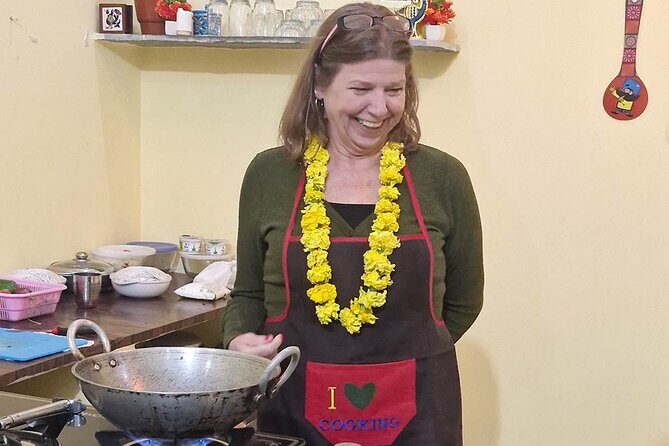
The standout part, at least from the way this experience is consistently described, is the warmth. Dine-N-Demo’s hosts—Dheeraj and Supriya—are repeatedly credited with making people feel comfortable and included, not like they’re being processed through a program. That matters in a cooking class because you’ll likely ask questions, and you’ll want answers that connect to how meals are actually made at home.
You’ll also hear the kind of cooking advice that doesn’t come from a cookbook. The class is built around traditional methods, including the “tricks” and spice know-how associated with the hosts’ grandmother. Even if you’ve cooked Indian food before, it can be eye-opening to understand how families think about components and seasoning as separate steps, not one big dump of spices at the end.
One more practical plus: the group size stays small—up to 10—so the experience won’t feel crowded. In a home kitchen, that comfort level makes a difference.
You can also read our reviews of more cooking classes in Jaipur

The 3-Hour Flow: Market Picks, Spices, and Five Recipes
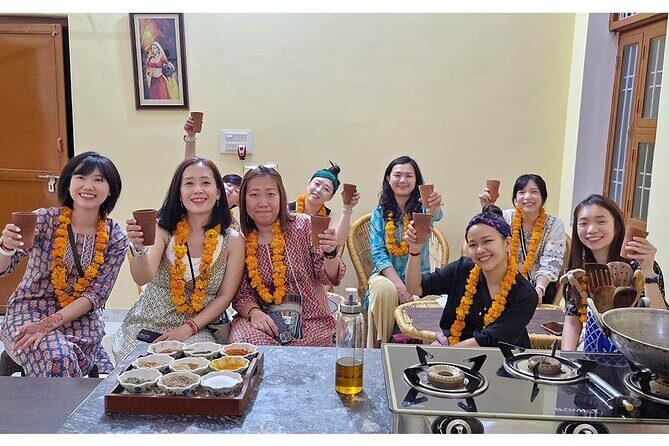
This class runs for about 3 hours and starts and ends back at the meeting point. The pace is designed for a full evening experience: you arrive, you get oriented, you shop and prepare, and you finish with dinner.
Here’s what the flow looks like in real terms:
1) Welcome on arrival
You’re greeted when you show up, and that first step helps the whole session feel relaxed. In home-based experiences, this is important—especially if you’re not used to cooking with someone else’s rhythms.
2) A neighborhood vegetable market stop
One of the most useful parts is the chance to see ingredients up close. The class includes a market component where you can select neighborhood vegetable ingredients and even choose “unusual” ones. This matters because Indian cooking at home often hinges on what you can find locally—seasonal vegetables and different spice blends change with the day.
If you’ve ever tried to recreate Indian dishes at home and felt like your ingredients didn’t match, this is the kind of early step that can prevent that problem. You’re learning what to look for, not just how to cook.
3) Cooking five common recipes, ingredient by ingredient
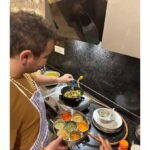
Back at the kitchen, the class focuses on five recipes that are presented as common, doable staples. You’ll work with components and spices in order, using guidance that follows how families typically cook. You’re not learning one complicated show dish—you’re learning a toolkit.
And yes, the experience supports both tastes: there are vegetarian and non-vegetarian selections. That doesn’t mean everything is forced onto every participant, but it does mean the session is built to handle different preferences in the same overall class.
4) Dinner included right after cooking
Instead of sending you off with only knowledge, the experience includes the meal. You get a complete dinner with non-alcoholic drinks, so the cooking lessons connect directly to the final result on the table.
A small extra that shows up in the most enthusiastic stories: some nights may include a garden moment—like harvesting fresh spinach from their garden. Even if you don’t get that exact step every time, it hints at the kind of household connection you’re stepping into.
What You Actually Learn: Spice Guidance You Can Reuse
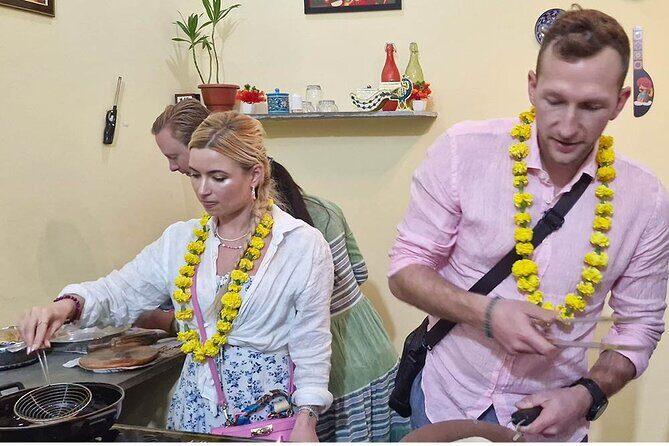
The class isn’t sold as a vague “Indian cooking experience.” It’s structured around learning how to prepare five common recipes, and that learning is tied to the way spices and ingredients work together.
What I like about this approach is how it treats cooking like a series of decisions:
- What ingredient goes in first
- What spice flavor you’re building
- When to adjust so the dish lands the way it’s supposed to
That’s practical knowledge. It’s the difference between following a recipe line-by-line and understanding the logic you can apply to your own pantry at home.
Because the guidance connects to a family’s traditional methods (including advice attributed to the grandmother’s approach), you’re also picking up habits that don’t always show up in written recipes. You might learn how people think about timing, layering, and the feel of the cooking process—those things that make homemade Indian food taste like it came from someone who grew up with it.
Also, the class is designed for take-home value. The session is explicitly about giving you what you need to prepare a delicious Indian meal at home, not just to experience Jaipur cuisine for an evening.
If you’re a confident cook, you may still enjoy this for the “why” behind flavors. If you’re a beginner, you’ll probably appreciate that the recipes are described as common and the class breaks the work down into manageable steps.
Dinner with Non-Alcoholic Drinks: The Meal Is Part of the Lesson
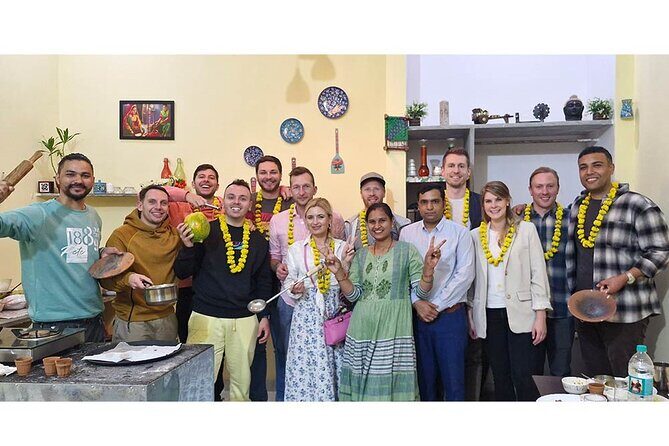
A cooking class is only as good as its payoff. Here, the payoff is built in. You get a complete dinner plus non-alcoholic drinks, and you eat after cooking.
That included meal is valuable for a few reasons:
- You taste the dish while the steps are still fresh in your mind
- You can compare what you thought you did with what it should taste like
- You’re encouraged to ask questions while the kitchen energy is still happening
It also keeps the experience from feeling like a “class only” event. You’re not paying for a workshop and then planning dinner separately.
And because this happens in a home setting, the dinner doesn’t feel like a distant performance. It’s connected to the hosts and the household routines that shaped the cooking style you’re learning.
Vegetarian and Non-Vegetarian Selections in One Session
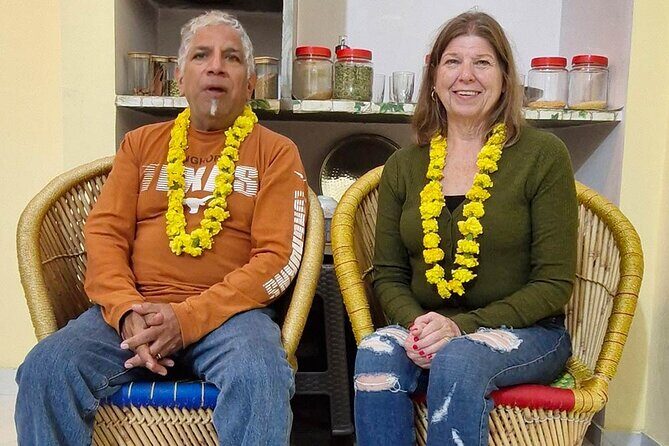
One of the practical details here is that the class includes both vegetarian and non-vegetarian selections. That’s a big deal if you’re traveling as a mixed group or if your appetite changes by the day.
From a planning standpoint, this means you’re less likely to be stuck in a one-size-fits-all menu. The session is described as having something for everyone, including both styles. That kind of flexibility is especially helpful in a smaller group where you want the meal to work for you.
If you’re vegetarian, you’ll want to pay attention to how the session handles seasoning across recipes, because Indian home cooking often builds flavor in layers. If you eat non-vegetarian foods, you’ll likely see how the same spice logic supports different dish types.
Either way, the main takeaway is that the class doesn’t treat diet like an afterthought. It’s part of what the host accommodates.
A few more Jaipur tours and experiences worth a look





Price and Value: What $22.46 Buys You in Jaipur
At $22.46 per person for about 3 hours, the price feels more reasonable when you look at what’s included rather than just the “cooking class” label.
You’re getting:
- A small-group class (maximum 10 people)
- Welcome on arrival
- Market time to choose ingredients
- Hands-on cooking for five recipes
- A complete dinner
- Non-alcoholic drinks
In other words, you’re paying for both instruction and a full evening meal. That’s where the value comes from. If you were to subtract the dinner cost (even roughly) and treat this as only a lesson, the deal gets even better in a city where food-focused experiences can range from casual to pricey.
Also, a home-based, local-family experience tends to be lighter on formalities and heavier on personal attention. In practical terms, that can mean more interaction and a more relaxed pace, which matters when you’re learning to cook.
Where You’ll Meet and When It Runs in Jaipur
You’ll start at Dine-N-Demo (Best Cooking Class in Jaipur), H-79, No.1, West part Yojna, Pani Pech, Sanjay Colony, Nehru Nagar, Jaipur, Rajasthan 302016, India. The activity ends back at the meeting point.
The experience runs daily—Monday through Sunday, 12:00 PM to 10:00 PM—during the listed operating dates. You’ll also receive confirmation at the time of booking, and the tour uses a mobile ticket.
One more practical note: it’s listed as near public transportation. That helps if you’re not planning to rely on rides the whole evening.
Should You Book This Jaipur Cooking Class with Local Family?
Book it if you want an Indian cooking experience that feels human, not staged. This one is built around a small-group, local-home approach, includes market time, and teaches you five recipes with spice guidance you can reuse. The included complete dinner makes the whole evening feel like a real meal, not an afterthought.
Skip it if you’re looking for a long, specialized class focused on mastering one technique in extreme depth. Three hours is enough for a strong foundation and a practical takeaway, but it’s not a multi-day culinary residency.
FAQ
Where is the meeting point for the cooking class?
The class starts at Dine-N-Demo (Best Cooking Class in Jaipur), H-79, No.1, West part Yojna, Pani Pech, Sanjay Colony, Nehru Nagar, Jaipur, Rajasthan 302016, India.
How long is the Indian cooking class in Jaipur?
It runs for approximately 3 hours.
How many people are in the group?
The experience has a maximum of 10 travelers.
What’s included in the price?
Dinner is included (a complete dinner) along with non-alcoholic drinks, plus a welcome on arrival.
Are there vegetarian and non-vegetarian options?
Yes. The session includes vegetarian and non-vegetarian selections.
Is there a market visit during the class?
Yes. Part of the experience includes going to a neighborhood vegetable market and choosing ingredients.
How many recipes will I learn?
You’ll learn how to prepare five common recipes during the session.
What are the daily operating hours?
It runs Monday through Sunday from 12:00 PM to 10:00 PM.
Is free cancellation available?
Yes. You can cancel for a full refund up to 24 hours in advance of the experience start time.