REVIEW · JAIPUR
Hands-on Block Printing Workshop
Book on Viator →Operated by Creatis · Bookable on Viator
Stop and print your own Jaipur textile. This hands-on Sanganeri block printing workshop at Creatis teaches the method where it began, right in Jaipur, and ends with two stoles you make yourself. I like that the class is capped for personal tutoring in a relaxed setting, so you can actually get your questions answered. I also like the practical payoff: you leave with finished, usable stoles (not just a demo you watched).
One thing to plan for: color and pattern choices can feel tighter if the group is bigger or if you arrive with very specific expectations. Also, the colors you see in swatches may not match the final result until you test and adjust, so you’ll want to pay attention to the practice step.
In This Review
- Key things I’d highlight before you go
- Sanganeri block printing basics: what the class actually teaches
- Where you’ll go in Jaipur: Creatis and the studio vibe
- The design session: choosing motifs and understanding the blocks
- Layering pigments the practical way (and why test prints matter)
- Making your stoles: from first stamp to finished edges
- Time and group size: why 2 hours feels doable
- Price and value: is $25.16 a fair deal?
- Who this workshop fits best (and who might want another plan)
- Should you book Creatis for block printing?
- FAQ
- How long is the block printing workshop in Jaipur?
- What is the price per person?
- Where is the meeting point?
- Do I need hotel pickup?
- How many people are in the class?
- What will I take home?
- Is there an age requirement?
- What should I wear?
- What’s included in the price?
Key things I’d highlight before you go
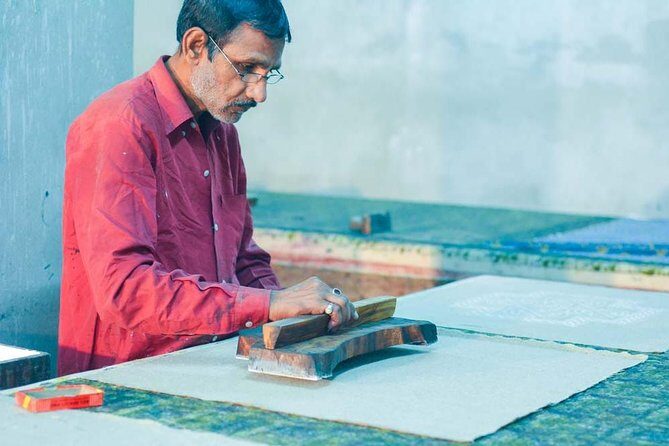
- Sanganeri is taught in its home region: the technique is credited to the Jaipur area’s block-printing tradition from centuries ago
- Gad, Rekh, Datte make design simpler: ground, outline, and filler patterns each have their own job
- You get guided practice for alignment: lining up blocks is its own skill, not just stamping hard
- Water-based pigments + layering: you’ll experiment with mixing and building patterns color by color
- You take home two stoles: borders are finished with machine embroidery, then your work becomes wearable
- Mohit and the team keep it calm: expect patient help and a no-pressure atmosphere
Sanganeri block printing basics: what the class actually teaches
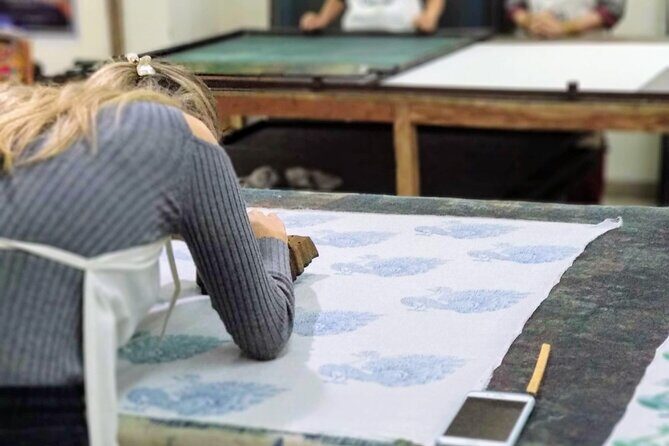
This is a hands-on class focused on Sanganeri block printing, the style known for crisp motifs and bold, layered color. The key value for you is that it’s not “craft viewing.” You learn the mechanics: tools, stamps, pigments, and the order of steps that makes the print look clean instead of muddy.
You start with the story and the purpose behind block printing. You’ll get context on why it matters culturally in India, plus what makes Sanganeri styles distinct in the Jaipur region. That background helps when you’re staring at a block stencil and thinking, how do I even start? It also makes your finished piece feel less like a souvenir and more like something connected to a real local tradition.
Then you move into the practical side: how to work with the materials and how each part of the design is built. The class uses the design language of Gad (ground), Rekh (outline), and Datte (filler). That’s useful for you because it turns a complex-looking print into separate decisions:
- the base area (Gad)
- the defining lines (Rekh)
- the extra pattern texture (Datte)
Even if your artistic instincts are more stick figures than graphic design, this framework gives your hands a route to follow.
A few more Jaipur tours and experiences worth a look

Where you’ll go in Jaipur: Creatis and the studio vibe
You travel independently to the studio at Creatis A12 Sudarshanpura RIICO, behind the Tata Motors Service Center in Jaipur’s Industrial Area (Sudarshanpura, Bais Godam area). It’s not in a tourist bazaar lane, which is part of the appeal. The space is described as calm and spacious, and it shares space with an active textile business operation, not a staged set.
That matters more than you might think. Jaipur can be a lot—noise, crowds, shopping pressure. This class is a good reset because you’re focused on one thing: stamping, lining up, pigment mixing, and careful layering. The process also slows you down naturally. You can’t rush alignment or you’ll see the mistakes.
The dress code is smart casual. I’d wear something comfortable you wouldn’t mind getting a little stained. Water-based pigments are part of the process, but printing always has a chance of splashes. Closed-toe shoes are also a safe call if you’re planning to move around the work area.
The design session: choosing motifs and understanding the blocks
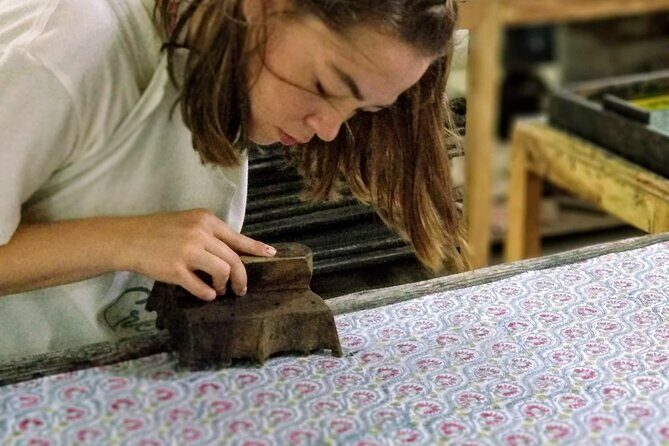
After your intro, you’ll choose from intricate designs inspired by Sanganeri prints. The studio provides access to designs from its own fabric collection, so you’re not relying on a random catalog online before you arrive. That’s a plus for you because it makes the decision part feel guided, not overwhelming.
You’ll work with blocks that correspond to those three design roles:
- Gad (ground): larger fill sections
- Rekh (outline): the structure and edges that make a motif readable
- Datte (filler): smaller pattern details that add texture
This is where the class earns its reputation. Block printing looks simple from the outside—press, lift, repeat. In reality, the design “reads” only when the layers match and the outlines land where they should. That’s why the course focuses on how to layer motifs or all-over designs using water-based pigments.
If you want creative control, you’ll have options. People have described being able to choose their own level of difficulty and to pick designs and colors. Still, if your group gets large, you may notice fewer choices in colors or in the complexity of patterns. Keep that in mind if you’re traveling as part of a big school or organized group.
Layering pigments the practical way (and why test prints matter)
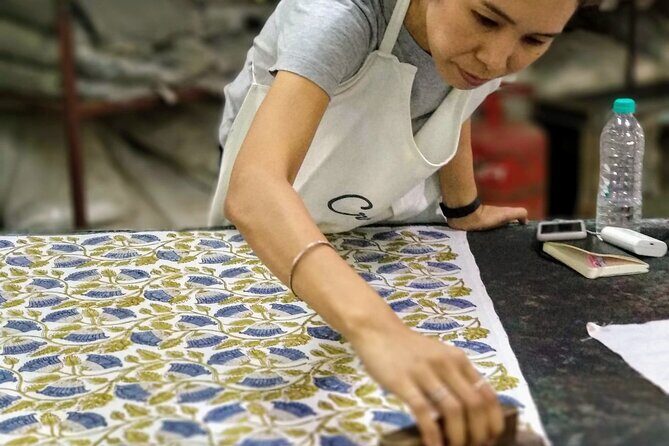
The real skill in block printing is layering without turning your design into a blur. You’ll experiment with mixing and matching colors, then apply them in a sequence that builds from one layer to the next. Water-based pigments are part of the workflow, and the instructor-style teaching helps you understand why timing and order matter.
One detail I’d treat as non-negotiable: alignment. You should expect to practice on a test piece before the final printing. That practice is where you learn how to eye placement, especially when a design uses several colors that overlay each other. One example that came up is a peacock-style design done through multiple color overlays, where the only way it looks sharp is if you place each color layer with care.
Also, don’t trust swatches blindly. In one experience, the colors selected from swatches didn’t match the final pigment results exactly. The fix was simple: if your test print isn’t what you expected, ask to adjust. That’s part of the value here. The class gives you feedback before the final piece is committed.
Making your stoles: from first stamp to finished edges
Your take-home item is clear: two stoles that you create during the workshop. That’s a big deal for value. Many classes give you a small sample. Here, you end with something long enough to wear or gift.
You’ll apply your selected design onto the fabric for your stoles using the block-printing process. Then, when the printing is done, the borders are finished with machine embroidery. That combination is smart: it keeps the overall work manageable within a two-hour window while still giving your final stoles a polished look.
What you’ll enjoy most is the moment you realize your piece is actually starting to match the pattern you chose. Early on, it might look like separate stamped shapes. Then the layering clicks, and suddenly the motif becomes legible.
If you’d like to print extra fabric, ask during the class. One participant said they successfully printed on clothing they brought along. That suggests there’s room for personalization, but you should still check with the studio first so you don’t waste time or run into a rule you didn’t know about.





Time and group size: why 2 hours feels doable
The workshop runs about 2 hours. That’s long enough to learn the basics and finish your two stoles, but short enough that you’re not stuck in a half-day factory routine.
Group size is capped for personalized tutoring in a relaxed atmosphere—six people is the stated cap for that instruction style. The activity can have a maximum of 15 travelers, so if you end up in a busier session, you may feel a little less one-on-one time. In that scenario, prioritize your own workflow: ask questions early, do the test print carefully, and focus on quality over experimenting wildly.
You’ll also get more value out of the class if you treat it like a skill session. Listen, copy what the instructor is doing, and then make small choices for your own colors and design layers.
Price and value: is $25.16 a fair deal?
At $25.16 per person for about two hours, this workshop can be a strong value in Jaipur. You’re paying for instruction, materials, and the fact that the end result is something you can wear—two handmade stoles with embroidered borders.
It’s also a better deal than buying a finished textile without understanding it. Block printing has labor hidden inside the process: alignment, layering, pigment behavior, and stencil choices. Once you do even a small portion of that work yourself, you start to spot what makes a piece look clean and what makes it look off.
What’s included matters here too: taxes and handling fees are covered, and GST is included. Hotel pickup isn’t included, so you’ll need to plan your own ride to Creatis.
If you want a travel memory that’s both personal and practical, this is the kind of activity that pays you back every time you wear the scarf.
Who this workshop fits best (and who might want another plan)
This is a great fit if you want a break from sightseeing that doesn’t feel like a chore. People describe the workshop as calm with good vibes, and that matches the practical reality of block printing: it’s focused, not frantic.
You’ll also like it if you enjoy making something with your hands. Even if you’re not “artsy,” the structure of Gad, Rekh, Datte makes it learnable. Plus, you have guided step-by-step tuition so you’re not left figuring it out alone.
It may be less ideal if you’re hoping for a purely passive cultural tour. This is a working studio. You’re going to stamp, layer, and pay attention to details.
The minimum age is 18, and the experience notes a moderate physical fitness level. It shouldn’t be a big hurdle, but it’s not built for wheelchair-style mobility constraints based on what’s provided.
Should you book Creatis for block printing?
Book this workshop if you want a real skill, not just a photo stop. You’ll get the Sanganeri method in the Jaipur region where it developed, plus the chance to make two take-home stoles that look like they belong in your closet back home.
If you’re picky about color outcomes, plan to be flexible. Swatches may not predict the final pigment behavior, so your test print and willingness to adjust will matter. And if you’re traveling in a larger group, be ready for slightly less choice in colors or patterns.
If your ideal day in Jaipur includes calm work, patient instruction from people like Mohit and his team, and a souvenir that’s actually yours, this is a very easy yes.
FAQ
How long is the block printing workshop in Jaipur?
It’s approximately 2 hours.
What is the price per person?
The price is $25.16 per person.
Where is the meeting point?
The start point is Creatis A12 Sudarshanpura RIICO, behind Tata Motors Service Center, Industrial Area, Sudarshanpura, Bais Godam, Jaipur, Rajasthan 302006, India.
Do I need hotel pickup?
No. Hotel pickup is not included.
How many people are in the class?
The workshop is capped at six people for personalized tutoring in a relaxed atmosphere, and the activity has a maximum of 15 travelers.
What will I take home?
You’ll create two block-printed stoles to keep, and the borders are finished with machine embroidery.
Is there an age requirement?
Yes, the minimum age is 18.
What should I wear?
The dress code is smart casual.
What’s included in the price?
All taxes, fees, and handling charges are included, including GST (Goods and Services Tax).