REVIEW · NEW DELHI
Half-Day Private Walking Tour of Old Delhi
Book on Viator →Operated by Shivalik Holidays · Bookable on Viator
Old Delhi rewards slow walking. In Shahjahanabad’s lane maze, a private heritage walk turns famous sights into a real neighborhood you can actually understand. You’ll see the markets, temples, and street-food stops that make this part of New Delhi feel different from the rest of the city.
What I like most is the mix of faith and daily life: Gurudwara Sis Ganj Sahib and the surrounding city streets give context fast. I also like the food-and-shopping flow, especially the chance to try chai and local street snacks while you pass places like Khari Baoli spice stalls.
The main thing to consider is the pace. This is about 3 to 4 hours of walking through crowded lanes, and the biggest optional cost is Jama Masjid entry (INR 300 per person) if you want inside.
In This Review
- Key highlights before you go
- Old Delhi on foot: what you’re really buying with a walking tour
- Meeting at Red Fort Metro (Lal Qila) and how the tour likely flows
- Gurudwara Sis Ganj Sahib: a free temple stop with neighborhood context
- Khari Baoli: spice and dry-fruit shopping lanes in bulk
- The revamped shopping street: cloth, sarees, and paratha energy
- Jewellers street: when Old Delhi’s craftsmanship meets street life
- Jama Masjid: the optional INR 300 entry and how to decide
- Included food: chai and street snacks that actually fit the route
- Price and value: how $21 makes sense in a private setting
- Practicalities that matter in Old Delhi lanes
- Who this tour suits best (and who should skip it)
- Should you book this Old Delhi half-day private walk?
- FAQ
- How long is the Old Delhi walking tour?
- Is this a private tour or a shared group tour?
- What’s the tour starting point?
- What is included in the price?
- Is there an entrance fee for Jama Masjid?
- What if the weather is bad?
Key highlights before you go
- Private group experience: only your group walks with the guide, so you can ask questions and move at a comfortable speed.
- Chai and street snacks included: you’re not just looking at food, you’re tasting along the way.
- Temple stops with real local context: Gurudwara Sis Ganj Sahib is free, and the surrounding streets explain how people actually live.
- Khari Baoli market focus: a short stop that’s perfect for scents, colors, and how spices move in bulk.
- Optional Jama Masjid entry: you control whether you pay INR 300 on the spot to go inside.
Old Delhi on foot: what you’re really buying with a walking tour
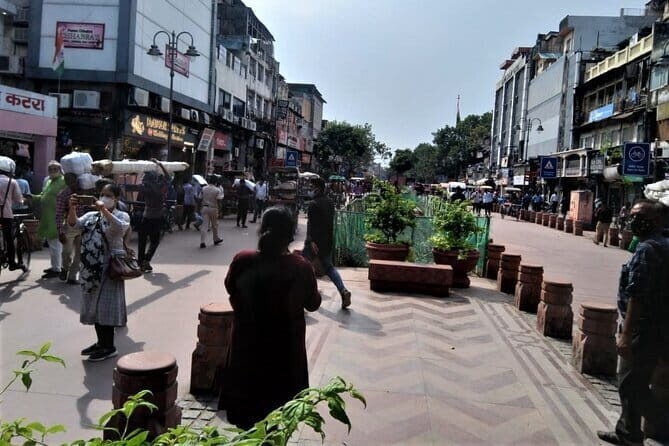
Old Delhi is not the kind of place where a car ride gives you the full story. The lanes are narrow, the turns are constant, and the whole point is to walk through the places where people work and shop every day. On this half-day route, your guide helps you read what you’re seeing instead of just passing it by.
You also get a practical advantage: a guide reduces time spent figuring out where to go next. They’ll point you toward major landmarks like Gurudwara Sis Ganj Sahib and Jama Masjid, then connect those bigger sights to the smaller details around them, like trade lanes for spices, cloth, and jewelry.
And since the tour is private, you’re not stuck with a mismatched pace. If your group wants a slow look at a doorway carving or a quick snack stop, you’re less likely to feel rushed than you would in a large group setting.
You can also read our reviews of more walking tours in New Delhi



Meeting at Red Fort Metro (Lal Qila) and how the tour likely flows
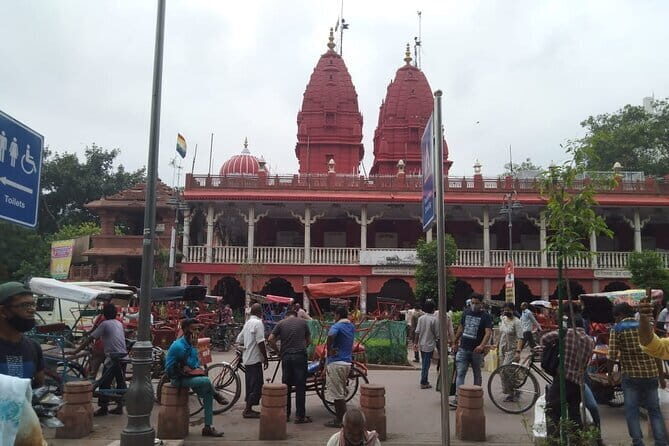
Your starting point is Red Fort Metro Station (Lal Qila), and the tour ends there too. That matters because it keeps logistics simple: no complicated drop-offs, no long detours back to transit.
The route is built for a 3 to 4 hour walk. That’s long enough to feel like you got somewhere, but short enough that you can still do the rest of your day in Delhi without feeling wrecked. If you’re traveling with a little planning anxiety, this duration is a friendly sweet spot.
You may also see options like pickup offered and group discounts, so it’s worth checking what’s available for your booking. Even if you use the Metro, being near public transportation is a big relief in a city where traffic can make timing unpredictable.
Gurudwara Sis Ganj Sahib: a free temple stop with neighborhood context
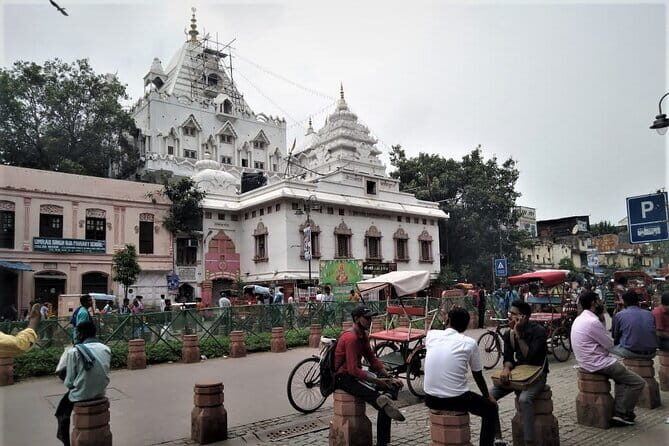
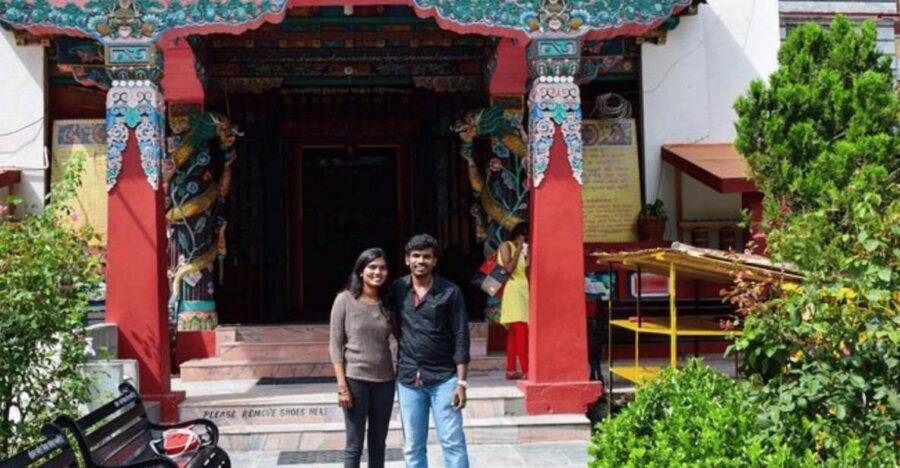
The first major stop is Gurudwara Sis Ganj Sahib. This is a Sikh temple located right in the heart of Old Delhi, so you’re not visiting it as a distant landmark. You’ll be walking into a space that sits inside daily street life.
Admission is free, and the stop is about 30 minutes. That gives enough time to understand the basic purpose of the place and to notice how worship fits into the surrounding neighborhood rhythm. It’s also a good early anchor point, because it sets a cultural baseline before you start moving through markets.
One practical tip: dress respectfully. Even when the time is short, treat the temple with the same mindset you’d use anywhere sacred. If your group is shopping later (and you will), you’ll also want to think ahead about how you’ll carry items without bothering your comfort during the walk.
Khari Baoli: spice and dry-fruit shopping lanes in bulk

Next up is Khari Baoli, one of Old Delhi’s key wholesale market areas for spices and dry fruits. This is the type of stop that works even if you’re not a hardcore shopper, because the sensory experience does most of the teaching: the colors, the containers, and the sheer density of goods.
The stop is about 20 minutes, and admission is free. That time window is intentional. It’s long enough to understand what you’re looking at and short enough that you don’t lose the rest of the tour to market wandering.
What you’ll likely notice is how bulk commerce feels different from retail. Even if you only buy something small, watching how stalls organize spices and dried goods gives you a better idea of Old Delhi’s economy. If you like food, this stop also makes the later street-snack section feel more meaningful.
The revamped shopping street: cloth, sarees, and paratha energy

Between the market stops, the tour includes time on a major shopping street that has been recently revamped. That matters because Old Delhi isn’t static. Some parts are actively evolving, but the core lane culture is still there.
You’ll also stop for a cloth and saree market segment, plus a chance to admire street scenes and enjoy paratha shops. This is a classic Old Delhi pattern: textiles and food sit side by side, and both are part of how people spend their day.
This portion of the tour is where your guide’s presence really helps. Without someone to point out the notable lanes, it’s easy to get lost in choice: too many stores, too many colors, not enough sense of what to prioritize. With a guide, you get the best view first, then you can decide how deep you want to go.
If you’re hungry, this is a good part of the day to feel that hunger. The tour includes snacks and chai, so you’ll likely hit a sweet spot where you’re ready for food but not so starving that you rush through everything.
You can also read our reviews of more private tours in New Delhi






Jewellers street: when Old Delhi’s craftsmanship meets street life
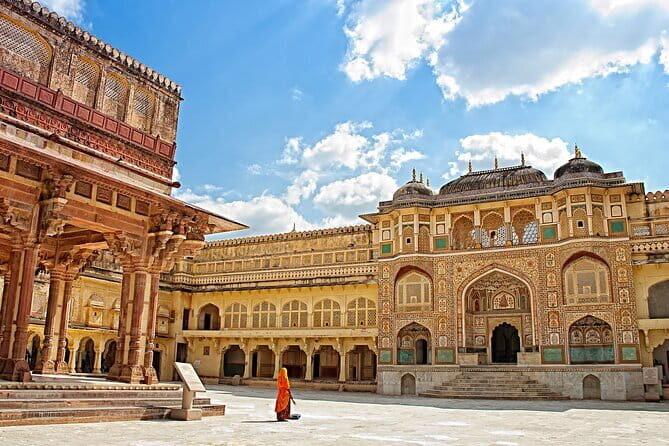
Later, the itinerary includes a jewellers street stop. This is one of those Old Delhi lanes where the visual weight of the storefronts is hard to ignore. Even if jewelry is not your planned purchase, you’ll learn a lot about the industry just by seeing how products are presented and how customers move through the area.
The tour keeps this segment focused, not long and drawn out. That’s a good strategy because Old Delhi lanes can eat time fast. A short, guided stop helps you understand the why behind the where without turning your afternoon into a shopping marathon.
If you do plan to buy something, keep your expectations realistic. Shopping in crowded bazaars is not like a clean mall experience. Prices and interactions can vary by shop and by item type. Your guide can help you avoid the worst confusion, but you’ll still want to stay patient.
Jama Masjid: the optional INR 300 entry and how to decide

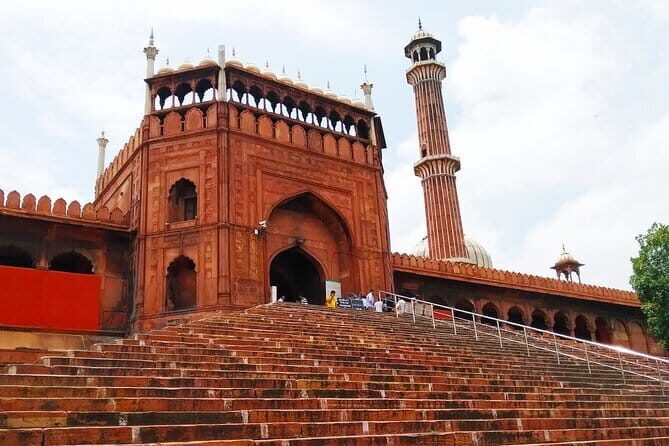
The biggest landmark on the route is Jama Masjid, one of the city’s major 17th-century mosques built by Shah Jahan. The stop is about 30 minutes, and this is where you’ll make a choice.
Entrance to Jama Masjid is INR 300 per person, not included in the tour price, and you can pay directly on the spot if you want to enter. That means you can keep it as a view-from-the-area experience, or you can spend the extra time and money for inside access.
So how do you decide? If your group is architecture- and monument-focused, the entry fee is worth budgeting for. If you’re more into food, market life, and quick cultural stops, you can skip paying and still enjoy the scale and atmosphere outside.
Either way, plan for crowd conditions. Even with a guided stop length, you’ll likely move slower in busy sections. Shoes that handle uneven or crowded walking will make this part more comfortable.
Included food: chai and street snacks that actually fit the route

This tour includes snacks (chai/tea plus some local street snacks) and bottled water. That’s not just a nice add-on. In Old Delhi, having food and drink handled for you prevents two common problems: low energy from skipped meals and decision fatigue when everything smells amazing.
The snack plan also fits the walking rhythm. Instead of a big lunch that ruins the pace, you get small tastings timed to the market movement. That’s great for a half-day plan because you can keep seeing things without feeling stuffed.
If you’re picky about spice levels, it’s smart to tell your guide early. You might find that what counts as mild by local standards is still bold by Western spice expectations. You can usually adjust by picking what you try, but don’t wait until the first bite to ask.
Price and value: how $21 makes sense in a private setting
At $21 for a 3 to 4 hour private walking tour, the value comes down to three things.
First, it’s a private experience. You’re not splitting guide time with a large group, and that generally makes the conversation and pace more comfortable. Second, you get an experienced authorized English/French speaking guide, plus practical supplies like bottled water. Third, you’re getting chai and street snacks included, which reduces your own daily food planning.
Now, the one cost you must account for is Jama Masjid entry (INR 300) if you choose to go inside. That fee is not part of the tour price, so treat it like an add-on, not a surprise.
Also, remember what’s not included: private transportation and lunch. If you’re coming from farther away and want door-to-door convenience, you’ll need to coordinate your own transport unless pickup is arranged. Still, the starting point is near Metro, so you have options.
For most people, the real question is: do you want a guided walk with tastings and context, or do you want to go solo and figure it out? If you want the shortcut, this is a strong value for Old Delhi.
Practicalities that matter in Old Delhi lanes
This is a walking tour through dense streets, so your comfort choices matter more than they do on open-air tours.
Wear shoes you can trust. You’ll be on uneven pavement and crowded lanes where you might slow down suddenly. If you plan to shop, consider a small day bag that keeps your hands free, because you’ll need them for snacks, photos, and navigating close quarters.
Time matters too. The tour is designed around about 3 hours minimum to about 4 hours, so try not to schedule something rushed right after. Old Delhi is famous for delays of all kinds, from traffic near intersections to simple crowd flow.
If you’re pregnant: the tour notes that pregnant travelers who can walk for about 3 hours can participate. That’s helpful, but it still means you should plan for breaks and comfort. If your comfort level is less than 3 hours, this route might feel stressful.
Finally, be smart about shopping expectations. The route includes markets for spices, cloth, and jewelry, so it’s natural to want to browse. But don’t let shopping swallow the tour—your guide’s job is to keep you moving between the most important stops.
Who this tour suits best (and who should skip it)
This is a great match if you want Old Delhi in a short time. You like street markets, you enjoy seeing religious landmarks in context, and you want someone to help you choose what’s worth your attention.
It’s also good if your group wants a more personal experience. Being private means you won’t feel like you’re being herded. If your group includes different interests—one person wants food, another wants monuments—your guide can adjust the emphasis.
I’d be more cautious if:
- you dislike crowded walking,
- you need frequent long breaks,
- you’re mainly after a quick photo hit and don’t care about the lane life.
One more angle: if you’re doing other parts of India on the same trip, a shorter Old Delhi day can be a calmer pivot. It gives you a strong cultural hit without swallowing your whole itinerary.
Should you book this Old Delhi half-day private walk?
If your ideal day includes chai and street snacks, a guided walk through the markets of Shahjahanabad, and at least one big landmark like Jama Masjid, then yes, I’d book it. The price is reasonable for a private format, and the route is built to give you context fast instead of leaving you stuck guessing.
I’d also book it if you want a guide to help you navigate respectful behavior in sacred spaces and make sense of what you’re seeing in the bazaars. For most people, that turns Old Delhi from overwhelming into understandable.
Skip it only if your group can’t handle about 3 to 4 hours of walking in dense lanes, or if you’re strongly against optional paid entry once you’re there.
FAQ
How long is the Old Delhi walking tour?
It runs for about 3 to 4 hours.
Is this a private tour or a shared group tour?
It’s a private tour/activity, meaning only your group participates.
What’s the tour starting point?
The meeting point is Red Fort Metro Station (Lal Qila), Lal Qila, Chandni Chowk, Delhi 110006. The tour ends at the same location.
What is included in the price?
The tour includes an experienced authorized English/French speaking guide, bottled water, and snacks (chai/tea plus some local street snacks).
Is there an entrance fee for Jama Masjid?
Yes. Jama Masjid entrance is INR 300 per person and is not included. You can pay on the spot if you want to enter.
What if the weather is bad?
The experience requires good weather. If it’s canceled due to poor weather, you’ll be offered a different date or a full refund.