REVIEW · NEW DELHI
Golden Triangle Tour 4 Nights 5 Days
Book on Viator →Operated by Expert Tour Planner · Bookable on Viator
Three cities. One classic route.
This Golden Triangle plan is built for first-timers who want Delhi, Agra, and Jaipur without figuring out logistics. You’ll see landmark monuments with a live guide, move between cities in a private air-conditioned car, and keep the days structured from morning to evening.
I especially like two things here. First, the big-ticket sights are prioritized in a sensible order, including Taj Mahal time plus an Agra Fort stop and the quieter view angle from Mehtab Bagh. Second, Jaipur doesn’t stop at photos; you get historic royal sites and even time for local shopping in markets like Johari Bazaar and Bapu Bazaar.
One consideration: the pace is intense. You’ll be on the move most days, with city-to-city driving plus several monuments packed into each day, so it may feel like a lot if you’re the slow-and-steady type.
In This Review
- Key highlights worth your attention
- The Golden Triangle rhythm that keeps this trip doable
- Delhi in a day: where the old empire shows up fast
- Agra’s double hit: Taj Mahal plus Agra Fort (and Mehtab Bagh)
- Fatehpur Sikri and Jaipur’s royal science: two very different styles
- Amber Fort and Jaipur markets: do the fort, then do the street
- Hotels, guides, and the private-car advantage
- Price and value: what $560.53 covers (and what to watch)
- Who should book this Golden Triangle plan
- Should you book it?
- FAQ
- How long is the Golden Triangle tour?
- Where does the tour start and end?
- What meals are included?
- Is transportation included between cities?
- Is there special transport at the Taj Mahal?
- Is an elephant ride included at Amber Fort?
- Can I get a refund if I cancel?
Key highlights worth your attention
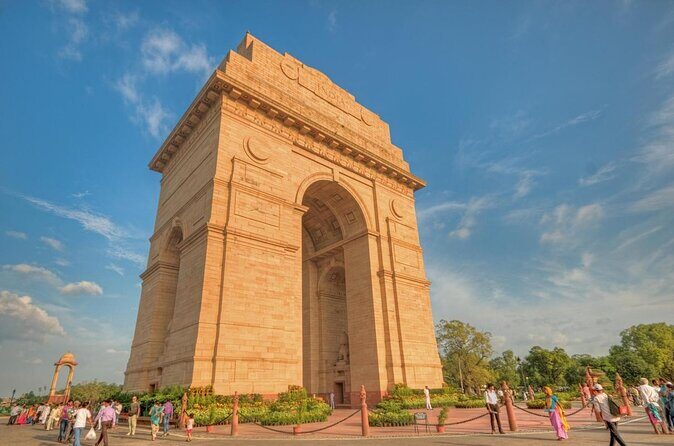
- Red Fort, Jama Masjid, Qutub Minar, India Gate in one tight Delhi day
- Taj Mahal with an included entrance ticket and a battery van ride
- Agra Fort + Mehtab Bagh to see the Taj from a different angle
- Fatehpur Sikri (Akbar’s abandoned capital) alongside Jaipur’s Jantar Mantar
- Amber Fort with an optional-feeling elephant experience included in the plan
- A private setup where only your group participates, with a driver and live guides
The Golden Triangle rhythm that keeps this trip doable
The Golden Triangle is popular for a reason. Delhi, Agra, and Jaipur sit in a rough triangle shape, and this route lets you hit the headline sights that define North India’s Mughal and Rajput eras.
What makes this specific 4-night, 5-day version work is its structure. You’re not spending days guessing when to travel, where to queue, or how to stitch experiences together. You start in Delhi, shift to Agra for the Taj Mahal and fort walls, then end in Jaipur with fort architecture and market time. The result is a trip that feels like a guided “greatest hits” album—without turning every stop into a blur.
Still, you’ll want to plan your expectations. This isn’t a long linger kind of travel style. You’re getting big sights plus transfers, so comfortable shoes and patience pay off.
A few more New Delhi tours and experiences worth a look



Delhi in a day: where the old empire shows up fast
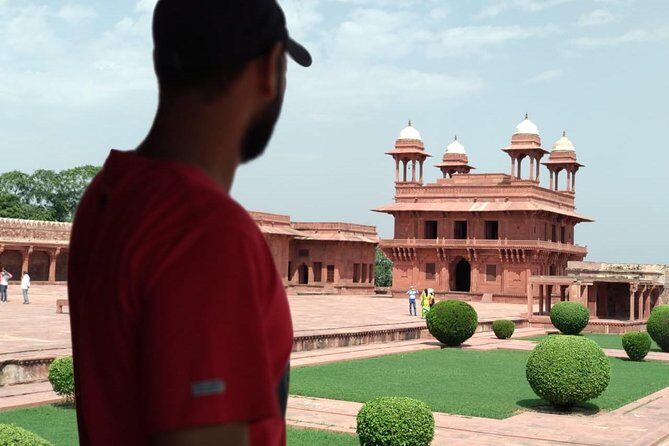
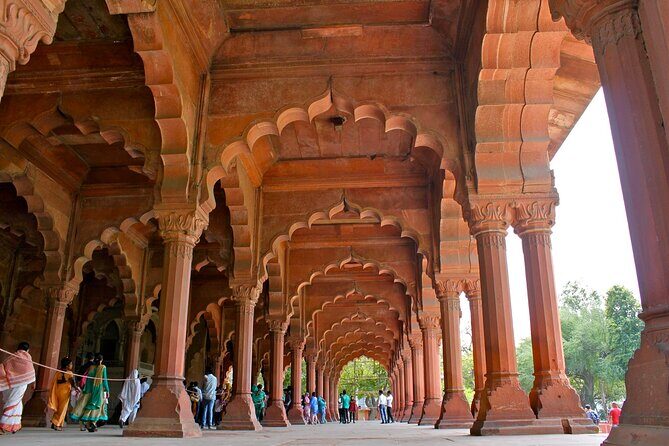
Day 1 is a strong sampler of Old Delhi and New Delhi in one go. You start at the Red Fort, then work through Old Delhi’s iconic mosque area, and finish with major New Delhi monuments.
Red Fort is a UNESCO World Heritage Site and a major Mughal power symbol, built in the mid-1600s by Shah Jahan. It’s the kind of place where even if you only skim the layout, you get a sense of how the Mughal world organized space—courts, walls, and ceremonial scale.
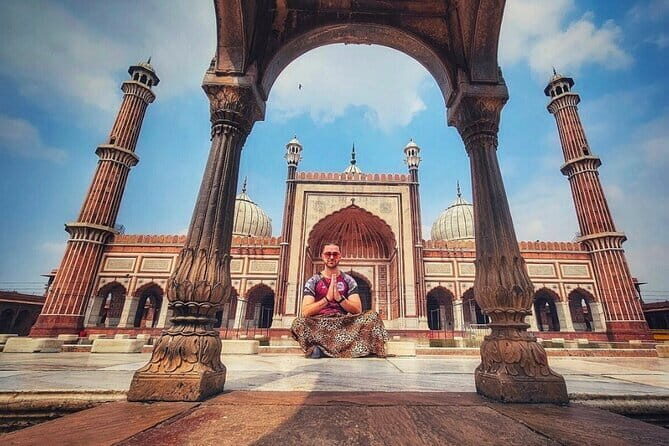
Then you head to Jama Masjid in Old Delhi. This is one of the largest mosques in India, built by Shah Jahan between 1644 and 1656. The itinerary lists admission as free for this stop, which is a nice way to keep costs contained while still hitting a landmark with real architectural weight.
Next up is Qutub Minar, the tallest brick minaret in the world at about 73 meters. It’s tied to the early Delhi Sultanate and marked as UNESCO. The stop is shorter—about 30 minutes—which is exactly what you want if you want to see it without spending your whole day in one single location.
Finally, you visit India Gate, the World War I and Third Anglo-Afghan War memorial. It’s designed by Sir Edwin Lutyens and completed in 1931. This stop is also quick (around 30 minutes) and works well as a visual palate-cleanser after fort and mosque architecture.
Practical thought: Delhi days can feel busy. If you’re the type who gets overwhelmed by crowds, keep your pace calm and focus on absorbing details—doorways, stonework, and layout—rather than trying to “finish” the day mentally.
Agra’s double hit: Taj Mahal plus Agra Fort (and Mehtab Bagh)
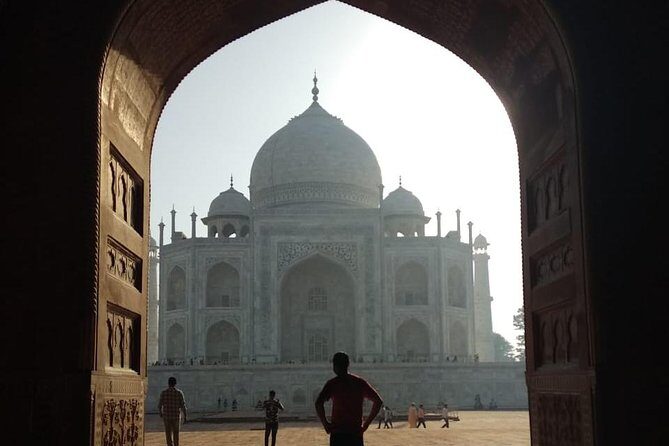
Day 2 is all about Agra’s Mughal grandeur, with the Taj Mahal as the headline.
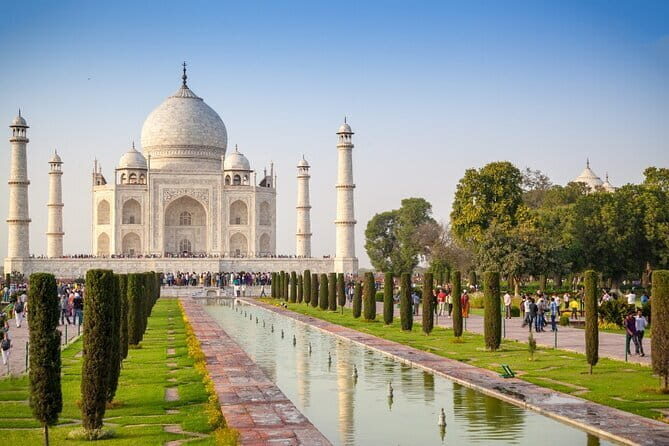
The Taj Mahal is a white marble mausoleum built by Shah Jahan for Mumtaz Mahal and completed in 1653. In a trip like this, it’s not just a photo stop. The guide-led approach helps you notice how the complex works as a planned whole: symmetry, marble surfaces, and the way the setting frames the monument.
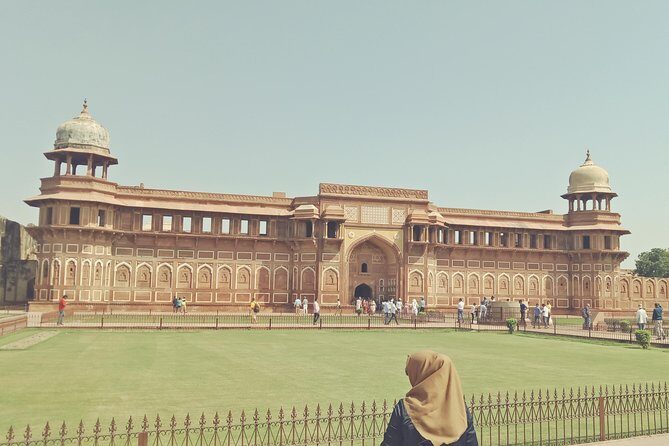
Agra Fort follows, also listed as a UNESCO World Heritage Site. Built by Emperor Akbar in the 16th century with red sandstone, it served as a main residence for Mughal emperors. This is where the story shifts from romance to power—fort walls, imperial presence, and a sense of defensive scale.
Then you go to Mehtab Bagh, a garden across the Yamuna River from the Taj Mahal. This stop is about 30 minutes and is known for offering a strong view direction, especially toward sunset. Even if your timing isn’t perfect for golden light, the value is that you’re getting the Taj from a different vantage, not from only one angle.
The final part of the day is time in Agra itself (listed as about 2 hours). You’ll see the city as more than a one-monument stop, though the schedule keeps it practical rather than sprawling.
Transportation note that matters: the plan includes a battery van ride at the Taj Mahal. That’s helpful if you’re dealing with distance on foot, hot weather, or limited mobility. It’s a small detail, but it makes a real difference in comfort.
Fatehpur Sikri and Jaipur’s royal science: two very different styles
Day 3 switches gears from Mughal-era monuments around Agra to Jaipur’s royal identity.
First is Fatehpur Sikri, a UNESCO site and former Mughal capital built by Akbar in the 16th century. You get a key historical detail that changes how you see the place: the city was abandoned after about 14 years due to water shortages. That single fact turns it from “another palace ruin” into a story about logistics, survival, and imperial planning.
Then you move to Jaipur with the City Palace, a blend of Mughal and Rajput architecture built in the 18th century under Maharaja Sawai Jai Singh II. A palace complex can feel like “just buildings” unless you know what to look for. In this setup, the guide time matters because you’ll be able to connect courtyards, temples, and palace structures into one coherent identity of Rajput-Mughal fusion.
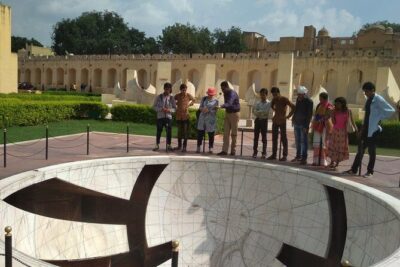
After that comes Jantar Mantar, Jaipur’s astronomical observatory built by Jai Singh II in the 18th century. It’s not only about looking at old instruments—it’s about understanding the ambition behind measuring time and celestial bodies with massive tools. The stop is about 30 minutes in this plan, which is enough to get the main ideas without exhausting you.
This is a great day for variety. You’re moving from a forsaken capital (Fatehpur Sikri) to working royal symbolism (City Palace) to science tools meant to observe the sky (Jantar Mantar).
Amber Fort and Jaipur markets: do the fort, then do the street

Day 4 is where the trip starts feeling very “Rajasthan.” You get Amber Fort, an elephant ride experience, and then market time to slow down and shop like a local.
Amber Fort is Rajput architecture at full scale. Built in the 16th century by Raja Man Singh, it’s known for massive walls, carved details, and courtyards. Plan for a bit of walking and stair-style movement depending on how you enter. The itinerary lists about 2 hours, which is a workable window if you want to see main sections without rushing.
Then you have the elephant ride experience with Jaipur included in the schedule (listed around 30 minutes). Elephant rides are controversial in some regions, so if you care deeply about animal welfare, you should ask clear questions on the day and judge based on conditions you can actually see. This plan does include the ride as part of the experience package, so your awareness matters.
Next is market time: Johari Bazaar, Bapu Bazaar, and Tripolia Bazaar are specifically named as the shopping areas. This is where you can trade “sightseeing mode” for “hands-on mode.” You can look for handicrafts, textiles, jewelry, and traditional Rajasthani goods—things you can’t really replicate later with a souvenir postcard.
A practical tip: shop with your eyes first. Pick one or two items you really want before you start negotiating or comparing prices, or you’ll end up buying random stuff just because you’re tired.






Hotels, guides, and the private-car advantage

This tour runs as a private experience, with only your group participating. That’s a big quality-of-life upgrade on a multi-city plan. It usually means fewer compromises on timing and less stress when you need to pause, take photos, or move at a pace that fits your comfort.
Your package includes:
- Hotel pickup and drop-off
- Professional live tour guides
- An experienced licensed driver
- Transport by a private air-conditioned car, with parking, gas, and tollways handled
- Packaged water bottles available in the car
- Accommodation in 3/4/5 star hotels depending on your selected option
- Breakfast and lunch (4)
The human factor also shows up in the feedback you can rely on. The driver Rishi has been described as safe, accommodating, and very professional, with a good balance of local history context and calm driving. That matters more than people expect. When you’re moving between cities, you want someone who keeps things orderly, arrives on time, and can handle family groups without turning the day chaotic.
Price and value: what $560.53 covers (and what to watch)
The price is $560.53 per person for the 4 nights / 5 days format. On its face, that’s a fair rate for a multi-city, private, guide-led package, especially when transport, hotels, and multiple major sites are included.
Here’s why the value holds up:
- You’re paying for structure: hotel pickup/drop-off, private car, driver, and scheduling between Delhi–Agra–Jaipur.
- You’re paying for access and time: major sights are built into the days with ticket inclusion where listed, plus that battery van ride at the Taj.
- You’re not relying on do-it-yourself planning for everything, which usually costs time and stress even when it’s “cheaper” on paper.
What to watch for: the package lists what’s included and what’s not, and the not-included section is broad—anything not listed. So if you’re the type who wants lots of extra activities, upgraded rooms beyond your selected hotel tier, or private add-ons, budget separately.
Also remember that the elephant ride is part of the scheduled experience. If you’d rather skip that segment, you should confirm how that’s handled in your specific booking flow.
Who should book this Golden Triangle plan
This fits best if:
- You’re seeing Delhi, Agra, and Jaipur for the first time and want a focused route.
- You like having a guide for context—especially for places like Jantar Mantar and Mughal-era sites where details matter.
- You want a private setup with an experienced driver and straightforward movement between cities.
You might want to think twice if:
- You prefer slow travel and long stays in fewer places. The daily schedule is active.
- You want fully flexible, stop-when-you-feel-like-it wandering. This plan follows a defined path, with time boxes on each attraction.
It also seems like it works across ages. There’s feedback describing families with kids joining successfully, with the driver helping keep the trip smooth.
Should you book it?
Yes, I’d book this Golden Triangle tour if you want a clear, high-impact India introduction without getting stuck in logistics. The strongest reasons are practical: private transportation, live guides, major monument coverage in a sensible order, and comfort helpers like the Taj Mahal battery van ride.
If you’re cautious about the elephant ride or you want a lighter pace, talk to the operator before you commit. Otherwise, this is a solid “first North India hit” that helps you leave with real landmarks—and not just a phone full of random photos.
FAQ
How long is the Golden Triangle tour?
It’s a 5-day tour with 4 nights of accommodation, following the Delhi to Agra to Jaipur route.
Where does the tour start and end?
The tour starts at Indira Gandhi International Airport in New Delhi. It ends back at the meeting point, with the morning drop taking you to the New Delhi airport or your scheduled location in Delhi.
What meals are included?
Breakfast is included. Lunch is included for 4 days during the tour, and packaged water bottles are available in the car.
Is transportation included between cities?
Yes. You’ll have hotel pickup and drop-off, plus transport by a private air-conditioned car with an experienced licensed driver.
Is there special transport at the Taj Mahal?
Yes. The package includes a battery van ride at the Taj Mahal.
Is an elephant ride included at Amber Fort?
Yes. The Amber Fort day includes an elephant ride experience as part of the scheduled activities.
Can I get a refund if I cancel?
The experience offers free cancellation. You can cancel up to 24 hours in advance for a full refund. If you cancel less than 24 hours before the start time, the amount paid is not refunded.