REVIEW · NEW DELHI
Golden Triangle Tour Delhi-Agra-Jaipur
Book on Viator →Operated by Royal Majestic Tour · Bookable on Viator
Three cities, tight timing, big sights. I like how this Golden Triangle plan combines an air-conditioned vehicle with one-day city guides, so you’re not figuring it out on your own. The big trade-off is pacing: if you try to sprint from stop to stop, the days can feel rushed.
Starting at 8:00am helps you get traction quickly in Delhi and keeps Agra manageable for the sunrise Taj Mahal visit. You’ll also hit a strong mix of icons and “you’ll be glad you came” stops like Jantar Mantar and Panna Meena ka Kund.
Keep in mind that monument entry fees are not included, so you’ll want to budget for tickets as you go—though some stops are free to enter, like the Lotus Temple and India Gate.
In This Review
- Key things worth knowing before you go
- Why the Golden Triangle route still works in 4 days
- Day 1 Delhi highlights: Qutub Minar, Lotus Temple, and the Rajpath axis
- The Day 1 reality check
- The drive to Agra via Yamuna Expressway: time, not just distance
- Day 2 Agra at sunrise: Taj Mahal plus Agra Fort
- Don’t ignore the entry-fee gap
- Crossing from Agra into Jaipur: 4 hours that change the vibe
- Day 3 Jaipur photo stops: Hawa Mahal, Amber Palace, and City Palace
- Amber + City Palace is a lot—so plan to choose your pace
- Day 3 added texture: Panna Meena ka Kund and Jantar Mantar
- Day 4 back to Delhi (or drop-off at Jaipur airport)
- Price and logistics: where the value really comes from
- Who this tour is ideal for, and who should reconsider
- Should you book this Golden Triangle Tour with Royal Majestic Tour?
- FAQ
- How long is the Golden Triangle Tour Delhi–Agra–Jaipur?
- What time does the tour start?
- Where is the tour located?
- What is included in the price?
- What is not included?
- Are pickup services offered?
- Is it a private tour?
Key things worth knowing before you go
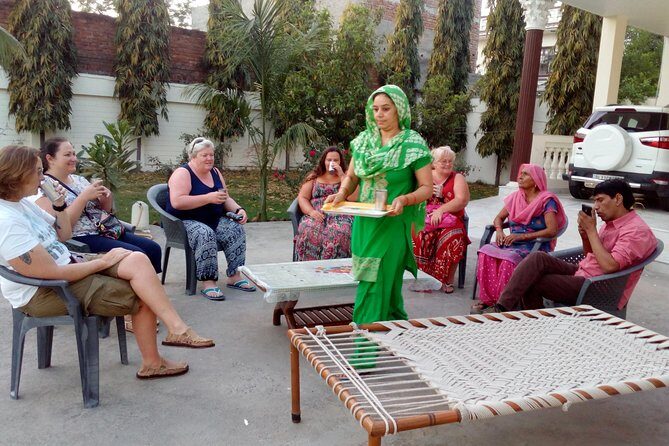
- Pickup + hotel-free tour structure: You travel with the group/vehicle, but you’ll arrange your own lodging and meals.
- Sunrise Taj Mahal timing: An early start is built into Day 2 so you can see it at sunrise.
- Free vs paid sights are mixed: Lotus Temple and India Gate are free, but many other major monuments are not included.
- One guide per city: You get guided context during each city portion, not only a single day.
- 720 km by road in 4 days: Each leg is roughly 4 to 6 hours, so you’re trading sleep and comfort time for sight volume.
- Private-for-your-group setup: It’s listed as private, meaning your group stays together during the activity.
Why the Golden Triangle route still works in 4 days
The “Golden Triangle” is the classic first-timer path: New Delhi to Agra to Jaipur. On paper, it sounds like a speed run—about 720 km of road total—but the itinerary is designed to match how most sights are distributed. Delhi is dense and museum-and-monument heavy, Agra is compact with two big Mughal anchors, and Jaipur spreads out across fort and palace areas.
What I like about this route for practical travelers is that it creates a clear rhythm: Delhi for imperial-era landmarks and city monuments, Agra for the Taj and Mughal power, then Jaipur for Rajput royal architecture. Because each leg is around 4 to 6 hours, you’re not spending every second in traffic—you’re spending big chunks of the day moving with a plan, and then getting focused time at each site.
This is the kind of tour where you’ll get the most value by keeping your expectations realistic: you’re not trying to “fully experience” every place as a resident would. You’re trying to hit the major highlights efficiently, with enough guide support to understand what you’re looking at.
You can also read our reviews of more tours and experiences in New Delhi.



Day 1 Delhi highlights: Qutub Minar, Lotus Temple, and the Rajpath axis
Day 1 is all about getting your bearings fast in Delhi—then moving on. The stops are clustered in a way that makes sense for a morning-and-midday tour.
Qutub Minar is your first “wow” moment. It’s part of the Qutb complex (a UNESCO World Heritage Site) and the tower’s story includes a major height addition after 1369. It’s a landmark you can’t really fake with photos—you’ll want to take a moment to see the scale and details.
Next comes Lotus Temple, the free stop that changes the pace from stone monument to something calmer and modern-feeling. It’s open to all regardless of religion or background, and the flowerlike design is one of those “stand back, then walk around” structures.
Then you hit India Gate, also free. It’s a memorial set along the ceremonial axis of Delhi, and it’s worth slowing down here because the whole setting is part of what you’re seeing—this isn’t just a single monument, it’s the way the city frames it.
The tour also includes quick passes by Parliament House and Rashtrapati Bhavan. These are mostly brief look-and-photo moments rather than long visits, so think of them as visual context for the capital city you’re standing in.
The Day 1 reality check
Day 1 doesn’t include admission tickets for some stops, which means you may see exterior views or time at locations without going deep inside. That’s not necessarily bad; it just affects what you’ll experience. If you love museums and indoor galleries, you’ll feel the “look-and-snap” side more than the “linger for hours” side.
The drive to Agra via Yamuna Expressway: time, not just distance
After lunch, you continue to Agra through the Yamuna Expressway. The itinerary lists the drive as about 4 hours, and that matters because it sets your energy level for Day 2.
This leg is one of those classic Golden Triangle trade-offs: you’re spending a big chunk of your day on the road so you can reserve the next morning for the Taj Mahal. If you’re sensitive to travel fatigue, plan to keep your afternoon easy. If you handle long car days well, you’ll probably find this portion reassuring—at least you’ll be moving with an air-conditioned vehicle and a schedule that holds your route together.
Also, because this is a road circuit, you’ll get that “we’re really doing the triangle” feeling. Delhi starts you in northern power-city style, but by the time you reach Agra, the tour shifts into Mughal-era focus.
Day 2 Agra at sunrise: Taj Mahal plus Agra Fort
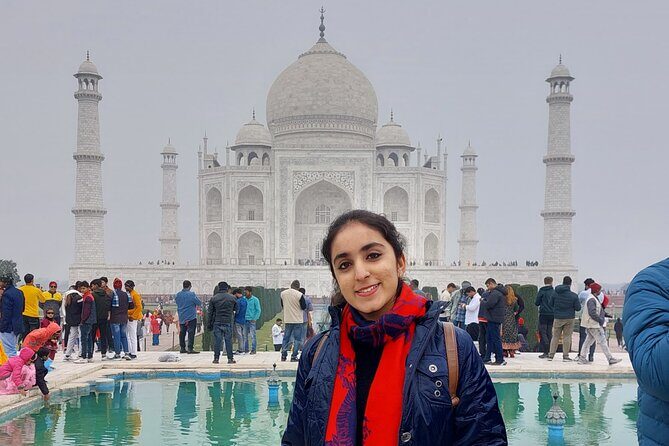
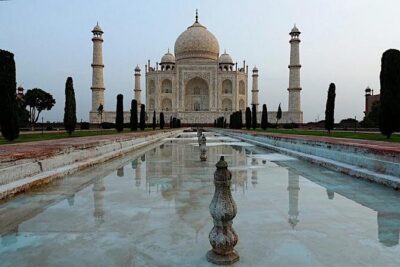
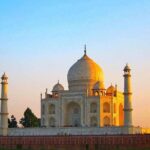
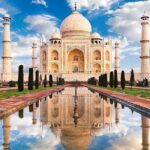
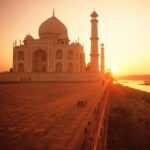
Day 2 is built around one headline: Taj Mahal at sunrise. The itinerary specifically lists the visit as 1 hour 30 minutes with sunrise timing, and the Taj is described as an ivory-white marble mausoleum commissioned in 1632 by Mughal emperor Shah Jahan.
That timing choice is the difference between “I saw the Taj” and “I understood why people chase the Taj.” Sunrise tends to give you softer light for photos and a quieter atmosphere than midday—so you can slow down and actually look at the structure rather than just aim your phone and move on.
After the Taj, you also visit Agra Fort for about 1 hour. This was a main residence of Mughal emperors until the capital shifted to Delhi in 1638. In other words, you’re pairing the poetic memorial (Taj Mahal) with the political and military heart (Agra Fort). That contrast helps the story click.



Don’t ignore the entry-fee gap
The itinerary marks Taj Mahal and Agra Fort as admission ticket not included. If you only bring transport and hope sights are covered, you’ll hit an expense surprise. If you’re the type who likes to know the bill up front, budget for monument entry fees before you arrive.
Also note that Day 2 continues on to Jaipur after lunch, which means you’ll be changing cities on the same day you do your Agra monuments.
Crossing from Agra into Jaipur: 4 hours that change the vibe
The transition from Agra to Jaipur is listed as about 4 hours of driving. This is an underrated part of the trip because it’s when your visual world changes.
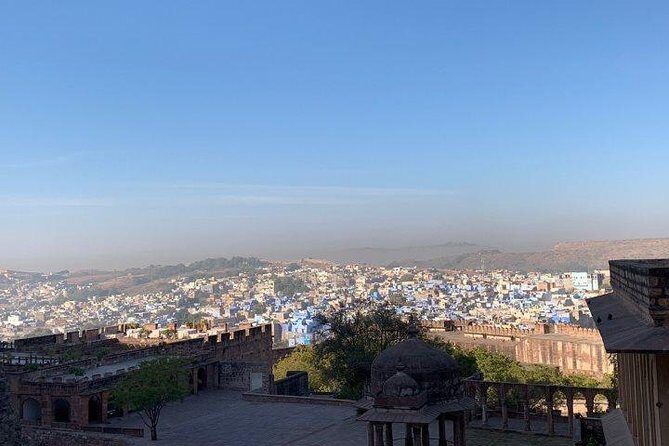
In Agra, you’re in Mughal stone and marble symbolism. In Jaipur, you shift into Rajput architecture with red and pink sandstone tones, plus forts and city palaces that look built for royal display. By the time you arrive, you’ll notice the itinerary’s focus on views, facades, and palace geometry.
If you’re wondering whether 4 hours is “enough time to rest,” it depends on you. But for a Golden Triangle route, this is a fairly standard pacing choice: arrive, refresh, then start the next city the next morning with iconic landmarks.
Day 3 Jaipur photo stops: Hawa Mahal, Amber Palace, and City Palace
Day 3 is the biggest “Jaipur moment” day. It starts with Hawa Mahal (Palace of Breeze) in the morning. The tour frames it as the red and pink sandstone façade that sits along the City Palace edge and extends toward the women’s chambers. Even if you don’t go deep inside (the itinerary lists the stop as about 10 minutes with ticket not included), this is one of the easiest Jaipur icons to photograph from multiple angles.
Then comes Amber Palace (Amber Fort area), with 1 hour 30 minutes. The description highlights Amber as a town area tied to Meenas and later major construction by the Meenas and subsequent development. Practically speaking, this is where you’ll feel the fort layout and the scale of the royal complex.
After that, you move to Jal Mahal for a short 10-minute stop. It’s a palace in the middle of Man Sagar Lake, and because the visit window is brief, it works best if you use it for quick photo angles and a scenic pause rather than a long exploration.
The day also includes the City Palace for about 1 hour 30 minutes, founded by Maharaja Sawai Jai Singh II when his court moved to Jaipur in 1727. This is your “royal administration” anchor, and it complements the fort stop earlier in the day.
Amber + City Palace is a lot—so plan to choose your pace
This itinerary can feel action-packed because Amber Palace plus City Palace are both time-responsible stops. If you like to stop and actually understand what you’re seeing, go slower at one and quicker at the other. Trying to “do both like a checklist” is where people end up wishing they had paced themselves better.
Day 3 added texture: Panna Meena ka Kund and Jantar Mantar
Two of the less obvious stops on Day 3 are Panna Meena ka Kund and Jantar Mantar, and they’re exactly the kind of additions that can turn a standard Golden Triangle into something more memorable.
Panna Meena ka Kund is a square-shaped stepwell with stairs on four sides and a room on the northern wall. The description notes it’s believed to have been used for religious ceremonies before weddings. Even with a 15-minute stop, you can get a real sense of how functional architecture also carried social and ritual roles.
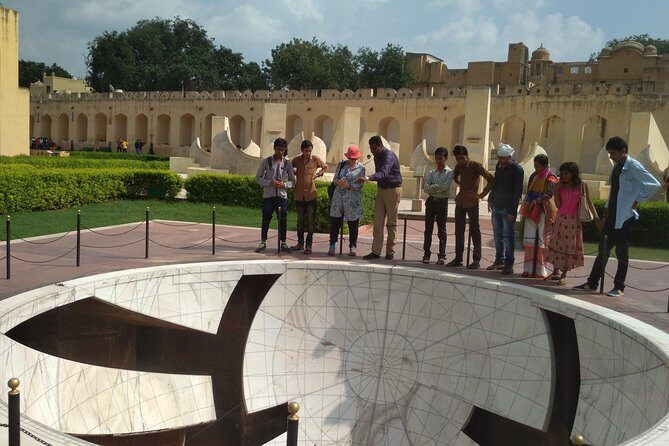
Then there’s Jantar Mantar, a collection of nineteen architectural astronomical instruments built by Sawai Jai Singh II, completed in 1734. This isn’t just a quirky photo stop; it’s the “Jaipur brain” moment. It helps you see Jaipur not only as royal stonework, but as science and measurement built into public space.
Because tickets are listed as not included for many Day 3 monuments, you’ll likely pay something at one or both of these places. Still, these are the stops that tend to reward people who are curious beyond the most famous building.
Day 4 back to Delhi (or drop-off at Jaipur airport)
Day 4 is your return day. After breakfast, the itinerary lists an approximately 5-hour journey back to Delhi, or you can be dropped at Jaipur airport.
This is a full travel block, so treat it like that. If you’re trying to add extra sightseeing on Day 4, don’t. The schedule already puts you in motion, and the tour gives you the payoff of getting home or to your flight without last-minute route planning.
If your trip ends in Jaipur instead of Delhi, that airport option is a practical convenience. It turns the Golden Triangle into a flexible itinerary rather than a one-way loop that traps you back in the same city you started from.
Price and logistics: where the value really comes from
At $283.32 per person, this tour is positioned as a bundled service: you’re paying for transport between cities, guide time, and the organization that keeps the circuit moving.
Here’s why that price can make sense. The Golden Triangle isn’t just three places. It’s long road legs, early starts, and multiple monuments across different neighborhoods. Without a coordinated plan, you’d be paying time and energy to line up transport, find reliable guides, and figure out what you can actually fit into each day.
This tour includes:
- Air-conditioned vehicle
- Tour guides for 1 day in each city
It does not include:
- Hotel accommodation
- Food & Beverage
- Monuments entry fees
So the value equation depends on you. If you’d otherwise rent a car with a driver and hire separate guides for Delhi and Agra and Jaipur, then this price can feel reasonable. If you already have lodging locked and you’re planning to self-guide most stops, you might feel like you’re paying for logistics you could do cheaper. Still, the sunrise Taj timing and the tight chain of stops are exactly the parts that are hard to replicate casually.
A final practical point: the itinerary includes some free sites (Lotus Temple, India Gate). That can help offset costs from paid monuments, but it won’t replace ticket budgeting.
Who this tour is ideal for, and who should reconsider
This tour fits best if you want the Golden Triangle highlights with less planning stress. If you’re traveling with limited time, don’t want to juggle multiple bookings, and appreciate having a guide explain context for major monuments, you’ll likely enjoy this structure.
It’s also a good choice if you like clear schedules. The stops are specific and the drive legs are defined, which makes your day feel organized rather than improvised.
I’d reconsider if:
- you hate early mornings (sunrise Taj is the center of Day 2)
- you need lots of slow downtime between sights
- you want all monuments fully inside-depth with tickets covered (tickets are not included)
And about pace: the itinerary moves with a “see a lot” mindset. If you’re the type who pauses for long stretches to read plaques and take time with photos, build in your own strategy—because the tour won’t wait around for the perfect shot.
Should you book this Golden Triangle Tour with Royal Majestic Tour?
If you want a structured, classic Golden Triangle plan with pickup, air-conditioned transport, and guided time in each city, this is an easy yes to consider. The big selling points are the sunrise Taj Mahal focus and the fact that the route is already stitched together into a logical 4-day circuit.
Book it if:
- you’re okay budgeting for monument entry fees
- you want a “greatest hits” overview with context
- you’d rather spend your energy looking at landmarks than planning logistics
Skip or rethink if:
- you’re chasing a slow travel pace and expect long museum-style visits at every stop
- you want food and hotel costs included (they’re not)
- you dislike early starts
For many people, the best approach is simple: treat this as a smart way to get the Golden Triangle checked off with a guide and a schedule that keeps you moving.
FAQ
How long is the Golden Triangle Tour Delhi–Agra–Jaipur?
It’s listed as approximately 4 days.
What time does the tour start?
The start time is 8:00am.
Where is the tour located?
It’s based in New Delhi and covers Delhi, Agra, and Jaipur.
What is included in the price?
The tour includes an air-conditioned vehicle and tour guides for 1 day in each city.
What is not included?
Hotel accommodation, food and beverage, and monument entry fees are not included.
Are pickup services offered?
Yes, pickup is offered.
Is it a private tour?
It’s listed as a private tour/activity, meaning only your group participates.