REVIEW · NEW DELHI
Golden Triangle 6 Days Tour from New Delhi
Book on Viator →Operated by Contes Asia · Bookable on Viator
Six days, three cities, zero guesswork. You get airport pickup and an escorted transfer to your pre-booked hotel, then travel between Delhi, Agra, and Rajasthan in a private vehicle with bottled water and guides who are quick with explanations like Hasseb and Mudassir. I especially like how the Delhi day mixes big monuments such as Qutub Minar with major faith stops like Lotus Temple and Gurudwara Bangla Sahib, and how the plan builds in a Mehtab Bagh sunset moment for the Taj Mahal view.
The tradeoff is that the schedule is drive-heavy: each leg can run about 4 to 6 hours, and entrance tickets plus most meals are extra. If you don’t want to budget for those add-ons, you’ll feel the squeeze.
In This Review
- Key highlights worth planning around
- The Golden Triangle rhythm: what six days means in real time
- Entering Delhi: Qutub Minar, Lotus Temple, and Jama Masjid
- Day 2’s two-temple pacing: Akshardham plus the Mehtab Bagh sunset view
- Taj Mahal morning and Agra Fort contrast on Day 3
- Fatehpur Sikri detour and Jaipur shopping taste on Day 4
- Jaipur essentials on Day 5: Amer Fort, Jantar Mantar, City Palace, Hawa Mahal
- How the private vehicle and bottled water really help
- Price and value: where $350 feels fair and where it doesn’t
- Who should book this Golden Triangle tour, and who should rethink
- Should you book this Golden Triangle 6-day tour?
- FAQ
- Is pickup included?
- How big is the group?
- How long is the tour?
- Where does the tour start and end?
- Do I get a mobile ticket?
- What’s included in the price?
- Are entrance fees included for all sights?
- Are meals included?
- Is accommodation included?
- Is free cancellation available?
Key highlights worth planning around
- Airport welcome and escorted hotel transfer: you’re greeted on arrival in Delhi and transferred to your pre-booked hotel.
- Sunset at Mehtab Bagh: timed for an easy Taj Mahal view across the river.
- Agra Fort with admission included: you get at least one paid site benefit built into the route.
- Fatehpur Sikri on the way to Jaipur: a major detour with sights like Buland Darwaza and a white marble shrine.
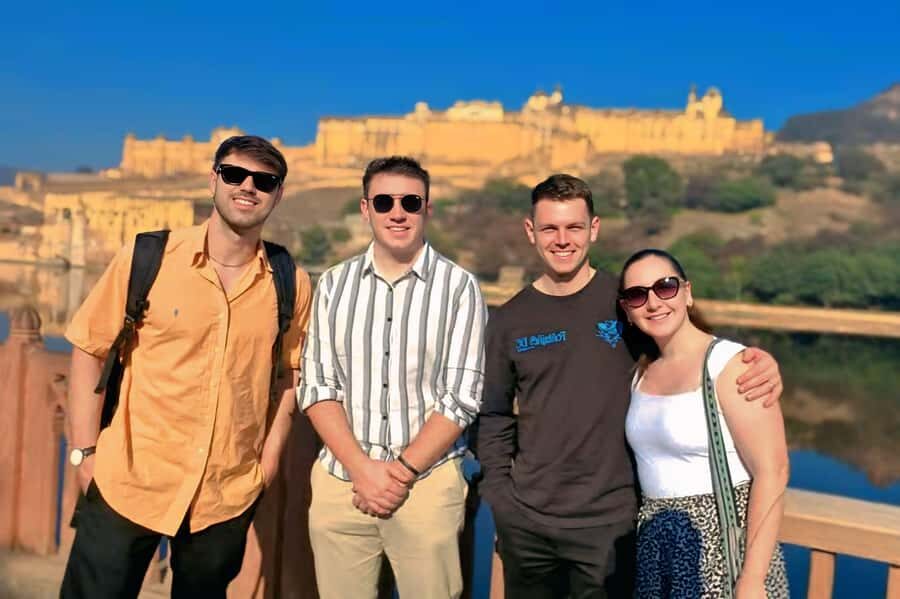
- A full Jaipur day beyond the main photo stops: Amer Fort plus Jantar Mantar, City Palace, and Hawa Mahal.
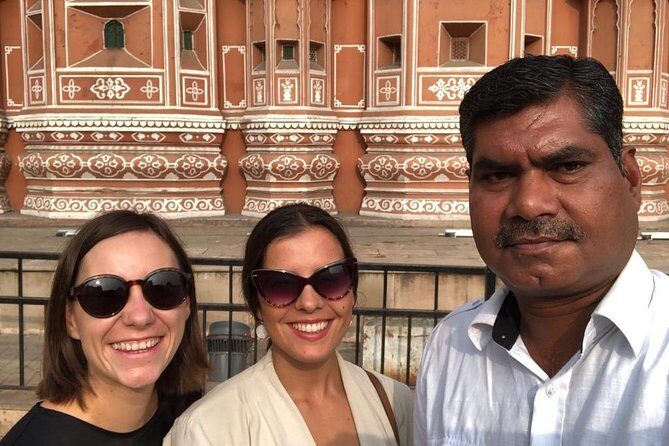
- Guides who answer everything: from Hasseb to Mudassir, the vibe is about real Q&A, including Spanish support when needed.
The Golden Triangle rhythm: what six days means in real time
This route is called the Golden Triangle for a reason. On a map it makes a clean triangle—Delhi, Agra, and Jaipur—but in motion it’s a lot of road. The full circuit is about 720 km by road, and each leg is typically 4 to 6 hours.
So I like this tour best as a structured way to do the classics without spending your energy on logistics. You’re covering a lot of ground, but you’re not reinventing the wheel every day.
A few more New Delhi tours and experiences worth a look


Entering Delhi: Qutub Minar, Lotus Temple, and Jama Masjid
Delhi on Day 1 is a smart mix of old stone, calm religion, and a big, iconic mosque stop. You’ll start with Qutub Minar and its complex, a solid 2-hour introduction that gives you a sense of how Delhi’s story reaches far back.
Then you get a complete mood shift at the Lotus Temple (about 1 hour, admission free). It’s a good pause point—quiet, simple to enjoy, and a nice contrast to the scale of Qutub Minar.
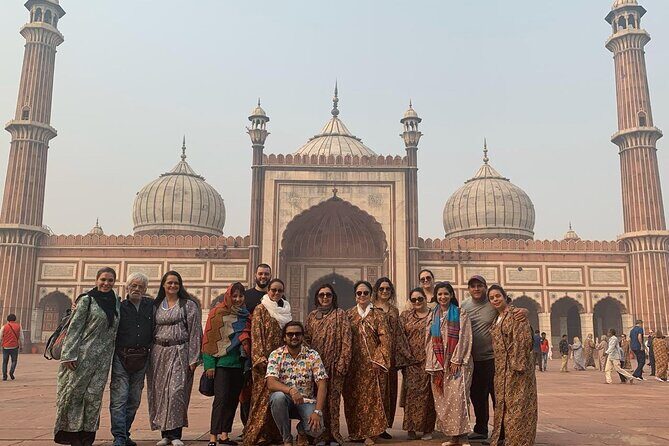
After that comes Gurudwara Bangla Sahib. The stop is very short (listed as about 1 minute), so treat it as a quick orientation stop—more about getting there and absorbing the setting than lingering. You’ll finish with Jama Masjid (about 45 minutes), one of India’s oldest and biggest mosques, with admission not included in the tour price.
My practical take: Day 1 is designed to get your bearings fast. If you arrive tired, you’ll still get value, but you won’t have the luxury of long wandering in every place.
Day 2’s two-temple pacing: Akshardham plus the Mehtab Bagh sunset view

Day 2 keeps you in Delhi/near-Agra territory with a pair of contrasts. First is Swaminarayan Akshardham (about 1 hour, admission free). It’s the kind of place that feels crafted and intentional, and it works as a clean reset before you chase views later.
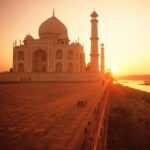
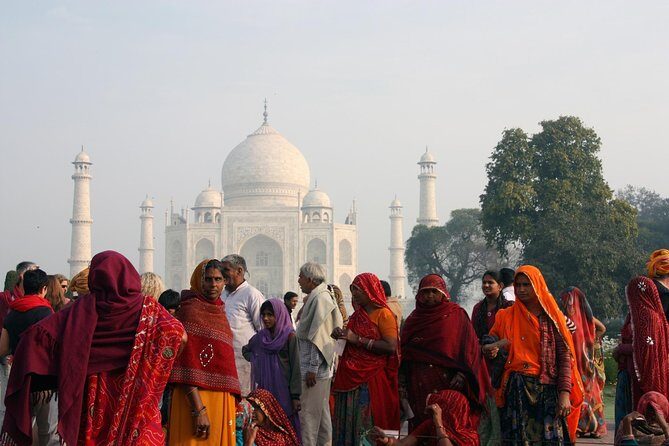
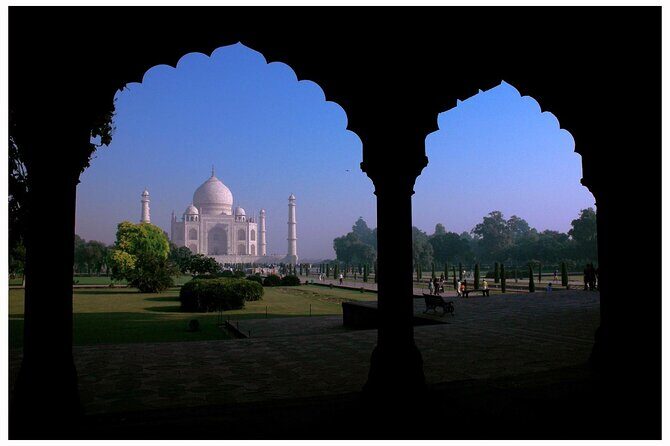
Then you go to Mehtab Bagh for about 1 hour. It’s listed as not included for admission, but it’s timed for sunset to catch a Taj Mahal view across the water. If you’ve ever wondered whether you can do Taj Mahal without only thinking about crowds and queues, this stop helps you enjoy the story from another angle.
Consideration: sunset depends on timing and weather. The plan is built for the view, but like any sunset plan, you’re trading schedule certainty for a nicer moment.
Taj Mahal morning and Agra Fort contrast on Day 3
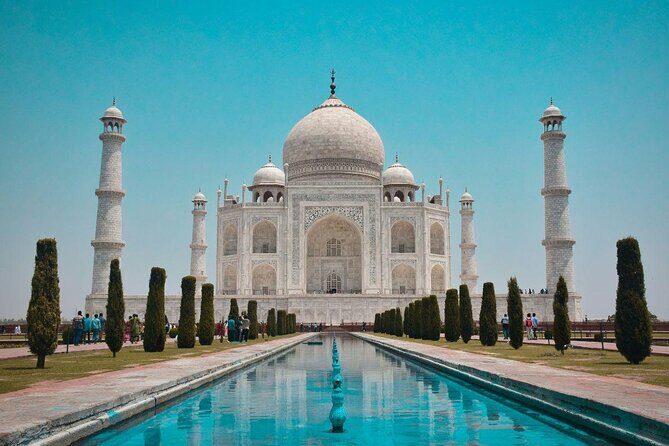
Agra is where this tour earns its name—Taj Mahal is scheduled for a long sightseeing block (listed as about 6 hours). It’s described as the world-famous monument of love, built by Mughal Emperor Shah Jahan in memory of Mumtaj Mahal. That framing matters because it encourages you to look at the monument as a purpose-built tribute, not just a photo backdrop.
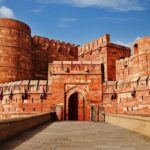
Then you add Agra Fort for about 1 hour, and this one is specifically marked as admission included. That’s a smart balance. Taj Mahal is emotion and symmetry; a fort is power and control. Together, they help you understand how Agra sits at the crossroads of devotion and authority.
Value tip for your mindset: if Taj Mahal feels overwhelming, let Agra Fort be your second chapter. It keeps the day from becoming only one kind of impression.
Fatehpur Sikri detour and Jaipur shopping taste on Day 4
Day 4 is one long travel day with a meaningful stop that prevents it from feeling like dead time. You’ll drive toward the Pink City of Jaipur, and en-route you visit Fatehpur Sikri, often called a ghost city. The plan includes key sights: Sikri Fort, Buland Darwaza, a Kali Temple, and a white marble shrine.
Admission for this stop is marked as free in the itinerary, so it’s a good day to stretch your budget. You’re also not just driving past; you’re getting a full detour with big architectural set pieces.
Then you get a quick taste of local life at Bapu Bazar—listed as a very short stop. It’s famous for textiles and shopping, so think of this as a chance to get your bearings and maybe pick up small items, not a full shopping spree.
My advice: if shopping matters to you, go in with a shortlist. This stop is brief, so it’s best for quick browsing and practical souvenirs.




Jaipur essentials on Day 5: Amer Fort, Jantar Mantar, City Palace, Hawa Mahal
Day 5 is the heart of Jaipur, with a layered set of royal-and-science stops. You start at Amber Palace (Amer Fort) for about 2 hours. Admission is not included, so treat it as one of the likely ticket costs you’ll want to plan for.
Next is Jantar Mantar, about 45 minutes. This is described as the biggest and only working observatory in India, and the idea here is experience through the lens of King of Jaipur’s astrological knowledge. Even if you’re not a science person, you may find the visit gives you a different way to look at the city—less only palace, more thinking.
Then you visit the City Palace of Jaipur (about 45 minutes) and learn about the life of the royal regime. Finally, you end with Hawa Mahal (Palace of Winds) for about 10 minutes. It’s shorter than the other stops, but it fits the rhythm of a packed day—quick visual payoff before heading onward.
Consideration: tickets for several of these sites are not included. If you know you want every stop, plan money for entrance fees so you’re not stuck deciding mid-day.
How the private vehicle and bottled water really help
The tour includes transport by private vehicle and bottled water. That sounds small until you’re on the road for hours. In a Golden Triangle trip, comfort isn’t a luxury—it’s how you stay focused during the sightseeing blocks.
Pickup is offered, and on the final day you’re driven back to the capital city area for drop at the airport or hotel. That’s useful because it reduces the last-day scramble.
Also, the structure is private in the real sense: it’s only your group. The price is $350 per group (up to 3), so you’re not dividing attention across a big crowd. That matters for how smoothly the day runs—especially when you have questions.
Price and value: where $350 feels fair and where it doesn’t
At $350 per group (up to 3) for about 6 days, you’re mainly paying for the biggest expensive part of a trip like this: organized route, transport, and a guide who keeps the day moving. The tour includes bottled water and private vehicle transport, but it does not include accommodation, breakfast, lunch, food and drinks, or entrance fees.
So here’s how I’d judge value:
- If you already have hotels and breakfasts sorted, this becomes a strong deal because your main costs get concentrated into transport and coordination.
- If you still need to budget for entrance tickets at several big sites, you’ll want to factor that into your total trip spend so you don’t get surprised on-site.
One more small plus: confirmation is provided at booking, and you’re offered a mobile ticket. That’s not flashy, but it makes life easier when schedules shift.
Who should book this Golden Triangle tour, and who should rethink
This tour fits you if you want the classics—Delhi monuments, Agra’s Taj Mahal and Agra Fort, and Jaipur palaces/observatory stops—in a tight timeframe. It’s also a good match if you like having someone handle routing so you can focus on the sights.
It may be less ideal if you hate long car days. Each leg can be 4 to 6 hours, and the plan packs major stops into limited time windows. The biggest adjustment is psychological: treat this as an efficient sprint, not a slow wander.
It’s also worth noting for families: children must be accompanied by an adult.
Finally, based on the guide feedback you may encounter—people like Hasseb, Mudassir, Ali, and Sabi—the tour tends to work well for visitors who want context and direct answers, including questions from foreigners navigating India.
Should you book this Golden Triangle 6-day tour?
If you want a guided Golden Triangle that prioritizes big sights and keeps logistics simple, I’d say this is a sensible booking. The best parts are the mix of Delhi’s religious and historic stops, the Mehtab Bagh sunset view setup, and the way Jaipur hits multiple major landmarks in one day.
If you’re the type who wants unhurried time at fewer places, you might feel rushed. But if you’re aiming to see the headline destinations with a private group and helpful guiding, the plan delivers.
FAQ
Is pickup included?
Yes. Pickup is offered, and on Day 1 you’ll be greeted on arrival at Delhi International Airport and taken on an escorted transfer to your pre-booked hotel.
How big is the group?
This is a private tour/activity. Only your group will participate, and the price is listed per group up to 3.
How long is the tour?
It’s about 6 days.
Where does the tour start and end?
It starts with arrival in Delhi International Airport (Day 1) and ends with a drive back to the capital city with drop at the airport or hotel on Day 6.
Do I get a mobile ticket?
Yes, a mobile ticket is included.
What’s included in the price?
The tour includes bottled water and transport by private vehicle.
Are entrance fees included for all sights?
Entrance fees are listed as not included. Some specific stops in the itinerary are marked free, but others (such as Qutub Minar and Jama Masjid in Delhi, and Taj Mahal in Agra) are marked as not included.
Are meals included?
Breakfast is not included, and food and drinks/lunch are not included.
Is accommodation included?
No, accommodation is not included.
Is free cancellation available?
Yes. You can cancel up to 24 hours in advance for a full refund.