REVIEW · NEW DELHI
Golden Triangle 3 days Tour to Delhi Agra and Jaipur
Book on Viator →Operated by Sunshine India Tours · Bookable on Viator
Golden Triangle in three days can feel intense. What makes this one work is the private luxury setup and the way you cover major sites without fighting for tickets or directions. I especially like the expert-led guidance (if your guide is Ravi, you’ll see why people trust his route choices), and I like that meals are planned, including a dinner with a local family in Jaipur.
You also get a real mix of Delhi contrasts: Old Delhi’s spice-and-street energy, then New Delhi’s wider avenues and monuments. One possible drawback is pacing: it’s packed, with several 30–45 minute stops plus driving between cities, so you’ll want comfortable shoes and patience for traffic.
In This Review
- Quick hits
- The real appeal of a Delhi–Agra–Jaipur Golden Triangle, in 3 days
- Day 1 in Delhi: Old Delhi’s mosques, markets, and a spice-market rickshaw ride
- Jama Masjid and the feeling of scale
- Chandni Chowk: chai, crowds, and the rhythm of buying and selling
- Gurudwara Sis Ganj Sahib: values you can actually see
- Khari Baoli spice market by rickshaw
- New Delhi in the same day: India Gate, Rashtrapati area, and Gandhi Smriti
- Qutub Minar: the UNESCO stop that actually teaches you something
- The pacing reality: early drive to Agra after Delhi’s highlights
- Day 2: Sunrise Taj Mahal, Agra Fort, then Jaipur logistics that actually make sense
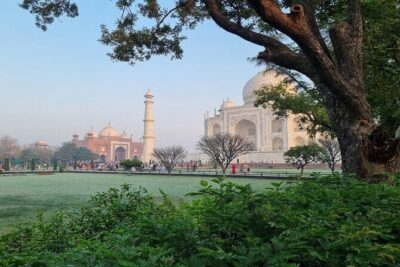
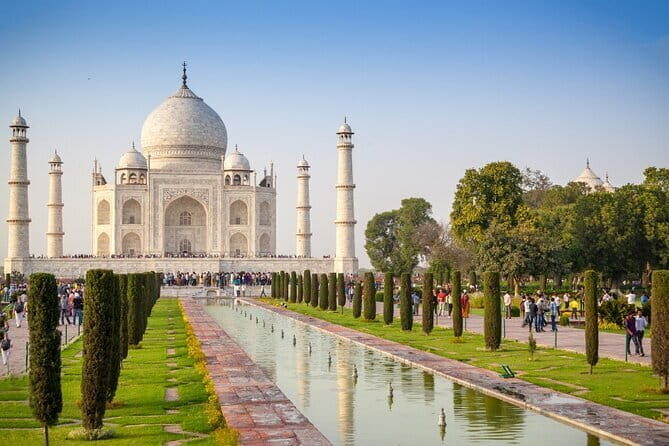
- Taj Mahal at sunrise: why early matters
- Agra Fort: a fortress with palace-level details
- Lunch and onward drive to Jaipur
- Jaipur day 3: royal facades, astronomy instruments, and lake views
- Hawa Mahal: the five-story façade that makes street life part of the design
- Jantar Mantar: when Jaipur turns into a science stop
- Jal Mahal: a palace that looks like it floats
- Jaigarh Fort: hilltop views and mirror-studded details
- Meals and hotels: where the value sits for a $710, 3-day private tour
- What to watch for: comfort, customs, and a packed schedule
- Who this tour suits best (and who should consider alternatives)
- Should you book this Golden Triangle 3-day Delhi Agra Jaipur tour?
- FAQ
- How long is the Golden Triangle tour from Delhi to Agra and Jaipur?
- Which cities are included in the 3-day tour?
- Is pickup included?
- Are the hotel stays included?
- Is transportation included?
- Are monument tickets included?
- What meals are included during the tour?
- Is the tour private or shared?
- Can dietary requirements be accommodated?
- How does the trip end after Jaipur sightseeing?
Quick hits
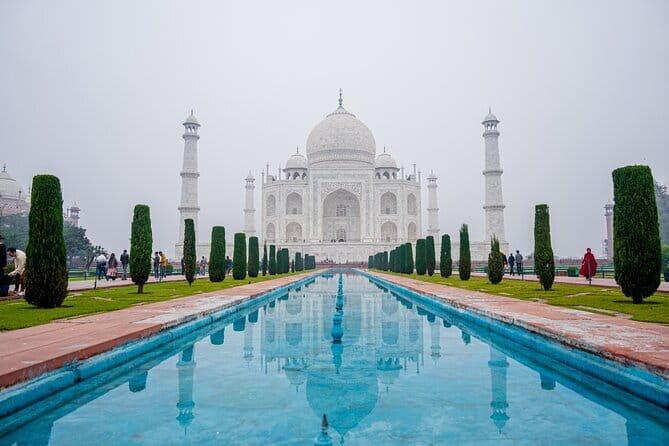
- Sunrise Taj Mahal time so you can see the marble in softer light
- Old Delhi by foot and rickshaw with Khari Baoli’s spice market experience
- UNESCO-heavy days with Qutub Minar, Taj Mahal, Agra Fort, City Palace, and Jantar Mantar
- Cultural variety in one loop: Jama Masjid, Gurudwara Sis Ganj Sahib, plus Hindu landmarks
- Jaipur forts and viewpoints with Jaigarh Fort and Jal Mahal by Man Sagar Lake
The real appeal of a Delhi–Agra–Jaipur Golden Triangle, in 3 days
A classic Golden Triangle can be either smooth or stressful. This style is aimed at smooth.
You travel by a comfortable private air-conditioned car with a dedicated driver, and an expert tour leader stays with you through the trip. That matters more than it sounds, especially on tight sightseeing days. You’re not trying to map out where to go next, and you’re less likely to lose time to ticket lines or misunderstandings about entrances.
Then there’s the “luxury” part that’s not just about hotel star ratings. You’re also looked after with complimentary water bottles and planned meal moments. The day-to-day details make the difference when you’re hopping between Delhi, Agra, and Jaipur.
Finally, you get a true cultural angle, not only monuments. In Jaipur, there’s a dinner with a local family, built for conversation and everyday-life learning—not just taking photos and moving on.
A few more New Delhi tours and experiences worth a look



Day 1 in Delhi: Old Delhi’s mosques, markets, and a spice-market rickshaw ride
Old Delhi is where India’s capital feels like a living city. The first stops pull you straight into the Mughal-era core: tight lanes, big buildings with deep symbolism, and markets that never seem to slow down.
Jama Masjid and the feeling of scale
You start with Jama Masjid, India’s largest mosque, in the red-sandstone courtyard. It’s built in the mid-1600s with the labor of thousands of workers, and the sheer size hits you fast. Take a slower pace here. Even if you just notice the proportions and inscriptions, it gives you a sense of why this place became a major religious center.
This is also one of the stops where the private guide experience pays off. You’ll know what you’re looking at and where to stand, instead of wandering while you guess about etiquette.
Chandni Chowk: chai, crowds, and the rhythm of buying and selling
Next is Chandni Chowk, a major Old Delhi bazaar. The guide walks you through why the market matters in daily life, not just as a tourist stop. This is where you’ll want to go with the flow: pause for masala chai, look closely at stall goods, and don’t rush. A short stop works here because the goal is to feel the area’s pace, not to shop your way through it.
Gurudwara Sis Ganj Sahib: values you can actually see
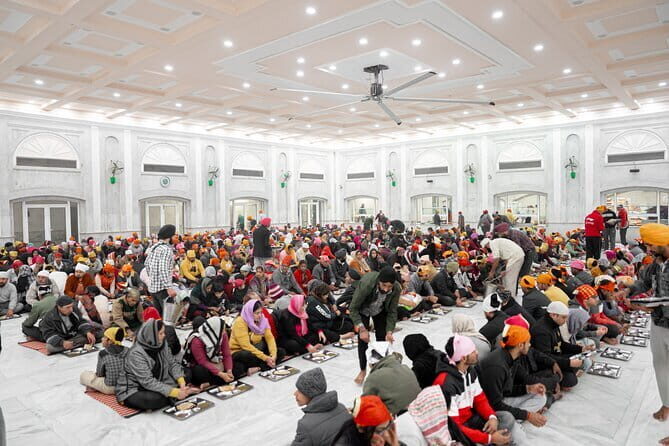
Then you shift to Gurudwara Sis Ganj Sahib. This stop is short, but the point is clear: you see Sikh traditions and hear the principles tied to the community’s history—equality, selfless service, and welfare for others. It’s a good contrast to the market energy around you.





Khari Baoli spice market by rickshaw
One of the most fun practical touches is the rickshaw ride to Khari Baoli, described as Asia’s largest spice market. Your senses will do most of the work. You’ll smell cumin, cardamom, and chili, and you’ll see piles of color in sacks and small bowls.
Even if you don’t plan to buy spices, this is a worthwhile stop because it explains Indian cooking in a visual way. When you later eat in the region, you’ll recognize ingredients faster.
New Delhi in the same day: India Gate, Rashtrapati area, and Gandhi Smriti
After Old Delhi, the tour shifts gears to New Delhi. This part helps you understand the capital’s layout: wider roads and planned architecture designed by British architects Lutyens and Baker in the early 1900s.
You’ll see India Gate, a war memorial built in the early 1930s, and it’s designed by Edwin Lutyens. It’s not just a photo-op; at 42 meters, it’s a statement about scale and memory.
Then comes Gandhi Smriti. You’re visiting the memorial marking the last 144 days of Gandhi’s life and the site where he was assassinated. The exhibits give you context, so the monument feels less like a stop and more like a moment with meaning.
Qutub Minar: the UNESCO stop that actually teaches you something
If there’s a “don’t miss” monument in Delhi for many first-timers, it’s Qutub Minar. At about 73 meters, it’s a UNESCO World Heritage site with detailed red-sandstone carvings and inscriptions. It dates back to the late 1100s (built beginning in 1193 under Qutb-ud-din Aibak), and it blends styles you can spot if someone helps you look.
You’ll likely spend around 30 minutes here, which is enough time to grasp the main story without turning it into a homework assignment.
The pacing reality: early drive to Agra after Delhi’s highlights
Day 1 ends with a drive to Agra after Delhi sightseeing. The drive time is about 3 hours, and the tour keeps the day moving rather than giving you lots of downtime.
That’s not necessarily bad. If you’re the type who wants maximum sightseeing in a short window, you’ll like the momentum. Just don’t assume you’ll be fresh for a long evening. If you’re sensitive to travel fatigue, plan for a low-key evening after you check in.
Day 2: Sunrise Taj Mahal, Agra Fort, then Jaipur logistics that actually make sense
Day 2 is built around timing—because Taj Mahal photography and atmosphere are mostly about the sun and crowd levels. You start early for sunrise views over the marble mausoleum.
Taj Mahal at sunrise: why early matters
You’ll visit for about 2 hours, and the core experience is seeing the white marble with softer light. The mausoleum was commissioned by Mughal emperor Shah Jahan for Mumtaz Mahal, and the site’s symbolism is hard to miss once you’re standing there.
The guide helps you look past the obvious. For example, you’ll notice how the architecture frames space and how the surfaces change as the light shifts. Even if you’ve seen pictures before, sunrise conditions change the feeling.
Also, sunrise Taj Mahal usually means you’re not starting your day at the same time as everyone else you’d meet later. That can translate into a calmer visit for your group.
Agra Fort: a fortress with palace-level details
After Taj Mahal, you move to Agra Fort, another UNESCO site. You’ll spend around 45 minutes here.
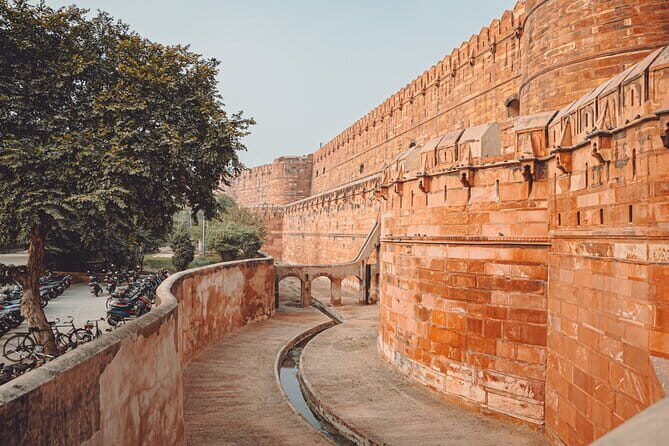
The fort was built by Akbar in the 16th century. It’s made of red sandstone and blends Islamic and Hindu architectural influences. Look for how the fortress doesn’t feel like only a wall and towers—it also feels like a place of rule and comfort, which is exactly what you’d expect from a major imperial center.
Lunch and onward drive to Jaipur
Then you drive to Jaipur, with about 4 hours on the road. The tour stops along the way for lunch, so you’re not stuck trying to find food while time squeezes you.
This is one reason the “private car + planned meals” part matters: long drives are easier when you’re not improvising everything.
Jaipur day 3: royal facades, astronomy instruments, and lake views
Day 3 is Jaipur’s mix of iconic buildings and “why did they build that?” engineering.
Hawa Mahal: the five-story façade that makes street life part of the design
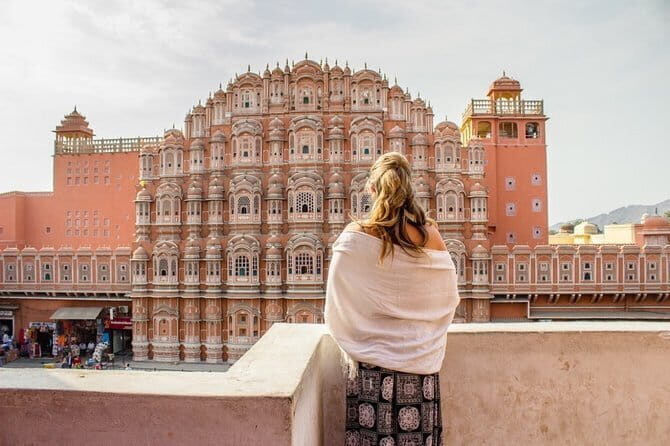
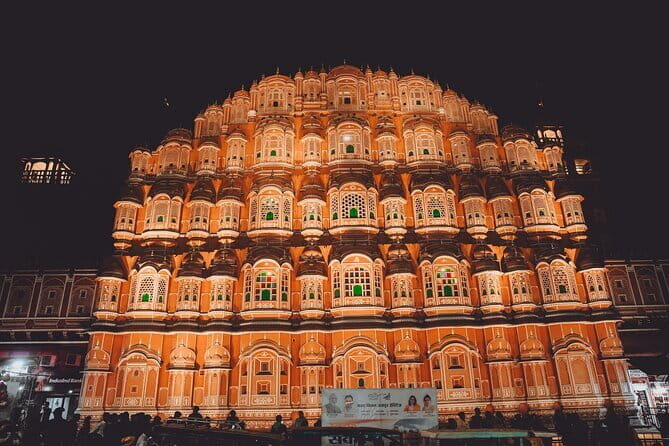
You start with Hawa Mahal (Palace of Wind). It’s famous for its five-story façade with 953 latticed windows, built in 1799. The idea was practical: royal women could observe street life while staying behind screens.
Even with only about 20 minutes, it’s a strong stop because it connects design to social life. You’re not just admiring patterns; you’re seeing how architecture served daily routines.
Jantar Mantar: when Jaipur turns into a science stop
Next is Jantar Mantar, a UNESCO World Heritage site built in 1734. It’s a set of nineteen architectural astronomical instruments commissioned by Sawai Jai Singh II, the founder of Jaipur.
If you don’t know how to read the place, it can turn into “cool rocks.” With an expert guide, it becomes easier to understand what each instrument is for and why it shows Rajput interest in astronomy. You’ll spend around 30 minutes, which is enough for the key ideas.
Jal Mahal: a palace that looks like it floats
Then you get to Jal Mahal, in Man Sagar Lake. It’s half-submerged, giving it that floating-palace look. The stop is short—about 15 minutes—but it’s ideal for a quick breather and a change of scene after royal buildings and forts.
Jaigarh Fort: hilltop views and mirror-studded details
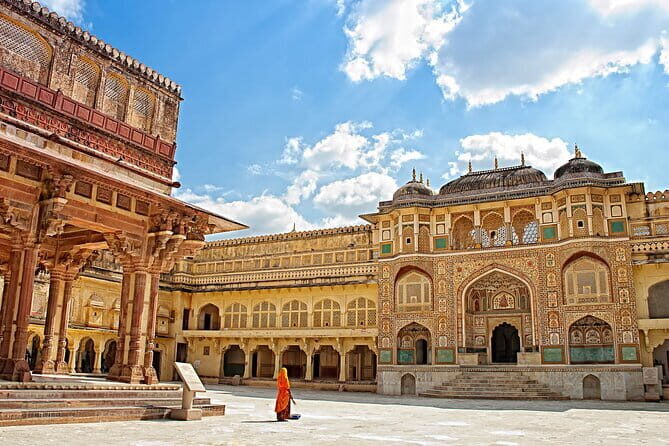
You end Jaipur with Jaigarh Fort, around 40 minutes. It’s perched on a hilltop near Jaipur and mixes Rajput and Mughal styles. One standout detail is the Sheesh Mahal (mirror-studded hall), plus carved interiors and wide courtyards.
This is a good stop for two reasons. First, you get a different side of Jaipur than the main city center. Second, forts help you understand how rulers protected power and looked over their territories.
Meals and hotels: where the value sits for a $710, 3-day private tour
Let’s talk value, because Golden Triangle tours vary wildly.
This one includes 5-star hotels for 2 nights, private transfers and sightseeing by an air-conditioned car, and a private expert tour leader. It also includes water bottles and planned meals: breakfast (2), lunch (2), and dinner (2). There’s also the special dinner with a local family in Jaipur.
On top of that, many monument tickets are included. You’re covered for places like Jama Masjid, Qutub Minar, Taj Mahal, Agra Fort, City Palace of Jaipur, Jantar Mantar, and Jaigarh Fort.
So where does the $710 feel like it goes? It’s not only the car and hotel. It’s the fact that your time is structured. You’re paying to reduce friction: fewer ticket-hunting moments, fewer route decisions, and less stress when crowds or traffic slow you down.
Also, this isn’t the “bare-bones” version of the Golden Triangle. It’s designed for comfort: private vehicle, pickup options (airport/rail/wherever you’re staying), and a guide who keeps the day from unraveling.
What to watch for: comfort, customs, and a packed schedule
This tour is practical, but it’s still a fast loop through three cities.
- You’ll cover a lot of ground with short monument windows, plus driving between Delhi, Agra, and Jaipur. Wear shoes you can stand in for temple courtyards and fort steps.
- You’ll move between very different settings—Old Delhi markets, religious sites, and formal memorials. Dress in a way that works for mosques and temples, and keep a light layer for AC and cooler mornings (especially on sunrise Taj Mahal day).
- It can feel intense if you want long free time. The design is for sightseeing momentum, not hanging out in cafés all day.
Who this tour suits best (and who should consider alternatives)
This is a great fit if you want:
- A private Golden Triangle with a dedicated driver and guide
- Major monuments handled smoothly with included entry for key sites
- A mix of cultural stops, not only a checklist of photo spots
- Planned meals, including a local-family dinner
It may not be ideal if you prefer:
- A very relaxed pace with lots of independent wandering each day
- Fully self-guided travel where you choose your own route and stopping times
If it’s your first time in India, the private setup is especially helpful. You’ll spend more energy enjoying places and less energy figuring out what comes next.
Should you book this Golden Triangle 3-day Delhi Agra Jaipur tour?
I’d book it if you want a well-managed route through Delhi, Agra, and Jaipur with comfort built in: private air-conditioned transport, 5-star hotels for 2 nights, monument tickets for the big hitters, and meals planned around the day.
The key decision is your tolerance for a packed schedule. If you like getting a lot done in a short time, this works. If you need lots of downtime, you might feel rushed.
One practical tip: go in ready to stand and walk. Even though each stop is timed, the total effort over three days adds up. If you do that, you’ll come away with the kind of Golden Triangle experience that feels complete, not fragmented.
FAQ
How long is the Golden Triangle tour from Delhi to Agra and Jaipur?
The duration is about 3 days.
Which cities are included in the 3-day tour?
You visit New Delhi, Agra, and Jaipur.
Is pickup included?
Yes. Pickup and drop are offered from the airport, railway station, hotel, or anywhere you specify.
Are the hotel stays included?
Yes. The tour includes 5-star hotels for 2 nights.
Is transportation included?
Yes. All transfers and sightseeing are handled by a comfortable private air-conditioned car and driver.
Are monument tickets included?
Yes. Tickets are included for the monuments listed in the tour details, including Jama Masjid, Qutub Minar, Taj Mahal, Agra Fort, City Palace of Jaipur, Jantar Mantar, and Jaigarh Fort.
What meals are included during the tour?
Breakfast is included for 2 days, and lunch and dinner are included for 2 days each. There is also a dinner with a local family in Jaipur.
Is the tour private or shared?
This is a private tour/activity, with only your group participating.
Can dietary requirements be accommodated?
Yes. You can specify dietary requirements like vegetarian, vegan, gluten-free, or lactose intolerant at the time of booking.
How does the trip end after Jaipur sightseeing?
After Jaipur, you start the journey back to Delhi, or you can choose a drop-off at Jaipur airport.