REVIEW · NEW DELHI
Golden Triangle 2 Nights, 3 Days: Delhi – Agra – Jaipur
Book on Viator →Operated by Masterji kee haveli dot com · Bookable on Viator
A Golden Triangle trip should feel like a story, not a checklist. This one works because you get a private vehicle and local guidance across the big hitters, with enough time on-site to actually see what you paid for. I especially like that the trip is built for comfort first, then sightseeing second.
My favorite parts were the on-the-ground organization and the way the day plans match the sites: Taj Mahal and Agra Fort on Day 1, then Jaipur’s Jantar Mantar, City Palace, and Amer Fort on Day 2. I also liked the human touch from the team behind the scenes—Dhruv’s planning support shows up in how smoothly the days run, and guides like Surya in Jaipur focus on making the places click instead of rushing.
One thing to consider: the headline monuments are timed tightly, and entrance tickets and camera charges aren’t included. Also, like most India road travel, timing can shift due to traffic and weather, even with a good plan.
In This Review
- Key things I’d zero in on
- Golden Triangle 2 Nights, 3 Days: what this trip really delivers
- Day 1 in Agra: Taj Mahal first, then Agra Fort
- Taj Mahal: 2 hours to slow down
- Agra Fort: 2 hours for Mughal power
- Day 2 in Jaipur: Jantar Mantar, City Palace, then Amer Fort
- Jantar Mantar: 1 hour with UNESCO energy
- City Palace of Jaipur: 1 hour in royal layers
- Amer Fort: 2 hours at the big viewpoint
- Day 3: Jaipur free time, then back to Delhi
- Private logistics: why the comfort details matter in India
- Price and value: what $279.18 covers, and what to budget
- What I’d watch for before booking
- Who this Golden Triangle tour suits best
- Should you book this Golden Triangle tour?
- FAQ
- Is transportation included in this Golden Triangle tour?
- Does the price include monument entrance tickets?
- What sites do you visit during the 3 days?
- Is this tour private?
- What’s included besides the guide and transport?
- How flexible is the schedule if I want changes?
Key things I’d zero in on
- Private transport with hotel pickup/drop-off makes the long drives easier to handle.
- Taj Mahal + Agra Fort get proper focus with 2-hour blocks rather than a quick stop.
- Jantar Mantar (UNESCO) and City Palace are scheduled with enough time to appreciate what you’re looking at.
- Amer Fort is given a full 2-hour slot, which you’ll want for the climb, courtyards, and viewpoints.
- Hands-on planning from Dhruv and professional guiding (like Surya) show up in the pace.
- No shopping pressure, even though you’ll have free time in Jaipur.
Golden Triangle 2 Nights, 3 Days: what this trip really delivers

The Golden Triangle is famous for a reason. Delhi, Agra, and Jaipur each do something different: the old capital’s layers in Delhi, Mughal grandeur in Agra, and the royal skyline of Rajasthan in Jaipur. What makes this version practical is how it balances big monuments with enough time to move slowly inside them.
You’re not doing this in a crowded bus line. This is a private tour, meaning your group stays together and the pace stays under your control. You also get transport by private vehicle, plus local guide support to help you connect facts to what you’re seeing—useful when the sights are grand but the details are easy to miss.
Finally, there’s a flexibility mindset. The company notes that the chauffeur-driven car can be used to visit markets, sites, or restaurants at your preferred time. That matters because Delhi and Jaipur can be frustrating if you feel trapped in a rigid schedule.
A few more New Delhi tours and experiences worth a look



Day 1 in Agra: Taj Mahal first, then Agra Fort
Day 1 is built around two of India’s most recognized monuments, and the order matters. Starting with the Taj Mahal helps you get the emotional high point early, before you turn to the heavier history of Agra Fort.
Taj Mahal: 2 hours to slow down
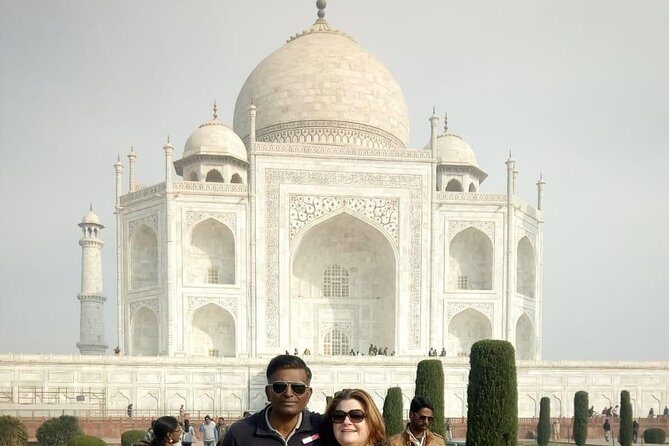
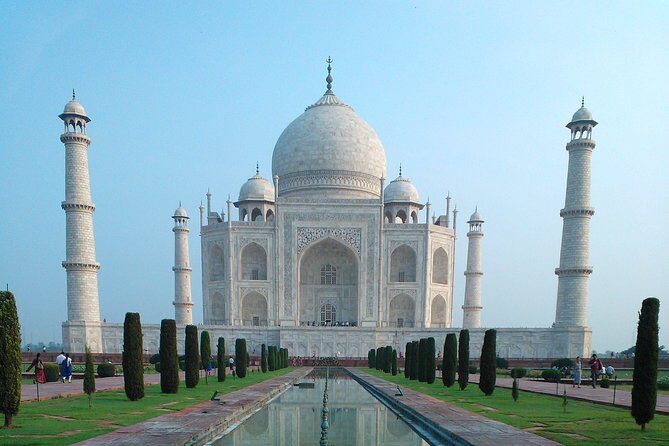
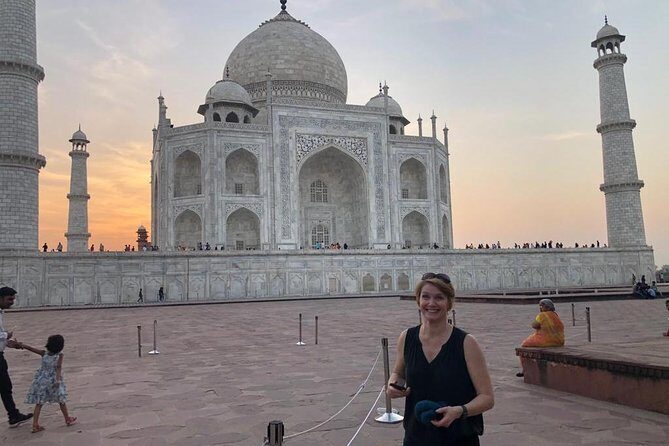
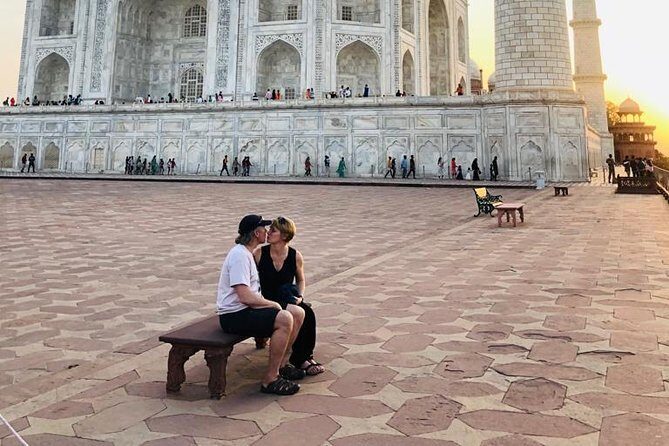
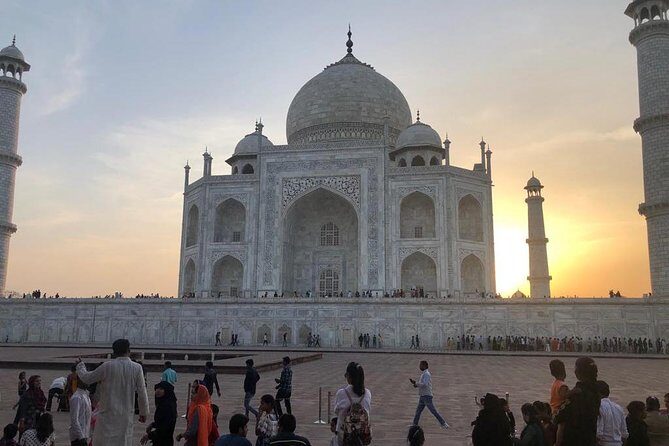
The Taj Mahal is an ivory-white marble mausoleum on the south bank of the Yamuna. It was commissioned in 1632 by Mughal emperor Shah Jahan to house the tomb of his favorite wife, Mumtaz Mahal, and it also contains Shah Jahan’s tomb. That story is everywhere once you’re inside, but the guide context is what makes it land.
You get about 2 hours here. That’s enough time to do the classics—view corridors, the main mausoleum area, and the surrounding perspective points—without feeling like you’re sprinting. Since admission tickets aren’t included, you’ll want to budget separately and keep an eye on what’s needed for entry.
A practical tip: give yourself a little patience for security and entry lines. Even with a plan, it’s a major site, and the experience feels better when you treat delays like part of the day, not an insult to your schedule.
Agra Fort: 2 hours for Mughal power
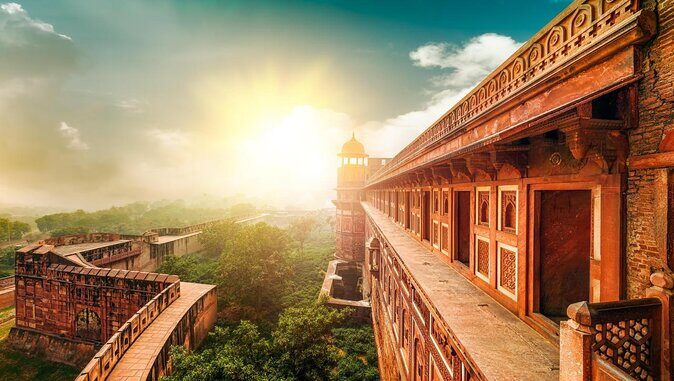
After the Taj, you move to Agra Fort, a major historical fort in Agra. It served as the main residence of Mughal emperors until 1638, when the capital shifted from Agra to Delhi. Before British capture, the last Indian rulers to occupy it were the Marathas.
This stop is also about 2 hours. It’s a smart pairing with the Taj because you start seeing the Mughal story in two directions: love and legacy at the Taj Mahal, and governance and defense at the fort. If you’re the type who likes history but hates museum-style lectures, this kind of guided site walkthrough usually works well.
Like the Taj, monument entrances and camera charges are not included, so plan for those separate costs.
Day 2 in Jaipur: Jantar Mantar, City Palace, then Amer Fort
Day 2 is a packed cultural sweep, but the schedule is paced by what the sights require. Jaipur’s monuments aren’t all the same. One is astronomy in stone, one is royal residence space, and one is a hillside fortress town. Doing them in a logical order helps.






Jantar Mantar: 1 hour with UNESCO energy
You’ll visit Jantar Mantar, a collection of nineteen astronomical instruments built by Rajput king Sawai Jai Singh II, completed in 1734. It includes the world’s largest stone sundial and is a UNESCO World Heritage site.
You get about 1 hour here. That’s about right because Jantar Mantar is visual and technical at the same time. Too little time and it turns into random stone shapes; too much time and you can feel overloaded. With a guide, that one hour is often what you need to connect the dots—how these instruments measured time and sky conditions.
Practical note: it’s mostly open-air, so you’ll feel the weather. If you’re visiting in warmer months, bring water and plan your energy accordingly.
City Palace of Jaipur: 1 hour in royal layers
Next is the City Palace of Jaipur, established when Jaipur was founded. Maharaja Sawai Jai Singh II moved his court to Jaipur from Amber in 1727, and the palace complex reflects that transition into the new capital.
This stop is scheduled for about 1 hour. That’s a manageable window for palace courtyards and museum spaces. It also helps you appreciate Jaipur’s look as more than just pretty pink stone—there’s a reason the city design ties back to royal priorities and administration.
Again, entrances aren’t included, so check ticket needs in advance. Camera charges are listed as not included too, so don’t assume free photos everywhere.
Amer Fort: 2 hours at the big viewpoint
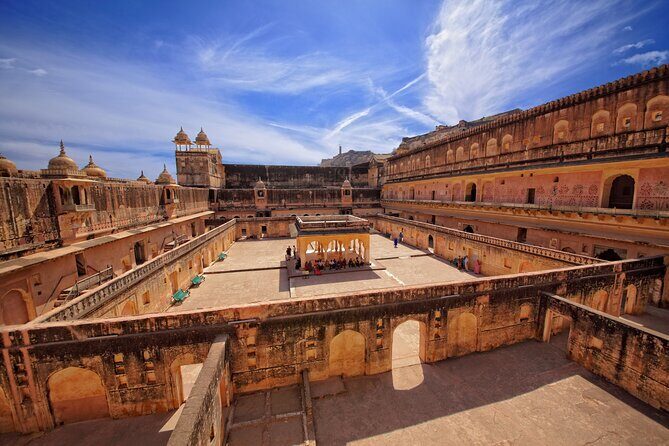
Finally, you head to Amer (Amer Fort). Amer is a town about 11 kilometers from Jaipur. The fort sits high on a hill and is a principal tourist attraction in the city. Amer Fort is the one stop where the experience can feel physically different from the others because it’s not just “look and move”—you navigate courtyards, stairways, and viewpoints.
You get about 2 hours at Amer. In my view, that’s the minimum sensible time if you want to actually enjoy the place rather than touch it and run. It’s also where a guide makes a difference because fort walls and gates can look similar until someone points out the design logic.
A good consideration here: the fort’s setting can be tiring if you’re sensitive to heat or stairs. If that’s you, take it slow and use shaded rest moments whenever possible.
Day 3: Jaipur free time, then back to Delhi
Day 3 is lighter. You’ll wrap up with free time for shopping if you want to buy something, or you’ll drive back to Delhi. The good news is that you’re not locked into a long final run of monuments at the end of the trip.
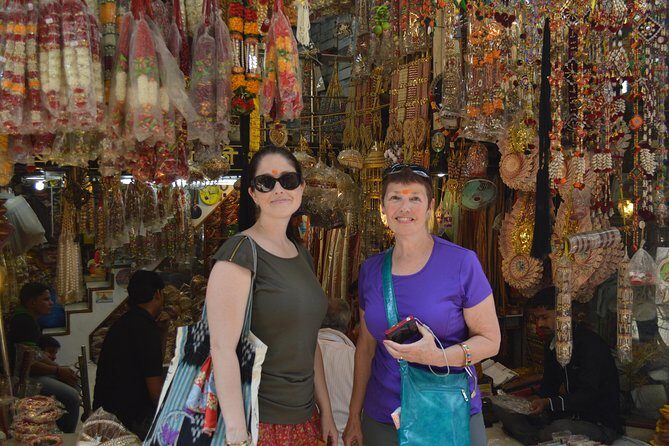
You’ll also likely have time around the Indian Crafts Bazaar in Jaipur. The company also notes that they discourage shopping and don’t have an interest in pushing it. That’s a rare plus in a region where some tours turn into sales marathons.
If you want souvenirs that feel connected to the area, Jaipur is the place. If you don’t want shopping, it’s still a helpful stop because you can use the time to pause, stretch, and reset before the drive back.
Private logistics: why the comfort details matter in India
On paper, this trip is about monuments. In practice, the long travel days between Delhi, Agra, and Jaipur are what make or break the trip. That’s why I pay attention to the logistics.
You get hotel/port pickup and drop-off and transport by private vehicle. That removes a lot of friction in big cities where finding the right starting point can be a hassle. It also helps you avoid losing hours to waiting or transfers you didn’t ask for.
The reviews tied to this kind of service also highlight small comfort extras: one guest specifically mentioned a spotless car and supplies like water, toilet papers, and snacks/fruits during the ride. Those details don’t sound glamorous, but they genuinely change the mood on a long day.
One more practical point: the company makes it clear that on-time service can’t be guaranteed due to traffic, weather, road conditions, and other factors beyond control. Translation: you’ll want to keep your plans flexible on Day 1 and Day 2, especially with road travel.
Price and value: what $279.18 covers, and what to budget
The listed price is $279.18 per person for a roughly 3-day experience. At this level, you’re paying for a focused bundle: local guide time, private transport, and pickup/drop-off.
What’s included:
- Local taxes
- Local guide
- Hotel/port pickup and drop-off
- Private tour
- Transport by private vehicle
What’s not included:
- Accommodation
- Food and drinks
- Entrances at the monuments
- Camera charges
So the real value equation depends on how you handle gates. If you assume you’ll cover Taj Mahal, Agra Fort, Jantar Mantar, City Palace, and Amer Fort ticket costs, the per-day price can feel fair for a private format. If you’re trying to keep costs ultra-low and rely on external group transport, you might compare options.
Either way, for many people the private feel is the main “value.” You’re not spending your mental energy on logistics while trying to enjoy the sights.
What I’d watch for before booking
A few practical things can save you frustration.
First, admission tickets and camera charges aren’t included. That means you should plan your budget for on-site payments and check photo rules at each monument.
Second, this is a schedule-driven trip with set time blocks (Taj 2 hours, Agra Fort 2 hours, Jantar Mantar 1 hour, City Palace 1 hour, Amer Fort 2 hours). That’s good for structure. But if you’re the kind of traveler who wants unlimited wandering time, you’ll still be able to use the flexibility note about adding a detour by chauffeur—just don’t expect every site to turn into a personal day trip.
Third, the road days matter. If you’re sensitive to long car rides, build in patience and keep water on hand.
Who this Golden Triangle tour suits best
This works well if you want:
- A private experience instead of crowded transport
- A clear plan for Delhi to Agra to Jaipur
- Guided explanations at major landmarks like the Taj Mahal and Jantar Mantar
- Comfort-forward logistics: pickup, drop-off, and private vehicle travel
It’s especially good for first-timers who want the “must-see” monuments but still want the day to feel human-paced. If you already know India history and want deep time, you may still enjoy it but might want to add extra days to slow the pace further.
Should you book this Golden Triangle tour?
I’d book it if you want the Golden Triangle highlights in three days without chaos—especially if you value private transport, guided time at each major site, and a driver/guide who keeps the day running.
I’d think twice if you strongly prefer unguided freedom, or if you dislike the idea that entrance fees and camera charges are extra and timing can shift on the road. But for most people, the comfort and structure are the point.
If you’re deciding today, go for it—then use your free time wisely in Jaipur, and treat those monument tickets as part of the real Golden Triangle cost.
FAQ
Is transportation included in this Golden Triangle tour?
Yes. The tour includes transport by private vehicle, plus hotel/port pickup and drop-off.
Does the price include monument entrance tickets?
No. Entrances at the monuments are not included, and camera charges are also listed as not included.
What sites do you visit during the 3 days?
You’ll visit Taj Mahal and Agra Fort in Agra, then in Jaipur you’ll see Jantar Mantar, City Palace, and Amer (Amer Fort).
Is this tour private?
Yes. It is a private tour/activity, and only your group participates.
What’s included besides the guide and transport?
Included items are local taxes, a local guide, hotel/port pickup and drop-off, and private vehicle transport. Food and drinks and accommodation are not included.
How flexible is the schedule if I want changes?
The tour notes flexibility to add destinations and more nights based on your final plan. It also says you can use the chauffeur-driven car to visit markets, sites, or restaurants at times you desire.