REVIEW · NEW DELHI
From Delhi- 5 Day Wheelchair Accessible Golden Triangle Tour
Book on Viator →Operated by Abby & Scout Tours · Bookable on Viator
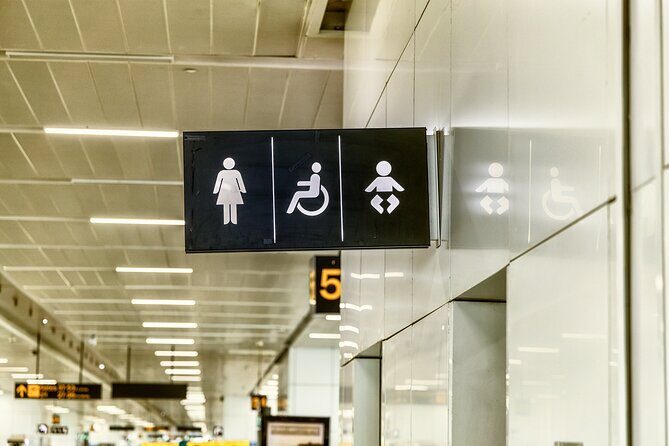
Wheelchair access makes the Golden Triangle real. This 5-day Delhi-Agra-Jaipur trip mixes famous sights with practical help from a private guide and driver, and I really like the step-focused transport setup plus the chance to skip ticket lines with your guide. One watch-out: there are no accessible restrooms at the attractions, so plan around that.
What makes this tour feel workable is the small-group approach. It’s limited to just 2 people in one air-conditioned Toyota MUV, which usually means fewer surprises in tight spots and less waiting around. In the same spirit, I’ve seen names like Rajesh and Vikram mentioned for safe, calm driving, with guides such as Karan and Sabir steering the story behind each stop.
You’ll spend a lot of time on the go—markets, memorials, forts, palaces—yet the experience is built for pacing. Still, some major landmarks are tricky for wheelchairs, so you’ll also get a few roadside view moments when step-free access isn’t practical.
In This Review
- Key highlights I’d plan around
- Wheelchair-accessible Golden Triangle: what you’re really signing up for
- Getting from door to door: the Toyota MUV setup that matters
- Delhi on Day One: markets and monuments without the full chaos
- Chandni Chowk (drive-through)
- Parliament House and the President’s House (drive past)
- India Gate and Rajpath (drive along)
- Raj Ghat (memorial visit)
- Connaught Place (walk around)
- Delhi on Day Two: Mughal architecture and a sunset option
- Humayun’s Tomb (main visit)
- Qutub Minar (main visit)
- Mehtab Bagh (optional)
- Sunrise Taj Mahal and Agra Fort: why timing is everything
- Taj Mahal at sunrise
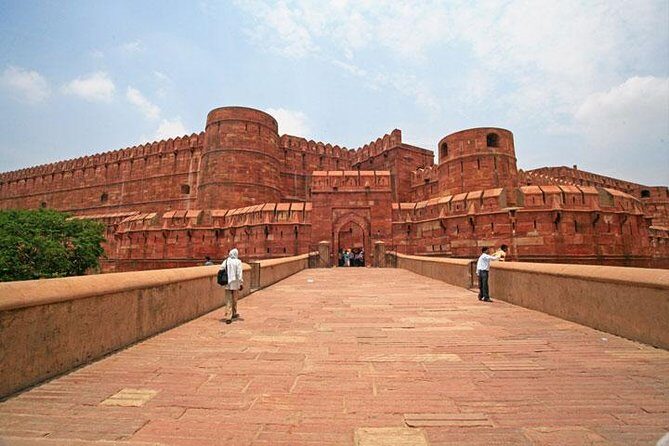
- Agra Fort
- Fatehpur Sikri (ghost-town feeling)
- Jaipur Day Four: palaces, science-in-stone, and roadside views
- City Palace of Jaipur
- Jal Mahal (roadside view only)
- Hawa Mahal (roadside view only)
- Jantar Mantar
- Lassiwala lassi stop
- Jaipur Day Five: Albert Hall ground-floor access and the drive back to Delhi
- Albert Hall Museum (ground floor only)
- Drive back to Delhi
- Skip-the-line tickets and what your guide really does for you
- Hand block printing: the cultural add-on that makes the trip feel human
- Price and value: is $563.26 per person worth it?
- Who this tour fits best
- Should you book this wheelchair-accessible Golden Triangle tour?
- FAQ
- Is this a private tour, and how many people fit in the vehicle?
- Are entry tickets included in the price?
- Can I visit the Taj Mahal on any day?
- Are accessible restrooms available at the attractions?
- Does the tour provide wheelchair or adaptive equipment?
- Is the transportation step-free, and what are the door widths?
- Is there support for hearing or vision impairments?
Key highlights I’d plan around

- Private Toyota MUV with step-free help from your guide and driver from pickup to drop-off
- Skip-the-line support for monument entry where tickets are required
- Sunrise Taj Mahal visit timed for the classic photo light (with a Friday closure note)
- Two people max per vehicle, which matters for comfort and accessibility logistics
- Some sights are roadside views (like Jal Mahal and Hawa Mahal), so set expectations early
Wheelchair-accessible Golden Triangle: what you’re really signing up for
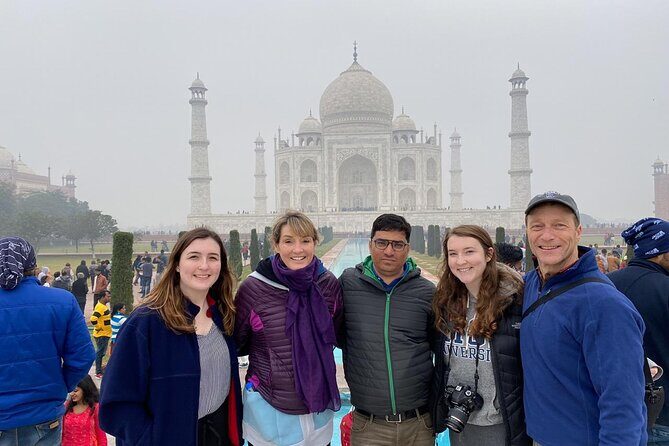
The Golden Triangle is usually sold as a bucket-list sprint. This version shifts the focus to flow: get you from sight to sight, keep things comfortable in between, and give you real context for what you’re seeing.
You’re doing three cities: Delhi, Agra, and Jaipur. That layout is efficient because you’re not bouncing around multiple regions. It also makes it easier for your guide to plan short stops, longer stops, and timing for the biggest draw—especially the Taj Mahal sunrise start.
The biggest value isn’t just that it’s wheelchair accessible. It’s the combination of:
- a private English-speaking guide cum escort,
- a driver who handles the road for you the whole time,
- and a car equipped with Wi‑Fi, bottled water, cookies, and snacks.
If you care about having your day structured without having to coordinate taxis, ticket lines, and transfers on your own, this format is a big win.
Price-wise, you’re paying $563.26 per person for a 5-day private style tour. Entry tickets, hotel, and meals aren’t included, so it’s not “all-in.” But when you weigh the vehicle with driver for multiple days, guide time, and all the city driving (including parking/tolls/state taxes/gasoline), the math tends to work best for people who want a true support-led experience rather than doing the route independently.
A few more New Delhi tours and experiences worth a look



Getting from door to door: the Toyota MUV setup that matters

This tour runs on a private air-conditioned Toyota MUV with a driver for the entire trip. The good part for wheelchair travelers is how the access is handled:
- Step-free transport support is provided: your guide and driver help you get in and out of the car.
- Side door width is listed as 42 inches wide (52 inches high), and the back door is 40 inches wide (58 inches high).
- You’ll have 2-point seatbelts, and there’s no movable armrest.
That last bit may sound minor, but it matters if you rely on positioning or need a specific comfort setup. Also, there’s no adaptive equipment included, so you should bring whatever your body and wheelchair need.
One more practical thing: the tour also states there’s no guidance support for hearing or vision impairment. If you need special accommodations beyond a guide helping in normal ways, you’ll want to message the provider in advance.
The other reality check: the tour includes a lot of drives through busy areas (Old Delhi traffic and market zones). You’ll get the driving time comfort in the MUV, but once you reach each stop, your wheelchair access depends on the site itself. Your guide will help slow down when needed and find places to eat or drink aside from lunch.
Delhi on Day One: markets and monuments without the full chaos

Day one leans into central Delhi and the classic sights people expect from the capital. The rhythm is mostly “short stop / drive-by / walk a bit” rather than long museum-style time.
Here’s what to expect:
Chandni Chowk (drive-through)
You get a look at Chandni Chowk, often described as famous because it’s long and busy. In this tour, you’ll mostly drive through rather than roll deep into the densest lanes. That’s smart for wheelchair comfort and reduces the stress of navigating crowded narrow stretches.
Parliament House and the President’s House (drive past)
You’ll drive past Parliament House and the President’s House area. It’s timed as quick photo potential, and it keeps the day moving.






India Gate and Rajpath (drive along)
You’ll travel along Rajpath past India Gate, with time marked for a drive-by and viewing.
Raj Ghat (memorial visit)
This is one of the more meaningful stops: Raj Ghat, the memorial site of Mahatma Gandhi. It’s a good pacing break from the bigger-city sights because the tone shifts from landmark viewing to reflection.
Connaught Place (walk around)
Connaught Place is your last stop in Delhi: a shopping and business hub where you’ll walk around for about an hour. Walking time is always the variable here—your guide can help with speed and breaks—but the plan suggests a relatively controlled area compared to the deepest market streets.
My take: Day one is a great choice if you want to see the “Delhi postcard” highlights without burning your full energy on heavy walking.
Delhi on Day Two: Mughal architecture and a sunset option

Day two brings you into Mughal-era landmarks. These sites tend to be visually dramatic, and they’re also where wheelchair access can vary a lot by entrance and internal pathways.
Humayun’s Tomb (main visit)
Humayun’s Tomb is a major Mughal architecture stop. Expect steady time on-site (about 40 minutes), with admission tickets not included. Your guide can help with ticketing and timing, including the ability to skip the ticket line.
Qutub Minar (main visit)
Next is Qutub Minar. The scheduled time is about 30 minutes. The minaret is the headline, but what you’ll really notice is how the area’s layout influences movement. Plan to go slow and let your guide set the route.
Mehtab Bagh (optional)
Then there’s an optional stop: Mehtab Bagh, positioned as a sunset-friendly spot with views toward the Taj Mahal across the river. It’s about 40 minutes, and the tour flags it as optional unless you still have energy.
This is a smart planning lever. If sunrise Taj Mahal already takes it out of you, you’ll probably skip this. If you’re feeling good, the view can add a second Taj perspective that isn’t identical to the sunrise angle.
Sunrise Taj Mahal and Agra Fort: why timing is everything
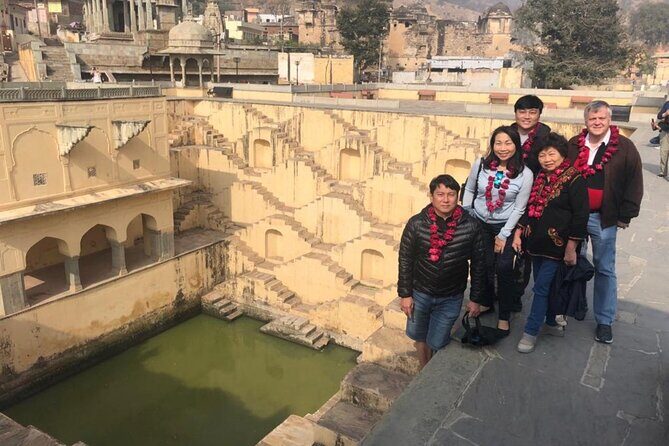
Day three is the heart of the Golden Triangle fantasy. It’s also the day you’ll want to treat like a mission with good sleep the night before.
Taj Mahal at sunrise
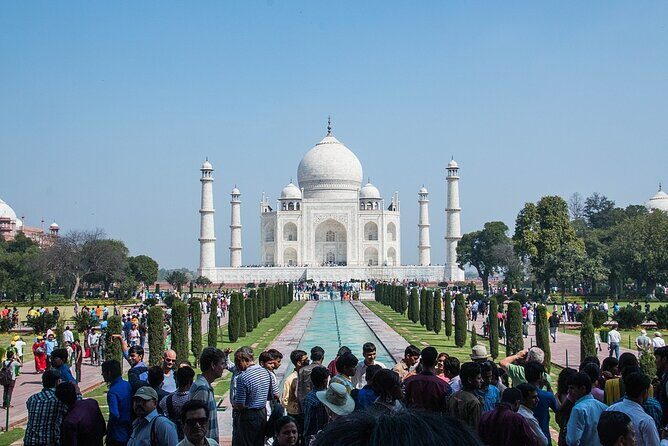
You start early for sunrise at the Taj Mahal, with about 1 hour 30 minutes on site. Admission tickets aren’t included. This is where the tour’s timing logic makes sense: sunrise light tends to flatter stone and reduces midday heat.
There’s one crucial scheduling note you should not ignore: the Taj Mahal remains closed on Fridays. So if your preferred travel window includes a Friday in Agra, you’ll need the Taj day moved accordingly.
Agra Fort
After that big moment, you head to Agra Fort for about 1 hour. This stop is all about scale and walls—carvings, layout, and viewpoints. It’s not a quick photo-only stop, but it’s also easier to pace than something like a long market maze.
Fatehpur Sikri (ghost-town feeling)
Next is Fatehpur Sikri, an off-center day trip feel with about 45 minutes. Tickets are listed as free for this stop. The tour description calls it a ghost town frozen in time, which is the right vibe to expect: wide courtyards, big monument shapes, and fewer “street distractions” than Delhi and Agra city cores.
My advice: for wheelchair travel, the magic of this day depends on pacing. Give yourself permission to slow down. The whole point of booking a private guide is not to force the itinerary to fit your body.
Jaipur Day Four: palaces, science-in-stone, and roadside views
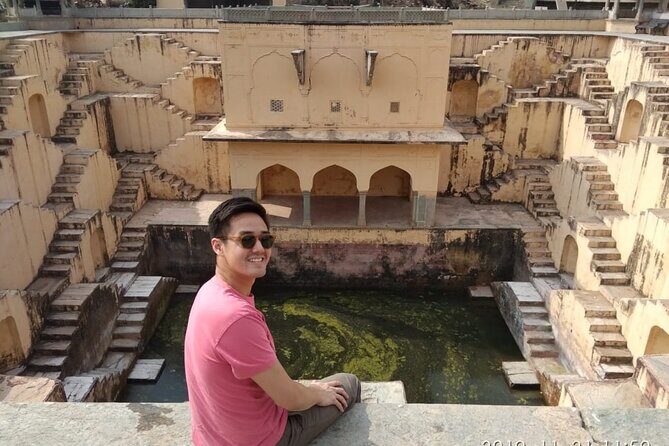
Jaipur is where the tour shifts from Mughal dominance to Rajasthan identity. This day includes several icons, but you’ll notice a pattern: some big photo targets are done as roadside views.
City Palace of Jaipur
You’ll spend about 1 hour 30 minutes at City Palace. Tickets aren’t included. This is the type of place where the guide’s narration can make your visit feel less like “walking through rooms” and more like “understanding why these spaces mattered.”
Jal Mahal (roadside view only)
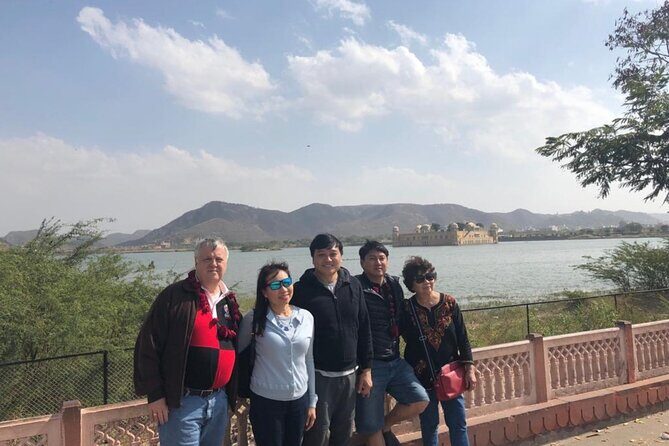
Jal Mahal is listed as only a roadside view. You’ll get to see it from outside rather than do an in-depth visit. For wheelchair travelers, that’s often the difference between a smooth day and a frustrating one when entrances and paths aren’t built for accessibility.
Hawa Mahal (roadside view only)
Same idea for Hawa Mahal (Palace of Wind). You’ll view it from the road side only for about 15 minutes. That’s enough for the iconic facade photos, but it’s not the same as exploring inside.
Jantar Mantar
Next comes Jantar Mantar, for about 30 minutes. Tickets aren’t included. This stop is special because it’s science-in-stone: ancient instruments used to measure time and the sky. It’s also a place where you can pause and look up while your guide explains what the shapes are doing.
Lassiwala lassi stop
Your last stop in Jaipur is a food break: Lassiwala Kishan lal Govind Narain Agarwal for lassi (about 45 minutes). Admission isn’t required for this part.
This lassi stop matters because it’s not just about calories. It gives your day a local anchor so the palaces don’t blur into one long line of monumental sight-seeing.
Jaipur Day Five: Albert Hall ground-floor access and the drive back to Delhi
Day five is lighter on monuments and heavier on travel time. You’ll do one museum stop and then a long drive back to Delhi.
Albert Hall Museum (ground floor only)
You’ll visit Albert Hall Museum for about 30 minutes. Here’s a key access detail: only the ground floor is wheelchair accessible. Tickets aren’t included.
If your wheelchair access needs differ by specific galleries or doorways, your best move is to tell your guide what you want to see most. That way, you don’t waste precious energy trying to reach areas that aren’t reachable.
Drive back to Delhi
Then you’ll drive back to New Delhi (to your hotel/airport/rail station) for about 5 hours. That’s long, so it’s another reason the car comfort and driver expertise matter. You’ll want to be ready for seated time.
Skip-the-line tickets and what your guide really does for you
This tour says entry tickets aren’t included, but your guide helps with skipping the ticket line to buy tickets. In practice, that’s a major advantage for anyone who wants fewer stands-in-queues moments.
It also shifts stress off you. Instead of you figuring out where to go first while managing a wheelchair and keeping your group together, your guide handles the flow and timing. That’s especially valuable for the Taj Mahal day and other high-demand stops.
Hand block printing: the cultural add-on that makes the trip feel human
Beyond monuments, the tour includes hand block printing. This type of craft stop is exactly what turns a “see three cities” trip into something more personal. You’re not just looking at stone and forts—you’re watching people work with traditional methods, and the story is in the materials and the hands-on process.
The tour also positions this as a history-carrying craft, which fits well after days of architecture. It’s a nice balance: you get to touch a different side of India, not just the skyline side.
Price and value: is $563.26 per person worth it?
Let’s talk money like a practical person.
For $563.26 per person, you’re paying for:
- a private air-conditioned Toyota MUV and driver for the full multi-city stretch,
- an English-speaking private guide throughout,
- parking, tolls, state taxes, and gasoline,
- and in-car comforts like Wi‑Fi and snacks/drinks.
What you’re not paying for:
- monument entry tickets,
- hotels and meals,
- personal tips,
- and extra fees like video and still camera charges at monuments,
- plus insurance/emergency/medical costs.
So when is this price a good deal? It tends to be when:
- you value a private guide who handles ticket lines and pacing,
- you don’t want to coordinate separate accessible transfers,
- you can use the 2-person limit to keep the service truly tailored.
If you’re cost-driven and already comfortable navigating accessible entry points and ticketing on your own, a self-guided approach might be cheaper. But if you want your energy to go toward sights, not logistics, the value here comes from reduced hassle.
One small note on comfort: the tour includes small snacks and drinks in the car, which helps on days where you might otherwise be hunting for accessible refreshment stops.
Also, it includes pickup and drop-off at the start and end of the trip, which saves you time and decision fatigue.
Who this tour fits best
This experience fits best if you:
- want a private, wheelchair-accessible Golden Triangle with a dedicated driver and guide,
- prefer structured days with clear “how long we stay” expectations,
- like history and want it explained in plain language,
- need fewer ticket-line hassles and more help at transitions.
It may feel less ideal if you:
- need access inside specific museum galleries beyond ground-floor options (Albert Hall is ground-floor accessible only),
- rely on accessible restrooms at every stop (the tour states none are accessible at attractions),
- need special accommodations for hearing or vision impairment (none are provided as a built-in feature),
- cannot travel on Friday in Agra without changing your Taj Mahal timing.
Should you book this wheelchair-accessible Golden Triangle tour?
I’d book it if you want a private Delhi–Agra–Jaipur trip that’s built around support and pacing, not around you fighting logistics. The best reasons are the private guide + driver, the Toyota MUV comfort, and the chance to skip ticket lines with help. The 2-person vehicle limit is also a quiet quality upgrade.
I’d hesitate if bathroom access is your non-negotiable dealbreaker, or if you require accessible entry into places that this tour handles as roadside views (like Jal Mahal and Hawa Mahal). In that case, you’d want to confirm which stops matter most to you and how your specific routes will be handled.
One more practical comfort check: you can cancel for a full refund up to 24 hours in advance, so you have room to plan confidently once you know your dates and Taj Mahal day.
If your goal is to see the Golden Triangle with less strain and more support, this is a solid match.
FAQ
Is this a private tour, and how many people fit in the vehicle?
This is a private tour. The booking is limited to 2 people in one Toyota MUV. If you have more than 2 people, you need to contact the provider to ask about the best vehicle option.
Are entry tickets included in the price?
No. Entry tickets are not included. Your English-speaking guide helps you with skipping the ticket line to buy tickets.
Can I visit the Taj Mahal on any day?
No. The Taj Mahal remains closed on Friday. You should plan your Agra day so the Taj visit is not scheduled for a Friday.
Are accessible restrooms available at the attractions?
No. The tour states that no accessible restrooms are available at any of the attractions. Some may have sitting benches and limited shelter, and your guide can help you slow down for breaks when needed.
Does the tour provide wheelchair or adaptive equipment?
No. The tour notes that no adaptive equipment is included.
Is the transportation step-free, and what are the door widths?
Yes, the access to the transportation is described as step-free, with help from the guide and driver. The MUV side doors are listed as 42 inches wide (52 inches high), and the back door is 40 inches wide (58 inches high).
Is there support for hearing or vision impairments?
No. The tour states there are no guidance features available for people with hearing and/or vision impairment.