REVIEW · JAIPUR
Guided Jaipur City Tour with Sunset
Book on Viator →Operated by India Rajasthan Tour Cab · Bookable on Viator
Golden hour in Jaipur has a shortcut. This day tour strings together landmark stops and a flower-market visit, with sunset built into the pace. You also get a guided feel for why each site matters, not just photos—plus an easy pickup/drop routine in Jaipur.
I especially like the comfort of a private AC car and the fact that you’re not stuck on a crowded bus. I also like that your driver/guide can explain what you’re seeing in English, so the day clicks into place fast.
One thing to plan for: some major monuments list admission as not included, so check whether your option includes tickets or you’ll budget for entry tickets.
In This Review
- Key highlights at a glance
- Why this 8-hour Jaipur day tour fits first-timers
- Price and value: what $12.36 covers (and what you may add)
- Starting with Hawa Mahal’s breeze-window facade
- Jantar Mantar: astronomy you can walk through
- City Palace: the mix of styles that explains Jaipur
- Royal Gaitor Tumbas: a calmer stop among the icons
- Flower market plus sunset energy: why this day feels different
- Panna Meena ka Kund and the power of symmetry
- Jagat Shiromani Ji Temple near Amer: quick, meaningful, free
- Amer old town: where the fort area becomes a neighborhood
- Jal Mahal: the palace on the water’s edge
- Galtaji Temple complex and the Sun Mandir feel
- How pickup, private transport, and guides shape your day
- Who this tour suits best
- Should you book this Jaipur City Tour with Sunset?
- FAQ
- How long is the Jaipur city tour?
- Do you get pickup and drop-off?
- Is this tour private?
- Does the tour include bottled water?
- Are monument entry tickets included?
- What sights are on the itinerary?
- Are any stops free?
- Is meals included?
- What’s the cancellation rule?
Key highlights at a glance
- Golden hour timing wrapped into a full day, so the light helps you at multiple viewpoints
- Hawa Mahal, Jantar Mantar, and City Palace in one logical sweep instead of random backtracking
- Flower-market visit where you can watch everyday Jaipur commerce and color up close
- Private, only-your-group setup with pickup and drop-off included
- Free stops included like Panna Meena ka Kund and Jal Mahal (entry)
- Bottled water and an AC ride that keep the day realistic in Jaipur heat
Why this 8-hour Jaipur day tour fits first-timers
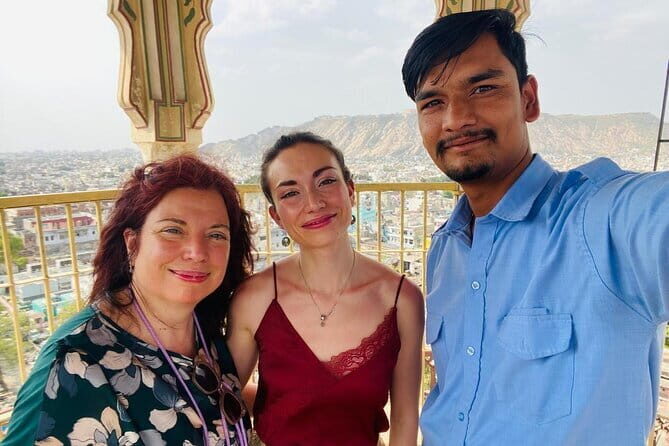
Jaipur can feel like a lot—big forts, famous palaces, and sights spread across town. This tour helps by bundling the main “greatest hits” into an 8-hour run that’s paced for a full day without rushing you to every corner.
You’re also not just looking at monuments. The day includes a visit to a flower market, which adds a human side to all the stone. If you like travel that mixes iconic landmarks with normal street life, this is the right balance.
The private setup matters too. Since it’s only your group and you get pickup and drop-off, you can keep your schedule cleaner and spend less time negotiating logistics.
You can also read our reviews of more guided tours in Jaipur


Price and value: what $12.36 covers (and what you may add)
At about $12.36 per person, this is priced like a value tour—and it mostly delivers on that promise. You get pickup and drop-off, bottled water, fuel/parking/taxes, and a guide when that option is selected.
The main “watch this” item is admissions. The itinerary lists several big stops with admission tickets not included (like Hawa Mahal, Jantar Mantar, City Palace, and Royal Gaitor Tumbas). Meanwhile, some places are free stops in your route (like Panna Meena ka Kund and Jagat Shiromani Ji Temple). So your out-of-pocket cost may vary depending on whether your booking includes monument tickets.
If you’re the type who hates surprise costs, I’d confirm ticket inclusion before you go. If you’re flexible and you’d rather control what you pay for, you can treat those fees as part of the day’s normal travel math.
Starting with Hawa Mahal’s breeze-window facade
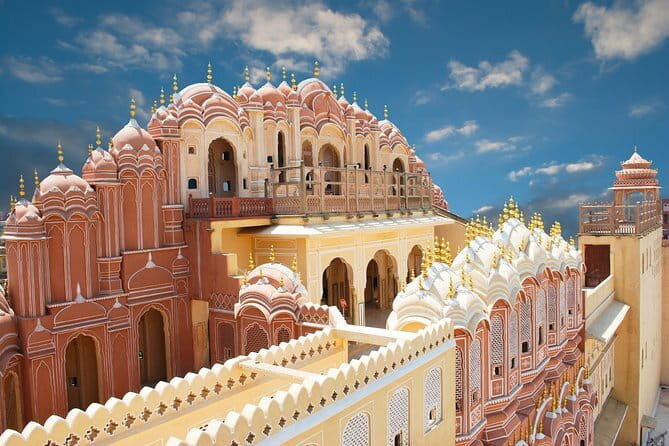
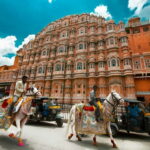
Hawa Mahal is the kind of Jaipur sight that instantly looks special, even if you’ve seen photos. The building’s signature design comes from lots of small windows. The idea is that air can move through, giving the palace a breezier feel than it looks from the outside.
Expect about 45 minutes here. That’s enough time to walk around the exterior and get a solid sense of the façade’s geometry. It’s also a good early stop because you’re more likely to enjoy the building without feeling sandwiched into a long line.
Drawback? Hawa Mahal often gets crowded around peak hours, and some parts depend on what you can access on the day. If you want quiet photo angles, go in with patience and expect to share the space.
Jantar Mantar: astronomy you can walk through
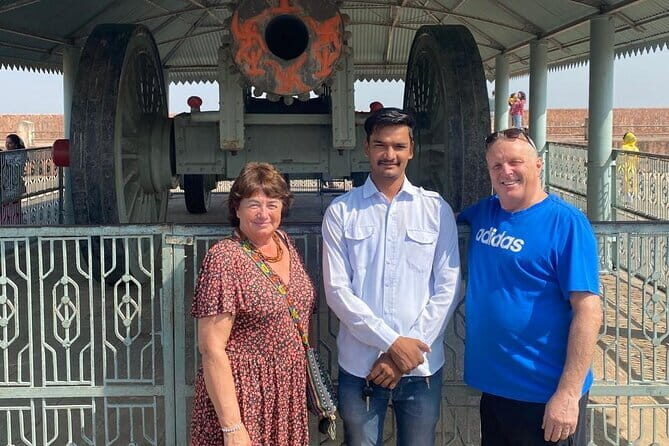
Next comes Jantar Mantar, Jaipur’s famous astronomical complex. What I like about it is that it’s not “space museum” energy. It’s more like old-world science made physical—multiple instruments built with precision, each meant to measure something about the sky.
You’ll have around 1 hour. That time window is just right to understand the major instrument types and connect the dots between the scale of the structures and the functions they served. It’s also a nice contrast to the palace styles you saw first.
The consideration here is admissions: the itinerary lists admission tickets as not included for this stop. So if you’re budgeting, plan for possible entry fees unless your option covers monument tickets.
City Palace: the mix of styles that explains Jaipur

The City Palace stop gives you the context behind Jaipur’s story. You’ll see a blend of Rajput, Mughal, and European architectural influences, which helps explain why Jaipur doesn’t look like a single-style city. It feels like layers—carefully maintained layers.
You’re allotted about 2 hours, which is a helpful amount of time. You can slow down, look at details, and get a sense of how the complex works as both a monument and a statement of power.
Again, admission is listed as not included. If your package includes tickets, you’ll glide through more easily. If not, keep a little extra for entry so you’re not scrambling late in the day.
You can also read our reviews of more city tours in Jaipur





Royal Gaitor Tumbas: a calmer stop among the icons
Royal Gaitor Tumbas are a change of pace. Instead of the everyday theater of a palace, you’re stepping into cenotaphs and carved memorial spaces that feel quieter and more reflective.
This stop clocks in around 45 minutes. That’s enough for a slow walk, a look at craftsmanship, and time to soak up the mood without turning it into a long detour.
Admission tickets are listed as not included. Still, if you want a break from the “most famous” loop and prefer architecture you can read with your feet, this is a strong mid-to-late day stop.
Flower market plus sunset energy: why this day feels different
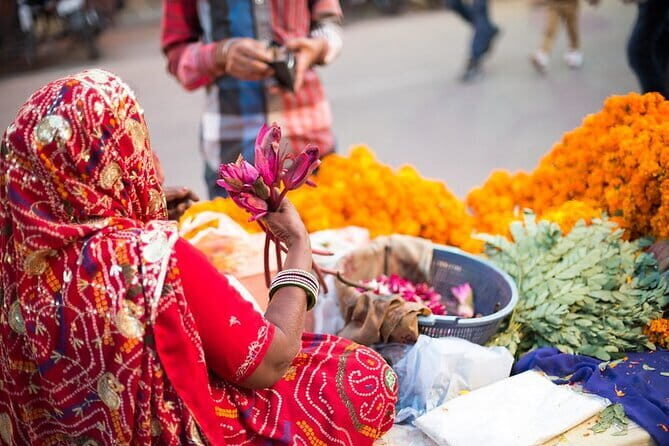
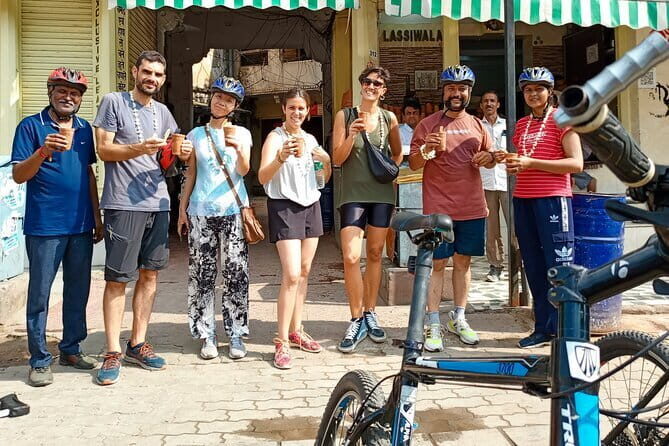
The tour’s schedule is built around big landmarks, but you also get a visit to the flower market. That’s a smart move. Markets are where you see how a city actually runs—people negotiating, arranging, buying, and preparing for daily rituals.
Then there’s the sunset component. The name of the tour says it all, and the routing makes sense for it: after you’ve covered palaces and instruments, you’re likely to reach the scenic parts of the day when light softens. Even if you’re not a “sunset person,” Jaipur’s afternoon shadows and warm tones are made for photos and for noticing details you’d miss at midday.
One practical tip: carry sunglasses and a light layer. Sunset can be pleasant, but Jaipur mornings and afternoons can still be intense, so don’t rely on the weather to do your comfort planning.
Panna Meena ka Kund and the power of symmetry
After the main monument wave, the route includes Panna Meena ka Kund, a historic stepwell and rainwater catchment. The most memorable detail is its symmetrical stairway design—simple from a distance, but fascinating up close.
You get about 30 minutes, and because it’s listed as free, it’s a win for both time and budget. Stepwells can feel like architecture lessons in disguise: you start noticing how people used spaces for water storage, not just decoration.
If you’re short on museum patience, this is one of those stops that rewards attention without demanding hours.
Jagat Shiromani Ji Temple near Amer: quick, meaningful, free
Next is Jagat Shiromani Ji Temple, also known as the Meera Bai temple. It’s located in Amer, near Amer Fort, and it’s a Hindu place of worship.
This is a short 15-minute stop and it’s listed as free. That makes it easy to include without stealing time from Amer itself. It’s also a reminder that this day isn’t just sightseeing. You’re visiting places still used by locals.
If you plan to take photos, use respectful judgment. At worship sites, how you behave matters as much as what you shoot.
Amer old town: where the fort area becomes a neighborhood
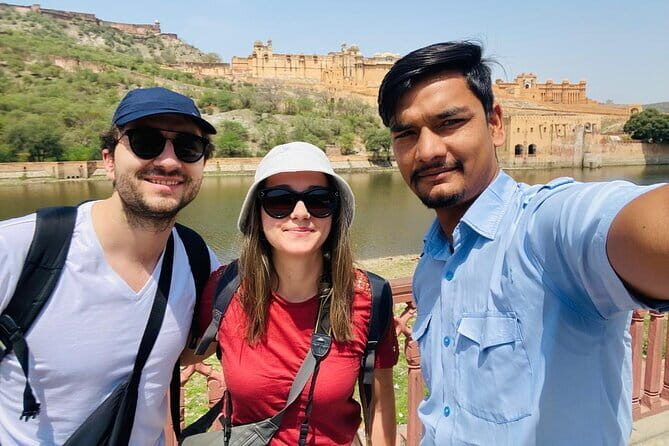
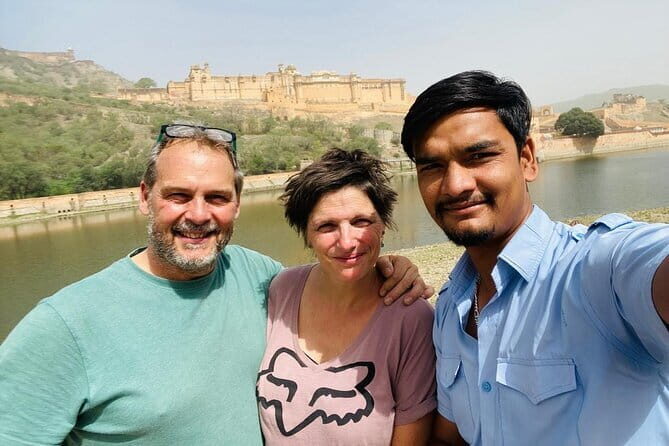
Amer is about 11 km from Jaipur, and the tour gives you around 2 hours to explore the old town area. This is where Jaipur stops feeling like a list and starts feeling like daily life—streets, heritage vibes, and the sense that the fort zone isn’t isolated from everyone else’s routine.
You also pick up context for why other Amer-linked stops fit here, like the temple near Amer Fort. The short duration of some other stops makes Amer time feel more intentional.
Admission is listed as free for this specific segment in your route, but Amer Fort itself isn’t listed in the stop details you provided. So you’ll likely be focused on the old-town experience and viewpoints, not necessarily a full fort ticketed visit.
Jal Mahal: the palace on the water’s edge
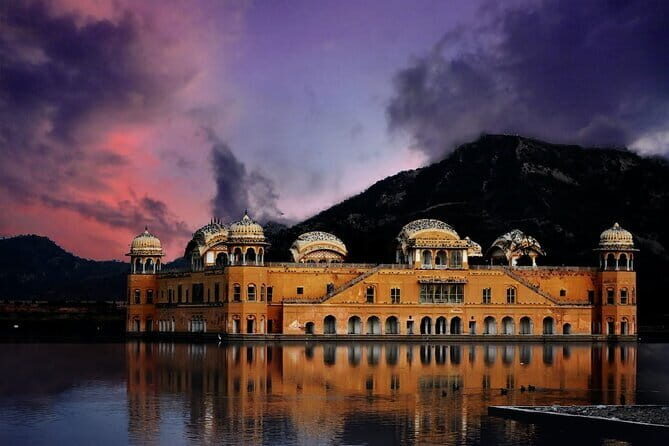
Jal Mahal is one of Jaipur’s most photographed scenes—the palace sits in the middle of Man Sagar Lake. In person, the quiet of the water changes the mood from the earlier palace stops.
You only have 15 minutes here, but that’s enough time to notice the architecture’s relationship to the lake and catch a few good angles. It’s also listed as free, which helps keep costs controlled.
The catch: because you don’t get long here, you’ll want to plan your photo priorities. If you’re hoping for a long, slow read of the views, this might feel short. If you’re more interested in seeing it and moving on to sunset timing, you’ll probably like the pace.
Galtaji Temple complex and the Sun Mandir feel
To round the day, the route includes Galtaji Temple, specifically mentioning the Sun Mandir on a hill within the complex. This part is dedicated to the Sun God, and it’s described as serene and sacred.
You get about 30 minutes, which is the right length for a short walk and a calm pause without dragging the whole schedule. This stop also pairs naturally with sunset. When the light changes, hilltop temples often feel extra atmospheric.
Admission is listed as free for this segment. Still, expect the area to involve some walking and stairs, so wear shoes that work on uneven ground.
How pickup, private transport, and guides shape your day
This tour is private, and that’s a practical advantage in Jaipur. You get hotel/airport/railway station pickup and drop-off, plus a private AC car. In a city where traffic and distances can mess with timing, having a driver who stays with you matters.
Your tour guide role depends on what you select. The description says an English-speaking driver and guide, and the included list notes professional tour guide (if option selected). Either way, the goal is clear: you’re supposed to understand what you’re seeing, not just stand and look.
Also included: bottled water. That’s a small line item, but it’s the difference between a day that feels manageable and a day that turns into a heat struggle.
Who this tour suits best
This is a great fit if you want a high-efficiency Jaipur day without feeling like you’re hopping from one random location to another. It also works well if you like architecture and you’d rather have context than a self-guided scavenger hunt.
It may be less ideal if you want deep time in just one site. Some of the stops are short by design. You’ll see highlights, not do a full-hour-by-hour deep dive at every location.
If you’re traveling as a small group and you care about comfort—AC car, pickup/drop, and an English guide option—this tour’s structure matches your needs.
Should you book this Jaipur City Tour with Sunset?
I’d book it if you want an organized day that covers Jaipur’s best-known sights, adds a flower market stop for real local texture, and includes a sunset finish. The value is strongest when you compare what’s included (pickup/drop, water, transport, guide option) against the fact you’re also visiting major landmarks across different parts of the city.
Skip or at least confirm details first if you hate paying for admissions after you arrive. Since multiple stops list tickets as not included, your final cost could rise depending on your selected package.
If you’re flexible and you like a “see a lot, learn a lot, stay comfortable” style of day, this one is a strong choice.
FAQ
How long is the Jaipur city tour?
It’s listed as about 8 hours.
Do you get pickup and drop-off?
Yes. Hotel/airport/railway station pickup and drop-off are included.
Is this tour private?
Yes. It’s described as private, with only your group participating.
Does the tour include bottled water?
Yes. Bottled water is included.
Are monument entry tickets included?
It depends on the option you select. The included list says expert guide and monument tickets (if option selected), while several stops list admission tickets as not included.
What sights are on the itinerary?
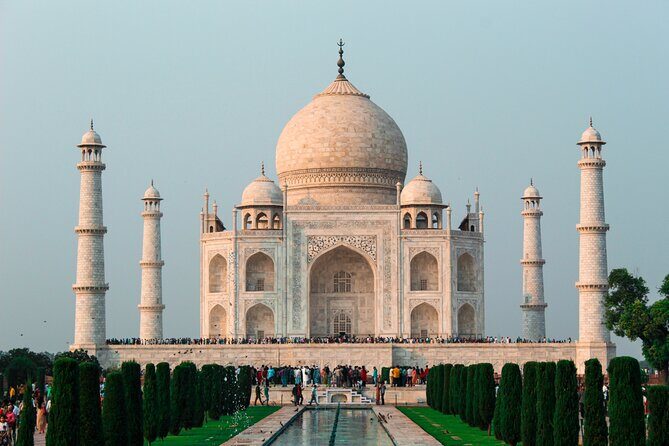
The stops listed are Hawa Mahal, Jantar Mantar, City Palace, Royal Gaitor Tumbas, Panna Meena ka Kund, Jagat Shiromani Ji Temple, Amer, Jal Mahal, and Galtaji Temple.
Are any stops free?
Yes. The itinerary marks Panna Meena ka Kund as free, Jagat Shiromani Ji Temple as free, Jal Mahal as free, and Galtaji Temple as free.
Is meals included?
No. Meals are not included.
What’s the cancellation rule?
Cancellation is free up to 24 hours before the experience start time for a full refund.