REVIEW · NEW DELHI
From Delhi: 2 Nights 3 Days Golden Triangle Delhi, Agra, Jaipur Tour
Book on Viator →Operated by Hello India Tour · Bookable on Viator
Delhi to Agra to Jaipur moves fast, but well. You’re set up with pickup and an air-conditioned vehicle, and you’ll hit the big-name sights with a guide who helps you connect the landmarks instead of just pointing. It’s a classic first-timer route, built around Delhi’s major Mughal-era monuments, Agra’s royal showstoppers, and Jaipur’s Rajput-era architecture.
I especially like that the tour can include monument entry tickets (if you select that option) and hotel breakfast (if selected). That matters because it reduces the small chaos of paying at the gate in busy places, and it keeps the day moving. One thing to consider: this itinerary is packed into three days, so you may feel some stops are a bit time-limited, and lunch and dinner aren’t included, meaning your day budget needs a plan.
In This Review
- Key Points That Make This Golden Triangle Route Work
- What You’re Paying For: Transport, Guide, and the Ticket Options
- Day 1 in Delhi: Jama Masjid, Humayun’s Tomb, Qutub Minar, and the Calm Breaks
- Old Delhi Market Time: Chandni Chowk Without the Headache
- Day 2 in Agra: Taj Mahal First, Then Forts and the Baby Taj
- Day 3 in Jaipur: Amber Fort to Hawa Mahal in One Day
- Guides and Review Highlights: Photo Help and Clear Explanations
- Timing, Crowds, and How to Keep This From Feeling Like a Race
- Is the Price Good Value for This Golden Triangle Loop?
- Who Should Book This Tour, and Who Might Want Something Else?
- Should You Book This Delhi to Agra to Jaipur Tour?
- FAQ
- How long is the Delhi, Agra, Jaipur Golden Triangle tour?
- What’s included in the price?
- Are monument entry tickets included?
- Are meals included?
- Do you get pickup and city-to-city transfers?
- Is this a private tour?
- What is the cancellation policy?
Key Points That Make This Golden Triangle Route Work
- Tight planning across three cities with car transfers that reduce stress
- Delhi’s mix of faith and landmarks, from Jama Masjid to Gurudwara Bangla Sahib and Lotus Temple
- Agra highlights that go beyond only Taj Mahal, including Agra Fort and Itmad-ud-Daula (the so-called Baby Taj)
- Jaipur icons in a single sweep, including Amber Fort, City Palace, Jantar Mantar, and Hawa Mahal
- Guide quality shows up in the reviews, including named guides like Javed Khan, Shaan, Basudev, Dilip Kumar, Naresh, and Kaif
What You’re Paying For: Transport, Guide, and the Ticket Options
At $280.86 per person, you’re not just buying a list of monuments. You’re buying a system: air-conditioned vehicle, a tour guide, and the practical add-ons like parking and fuel surcharges. For many people, that’s the real value of a Golden Triangle tour—less time figuring out logistics, more time seeing.
A big detail is the option-based inclusions. You may have hotel accommodation with breakfast depending on what you choose, and monument entry tickets may also be included depending on the option selected. Before you book, I’d confirm exactly what’s covered so you can compare like-for-like with other tours.
Also note what’s not included: lunch and dinner are not part of the price, and tips aren’t included. In cities like these, that usually means your total cost depends heavily on where you choose to eat, not just the tour fare.
A few more New Delhi tours and experiences worth a look



Day 1 in Delhi: Jama Masjid, Humayun’s Tomb, Qutub Minar, and the Calm Breaks
Delhi on this route is a full-on sightseeing day, but it’s not only stone monuments. It starts with Jama Masjid, one of the largest mosques in India, built by Emperor Shah Jahan between 1650 and 1656. The tour gives you about an hour here, and if you like understanding scale, this is a great start. You’ll also get the story context: the construction cost is described as one million rupees, which helps you appreciate why it was meant to be monumental.
Next comes Chandni Chowk (Moonlight Square) in Old Delhi. You get around an hour, and admission is free. This stop is for the senses: narrow lanes, active street life, and market energy near the Old Delhi Railway Station. You won’t be doing a full shopping marathon, but it’s the right kind of pause after a big religious complex—different pace, different visuals.
Then you pivot back into Mughal-era grandeur with Humayun’s Tomb. You’ll spend about an hour, and the tour highlights that it was commissioned by Humayun’s first wife and chief consort, Empress Bega Begum. This is a good place for your guide to explain the Mughal design logic, because the gardens and symmetry help you see why later monuments in India follow similar patterns.
After that: Qutub Minar, described as the tallest monument in Delhi for many centuries and one of the most visited sites in the city. It’s another included-ticket stop with around an hour allocated. If you’re the type who likes photos with real architectural lines, this is one of the easier wins of the day.
One of my favorite parts of this Day 1 schedule is that it includes two stops that slow you down. Gurudwara Bangla Sahib includes the free kitchen, and the tour notes that it serves around 50,000 meals every day. Even if you don’t eat, the idea of a site tied to daily service changes how you view your surroundings. Not far from that is the Lotus Temple, known for its flowerlike shape made of 27 marble-clad “pedals,” arranged in clusters of three to form nine sides. It’s included and gives you a quiet reset from crowds.
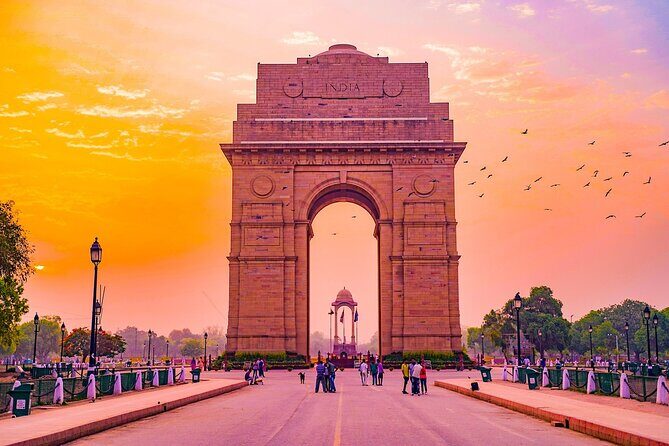
You also stop at India Gate, a memorial for 84,000 soldiers of the British Indian Army who lost their lives between 1914 and 1921 in the First World War in France. It’s a short moment of reflection in the middle of a packed day.
Then the day ends with the car transfer to Agra for your first night. This matters: you’re not breaking your travel rhythm with train schedules or last-minute station fixes. You simply drive, rest, and do the next city’s highlights the following day.
Old Delhi Market Time: Chandni Chowk Without the Headache
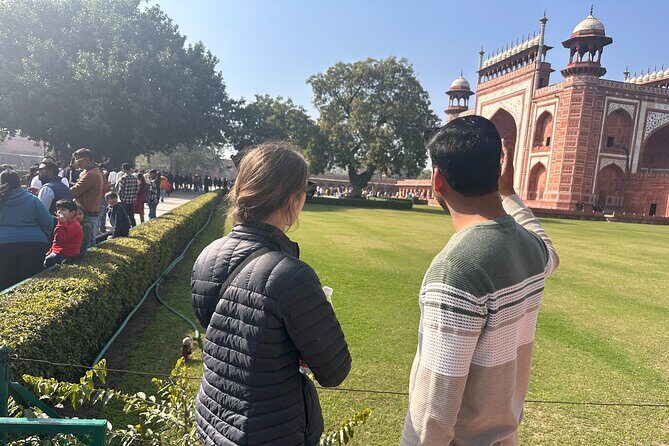
Chandni Chowk can overwhelm you if you treat it like a museum. This tour gives it a timed slot—around one hour—which is honestly the right way to handle Old Delhi markets. You get a feel for the place, but you’re not trapped for hours negotiating every corner.
I also like that the stop is positioned near the Old Delhi Railway Station. It means you’re not going far off the route for this portion. You’ll still want to keep your expectations practical: this isn’t a guided shopping expedition, and the main value is seeing how people live and buy things right where the history is layered.
If you do want to buy something, do it with a simple mindset: carry small cash, check prices, and don’t plan on big purchases during the first stop of the day. You can always choose souvenirs later when you’re not rushing between major sites.
Day 2 in Agra: Taj Mahal First, Then Forts and the Baby Taj
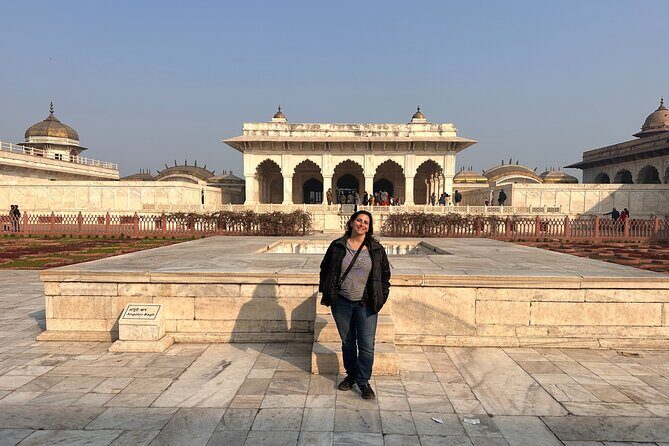
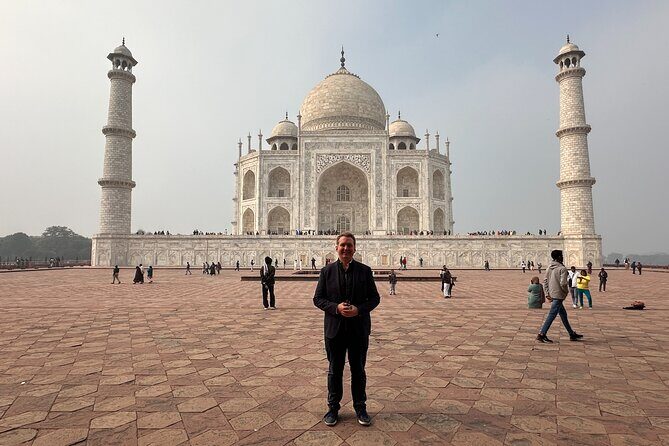
Agra is where the tour earns its reputation. You start with Taj Mahal, described as an ivory-white marble tomb on the south bank of the Yamuna. The tour lists the dates 1631 to 1653 and credits Shah Jahan as the ruler behind it. You’ll have about two hours here, and this is long enough to see more than just the perfect postcard view.
Here’s the practical value of having a guide at the Taj: you’ll be able to shift from awe to understanding. You’ll likely notice how sight lines, symmetry, and the setting around the Yamuna shape the experience. If you only walk in and out without explanation, you can miss why the building feels so controlled and intentional.
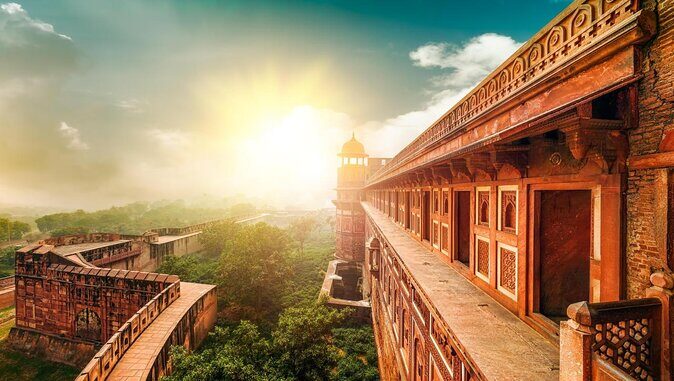
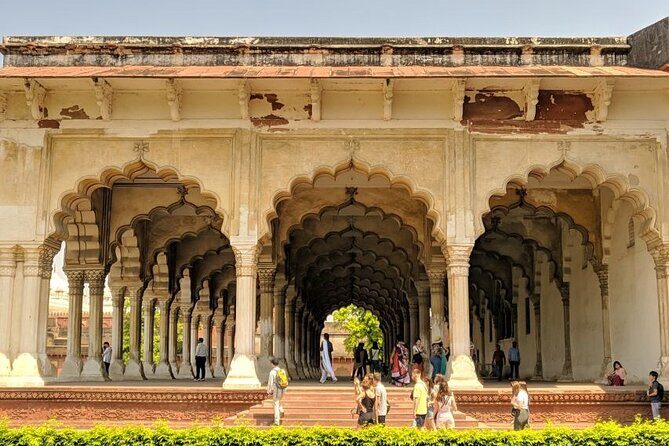
Next is Agra Fort, where you get about an hour. The tour description frames it as a Mughal royal residence until 1638, when the capital shifted to Delhi, and it also mentions British capture later on. This stop helps you balance the story: Taj Mahal is about love and legacy, while Agra Fort shows the power structure around it.
Then comes Itmad-ud-Daula, often called the Baby Taj. The tour describes it as a Mughal mausoleum in Agra and notes that it’s sometimes described as a “jewel box.” You get around 45 minutes, which is perfect for a site that can feel easy to rush if you only have a quick glance.
This trio—Taj Mahal, Agra Fort, Itmad-ud-Daula—is strong because it gives you different textures of Mughal architecture. Taj is the headline, Fort adds scale and political context, and Baby Taj adds refinement.
After Agra, the tour heads to Jaipur for your overnight stay. That car transfer is part of what makes this itinerary workable in only three days. You’re not paying with time or getting stuck waiting between separate tour operators.
Day 3 in Jaipur: Amber Fort to Hawa Mahal in One Day
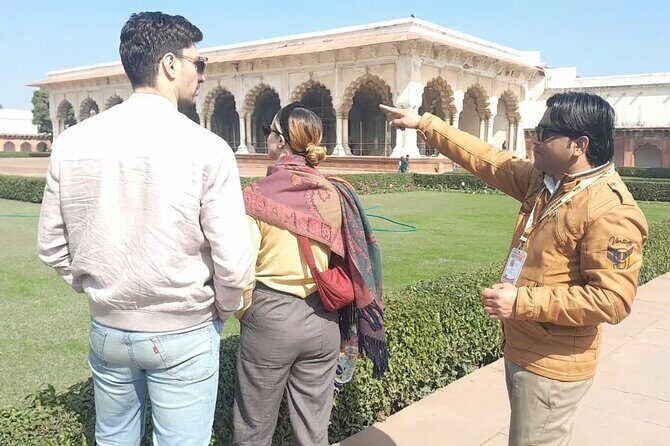
Jaipur is where the route shifts from Mughal to Rajput-era style and town planning. The day starts at Amber Fort (Amer Fort), located in Amber about 11 kilometers from Jaipur. You’ll have about two hours, and admission is included. This is a great starting anchor because it sets the visual language for the rest of the city: forts built for defense but designed to impress.
Then you get a short stop at Jal Mahal, a palace in the middle of Man Sagar Lake. The description says it was originally constructed in 1699 and later renovated. You only have about 15 minutes allocated here, so I’d treat it like a quick perspective break—get the lake-and-palace view, grab photos, move on.
Next up: City Palace of Jaipur. The tour describes it as established when Jaipur was founded, by Maharaja Sawai Jai Singh II, who moved his court from Amber in 1727. You’ll spend around two hours here with included entry. This is one of the best stops for slowing down and understanding the city’s role as a royal capital. If you enjoy places where architecture connects to how ruling families organized daily life, this is a key one.
After City Palace comes Jantar Mantar, a collection of astronomical instruments built by Rajput king Sawai Jai Singh, described as completed in 1734. You’ll have about 45 minutes. The practical advantage of a stop like this is that it changes your idea of what “sightseeing” means. It’s not only about looking pretty; it’s about measuring the sky in a pre-modern way.
Then comes Hawa Mahal (Palace of Wind). The tour notes the beehive design and explains the intention: to let royal ladies observe street life below. You’ll have 30 minutes, and it’s one of the easiest places to enjoy even if you’re tired. You can understand it at a glance, especially if your guide points out the window rhythm and how it functions socially.
Finally, you return to New Delhi for drop-off. The tour keeps the end of the trip clean: you don’t need to arrange your own intercity ride at the last minute.





Guides and Review Highlights: Photo Help and Clear Explanations
The star of a good Golden Triangle tour is often the guide, not the itinerary. The reviews linked to this experience consistently praise people by name and mention things like caring attention and careful explanations. Javed Khan shows up in feedback tied to Taj Mahal, with people describing the day as wonderful and the guidance as caring.
Shaan gets mentioned in Agra-related praise, including help with great photos and a warm approach. Basudev, Dilip Kumar, and Naresh are named for different days, and one review points out that the guides spoke Japanese well and explained things carefully. Kaif is also mentioned as attentive and helpful when needed.
One small caution from the review record: language support isn’t guaranteed to match every request. One note says a guide spoke Spanish rather than Portuguese. In practical terms, if language matching is important for you, I’d confirm what languages the guide can support when you book.
Still, the pattern is clear: the reviews repeatedly connect their satisfaction to guide attentiveness and learning without feeling overwhelmed.
Timing, Crowds, and How to Keep This From Feeling Like a Race
This route moves. That’s the nature of a Golden Triangle in three days. The upside is that you see the big icons without building your own itinerary. The downside is that you need to travel smart.
Here’s how I’d plan for it:
- Wear comfortable shoes. You’ll do a lot of walking across major sites.
- Bring water and something small to snack on. Lunch and dinner aren’t included, but you’ll still need energy between stops.
- Keep your day bag light. Market streets and fort stairways are not where you want bulky luggage.
Photo-wise, the tour gives you multiple “anchor” stops like Taj Mahal and Qutub Minar, plus shorter timed moments like Jal Mahal and Hawa Mahal. Don’t spend all your energy trying to get every possible angle. Instead, prioritize one or two “must get” shots per site, then focus on enjoying the place.
Also, remember that this day is built around included tickets and guided timing. If you want maximum flexibility, you may feel slightly constrained at stops with fixed time allocations. If you’re okay with that tradeoff, this tour is a solid way to see a lot without the hassle.
Is the Price Good Value for This Golden Triangle Loop?
$280.86 per person can be a good deal if you select the options that include hotel breakfast and monument entries. When that’s the case, you’re getting a bundle: transport, guide time, and key admission costs, plus the practical add-ons like parking and fuel surcharges.
The value drops a bit if you end up paying for many entries yourself and you don’t have breakfast included. Since lunch and dinner are always not included, your final total cost will depend on how you handle meals on your own.
So I’d treat this like a budget decision:
- If you want help paying for admissions and you like the included structure, this price looks more attractive.
- If you already have strong preferences for where you eat and which entrances you use, you might want to compare options carefully.
Who Should Book This Tour, and Who Might Want Something Else?
This tour fits best if you:
- want a first Golden Triangle experience with major sights in three days
- value a guided route instead of figuring out transport between cities
- like seeing multiple sides of each city, not only one monument
It might be less ideal if you:
- hate time limits and want long, slow stays
- want total control over meals and pacing
- are looking for an ultra-flexible itinerary with lots of free time
If you’re the type who likes action and wants to leave with a clear set of memories, this route is a strong match.
Should You Book This Delhi to Agra to Jaipur Tour?
I’d book this if you want a well-organized Golden Triangle with pickup, air-conditioned rides, and a guide who helps the big sights make sense. The itinerary hits the recognizable icons—Taj Mahal, Agra Fort, Amber Fort, City Palace, and Hawa Mahal—while still adding thoughtful variety like Gurudwara Bangla Sahib’s daily kitchen and Lotus Temple’s distinct architecture.
Choose it with eyes open if you’re sensitive to packed schedules. You’ll get a lot, but not endless time. If you also budget for lunch and dinner from the start, you’ll feel much better about the overall cost.
FAQ
How long is the Delhi, Agra, Jaipur Golden Triangle tour?
It’s a 3-day tour with 2 nights, running approximately 3 days.
What’s included in the price?
The tour includes all fees and taxes, an air-conditioned vehicle, a tour guide, and hotel accommodation with breakfast if that option is selected. It can also include monument entry tickets if the option is selected, plus parking and fuel surcharges.
Are monument entry tickets included?
They are included only if you select the option for monument entry tickets.
Are meals included?
Lunch and dinner are not included. Breakfast is included only if you choose the hotel option.
Do you get pickup and city-to-city transfers?
Pickup is offered, and you’ll be transferred by car between Delhi, Agra, and Jaipur, with drop-off back in New Delhi at the end.
Is this a private tour?
Yes. It’s described as a private tour/activity where only your group participates.
What is the cancellation policy?
You can cancel for free up to 24 hours in advance for a full refund. If you cancel less than 24 hours before the start time, the amount paid is not refunded.