REVIEW · CHENNAI
Exploring Georgetown: A Heritage Walking Tour of Chennai
Book on Viator →Operated by Wonder tours · Bookable on Viator
Georgetown has a way of feeling real fast. This heritage walk takes you through Chennai’s older trading streets, from wholesale bazaars to landmark buildings that explain why this neighborhood looks the way it does today.
I especially like the market-first approach, where you see how trade works in Georgetown instead of just reading about it. I also like the mix of everyday stalls with big architecture, from the Indo-Saracenic look of the Madras High Court to the Armenian Church built by a community shaped by commerce.
One thing to watch: meeting points and market opening times can be a little tricky in this area. If you’re starting early, some shops may not be fully ready yet, so you’ll want to confirm the exact spot your guide is using that day.
In This Review
- Key things to know before you go
- Georgetown’s Black Town roots: why this walk feels different
- Price and logistics: what you’re really paying for
- Kotwal Chavadi Market: the best place to start trading
- Madras High Court: architecture you can actually study
- Armenian Church: trade stories behind the walls
- Dare House #234: a quick hit of Parry’s Art Deco legacy
- How the 2.5-hour pacing works in real life
- What to do before you go (so it feels smooth)
- Who this tour suits best
- Should you book this Georgetown heritage walking tour?
- FAQ
- What is the duration of the Georgetown heritage walking tour?
- Where does the tour start?
- Does the tour include pickup?
- What are the main stops during the walk?
- Is the price per person and what does it include?
- Are admission tickets included for the stops?
- Is this a private tour?
- What is the cancellation policy?
Key things to know before you go
- Two-and-a-half hours of walking that fits a normal morning or afternoon slot without turning into a marathon
- Kotwal Chavadi Market as the first stop, giving you context for everything else you’ll see
- Madras High Court as a major photo and architecture moment, with admission included
- Armenian Church where the story ties to trade and refugee-era merchants
- Dare House #234 for a quick hit of Art Deco and Parry’s corporate roots
- All-in pricing details: guide, bottled water, snacks, and entry fees are included in the $29 price
Georgetown’s Black Town roots: why this walk feels different
Georgetown is not a museum neighborhood. It’s an active trade zone with small winding lanes, warehouses, covered wholesale markets, and street-side stalls that keep moving all day.
What makes this area click is the name history. It began as a settlement known as Black Town after the founding of Fort St. George in the late 1600s. Local traders moved in to do business with the fort, and as the area changed, so did the layout—parts of Black Town were flattened in the 1700s to create an open space outside the fort. Later, that open area became the site for the grand Madras High Court building in the mid 1800s. Then, in 1910, when King George visited India, Black Town was renamed Georgetown. Today, the neighborhood still sells everything from bangles and fabrics to fruits, vegetables, spices, stationery, and jewellery.
On this kind of walking tour, you don’t just pass buildings—you understand why they sit where they do. That’s the difference between a route and a story.
You can also read our reviews of more walking tours in Chennai


Price and logistics: what you’re really paying for
At $29 per person for about 2 hours 30 minutes, you’re not only buying a guide. You’re buying a guided route through an area where you could easily spend time “trying to figure it out.”
Here’s what your money includes:
- A guide (that matters more in Georgetown than in many cities)
- Bottled water and snacks
- Admission included for the stops with entry fees
- A mobile ticket
- Pickup offered, plus group discounts if you’re going with friends
The private format is also a plus. This is set up as a private experience for only your group, which usually means you can ask more direct questions without waiting your turn.
The only real consideration is timing. One past issue involved the meeting point being changed and shops not being open as expected. So I’d treat this tour like any market experience: confirm the meeting spot the day of, and build in flexibility.
Kotwal Chavadi Market: the best place to start trading
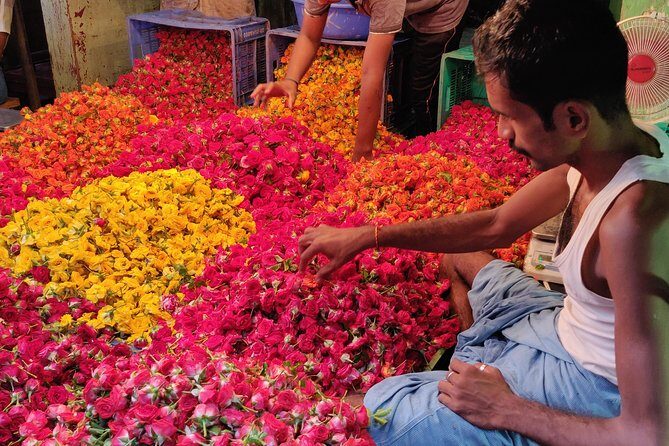
Most heritage walks start with a landmark and work toward context. This one flips it, and that’s smart. Kotwal Chavadi Market is where Georgetown’s trading rhythm becomes obvious.
This stop is about an hour long, giving you enough time to see how the market works without rushing. The idea is simple: you start with the living marketplace—wholesale-style buying, retail counters, and street stalls—and then you move on to the buildings that shaped (and were shaped by) that business world.
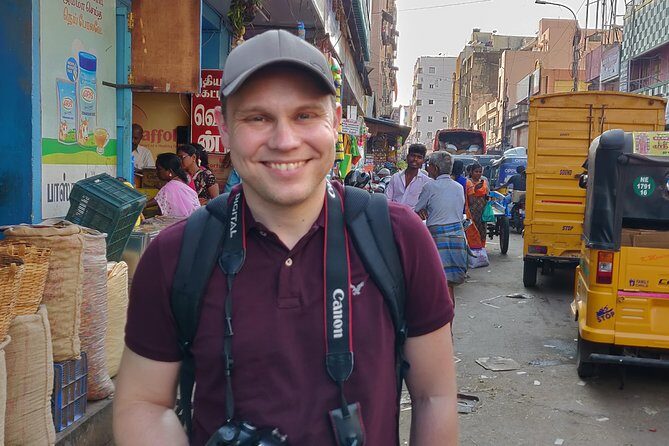
You’ll probably notice how the area feels practical. You’re not looking at empty heritage façades. You’re looking at a commercial neighborhood where people come to buy and sell a huge range of goods—things like fabrics, spices, jewellery, stationery, and produce. In a place like this, a guide helps you connect what you see on the ground with the historical “why” behind Georgetown’s streets.
One small caution: markets can run on their own schedules. If you’re early, you may see partial activity. That doesn’t ruin the tour, but it does mean you should keep your expectations flexible and come ready to watch what’s happening right now.
Madras High Court: architecture you can actually study
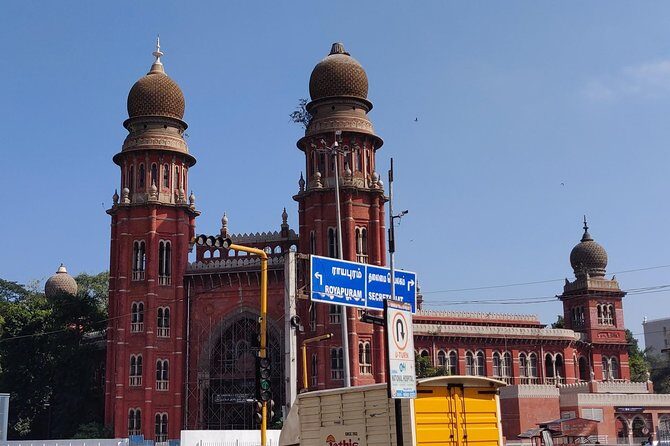
After the market noise, the Madras High Court gives you a calmer kind of attention—still dramatic, but in a different way. This building, originally established in 1862 by decree from Queen Victoria, is one of Chennai’s iconic structures.
What you’re looking for here is the architecture: it’s described as Indo-Saracenic, meaning it blends different design influences into one statement. The tour gives you about 30 minutes at the courthouse, which is just enough time to focus on the exterior character and take in details without turning the stop into a lecture.
I like this stop because it ties the neighborhood’s commerce and governance together. Georgetown’s history is tied to Fort St. George and the open area outside it. Later, that open space became the courthouse site. When you stand there, it’s easier to picture how the city organized itself around trade and authority.
If you’re the type who likes buildings more than plaques, you’ll get a lot out of this section.
Armenian Church: trade stories behind the walls
Georgetown has more than one layer of merchant history, and the Armenian Church stop is where the story expands beyond local business. The walk heads down the historic street where Armenian refugees established trade in silk, spices, and gems over 300 years ago.
The focus here is on atmosphere and context: this isn’t just a church visit. It’s a reminder that trade routes and migration patterns shaped Chennai’s neighborhoods, just like in many port cities.
You get around 30 minutes, which is enough to take your time, absorb the setting, and connect the dots between the market energy you just saw and the community presence behind a specific landmark.
A practical note: church settings often ask for respectful behaviour, and time inside can feel more structured than a street stall. If you like calm pauses in busy areas, this stop balances the day nicely.
You can also read our reviews of more historical tours in Chennai



Dare House #234: a quick hit of Parry’s Art Deco legacy

Next comes Dare House #234, a shorter stop of about 15 minutes, but it’s a meaningful one if you care about how old business evolved visually.
This is an iconic Art Deco building that once served as headquarters for Parry’s company, founded by Thomas Parry, a Welshman and one of Chennai’s first free merchants. In a neighborhood built around trade streets and wholesale markets, it makes sense to see how that commerce created its own corporate footprint—and how style followed status.
Because the stop is brief, you’ll want to use it intentionally: look at the building’s form, note the Art Deco character, and treat this as a snapshot rather than a long sit-down.
I like these short architectural pauses because they break the walking rhythm and give your brain a new “angle” on the same theme.
How the 2.5-hour pacing works in real life
This walk runs about 2 hours 30 minutes, and the stop lengths are balanced:
- About 1 hour at the first market stop
- 30 minutes at the High Court
- 30 minutes at the Armenian Church
- 15 minutes at Dare House #234
That structure matters. If everything were longer, the market would blur and the landmarks would feel rushed. If everything were shorter, you’d miss the market context that makes the architecture stops land.
For you, it also means you can fit this into a normal day without needing a full half-day commitment. You’ll leave with enough familiarity to navigate Georgetown’s streets later, even if you don’t plan to shop.
One more practical detail: the tour is designed near public transportation. That’s helpful in Chennai, where routes can shift and you don’t want your entire day tied to one fixed plan.
What to do before you go (so it feels smooth)
Because Georgetown is a working commercial area, a little planning helps a lot. Here are practical things that match what’s known about the tour experience:
- Confirm the exact meeting spot the day of. The listed start point is C1 Flower Bazaar Police Station (Rattan Bazaar Rd, George Town), but past confusion suggests a day-of adjustment can happen.
- Expect some stalls to be slower if you start early. The area is active, but not every shopfront may be ready right on schedule.
- Wear comfortable shoes for uneven lanes and market surfaces. This is a walking tour through lanes that aren’t designed for slow sightseeing carts.
If you want to buy things, bring a plan. The tour includes water and snacks, but it doesn’t include purchases. So decide what matters to you—spices, fabric, stationery, jewellery—then treat shopping like a separate activity after the tour builds your bearings.
Who this tour suits best
This experience is best for you if you:
- Like markets, but want them explained in plain language
- Want a neighborhood walk that connects commerce, migration, and architecture
- Prefer a route with set stops and included admissions rather than DIY wandering
It’s also a solid choice if you’re travelling with a group and can use the group discounts, since the tour is structured as a private experience for your group.
If you’re only interested in major monuments with long viewing times, you might find the shorter architectural stop at Dare House #234 a bit quick. But for most people, the mix works.
Should you book this Georgetown heritage walking tour?
Yes, if you want a market-to-landmark tour that makes Georgetown’s name and street layout feel logical. The price is reasonable for what’s included—guide time, snacks and water, and admission fees—and the pacing is built to keep you moving without feeling frantic.
I’d book it with one mindset: treat it as a working neighborhood experience, not a perfectly staged sightseeing circuit. Confirm the meeting point close to departure, keep an eye on how open stalls are, and you’ll get a lot more out of the day.
FAQ
What is the duration of the Georgetown heritage walking tour?
It runs for about 2 hours 30 minutes (approximately).
Where does the tour start?
The start point is C1 Flower Bazaar Police Station, on Rattan Bazaar Rd, George Town, Chennai, Tamil Nadu 600001.
Does the tour include pickup?
Pickup is offered.
What are the main stops during the walk?
The walk includes Kotwal Chavadi Market, Madras High Court, the Armenian Church, and Dare House #234.
Is the price per person and what does it include?
The price is $29.00 per person and includes a guide, bottled water, snacks, all fees and taxes, and admission where it applies.
Are admission tickets included for the stops?
Yes, admission ticket(s) are included for the listed stops that require entry.
Is this a private tour?
Yes. It’s private, and only your group will participate.
What is the cancellation policy?
You can cancel for a full refund up to 24 hours in advance. If you cancel less than 24 hours before the start time, the amount paid is not refunded.