REVIEW · NEW DELHI
Evening Old Delhi Food Walk
Book on Viator →Operated by SpinMonkey Cycle tour · Bookable on Viator
Old Delhi at night has a different rhythm. This 4-hour food walk sends you through Puraani Dilli in the evening, when shops are awake and flavors get louder. I especially like how the tour builds from classic sweets to deeper savory dishes, with an eye on dietary restrictions.
Two things I really loved were the pace and the guidance. The plan hits big crowd areas but still feels readable, and the guide I met, Adil, was a true gentleman—sharing the how and why behind what you’re eating, plus Old Delhi context that makes the streets feel less chaotic.
One thing to consider: this is a food-heavy route with spicy-sweet stops packed closely together. If you’re sensitive to heat or don’t do well with lots of sugar, tell your guide early so they can steer you toward the most comfortable options.
In This Review
- Key highlights you will actually feel on the walk
- Why an Evening Old Delhi Food Walk Works Better Than Daytime
- Meeting at Chawri Bazaar: Easy Start, Real Streets, No Fuss
- Delhi’s Sweet Opening: Homemade Ice Cream and Bedmi Poori
- Chai, Jalebi, and the Snack Rhythm of the Lanes
- The Sikh Temple Community Kitchen: Scale, Respect, and a Different Kind of Eating
- Asia’s Largest Spice Market and Sunset Views You’ll Actually Remember
- Halwa and Nihari: The Sweet Balance, Then the Slow-Cooked Finish
- Price and Value: What $70 Buys You in Real Life
- Smart Tips So You Don’t Miss the Best Parts
- Should You Book This Evening Old Delhi Food Walk?
- FAQ
- How long is the Old Delhi evening food walk?
- Where do we meet for the tour?
- How much does the tour cost?
- Is vegetarian food available?
- Can the tour accommodate dietary restrictions?
- What’s included in the price?
- What is not included?
- Does the tour run in bad weather?
- What’s the group size limit?
Key highlights you will actually feel on the walk
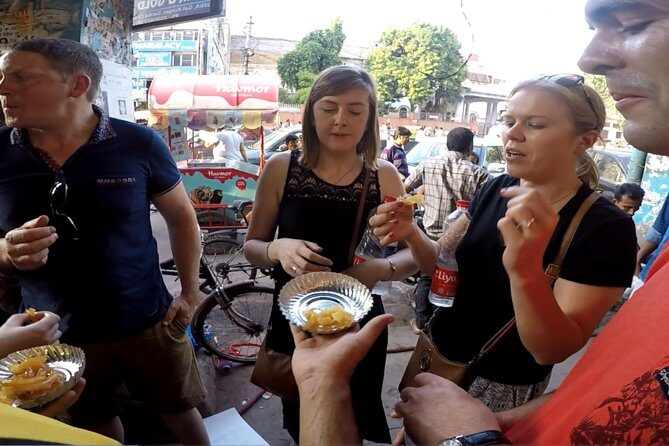
- Sweet-to-savory progression that keeps you from getting stuck eating only one type of food
- Chawri Bazaar metro meetup that makes it easy to start without hotel logistics
- Sikh temple community kitchen stop, including how large-scale daily cooking supports thousands
- Asia’s Largest spice market with a bird’s-eye view and sunset moments
- Long-cooked nihari paired with a fermented bread option, plus vegetarian alternatives
Why an Evening Old Delhi Food Walk Works Better Than Daytime
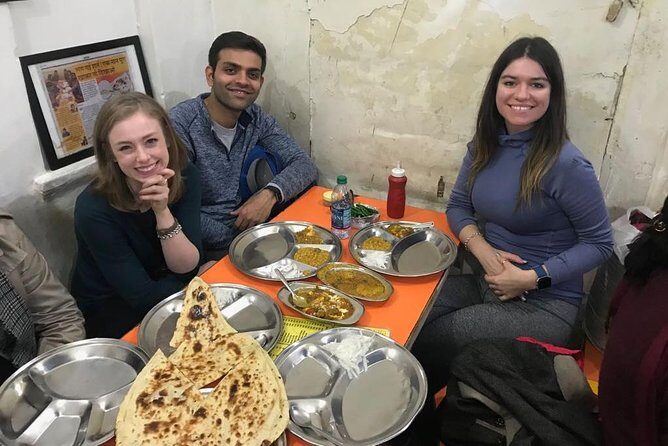
Old Delhi is busy. But in the evening, it becomes more than a set of sights—it becomes a place where food is part of daily life. You don’t just taste snacks; you watch how vendors work, how people order, and what locals reach for when they want something comforting.
I like that this walk is designed around the idea that the evening is when certain dishes and energy peak. You’ll move through narrow lanes and recognizable markets, with stops that lean classic: chai, jalebi, halwa, and nihari, plus drinks and sweets that many people miss if they only arrive for sightseeing.
Also, the tour isn’t just random street-food sampling. It’s structured so you try a spread across different regions and styles, from Delhi-style sweets to Mughal-inspired lamb, and you’ll get enough variety to understand how Old Delhi can feel like one big food map.
You can also read our reviews of more walking tours in New Delhi

Meeting at Chawri Bazaar: Easy Start, Real Streets, No Fuss
You meet at Chawri Bazaar metro station. That matters more than it sounds. When the start is clear and public, you don’t waste time figuring out local connections while hungry.
Once you’re together, your guide takes you into the lanes that feel like a maze at first glance. The group size is capped at 15, which helps the flow. You’re not getting shoved through doorways, and your guide can still answer questions as you go.
Dress code is smart casual, and the tour runs in all weather conditions. In practical terms, bring a light rain layer if storms are common during your dates, and wear shoes that can handle uneven pavement. The “moderate physical fitness” note is real—expect walking in tight spaces and some stop-and-go threading through markets.
Delhi’s Sweet Opening: Homemade Ice Cream and Bedmi Poori
The route starts on a sweet note with Delhi-style homemade ice cream. It’s a nice trick for jet-lag days too, because it gives you an easy first taste without you having to commit immediately to something heavy or spicy.
Then you move to a sweet shop known for Bedmi Poori. This is a local-style puffed bread made from wheat flour, topped with a layer of lentils, served with spiced potatoes. What makes it interesting isn’t just the flavor—it’s the balance. You get crunch and softness, plus a savory bite that’s stronger than a typical street snack.
A drawback with early savory tasting is portion speed. If you already eat breakfast late or you’re very sensitive to fried textures, pace yourself on this stop. Ask your guide for guidance on how much to take, because the tour keeps moving.
Chai, Jalebi, and the Snack Rhythm of the Lanes
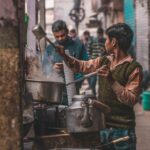
After the bread stop, you’ll hit chai—Indian tea infused with spices. The great thing about chai in Old Delhi is that it’s not just a drink; it’s a rhythm. People pause, sip, and keep talking while they decide what comes next. You’ll feel that tempo as you walk.
Next is jalebi, those deep-fried sugar-dipped swirls. Jalebi has a texture lesson baked into it: crispy edges with syrupy sweetness. It’s also a strong signal that you’re in the evening zone—this is when these stalls feel most alive.
Here’s my practical advice: if you’ve never tried jalebi, take a smaller portion first. You can always come back for more, but you can’t undo too much sugar too early if you want to enjoy later savory dishes. Tell your guide if you prefer less sweet, and they’ll shape the route to match your comfort.
The Sikh Temple Community Kitchen: Scale, Respect, and a Different Kind of Eating
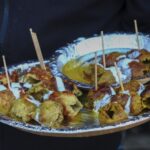
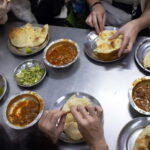
One of the most memorable stops is the community kitchen of a Sikh temple, where food for 25,000 people is cooked every day. This is not a quick photo stop. It’s a chance to see how feeding people at scale works, and how food can be service before it’s spectacle.
In a normal market situation, you experience food as transaction and taste. Here, you get a different feeling: food as routine, shared work, and hospitality. Even if you’re just there for a bite, the context changes how you think about the next dish you eat.
The tour note says vegetarian options are available. That’s helpful here because temple food tends to align with vegetarian-friendly eating. If you’re traveling with dietary limits, this kind of stop can be easier to manage than some meat-heavy street offerings.
You can also read our reviews of more food & drink experiences in New Delhi


Asia’s Largest Spice Market and Sunset Views You’ll Actually Remember
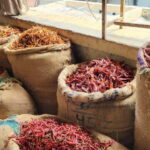
From religious kitchens to sensory overload in the best way: the route includes Asia’s Largest spice market. You’ll get a bird’s-eye view of the area and then enjoy the sunset. That combination is why this tour feels more than a snack crawl.
Spice markets can overwhelm first-timers, especially if you’re used to packaged food. But your guide helps you slow down and understand what you’re seeing and smelling. This is the point where you start to connect dishes you’ve tasted—like chai and spiced savory items—with the ingredients that make them possible.
My tip: don’t rush this segment. Even if you want to keep eating, pause and take in the moment. The sunset view gives you a visual reset so you’re not only mentally “consuming” the place.
And yes, you’ll keep eating—because Old Delhi doesn’t do a food break. After the market, you’ll try a refreshing lemonade bottled in a unique way from a shop that’s described as century old. It’s a smart palate cleanser, too, between the heavier dishes and the sweet finish that comes next.
Halwa and Nihari: The Sweet Balance, Then the Slow-Cooked Finish
To balance flavors, the tour heads to a famous food street for halwa—an Indian sweet that often tastes like comfort in spoon form. Halwa is a good bridge dish. It’s satisfying without being as aggressively sticky as some syrups, and it helps you reset before the final savory stop.
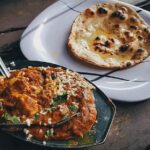
Then comes nihari, a Mughal-inspired lamb dish cooked for hours on low heat. It’s served with a fermented bread option, and vegetarian options are available. This is the part where the tour’s “value” becomes obvious: you’re not just tasting quick bites; you’re getting into slow-cooked depth.
If you’re the type who likes to understand what you eat, nihari is a great final stop. After sweets, tea, and fried snacks, the low-and-slow meat flavor feels grounded and substantial. It also works well for dinner timing, especially because the entire walk runs about 4 hours.
Consideration: if you’re vegetarian and you’re expecting a direct substitute for lamb flavor, remember the tour offers vegetarian options but not identical equivalents by default. Still, you should be able to get a satisfying final course without compromising your dietary needs.
Price and Value: What $70 Buys You in Real Life
At $70 per person, you’re paying for more than a handful of tastings. The included items listed are meaningful: food tasting, tea, other beverages, bottled water, snacks, and lunch, plus a local guide and the taxes/fees (GST is included).
Here’s how I’d judge value for your own trip. The route is about four hours and includes a sequence of distinct stops, not just one main meal and a couple small snacks. You’re also getting drinks that keep you comfortable as you sample, which matters in a busy market environment.
The small group limit (max 15) also adds value. It means you’re less likely to feel rushed or disconnected when you need guidance, especially if you have dietary restrictions. And since the tour specifically mentions adjusting to your restrictions, that’s part of what you’re paying for: fewer surprises, better matches.
If you’re on a tight schedule and still want a “real Old Delhi” experience without hunting down multiple places yourself, this price can feel fair. If you love food but hate structured tours, you might find it less flexible than DIY. For most people, the structure is exactly the point.
Smart Tips So You Don’t Miss the Best Parts
To get the best experience, think “two priorities”: pacing and communication.
First, pacing. The stops are close enough that you’ll likely feel full by the end, especially if you try everything offered. Don’t force it. Take smaller portions early and save room for the savory finish like nihari.
Second, communication. The tour says it will shape around dietary restrictions. Use that. If you’re avoiding anything specific—spice levels, vegetarian-only, or other limits—tell your guide at booking so the route can be adjusted properly.
Also, dress for movement. Smart casual is fine, but prioritize comfort. Markets can be uneven, and you’ll be walking through narrow lanes. A light layer helps if the evening air cools down or if you get sudden weather changes.
Finally, if you’re doing more than one SpinMonkey experience, this evening walk pairs nicely with a daytime activity. One review mentioned doing both a cycle tour and this evening food walk, and that pairing makes sense: the cycle tour gets you street context, and the food walk gives you flavor context.
Should You Book This Evening Old Delhi Food Walk?
I’d book it if you want an Old Delhi experience that feels food-first and guide-led, with enough structure to keep you from getting lost or missing key tastes. The highlights—Adil’s kind guidance, the temple kitchen stop feeding 25,000 daily, the spice market with a sunset view, and the slow-cooked finale of nihari—are the kind of moments that stick.
I’d think twice if you hate crowds, dislike trying many different foods back-to-back, or need a very strict diet where substitutions are complex. The tour can be shaped for restrictions, but this is still a dense walking-and-tasting route.
If you’re open to adjusting portions and telling your guide what you can comfortably eat, this is a strong value way to understand Old Delhi after dark.
FAQ
How long is the Old Delhi evening food walk?
It runs for about 4 hours.
Where do we meet for the tour?
The meeting point is Chawri Bazaar metro station in New Delhi.
How much does the tour cost?
The price is $70.00 per person.
Is vegetarian food available?
Yes, vegetarian options are available, and you should advise the provider at booking.
Can the tour accommodate dietary restrictions?
Yes. You’re asked to provide specific dietary requirements at booking so the tour can be shaped around them.
What’s included in the price?
The tour includes beverages, bottled water, lunch, tea and snacks, food tasting, and a local guide, along with taxes/fees (GST).
What is not included?
Hotel pickup and drop-off are not included.
Does the tour run in bad weather?
Yes, it operates in all weather conditions, so dress appropriately.
What’s the group size limit?
The maximum group size is 15 travelers.