REVIEW · NEW DELHI
From Delhi: Delhi, Agra and Jaipur 5-Days Golden Triangle Tour
Book on Viator →Operated by Travel With Us · Bookable on Viator
Five days, three cities, and a full-on India fix. This Golden Triangle-style trip strings together UNESCO landmarks with guided, practical sightseeing, plus the little logistical wins that make the day feel easier. I like that you move with a private car and a real plan, not a loose list of stops.
What I really like is how the core sights are handled with the right support. You get a tour guide at all sites, plus practical extras like shoe covers for the Taj Mahal and a golf cart to and from the entrance.
The other plus: Delhi gets the full treatment, including a rickshaw ride through Old Delhi, plus major stops from Jama Masjid to Humayun’s Tomb and India Gate. One consideration: most monument entry tickets are not included, so you’ll want to budget for admissions and plan for extra walking during a packed schedule.
In This Review
- Key things that make this tour work
- Golden Triangle in 5 Days: what the pace actually feels like
- Day 1 Agra: Taj Mahal first, then Agra Fort
- Taj Mahal: the built-in shortcuts you’ll appreciate
- Agra Fort: what you’ll get after the main star
- Day 2 Fatehpur Sikri to Jaipur: a “stop-and-go” heritage day
- Fatehpur Sikri: red sandstone + major Mughal landmarks
- Day 3 Jaipur icons: Amber Fort, City Palace, Hawa Mahal, and Jantar Mantar
- Amber Fort: the fort you picture when you think Jaipur
- City Palace: where you slow down a bit
- Jal Mahal, then the classic photo faces
- Day 4: back to Delhi with a full day transfer
- Day 5 Delhi: from Jama Masjid to Old Delhi lanes and major monuments
- Jama Masjid: scale first, details second
- Chandni Chowk: your quick hit of street life
- Lotus Temple: calm architecture break
- Humayun’s Tomb: Mughal garden style, UNESCO-level feel
- Agrasen Ki Baoli + Gurudwara Bangla Sahib: faith spaces with softer energy
- India Gate, President’s House views, and Raj Ghat
- Price and tickets: where the real value sits
- Practical tips that match how the tour runs
- Bring cash for monument tickets
- Wear shoes made for walking
- Use the day’s timing wisely
- Watch your dates for Friday Taj closure
- Plan for seasonal gala dinner charges
- Should you book this 5-day Golden Triangle tour?
Key things that make this tour work
- Private car for transfers between Delhi, Agra, and Jaipur, with pickup and drop-off options
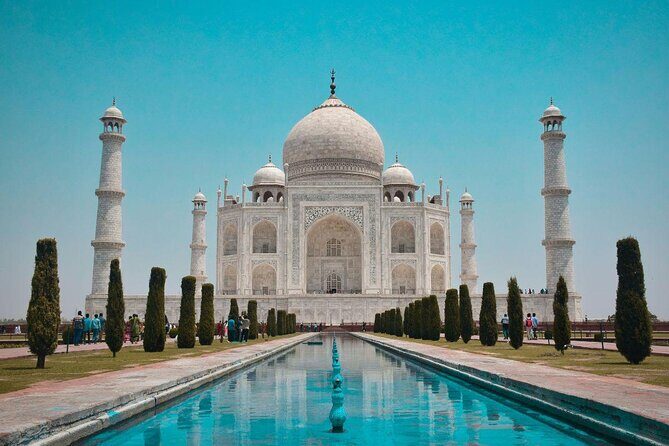
- Taj Mahal logistics handled: shoe covers plus a golf cart ride to the entrance area
- Guides at every stop, so you’re not guessing what to look at or where to go next
- Old Delhi rickshaw ride for a quick, fun contrast to temple and monument time
- Unlimited bottled water throughout the tour day
- Tight but structured timing across 5 days, with long drives on travel days
Golden Triangle in 5 Days: what the pace actually feels like
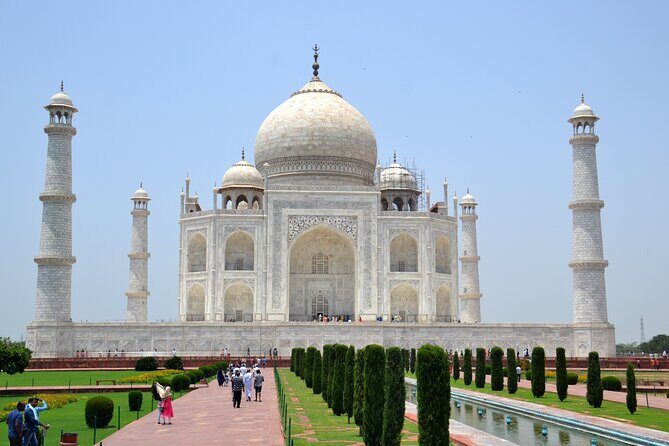
This is a classic 5-day run through Delhi, Agra, and Jaipur, which means you’ll spend a lot of your time either riding or touring. That’s not a complaint. It’s the whole point. If you want a deep taste of India’s biggest sights without stretching the trip into a week-plus, this kind of pace can be a smart trade.
The tour is set up as a private activity for your group only, and the vehicle size changes with group size. That matters because it keeps transfers comfortable instead of feeling like you’re squeezed into a bus with strangers. If you’re traveling as a couple or a small group, the payoff is real: you’re not waiting around for other people’s sightseeing delays.
That said, you’ll be on your feet some of the time. The tour notes comfortable footwear because walking is part of the deal—especially around forts, palace complexes, and the older lanes of Delhi.
You can also read our reviews of more tours and experiences in New Delhi.



Day 1 Agra: Taj Mahal first, then Agra Fort
Your trip starts with pickup in the Delhi area—Delhi Airport, or hotels in Delhi, Gurugram, Aerocity, Noida, Ghaziabad, or Faridabad. Then you head toward Agra on the expressway. It’s about a 3-hour drive, and having that covered matters because getting yourself from Delhi into Agra can eat time (and patience) if you’re doing it independently.
Taj Mahal: the built-in shortcuts you’ll appreciate
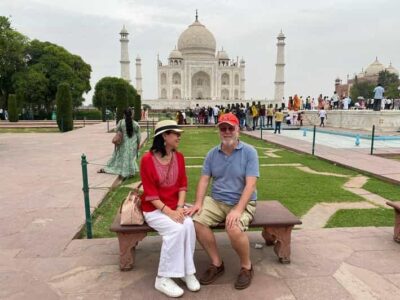
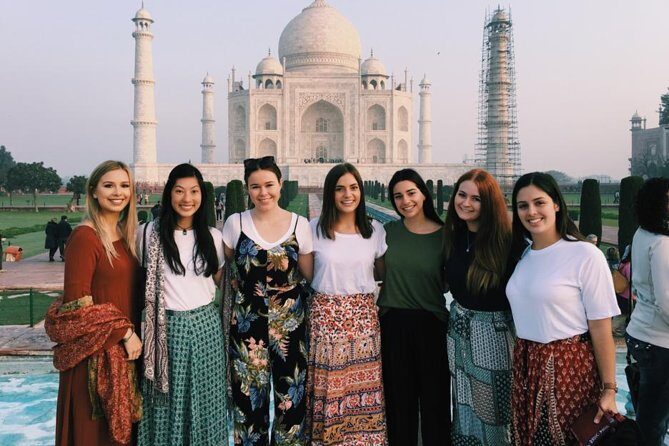
You arrive in Agra, check into your hotel, and then go straight to the Taj Mahal. Expect about 2 hours at the site. This is the kind of stop where the small details help you enjoy it more:
- You’ll have shoe covers provided.
- You also get a golf cart ride to and from the Taj entrance area.
Those are not fancy extras. They’re time savers and comfort savers. The Taj area involves walking on uneven ground in places, and cutting down the distance is a big win when you’re in your first day of a multi-city schedule.
Important practical note: the Taj Mahal is closed on Fridays, so if your dates land on a Friday, you’ll want to double-check how the operator handles that.
Agra Fort: what you’ll get after the main star
After the Taj, the next stop is Agra Fort, another UNESCO site, with around 2 hours there. The fort is a good follow-up because it broadens your view beyond the mausoleum. You get a sense of the power center that sat alongside the Mughal architecture you came to see.
No entry ticket is included for Agra Fort in the tour details, so again: budget for monument fees.
Day 2 Fatehpur Sikri to Jaipur: a “stop-and-go” heritage day
Day 2 begins after breakfast. You check out and drive from Agra to Jaipur, but not directly. You stop at Fatehpur Sikri first, with about 3 hours allocated.




Fatehpur Sikri: red sandstone + major Mughal landmarks
Fatehpur Sikri is known for its red sandstone buildings. You’ll see highlights including Buland Darwaza, Jama Masjid, Salim Chishti’s Tomb, and Diwan-E-Khas Hall. This is one of those places where having a guide helps you connect the dots—what you’re looking at, and why each structure matters.
Admission is listed as free for this stop, which is a nice value add. Still, keep your expectations realistic: 3 hours at a site like this is enough to get the feeling and key views, but not enough to treat it like a museum marathon.
Then you drive to Jaipur and check into your hotel. The tour leaves time to relax on arrival (roughly a 5-hour block is shown), which is useful on a day when you’ve already done a long heritage stop.
Day 3 Jaipur icons: Amber Fort, City Palace, Hawa Mahal, and Jantar Mantar
This day is basically your “Jaipur greatest hits,” and it’s a good one. You’ll get a morning pickup from your Jaipur hotel and start with the big fort experience.
Amber Fort: the fort you picture when you think Jaipur
Your first major stop is Amber Fort, UNESCO-listed, with about 2 hours there. It’s made of sandstone and marble and is especially known for Hindu architecture, big gates, and multiple courtyards.
Admission is not included, so plan for that. But don’t skip it. Forts are where Jaipur’s visuals lock in. If you’re the kind of traveler who remembers how a place looks more than how a schedule reads, Amber is worth your energy.
City Palace: where you slow down a bit
Next up is City Palace, about 2 hours. This is a historic complex with museums focused on art, textiles, and weapons. It’s associated with Jai Singh II, and it expanded over time—so you’re walking through layers of royal life and collecting history in physical form.
Here’s what makes this stop work: it’s not just a photo stop. If you enjoy seeing everyday objects made into cultural artifacts, City Palace can be satisfying, even if you’ve already seen other palaces.
Jal Mahal, then the classic photo faces
You’ll visit Jal Mahal, the water palace, in about 30 minutes. The time is short, but the location is the point: it’s designed to look serene and float-like over shallow water.
Then comes Hawa Mahal (Palace of Wind), around 30 minutes. This is the famous façade—long, pink, and patterned like a shell. Even if you only have a brief window, it’s one of those structures that makes sense immediately.
After that, you go to Jantar Mantar for about 2 hours. It’s listed as another UNESCO-style highlight in this route, and it’s a strong contrast to the forts and palace shapes: it’s about measurement and astronomy made visible.
Day 4: back to Delhi with a full day transfer
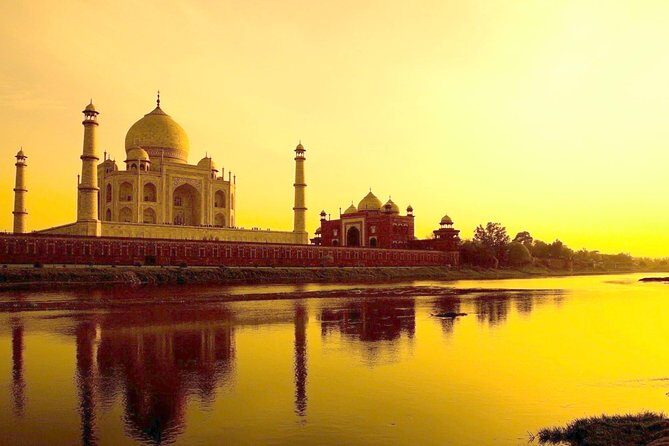
Day 4 is mostly travel. After breakfast, you check out and drive back to New Delhi, with about 6 hours of driving time shown.
This is one of the days where the private car setup becomes more than just convenience. If you’re doing this by your own planning, you might lose time to logistics. With the operator handling the transfer, you can focus on staying comfortable, resting a bit, and not turning your day into a transportation puzzle.
When you arrive in Delhi, you check into your hotel and unwind. That hotel buffer is helpful because Day 5 is packed.
Day 5 Delhi: from Jama Masjid to Old Delhi lanes and major monuments
Day 5 is your Delhi “greatest hits” day, and it’s well balanced between big monuments, religious architecture, and the city’s older trading streets.
Jama Masjid: scale first, details second
You start at Jama Masjid, one of India’s largest mosques, built by Shah Jahan. You’ll have about 2 hours here. The tour notes massive courtyards and panoramic views from minarets, which tells you what you should prioritize: get your bearings, then take in the size before you zoom in on design details.
Admission is not included for this stop, so don’t assume it’s a freebie.
Chandni Chowk: your quick hit of street life
Then you head to Chandni Chowk, with about 1 hour. This is Delhi’s historic market area—shops, and street food is part of the vibe. You don’t need an all-day shopping plan here. Think of it as a sensory reset: colors, textures, and constant movement, with your guide helping you focus on the right lanes instead of getting lost.
Lotus Temple: calm architecture break
Next is the Lotus Temple, where the tour includes about 1 hour and highlights the lotus-shaped Bahá’í design and the serene atmosphere. This is a useful breath between the harder-core heritage stops. It’s also a good place to just sit for a moment and watch how people move through the space.
Admission is listed as free for this stop in the details.
Humayun’s Tomb: Mughal garden style, UNESCO-level feel
After that, you visit Humayun’s Tomb, about 1 hour. It’s UNESCO-listed and known for Mughal architecture and its gardens. Admission is not included, but the time slot is realistic: you’ll get the main ideas without spending half a day.
Agrasen Ki Baoli + Gurudwara Bangla Sahib: faith spaces with softer energy
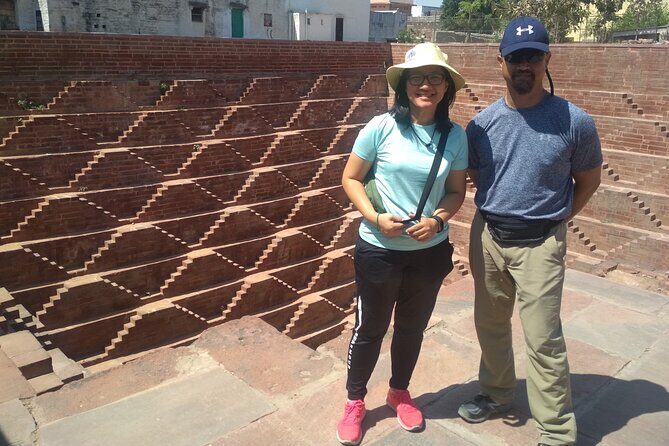
Then you go to Agrasen Ki Baoli, a historic stepwell, about 30 minutes. It’s a quiet change of pace from forts and palaces, and the stepwell format can be fascinating once you’re actually standing there.
After that, you visit Gurudwara Bangla Sahib, about 30 minutes, a Sikh temple known for peaceful atmosphere and a sacred water tank (Sarovar). Admission is listed as not included. Either way, plan for a calm, respectful visit and give yourself time to absorb how different these spaces feel.
India Gate, President’s House views, and Raj Ghat
You’ll wrap up with India Gate (about 30 minutes), plus a drive-past of the President’s House. Then you visit Raj Ghat, the memorial of Mahatma Gandhi, about 30 minutes.
India Gate gives you a broad-open pause. Raj Ghat is the reflective closer. Together, they round out the day so it doesn’t feel like non-stop stone-and-statues.
Price and tickets: where the real value sits
The price shown is $118.81 per person for roughly 5 days. That can be good value for a Golden Triangle trip, but only if you understand what’s included versus what isn’t.
Here’s how the value works in your favor:
- Pickup and drop-off are included.
- You get a private air-conditioned vehicle for sightseeing.
- There’s a tour guide at all sites.
- You’ll have unlimited bottled water.
- Key comfort/logistics items are included for the Taj Mahal: shoe covers and a golf cart ride.
- On Day 5, you also get a rickshaw ride through Old Delhi.
- Hotel accommodation is included only if you select that option, with 4 nights shown, and breakfast at the hotel if you choose the hotel option.
What you should plan for:
- Entry tickets to monuments are not included in general. Some stops are listed as free, but not all.
- Meals and beverages aren’t included, so you’ll need to budget lunch and dinner.
- Tips are not included.
So the smart way to look at the price: the big costs you’re buying are guide time, transport, and the organized flow. Monument fees and meals are still on you.
If you’re a traveler who wants everything handled—car, guide, and logistics—this format often pays off. If you’re the type who prefers to play it by ear and buy tickets yourself, you might be able to cut costs, but you’ll also lose the built-in convenience.
Practical tips that match how the tour runs
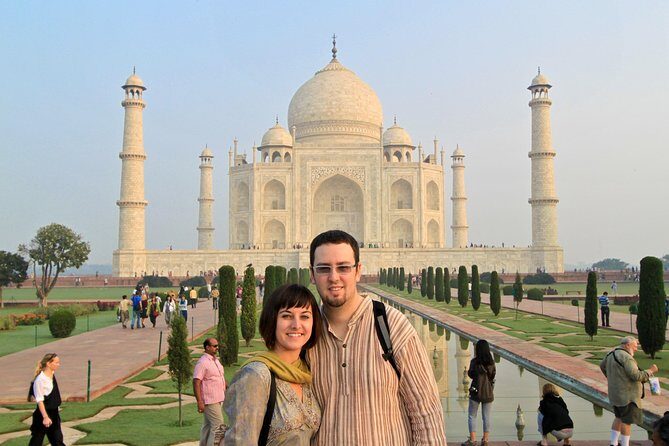
A few details here make your trip smoother.
Bring cash for monument tickets
The tour notes that guides will assist with ticket purchases, but some monuments might not accept credit cards. Carry cash in INR, or ask your driver for ATM help. This is one of those travel small steps that prevents a day from stalling.
Wear shoes made for walking
Footwear matters here. Forts and palace areas mean uneven surfaces and stairs in places. Comfortable shoes keep you from turning a great day into a foot-ache day.
Use the day’s timing wisely
Transfer days (Day 1’s drive and Day 4’s return to Delhi) are long. On those days, keep your expectations flexible. If you arrive and want to move right away, do it—but also use the hotel time to reset.
Watch your dates for Friday Taj closure
Since the Taj Mahal is closed on Fridays, check your schedule early. If your departure date lands on a Friday, you’ll want confirmation on the plan.
Plan for seasonal gala dinner charges
There’s a compulsory gala dinner fee on New Year’s Eve, Christmas, and from December 24 to January 4 annually. If you’re traveling during late December, treat that as a likely extra cost.
Should you book this 5-day Golden Triangle tour?
I’d book this if you want a structured, private way to hit Delhi, Agra, and Jaipur without juggling transport and guides yourself. The Taj Mahal support (golf cart and shoe covers), the rickshaw ride in Old Delhi, and the fact that you get a guide at every major stop are the big reasons this tour feels efficient.
Skip or rethink it if you’re trying to keep costs ultra-low, because monument admissions and meals are not included overall. Also, if you strongly dislike long driving days, the Day 4 transfer may feel heavy.
If you want a practical sampler of India’s top sights with enough guidance to make the time count, this is a solid match. Just plan your budget for entry tickets, wear good shoes, and you’ll enjoy the pace.