REVIEW · NEW DELHI
Divine Delhi: Explore Indian Faiths on a Cultural Tour
Book on GetYourGuide →Operated by Go City Adventures · Bookable on GetYourGuide
Delhi is religious on every corner.
That is what makes Divine Delhi such a smart way to see the city: in one morning, you’re guided through working places of worship that shape daily life for very different communities. I love how the route connects faiths in a way that feels practical, not academic. I also love that you’re not just looking from outside. You get short guided time inside each site, plus street walking in between, so you learn as you go.
Two things I like a lot. First, the English-speaking guide (for example, one guide named Sandeep is noted for making stories clear and personal, not lecture-style). Second, the comfort and pacing: an air-conditioned vehicle and hotel pickup keep the day from turning into a heat-and-traffic grind.
The main drawback is also the obvious one: it is a lot of stops in about 6 hours, so each location gets a short visit. If you want slow, long worship time or deeper time at one single monument, you might leave wishing you had more hours.
In This Review
- Key highlights worth choosing this tour for
- A 6-hour plan that strings Delhi’s faiths together
- Sri Digambar Jain Lal Mandir: birds, temples, and the Chandni Chowk corridor
- Gurudwara Bangla Sahib: Sikh worship, the Sarovar, and community cooking
- Laxmi Narayan Temple (Birla Mandir): Hindu symbolism in a short, guided window
- Sacred Heart Cathedral: Latin Rite Christianity in New Delhi
- Lotus Temple: a quick guided look at a different kind of sacred space
- Hazrat Nizamuddin Dargah: Sufi devotion and qawwali atmosphere
- Price and logistics: what about $15 actually buys you
- Who should book Divine Delhi, and who might prefer something else
- Final verdict: should you book it
- FAQ
- What is the duration of the tour?
- How much does Divine Delhi cost?
- Which pickup areas are offered?
- What religious sites are visited?
- Is lunch included?
- Do I need to join a large group?
- What languages are available for the guide?
- Is there a way to avoid long lines?
Key highlights worth choosing this tour for

- A multi-faith route that moves between Jain, Sikh, Hindu, Christian, and Sufi worship spaces in one day
- Real guided stops (not a quick photo pass) with time at each site so you understand what you’re seeing
- Jain Birds Hospital at Sri Digambar Jain Lal Mandir, a detail many visitors miss
- Gurudwara Bangla Sahib’s Sarovar pool and community focus that turns religion into everyday service
- Skip-the-line access through a separate entrance to keep your schedule on track
- AC transport plus hotel pickup from Noida/Delhi/Gurugram/New Delhi, so you start and end with less hassle
A 6-hour plan that strings Delhi’s faiths together
This is the kind of tour that works best when you want context fast. Instead of picking one temple and calling it a day, Divine Delhi lets you compare how different traditions use space, symbols, and community rules.
You’ll start with pickup from your hotel lobby in Delhi (with options in Noida, Delhi, Gurugram, and New Delhi). From there, you travel in a comfortable AC vehicle and then step out for guided visits. The whole thing is designed for momentum: you get enough time to ask questions and make sense of each place, then you move on before the day gets too long.
The value angle here is clear. At about $15 per person, you’re getting a professional guide, transport, and entry help (including a separate entrance for skipping the line), plus light snacks. Lunch is not included, so plan for that by grabbing something simple afterward or bringing snacks if that works for you.
You can also read our reviews of more historical tours in New Delhi



Sri Digambar Jain Lal Mandir: birds, temples, and the Chandni Chowk corridor
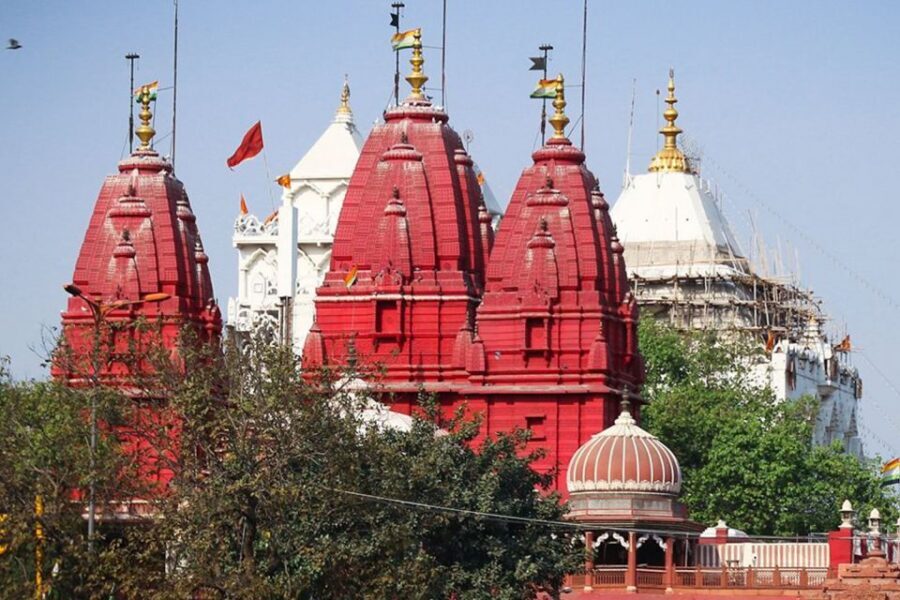
Your first major stop is Sri Digambar Jain Lal Mandir, described as the oldest and best-known Jain temple in Delhi, set in the Chandni Chowk area directly across from the Red Fort. This location matters because Chandni Chowk is one of those places where you can feel the city’s old trading routes in the street layout. Going here early helps you get your bearings before crowds thicken later.
What you’ll likely remember most is the temple’s Jain Birds Hospital in a separate building behind the main temple. Jainism is famous for strong ideas around non-violence, and this is one very concrete example of how those beliefs can show up in an institution. You are not just seeing carved stone and devotional marks. You’re seeing the everyday logic of compassion made visible.
Timing is tight, too. Your guided visit is about 40 minutes, so you’ll want to come with an easy mindset: look first, then listen, then ask. If you keep your questions simple, you’ll get more out of this stop than trying to memorize details.
Consideration: because you’re in one of Delhi’s busiest historical areas, you may feel traffic and foot-drag crowd energy. Comfortable shoes help more than you’d think.
Gurudwara Bangla Sahib: Sikh worship, the Sarovar, and community cooking
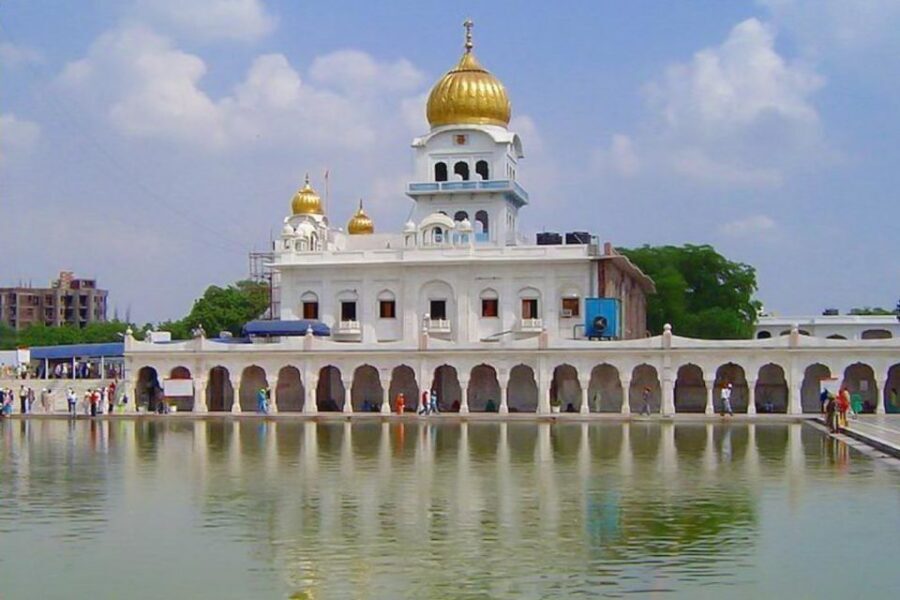
Next up is Gurudwara Bangla Sahib, one of Delhi’s most prominent Sikh gurdwaras. It’s connected to the eighth Sikh Guru, Guru Har Krishan, and the complex includes the pool called Sarovar. Even if you’re not a Sikh history nerd, the guide can help you understand why these details matter: the setting and layout are part of the worship experience.
In a good tour, this stop does more than show you architecture. It explains the idea of community. One of the strongest impressions from the tour description and feedback is the presence of a major kitchen operation where volunteers help prepare food for people, and then a large hall where visitors can eat a warm meal. You don’t need to know Punjabi to grasp the point. This is religion with a service engine.
Expect about 1 hour here, which is enough time to see the space and understand what the Sarovar and the gurdwara routines mean in daily Sikh life. If you’re curious about how different faiths handle shared meals and community work, this is your best comparative anchor point on the day.
Practical tip: follow local rules for entering worship areas and keep your pace respectful. If you feel unsure, watch what others do and ask your guide.
Laxmi Narayan Temple (Birla Mandir): Hindu symbolism in a short, guided window
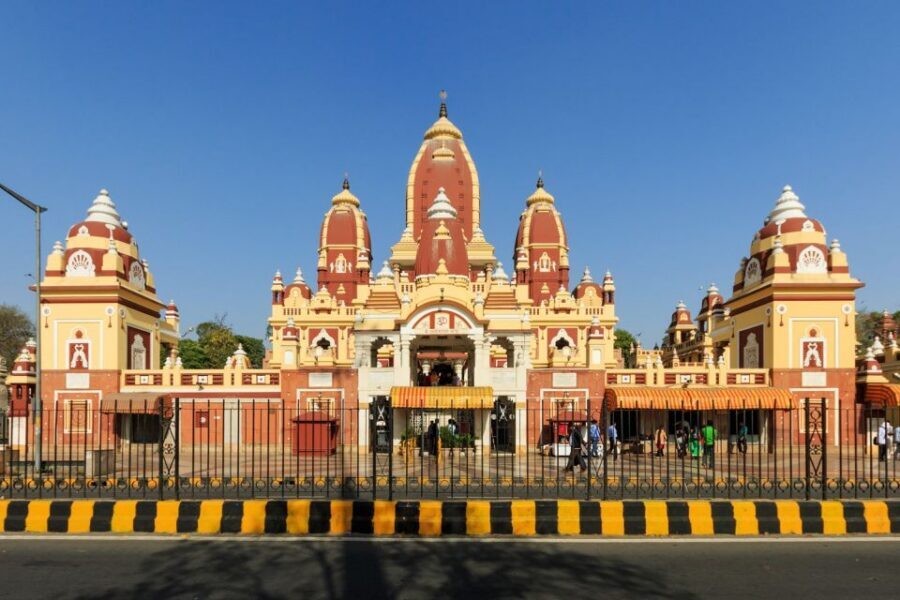
After the Jain and Sikh sites, the tour shifts into Hindu worship at Laxmi Narayan Temple, also called the Birla Mandir. This temple is dedicated to Laxmi Narayan, a name that points to Vishnu (Narayan) together with his consort Lakshmi.
That naming detail is more than trivia. It’s a key to understanding how Hindu worship often works: symbols and relationships are part of the devotion, and the guide can help you connect what you’re seeing to what the tradition is emphasizing. You’re given about 35 minutes, so you’ll want to focus on big-picture questions like what the pairing of deities communicates and how the temple’s space supports worship.
Before you move to the next location, you’ll stop for a light snack with your guide. That matters because your energy and patience will decide how much you absorb at the next two sites. Delhi can wear you down with heat and crowds, even when you’re in an AC vehicle much of the time.
Consideration: this part of the day can feel like a switch in pace. If you’re the type who needs time to settle in, use the snack stop to reset your mind before walking into a new style of prayer.
Sacred Heart Cathedral: Latin Rite Christianity in New Delhi
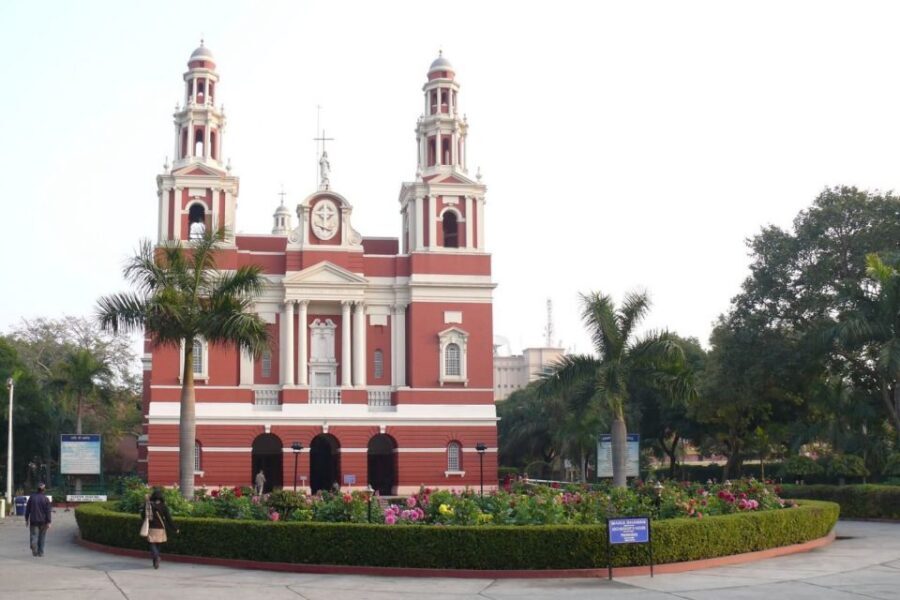
Then you head to the Sacred Heart Cathedral, a Roman Catholic cathedral of the Latin Rite and one of the oldest church buildings in New Delhi. This is a meaningful change of perspective. After seeing temples and a gurdwara, you’re now in a Christian worship space with different architectural priorities and devotional rhythms.
Your guided visit is about 30 minutes. That time window is short, but the payoff is in the contrast. A good guide will point out how worship focus shifts: how people enter, where they look, and what the building communicates. Even if you don’t know Christian theology, you can still understand the basics by paying attention to the visual language.
Why this stop is valuable: multi-faith tours can sometimes turn into a checklist. This cathedral helps keep it human by showing that Christianity in Delhi has long, established roots alongside other traditions.
Practical note: keep your phone ready, but not at the expense of respect. If the guide asks for quiet or no photos in certain areas, follow that.





Lotus Temple: a quick guided look at a different kind of sacred space
The route also includes the Lotus Temple for a guided visit of about 20 minutes. The time here is brief, so treat it like a visual palate cleanser: you’re moving from one tradition to another and getting one short guided moment to notice how design can signal meaning.
With only a short guided window, your best strategy is to ask your guide one simple question: how should I look at this place? Then you can adjust your attention. Sometimes, the best tours don’t try to explain everything. They help you choose what to notice.
If you’re the kind of traveler who likes architecture and symmetry, you might find this stop especially satisfying. If you want deep religious context, make sure you ask questions during the other longer guided segments too, since they carry more explanatory weight.
Hazrat Nizamuddin Dargah: Sufi devotion and qawwali atmosphere
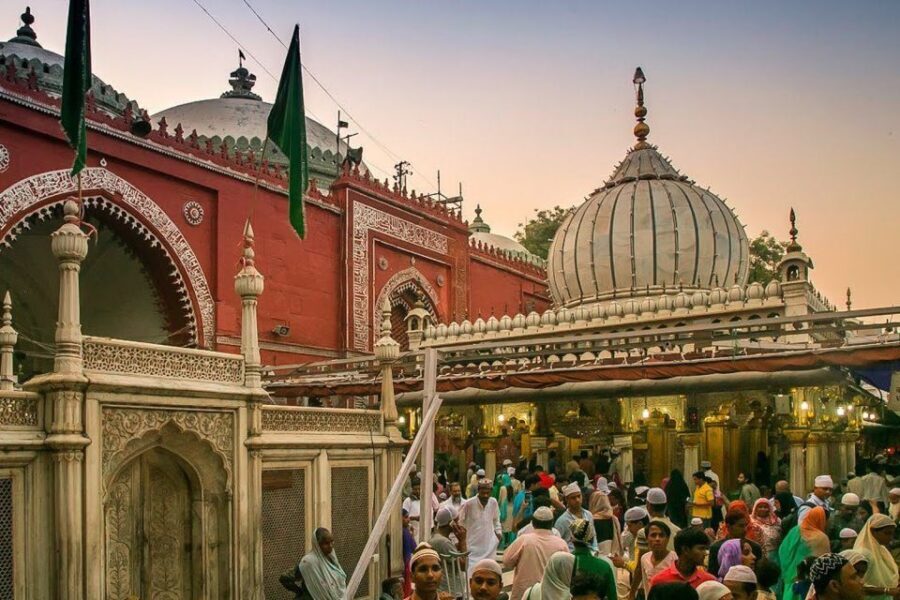
The final major religious site is Hazrat Nizamuddin Dargah, also referred to as the Nizamuddin mausoleum. It is associated with the Sufi saint Khwaja Nizamuddin Auliya and is visited by thousands of pilgrims every week.
This stop tends to feel different from the temple and church settings because Sufism often connects worship with music and emotional devotion. The tour information specifically notes evening qawwali sessions at the site. Even if you’re not catching music on the day you go, the dargah’s reputation for devotional performances gives you context for the energy of the place.
Your guided visit is about 30 minutes. That is long enough to understand what people come here for and how the site functions during peak pilgrimage days. The dargah also gives you a strong final comparison point: where earlier stops leaned into community service (like kitchen work) or symbolic deity devotion, this one emphasizes saint-based devotion and pilgrimage tradition.
Consideration: if you’re sensitive to crowding, remember this is a place that draws many visitors weekly. Your guide can help you navigate the flow so you don’t feel stuck trying to see everything at once.
Price and logistics: what about $15 actually buys you

At around $15 per person for a 6-hour day, this tour stacks up well if you value structure. You’re not just paying for a seat on a bus. You’re buying:
- hotel pickup and drop-off
- an English-speaking professional guide
- air-conditioned vehicle transport
- light snacks
- guided time across multiple major worship sites
- a separate entrance to help skip the line
Lunch is not included, so factor that into your plan. Also, the tour is described as a private group, which usually means you won’t be squeezed into a huge crowd feeling. You still have to deal with the general public around these sites, but the guide interaction typically stays more personal than large group tours.
Is it a bargain? For the number of destinations and the guided time, yes. The tradeoff is time per stop. You get a guided understanding, not a long sit-down experience at every site.
Who should book Divine Delhi, and who might prefer something else
This tour is a strong fit if you want a multi-faith overview without having to organize routes and guides yourself. If you’re curious how Jain compassion shows up in real life, how Sikh worship ties into shared community kitchens, how Hindu symbolism is named and presented, and how Christian and Sufi spaces differ in atmosphere, this itinerary gives you a clear comparison framework.
It’s also a good choice if you enjoy walking through central Delhi areas and you don’t want to do the hard parts alone. The AC vehicle and pickup/drop-off from multiple city points reduce friction, so you spend more time learning and less time negotiating transport.
You might choose differently if you’re the kind of traveler who wants deep time for one religion or one landmark. With about 20 to 40 minutes at most stops, this is made for variety, not for immersion at a single site.
Final verdict: should you book it
If your goal is to understand Delhi’s faith landscape in one organized day, I think this tour is worth it. The best parts are the guided connections between traditions and the way real-world details show up, like the Jain Birds Hospital and the community focus around Gurudwara Bangla Sahib.
I’d skip it only if you dislike schedules with many quick transitions, or if you want long worship time and quiet reflection at just one or two locations. Otherwise, for the price, the guide-led context, and the practical comfort of AC transport, Divine Delhi is a smart way to see more of the city’s spiritual life without wasting hours figuring it out.
FAQ
What is the duration of the tour?
The tour lasts about 6 hours.
How much does Divine Delhi cost?
The price is listed as $15 per person.
Which pickup areas are offered?
Pickup is available from Noida, Delhi, Gurugram, and New Delhi, and it starts from your hotel lobby.
What religious sites are visited?
The tour includes Sri Digambar Jain Lal Mandir, Gurudwara Bangla Sahib, Laxmi Narayan Temple (Birla Mandir), Sacred Heart Cathedral, the Lotus Temple, and Hazrat Nizamuddin Dargah (Nizamuddin mausoleum).
Is lunch included?
Light snacks are included, but lunch is not included.
Do I need to join a large group?
It is described as a private group.
What languages are available for the guide?
The guide is available in English, Spanish, German, Italian, and French.
Is there a way to avoid long lines?
Yes, the tour notes skip-the-line entry through a separate entrance.