REVIEW · NEW DELHI
Delhi: Private Half Day City Sightseeing Tour
Book on GetYourGuide →Operated by The Imperial Tours · Bookable on GetYourGuide
A morning in Delhi can feel like a test. This private half-day tour keeps it calm with hotel pickup/drop-off and a driver that handles the busy driving so you can focus on the sites. I like that you cover major landmarks in just 3–4 hours, and I especially like the chance to learn the spiritual and cultural context behind Hinduism and Sikhism as you move through the city. One thing to consider: the day is action-packed, so if you’re sensitive to walking or have a back issue, this may not be the best fit.
The route also avoids the usual hassle. You’ll get a guided visit, photo-friendly stops, and even a way to skip the line with a separate entrance (when applicable), which helps a half-day plan actually feel like a half-day. The main drawback is simple: there’s a dress rule, and shorts aren’t allowed—plan on smart casual and comfy shoes.
In This Review
- Key points worth knowing
- Private Transport in Delhi Keeps the Half-Day Actually Enjoyable
- Parliament House and Lutyens New Delhi Photo Stops: Where Planning Meets Power
- Lodi Gardens: A Calm Breather Between Big City Icons
- India Gate: A War Memorial You Feel in Your Feet
- Agrasen Ki Baoli: The Stepwell That Turns Monuments Into Stories
- Humayun’s Tomb: The Garden-Tomb Idea That Changed the Game
- The Guide Makes It More Than a Checklist
- Price and Value: How $10 Per Person Makes Sense Here
- Timing, Pacing, and What to Wear (So You Don’t Feel Rushed)
- Who Should Book This Tour (and Who Might Skip It)
- Should You Book This Half-Day Delhi Tour?
- FAQ
- What time does pickup happen?
- Where can the tour pick me up?
- How long is the tour?
- Do I need to meet the guide at a specific location?
- Are entrance fees included?
- Is lunch included?
Key points worth knowing

- Private car, not public transport: You’re not negotiating Delhi traffic or finding your own way between sights.
- Skip-the-line style entry: A separate entrance can save time at ticketed stops.
- A real guide for context: You’re not just seeing monuments—you’re getting explanations of culture and faith traditions.
- Perfect photo-and-walk mix: Several stops are short and photo-based, while the longer ones let you slow down.
- Tight route, 3–4 hours: Great for first timers with limited time, less great if you want a long, leisurely day.
Private Transport in Delhi Keeps the Half-Day Actually Enjoyable
Delhi is huge, and distances can surprise you. This is the kind of tour where the private car matters more than you’d expect. Instead of guessing routes, you start with pickup at 09:00 AM (or your chosen time) from a location in Delhi, Gurugram, or Noida, then you’re back after the sightseeing without having to plan the return.
The private setup also changes how you experience each stop. When you aren’t worrying about navigation, you can ask questions, take photos without rushing, and spend a little time absorbing details—like why a monument looks the way it does or what role it played in its era.
This tour works best for people who want an efficient highlight run but still want a guided explanation. It’s less ideal if you want a slow, wandering day with plenty of downtime. The pacing is designed to fit multiple major landmarks into one morning or early afternoon block.
You can also read our reviews of more city tours in New Delhi



Parliament House and Lutyens New Delhi Photo Stops: Where Planning Meets Power
Your day typically starts in New Delhi’s administrative core. You’ll pass Parliament Building and get a guided overview as the car rolls by, with time allocated for sightseeing and a quick look around. This area is a masterclass in British-era city planning—wide avenues, official buildings, and big symmetry—so even short photo windows feel meaningful.
From here, expect a photo-and-drive style stop at Rashtrapati Bhawan, the Viceroy’s House before independence. You might not be walking through the building, but the outside presence is the point. The architecture is massive and ceremonial, and it helps you understand how the city’s power center was designed to project authority.
Then it continues with the Parliament area again in spirit: the feeling that this is where decisions are made and where the country’s biggest democratic institutions sit. Even if you’re not into politics, the scale and design language give you a quick sense of how Delhi functions today.
My practical tip: wear shoes with good grip. Even if you’re not doing long walks, you’ll still want solid footing for uneven sidewalk edges and curb transitions.
Lodi Gardens: A Calm Breather Between Big City Icons

After the big government sights, you’ll head to Lodi Gardens. This stop is shorter than Humayun’s Tomb, but it’s a valuable change of pace. Lodi Gardens is one of those places where you feel like the city quiets down around you. You’ll have guided time for sightseeing, and you’ll also notice how the environment supports a relaxed kind of viewing—less staring at stone for explanations, more letting the surroundings do some of the work.
The garden matters because it’s home to 15th-century Mughal monuments alongside older tomb structures. It’s a reminder that Delhi’s identity isn’t only modern or only colonial. It also holds layered timelines where different rulers and cultural influences left their mark.
A good guide helps here, because you’ll likely be pointed to what to look for instead of just following a general route. This is where you start understanding why these gardens and tomb complexes weren’t just built for beauty—they were built for memory, ceremony, and a kind of spiritual calm.
If you want photos: this is one of the better spots for calmer, shaded-looking frames, especially compared with the open, traffic-heavy feel around India Gate.
India Gate: A War Memorial You Feel in Your Feet
India Gate is the famous one. It’s also the kind of landmark that can be overhyped if you treat it like a generic archway. The difference here is the guide’s context: it’s an arc-of-triumph-style gateway that was built as a war memorial for 70,000 soldiers of the British Indian Army who died during the First World War.
That backstory changes how you view the place. Instead of seeing only stone and a roadway, you start noticing the solemn symmetry and the way the site functions as a space for remembrance. Even a brief guided visit can help you read the monument correctly.
Expect a short, focused window for sightseeing and photos. Because the stop is timed, you won’t feel stuck standing around. You’ll get in, see what matters, and move on without losing momentum in the rest of your route.
Practical angle: the area can be busy, and crowds tend to show up around peak hours. Going with a private guide and driver is helpful here because you spend less time trying to find an approach angle.
Agrasen Ki Baoli: The Stepwell That Turns Monuments Into Stories
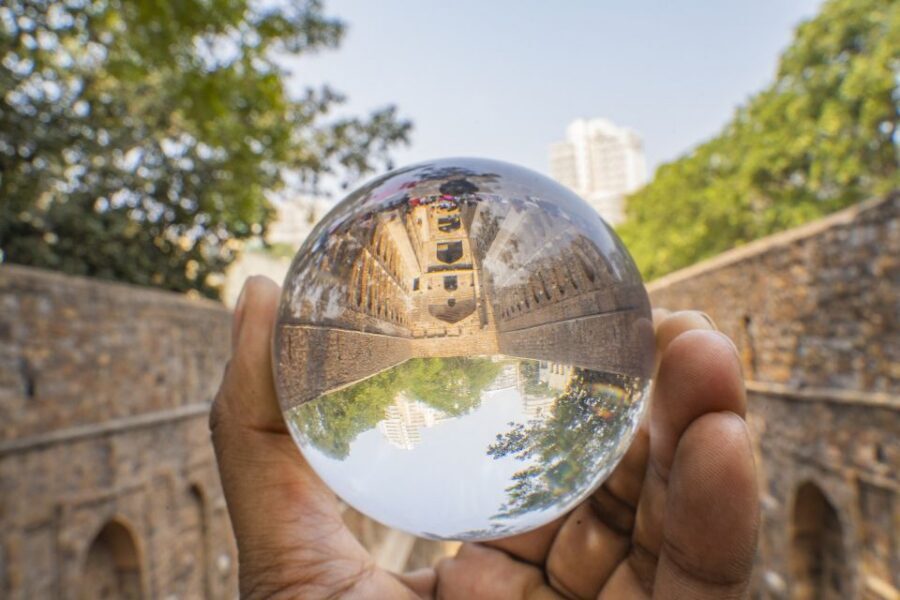
Then comes Agrasen ki Baoli, one of Delhi’s most interesting older structures. It’s an ancient stepwell—about 60 meters long, 15 meters wide, and it features 108 steps with ornate stone details.
This is one of the stops where a private guide pays off. A stepwell isn’t only architecture; it’s an engineering answer to water needs, and it’s also a place with social and cultural meaning. Having a guide helps you connect those ideas instead of treating it like a quick photo stop.
Even if your time there is limited, you’ll typically get enough context to notice the arcades, alcoves, and the way the walls frame the space. The building style feels deeply crafted, and it’s the sort of structure where details reward a slow glance.
One possible consideration: stepwell sites can have uneven edges and steps. Comfortable shoes aren’t optional here. Also, the pacing around this stop can feel a little more active than the big roadway memorials, because you’re visually and physically moving through the area.
You can also read our reviews of more private tours in New Delhi





Humayun’s Tomb: The Garden-Tomb Idea That Changed the Game
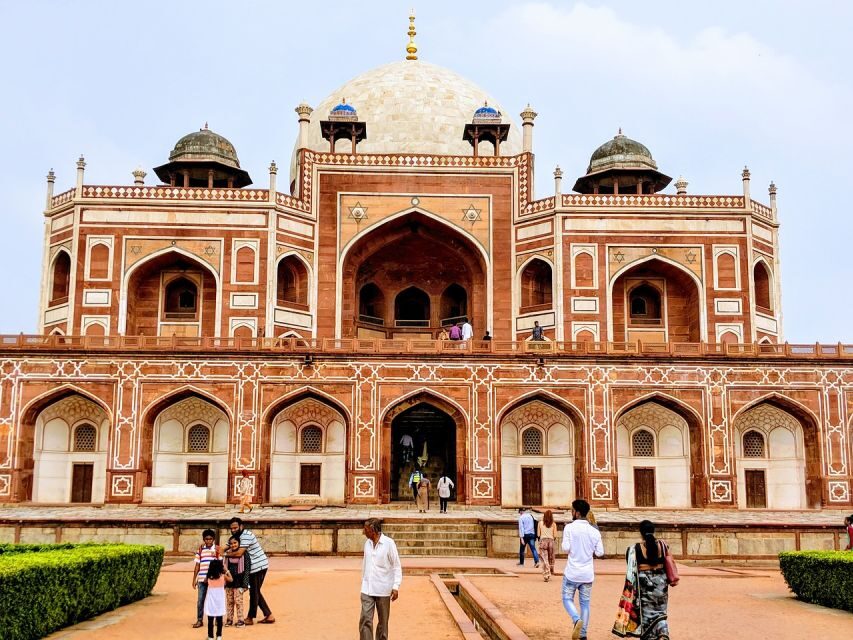
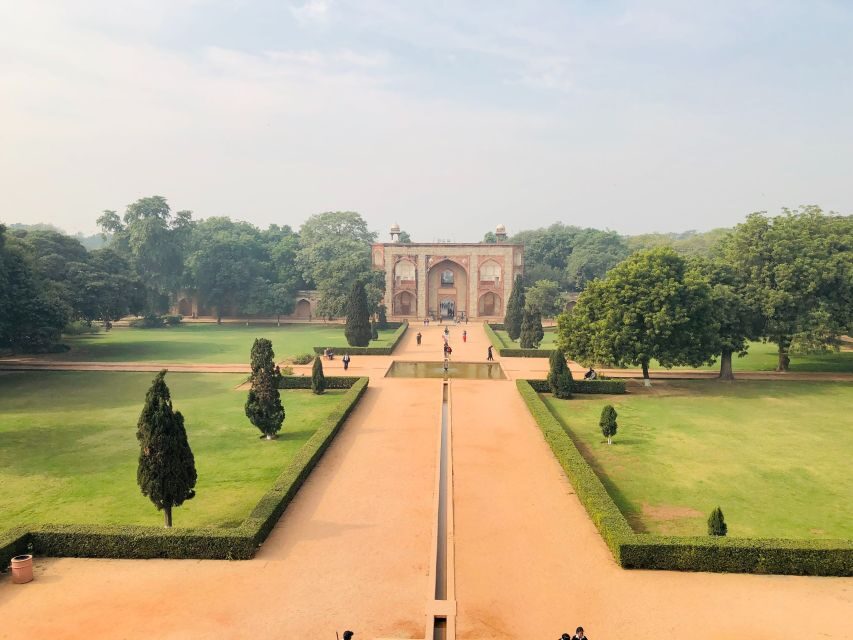
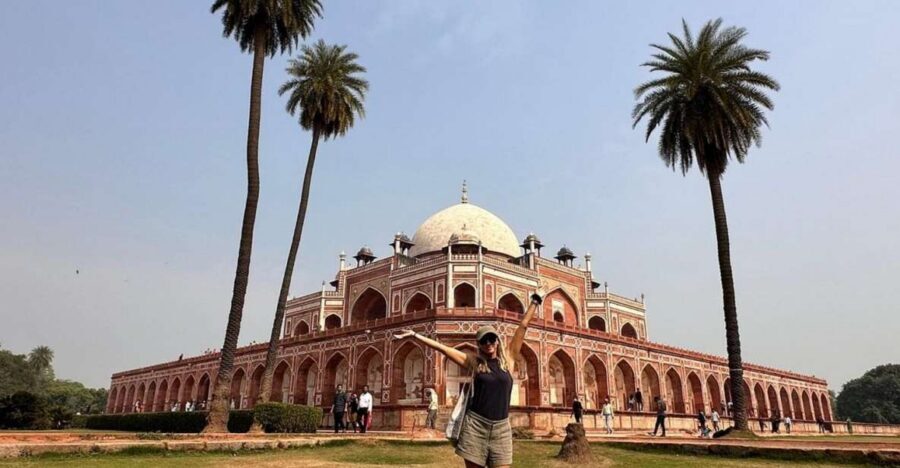
If you like monuments that are more than just a pile of impressive stone, you’ll appreciate Humayun’s Tomb. It’s a World Heritage Site, and it’s often described as the first garden-tomb on the Indian subcontinent. That label matters because it represents a concept: using gardens and water-like symmetry to create a sacred landscape.
The tomb was commissioned in 1562 CE by Hamida Banu Begum, and it was designed by Mirak Mirza Ghiyath, a Persian architect. That mix of local and Persian influences is part of what makes the site feel like a turning point in architecture and design.
You’ll likely have about an hour here with guided sightseeing. That’s enough time to understand the layout and to appreciate how the gardens and tomb structure interact. If you take your time, you can also see how the site’s design supports a calm, reflective viewing experience—very different from the traffic-and-monuments rhythm of Delhi’s larger avenues.
Note to plan for: this is one of your more “serious” stops. If you’re not into walking around formal layouts, you may want to pace yourself and ask your guide where to focus.
The Guide Makes It More Than a Checklist
This is where the experience earns its strong reviews. The private guide approach doesn’t just explain what you’re looking at—it helps you understand why these places matter. The tour includes live interpretation in English, Spanish, or French, and the focus includes spirituality, culture, and dharmic religions such as Hinduism and Sikhism.
That matters because Delhi’s monuments can otherwise feel like isolated sightseeing stops. With context, you start seeing patterns: sacred architecture, public memorials, imperial city planning, and the way gardens create a pause in the day.
In particular, Riyaz (guide) and Rakesh (driver) have been highlighted for taking careful care of the day and keeping things at the right pace. That combination is huge. When the driver and guide work smoothly together, you spend less time waiting in confusing traffic and more time actually seeing.
If you’re the type who likes asking questions—about faith, culture, or design—this setup is a good match.
Price and Value: How $10 Per Person Makes Sense Here
At $10 per person for a half-day with private transportation, the value can feel almost unreal. The key is what’s included: a private air-conditioned car with a driver, pickup and drop-off, and a private tour guide. You’re also covered for parking, tolls, and other operational costs.
Now, the fine print: entrance fees are included only if you choose that option, and meals aren’t included. So your total cost can be a little higher depending on what you select and whether you add snacks or drinks.
Even so, for a short stay in Delhi, private transport is the big expense—and it’s included. If you’ve ever tried to DIY a route across multiple historic areas, you know how fast time and energy get eaten up. Here, you’re paying for your time back.
Timing, Pacing, and What to Wear (So You Don’t Feel Rushed)
The duration is 3 to 4 hours, and the route is built to hit several core landmarks in a tight window. That makes the tour great for first-timers who want highlights without turning the whole day into sightseeing logistics.
You’ll start with pickup around 09:00 AM or another selected time, then move through multiple stops: government core photo sights, a calm garden section, India Gate, Agrasen ki Baoli, and Humayun’s Tomb, ending with a drive back to your hotel.
For what to bring:
- a passport or ID card
- comfortable shoes
For what to wear:
- smart casual
- no shorts (this is specifically stated)
If you have back problems, the tour is not recommended. Pregnant women are also listed as not suitable. If any of those apply, it’s worth thinking twice, because the day has multiple walking and step-related elements even though it’s not a full-day trek.
Who Should Book This Tour (and Who Might Skip It)
You should book this if:
- you want a low-stress Delhi highlights morning
- you like monuments but also want spiritual and cultural context
- you’re short on time and want a smart route (not a DIY scavenger hunt)
- you value communication and a guide who keeps things at a comfortable pace
You might skip it if:
- you need lots of downtime between stops
- you can’t handle steps and uneven areas (Agrasen ki Baoli is a big clue)
- you have restrictions mentioned by the operator, like back problems or pregnancy
Should You Book This Half-Day Delhi Tour?
If you’re trying to make Delhi work in limited hours, I’d say yes—this is a solid way to see serious landmarks without spending your day fighting traffic or figuring out logistics. The standout benefit is the combo of private transport + live guide context, which turns India Gate, Humayun’s Tomb, and the older stepwell at Agrasen ki Baoli from photos into meaning.
But if you want a long, slow day, you might feel rushed. In that case, look for a longer sightseeing option. For most people with a first visit and a schedule that doesn’t stretch, this half-day plan is a practical win.
FAQ
What time does pickup happen?
Pickup is offered at 09:00 AM or at your given time, depending on your selection.
Where can the tour pick me up?
You can choose a pickup location in Delhi, Gurugram, or Noida.
How long is the tour?
The tour typically lasts 3 to 4 hours.
Do I need to meet the guide at a specific location?
No. Hotel pickup and drop-off are included, so you don’t need to go to a meeting point.
Are entrance fees included?
Entrance fees are included if you choose the option that includes them.
Is lunch included?
No. Meals are not included.