REVIEW · NEW DELHI
5 Days Private Golden Triangle Tour
Book on Viator →Operated by Rajasthan Cabs · Bookable on Viator
Three cities, nonstop monuments, smooth driving. This 5-day private Golden Triangle tour links Delhi, Agra, and Jaipur with pickup and car time designed to keep you moving without the hassle of constant planning.
I like how the day-to-day stops mix big-name icons with places that feel more local, like the Old Delhi mosque area near Jama Masjid and the calm museum stop at Gandhi Smriti. I also like that the route balances paid-ticket heavyweights (think the major Moghul masterpieces) with free or low-cost sights such as India Gate and Birla Mandir.
One caution: the schedule is packed, and for several of the headline monuments you’ll need to pay admission separately (Red Fort, Humayun’s Tomb, Taj Mahal, and multiple Jaipur stops). If you’re traveling on a Monday, note that Lotus Temple is closed that day.
In This Review
- Key things I’d watch before you go
- Golden Triangle in 5 days: classic for a reason
- Price and value: what $220 really covers
- The driving experience: comfort, timing, and real navigation help
- Day 1 in Delhi: Old Delhi icons plus the Qutub Minar area
- Day 2 to Agra: Agra Fort and a garden across the Yamuna
- Day 3: Taj Mahal day, plus Fatehpur Sikri’s Akbar-era punch
- Day 4 Jaipur: breeze palaces, star math, and royal forts
- Day 5 Delhi wrap-up: Birla Mandir and a softer ending
- What kind of traveler fits this tour best?
- Should you book this Golden Triangle private tour?
- FAQ
- How long is the 5 Days Private Golden Triangle Tour?
- What cities does the tour cover?
- What is the price per person?
- Is this tour private?
- Is pickup included?
- What is the type of vehicle used?
- Are admission tickets included?
- Is Lotus Temple open every day?
- Do I get a ticket on my phone?
- What’s the cancellation window?
Key things I’d watch before you go
- Private driving in a Toyota Innova Crysta: you get a dedicated vehicle for the long stretches between cities.
- A smooth service team setup: Amit handles driving/support, with guidance from Rahul and Krishna for on-the-ground help and navigation.
- UNESCO hits plus free stops: you’ll spend time on major World Heritage sites while still getting free moments built in.
- A very classic Golden Triangle flow: Delhi’s Moghul landmarks, Agra’s fort/garden/Taj, then Jaipur’s royal architecture.
- Mobile ticket for easier entry planning: you’ll receive the ticket digitally.
Golden Triangle in 5 days: classic for a reason
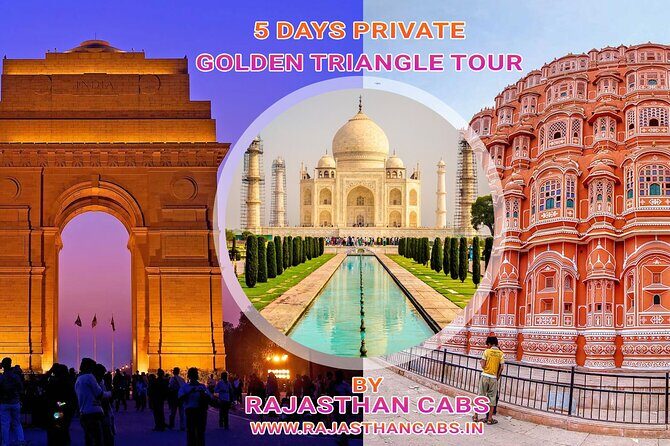
The Golden Triangle is famous because it works. You land in Delhi for Mughal-era power, slide into Agra for architectural perfection, then cap it in Jaipur with palaces and royal-era science and design. In five days, you’re not just ticking off landmarks—you’re also seeing how styles shift across northern India.
What makes this version appealing is the private format. Instead of sharing a bus with strangers and a plan that doesn’t fit your pace, you get one group moving together with a dedicated car. For a route with long transit days, that matters.
This tour is priced at $220 per person for the private experience. In practical terms, you’re paying mostly for vehicle time across three cities, plus structured stops at the major sights. The big budget twist is admissions: many of the most famous places are listed as admission ticket not included, so you should add those on top.
You can also read our reviews of more private tours in New Delhi


Price and value: what $220 really covers
At $220 per person, this isn’t the cheapest way to do Delhi–Agra–Jaipur. But you are buying three things:
1) Private car time
Golden Triangle distances add up fast. A dedicated vehicle (Toyota Innova Crysta) saves you the time and stress of figuring out rides between neighborhoods and cities.
2) Pickup and a guided structure
Pickup is included, and the tour is designed so you’re not piecing together a day yourself. That’s especially helpful in places where you’ll deal with crowds, traffic, and lines.
3) Stop selection that mixes big-ticket and free entries
India Gate and Birla Mandir are listed as free, and a few other stops are free as well. That helps your budget while still keeping the itinerary strong.
The main drawback on value is also the simplest: tickets for key sites aren’t included (Red Fort, Humayun’s Tomb, Agra Fort, Taj Mahal, and several Jaipur sights). Plan for that and this becomes good value for people who want comfort and a clean flow.
The driving experience: comfort, timing, and real navigation help
Long-haul road days can make or break a tour. Here, the vehicle is a Toyota Innova Crysta, which is a solid pick for highway driving and family-style comfort in India.
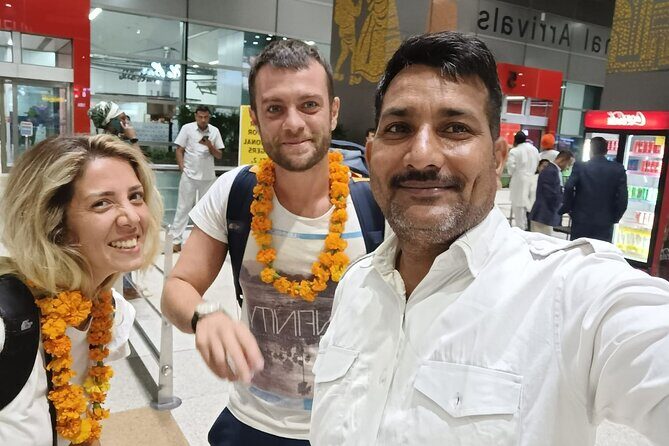
Even more important than the car is the human support. The service setup includes Amit for driving/support, plus guides Rahul and Krishna who help with navigation and explanation. You can feel the difference when someone understands how to get you to the right entrances, how to manage timing around crowded monuments, and how to keep the day from turning into a scavenger hunt.
I’d also think about your own travel style. If you like to ask questions, linger when something grabs you, or you don’t want to constantly re-check directions, a private format with a dependable team will likely feel worth it.
Day 1 in Delhi: Old Delhi icons plus the Qutub Minar area
Day 1 is heavy on Delhi’s layered past, and it’s arranged so you get both grandeur and variety. You start with Red Fort (Lal Qila), a UNESCO World Heritage Site and one of India’s most iconic fortifications. Expect an hour here to get oriented and take in the main structures without turning it into a half-day ordeal.
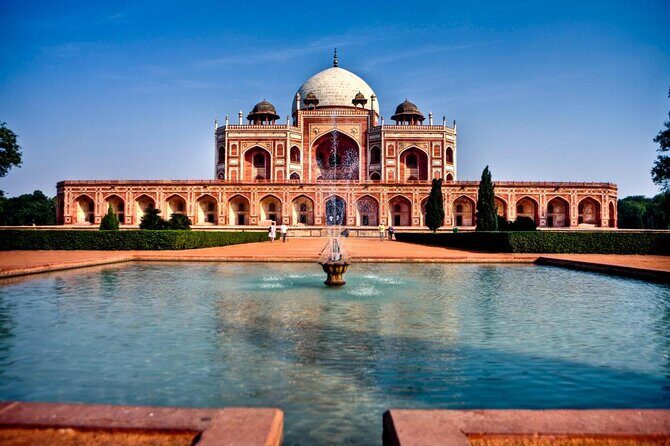
Next is Humayun’s Tomb, also UNESCO. This stop is about Mughal design and symmetry—things you’ll appreciate more once you actually stand in the space. The visit length listed is about 1 hour 30 minutes, which is enough time to look closely rather than rush through.
Then you move toward central Delhi with India Gate, which is free and quick (about 30 minutes). It’s a good reset stop, a place to stretch your legs and get a feel for the broader city without paying another ticket.
From there, you’re at the Lotus Temple (free, but closed every Monday). If your day lands on Monday, you’ll miss it—so it’s worth factoring that into your planning and expectations.
You finish the day around the Mehrauli/Qutub Minar area (Qutub Minar is listed as free here). It’s one of those Delhi stops that’s less about one building and more about the feel of historic architecture in the city.
You also get a calmer cultural pause at Gandhi Smriti (free). It’s a memorial and museum focused on Mahatma Gandhi, and even with a short visit, it adds context so the rest of the trip doesn’t feel like only stone and monuments.
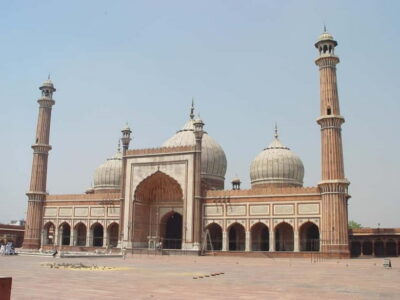
Finally, you end near Jama Masjid. The time listed is very short, but even a brief stop can help you understand Old Delhi’s layout and energy. It’s also one of the places where you’ll want to keep your eyes open for the scale of the neighborhood around the monument.
If you want the best Day 1 experience: wear comfortable shoes and bring a cover or light layer for sun and dust. Delhi can shift quickly in feel during the day.
Day 2 to Agra: Agra Fort and a garden across the Yamuna
Day 2 is where the trip starts to “lock in” visually. You head to Agra for Agra Fort, described as a World Heritage Site. The visit time is about 1 hour 30 minutes, and that’s a sensible window: enough time to appreciate the fort’s structure and courtyard rhythm without dragging.
After that, you visit Mehtab Bagh (the Moonlight Garden). This is across the Yamuna River from the Taj Mahal. The point of this stop is viewpoint and atmosphere: it’s not the same as being inside the Taj complex, but it’s often where you start connecting the dots between gardens, river space, and how rulers planned the landscape.
The admission here is listed as not included, so again: keep tickets in mind.
Agra days can feel hot and busy, so I like having a mix of a fort and a garden stop. It changes your brain from “museum pace” to “look, breathe, and frame the big monuments” mode.
A few more New Delhi tours and experiences worth a look




Day 3: Taj Mahal day, plus Fatehpur Sikri’s Akbar-era punch
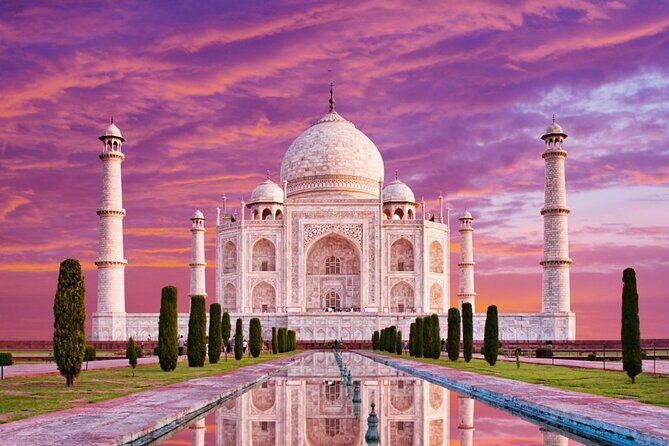
This is the day people plan around: Taj Mahal. It’s listed with a 2-hour visit time and admission ticket not included, which is exactly how it should be. Two hours is workable if you want to see more than the postcard angles—especially if you take a moment to look beyond the main building and notice how it’s composed.
Next comes Fatehpur Sikri, an Akbar-era historic city near Agra. It’s listed as about 1 hour 30 minutes, and the admission is shown as free here. That’s a nice contrast after Taj Mahal’s ticketed draw: you get to switch from paying for the icon to exploring a broader historical setting.
This combo works because it gives you two different types of “impressive”:
- Taj Mahal: one monument, perfect focus.
- Fatehpur Sikri: whole complex thinking, lots of architectural variety.
If you’re the kind of person who likes to understand how empires used space, this pairing makes the day feel less random.
Day 4 Jaipur: breeze palaces, star math, and royal forts
Jaipur is where you go from Moghul stone to Rajasthan’s palace-and-city planning. Day 4 is packed, but the stops are spaced so the day tells a story.
You start with Hawa Mahal (Palace of Breeze). Admission is listed as not included and the time is short (about 30 minutes). That’s typical for Hawa Mahal: you mainly want time to absorb its famous facade and understand why it was designed the way it was.
Then you move to Jantar Mantar, a World Heritage Site and an astronomical observatory. This is one of the most interesting stops on the trip because it’s not just pretty architecture. The visit time listed is about 1 hour, and admission is not included. If you like science wrapped in stone, you’ll enjoy how practical the whole place feels.
Next is City Palace (Chandra Mahal), listed with about 1 hour and ticket not included. This is the place to slow down and look at how the royal seat of power shaped the city around it.
After that, you get Jal Mahal (Water Palace) for a short stop (about 30 minutes). The listing shows admission not included. Even if you don’t spend long, it’s a good visual break—especially if you’ve been walking forts and tombs for days.
Finally, you end with Amber Palace (Amer Palace), about 1 hour and ticket not included. Amber is a great “finish strong” choice because it’s immersive in the way forts often are: you feel the scale and the hilltop drama. If you only had one Jaipur palace, this would be a strong contender.
My practical advice for Day 4: keep your energy for Amber Palace. It’s the stop most likely to feel like a real walking session compared to the shorter facade-and-photo stops.
Day 5 Delhi wrap-up: Birla Mandir and a softer ending
You return to Delhi for a quieter final note with Birla Mandir (Lakshmi Narayan), also known as Laxminarayan Temple. Admission is free and the time listed is about 30 minutes.
This is a nice way to end a Golden Triangle circuit. After forts and palaces, a temple stop can reset your pace. It also keeps the final day from feeling like another “big-ticket” sprint.
If you still have energy after this, you’ll likely enjoy using the time you saved from a well-structured route to explore at your own pace—especially in central Delhi.
What kind of traveler fits this tour best?
This private Golden Triangle tour is a strong match if you:
- Want private driving across three cities (and don’t want to manage transit yourself).
- Prefer a structured mix of UNESCO World Heritage stops and free landmarks.
- Like having a support team who can help with navigation and timing, with Amit driving/support and guides Rahul and Krishna helping on-site.
- Are traveling with a group and want a smoother itinerary than a shared tour bus.
It may feel like too much if you:
- Get overwhelmed by packed days.
- Hate paying separate admission fees for major sights.
- Need a fully flexible schedule with no chance of Monday closures (Lotus Temple specifically).
Should you book this Golden Triangle private tour?
I’d book it if your priority is a clean, classic route with private vehicle comfort and a stop list that makes sense from Delhi to Agra to Jaipur. The $220 price is reasonable for a private 5-day circuit, especially since some stops are listed as free and the itinerary includes both heavy hitters and lighter reset moments.
I would hesitate if you’re budget-tight on entrance fees or if you’re traveling on a Monday and Lotus Temple is a must-see for you. In that case, you can still do the trip, but you should expect to adjust your personal highlights.
If you’re set on the Golden Triangle and you want it handled—car, pickup, and an efficient flow—this is the kind of tour that turns a famous route into an easier, less stressful experience.
FAQ
How long is the 5 Days Private Golden Triangle Tour?
It’s about 5 days.
What cities does the tour cover?
The tour covers Delhi, Agra, and Jaipur.
What is the price per person?
The price is $220.00 per person.
Is this tour private?
Yes. It’s a private tour/activity, so only your group participates.
Is pickup included?
Pickup is offered.
What is the type of vehicle used?
The tour uses a Toyota Innova Crysta.
Are admission tickets included?
Some sights are listed as admission ticket not included, while others are listed as free. Tickets for paid monuments will be an extra cost.
Is Lotus Temple open every day?
No. Lotus Temple is closed every Monday.
Do I get a ticket on my phone?
Yes. The tour includes a mobile ticket.
What’s the cancellation window?
Free cancellation is available, and you can cancel up to 24 hours in advance for a full refund.