REVIEW · NEW DELHI
Delhi Agra Jaipur Tour 3 Days
Book on Viator →Operated by INDIA TRIP DESIGNER India · Bookable on Viator
Three days, three cities, one fast rhythm. This Delhi–Agra–Jaipur tour is interesting because it strings together the big-name sights with comfortable, air-conditioned driving and guides who explain what you’re seeing. One thing to consider up front: monument entrance fees are not included, and a few stops are timed like quick checkpoints rather than long wanderings.
I like that the tour is built around a real workflow: pickup, guided sightseeing, scheduled drives between cities, hotel overnights, and breakfasts included. You also get the advantage of a private group setup, so you’re not fighting crowds for attention. The only drawback I’d flag is the pace: sunrise in Agra is early, and the road days add up, especially if you’re not used to long transfers.
In This Review
- Key things that make this tour tick
- Golden Triangle in 3 Days: what this pace really feels like
- Delhi day 1: Humayun’s Tomb, Qutub Minar, Lotus Temple, and the city’s power centers
- Humayun’s Tomb: Mughal scale without the full Taj Mahal wait
- Qutub Minar: the towering marker of an era
- Lotus Temple: a breath of modern calm in the middle of monuments
- India Gate and Jama Masjid: quick hits with real atmosphere
- Agra day 2: sunrise Taj Mahal, Agra Fort, then Fatehpur Sikri on the way to Jaipur
- Taj Mahal at sunrise: why the timing matters
- Agra Fort: the other Mughal story in the same city
- Fatehpur Sikri: a worthwhile detour before Jaipur
- Jaipur day 3: Amber Fort to City Palace to Jantar Mantar to Hawa Mahal
- Amber Fort: the big opening act
- City Palace: where royal life becomes a visitable space
- Jantar Mantar: science as architecture
- Hawa Mahal: quick, iconic, and totally worth a few photos
- Jal Mahal: a short look at the Water Palace
- Price and tickets: what the $310 actually buys you
- Comfort, safety, and guidance: what the best feedback points to
- Practical tips to make this trip smoother
- Who should book this tour, and who might need more time
- Should you book this Delhi–Agra–Jaipur 3-day tour?
- FAQ
- FAQ
- How long is the Delhi Agra Jaipur tour?
- What is the price per person?
- Where do I get picked up?
- Is this a private tour?
- What’s included in the tour price?
- Are entrance fees for monuments included?
- Are lunch and dinner included?
- Which day includes the Taj Mahal visit and when is it scheduled?
- What is the cancellation policy?
Key things that make this tour tick

- Early-morning Taj Mahal visit timed around sunrise, when the mood is calmer and the light is better
- Delhi in one day with a mix of Mughal-era tombs, a towering minaret, a Bahá’í House of Worship, and major mosques
- Agra Fort + Taj Mahal combo so you’re not only seeing the postcard—though you’ll still move on quickly
- Fatehpur Sikri en route to Jaipur for a full-world-heritage-style detour without blowing up the schedule
- Jaipur classics in daylight: Amber Fort, City Palace, Jantar Mantar, Hawa Mahal, plus a quick look at Jal Mahal
Golden Triangle in 3 Days: what this pace really feels like
This is a classic Golden Triangle structure, just compressed. You’ll cover New Delhi, Agra, and Jaipur in roughly three days, which is great if you’re short on time and want the highlights. But you should go in with the right expectation: this tour is designed for momentum, not slow travel.
The driving segments are part of the experience. After Delhi, you’ll head to Agra (about 3 hours). After Agra, you’ll transfer to Jaipur (around 4 hours), with Fatehpur Sikri as a stop in the middle. On day 3, you’ll drive back to Delhi (roughly 4–5 hours) for your flight transfer.
The payoff is that you spend less time planning and more time seeing. The car is air-conditioned, and you’re in a private transportation arrangement. That matters in India, where heat, traffic, and distance can turn “I’ll just figure it out” into a long day.
A few more New Delhi tours and experiences worth a look



Delhi day 1: Humayun’s Tomb, Qutub Minar, Lotus Temple, and the city’s power centers
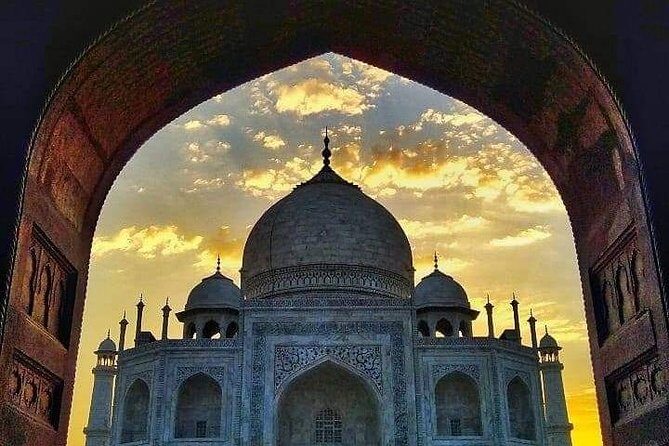
Delhi on day 1 is a smart mix: imperial Mughal, early Islamic architecture, modern spiritual design, and the urban religious heart of Old Delhi.
Humayun’s Tomb: Mughal scale without the full Taj Mahal wait
You start at Humayun’s Tomb. This is the tomb of Emperor Humayun, commissioned by Humayun’s first wife. It’s a strong opener because it sets the Mughal tone for the entire trip. Even if you don’t know the history, you can see why later Mughal architecture would evolve from here—symmetry, monumental proportions, and a layout that rewards slow looking.
Expect about 1 hour, and remember that entrance tickets aren’t included.
Qutub Minar: the towering marker of an era
Next is Qutub Minar, a towering 73-meter structure built in 1193. The tour frames it as a celebration of Muslim dominance after the defeat of Delhi’s last Hindu ruler. For me, the key takeaway is simple: this is the kind of landmark where photos help, but standing back and taking in height and silhouette is what makes it click.
Plan about 1 hour here. Again, entrance fees aren’t included.
Lotus Temple: a breath of modern calm in the middle of monuments
Then you’ll reach the Lotus Temple, a Bahá’í House of Worship dedicated in December 1986 and famous for its flowerlike shape. It’s a classic contrast stop: after heavy stone monuments and ancient powers, this is cleaner, calmer, and very easy to appreciate without needing a deep background.
Time is about 30 minutes, and admission isn’t included.






India Gate and Jama Masjid: quick hits with real atmosphere
After that, the itinerary drops you into two places with different vibes:
- India Gate (about 15 minutes): foundation stone laid in 1920, unveiled in 1933, designed by Edwin Lutyens. Entrance is listed as free, which is handy if you want a quick photo and a breather.
- Jama Masjid (about 45 minutes): Delhi’s principal mosque—Arabic for Friday mosque. It’s close to the Red Fort area, and you’ll feel the living side of the city here, not just monuments.
The driving transition matters too. Day 1 ends with an evening transfer to Agra (about 3 hours), hotel check-in, and overnight rest.
Practical tip: this kind of Day 1 lineup works best if you wear comfortable shoes and keep hydration in mind. You’re in and out of sites all day.
Agra day 2: sunrise Taj Mahal, Agra Fort, then Fatehpur Sikri on the way to Jaipur
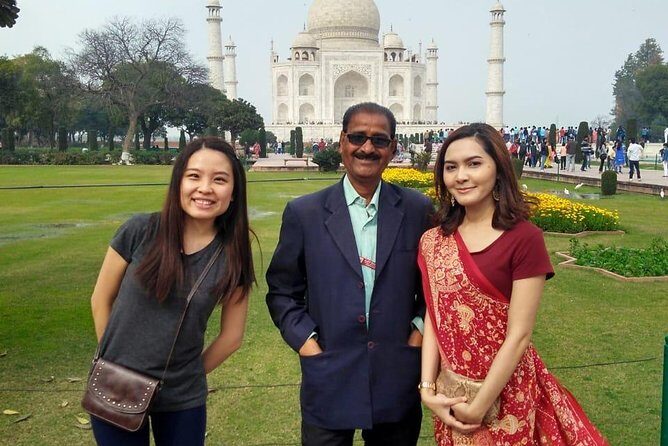
Day 2 is the emotional peak. You’ll get an early morning start for the Taj Mahal at sunrise, listed as the best time. That timing isn’t just a gimmick. Sunrise generally means softer light and fewer people compared with mid-morning, which makes the whole experience easier to absorb—especially when your schedule is tight.
Taj Mahal at sunrise: why the timing matters
The tour visits the Taj Mahal for about 2 hours. You’ll learn it was built by Mughal Emperor Shahjahan in memory of his beloved wife Mumtaz (1631–1633). The important thing for you is the flow: you’re not rushing in for 15 minutes; you’re given time for main views and a calmer pace to take it in.
Entrance tickets aren’t included, so you’ll want to budget extra.
Agra Fort: the other Mughal story in the same city
After returning to the hotel for breakfast, you’ll visit Agra Fort for about 1 hour. This massive fort was built by Mughal Emperor Akbar and helps you move beyond the single-sight story of Agra. It’s also a nice reset after Taj Mahal’s emotional intensity.
Entrance tickets aren’t included here either.
Fatehpur Sikri: a worthwhile detour before Jaipur
In the afternoon, you depart Agra to Jaipur (about 4 hours) and stop at Fatehpur Sikri, Emperor Akbar’s dream capital. The visit is about 1 hour, and entrance is listed as free.
This stop is valuable because it adds variety. Instead of going straight from “most famous mausoleum” to “most famous forts,” you get a different kind of Mughal site—bigger in concept and more sprawling in feeling.
Evening check-in in Jaipur comes next.
Jaipur day 3: Amber Fort to City Palace to Jantar Mantar to Hawa Mahal
Jaipur is where the tour leans into Rajasthan’s signature scenes. The day is packed, but it’s a logical sequence: fort first, then royal city spaces, then the astronomy/architecture highlights, ending with a quick water-palace view.
Amber Fort: the big opening act
You begin at Amber Fort (about 1 hour 30 minutes). It was originally the capital before Jaipur and was built in 1592 by Raja Man Singh. This is the kind of place where the visuals do the heavy lifting even if you’re tired. The fort setting gives you a sense of scale and power, and it’s a great morning start because it’s easier to enjoy before the day heats up.
Entrance tickets aren’t included.
City Palace: where royal life becomes a visitable space
Next is the City Palace for about 1 hour. The palace complex was established by Maharaja Sawai Jai Singh II when he moved his court to Jaipur. This stop grounds you in how Jaipur’s rulers organized power, residence, and public presence.
Entrance tickets aren’t included.
Jantar Mantar: science as architecture
Then you’ll go to Jantar Mantar (Jaipur) for about 1 hour. Built between 1724 and 1730, it’s a set of five astronomical observatories created by Sawai Jai Singh II. This is one of those stops that feels different from the usual palace-and-fort circuit.
If you like seeing old technology made visible, this is your moment.
Entrance tickets aren’t included.
Hawa Mahal: quick, iconic, and totally worth a few photos
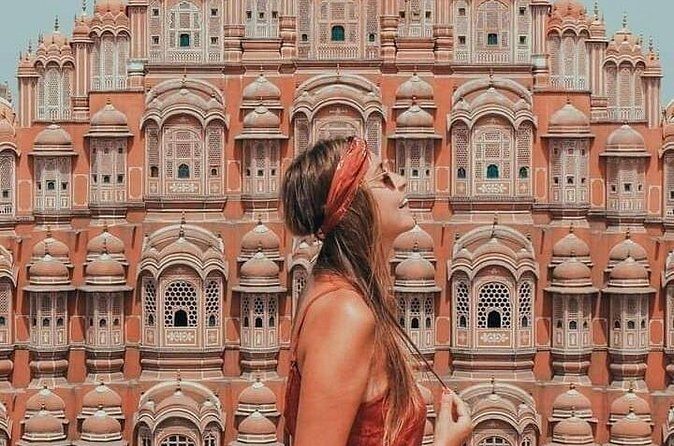
After Jantar Mantar, the plan includes Hawa Mahal (Palace of Breeze) for about 30 minutes. Built in 1799 as an extension to the Royal City Palace, it was designed so royal ladies of the time could observe street life from behind windows.
Entrance tickets aren’t included. The time is short, so make your photos count and don’t expect a long hang.
Jal Mahal: a short look at the Water Palace
Finally, you’ll stop at Jal Mahal (about 15 minutes)—a palace in the middle of Man Sagar Lake. The tour lists Jal Mahal as free entry. It’s a quick visual finish to the day and gives your eyes a break from sandstone walls and forts.
Late afternoon you head back to Delhi (about 4–5 hours), with driver transfer to your flight.
Price and tickets: what the $310 actually buys you
At $310 per person for about 3 days, the value is mostly in the bundled logistics. You’re paying for an air-conditioned car, private transportation between cities, and guided time at multiple major stops. Breakfast is included twice, which helps you avoid scrambling for meals between sightseeing blocks.
The big catch: monument entrance fees are not included. Since most of the major sights on your route are ticketed, you should expect to pay extra on top of the tour price. The itinerary clearly labels many sites as not included, while a few are free (like parts such as India Gate, Fatehpur Sikri, and Jal Mahal).
So, the smart budgeting move is simple:
- Keep $310 as your base.
- Add an extra budget line for entrance fees at the sites marked as not included.
- Plan for lunch and dinner on your own, since those meals are not included.
The tour does list all fees and taxes as included, which is a good sign for avoiding surprise add-ons related to service charges. But entrances are separate, and that’s the one cost category you’ll want to prepare for.
Comfort, safety, and guidance: what the best feedback points to
The strongest praise in the feedback centers on one theme: the ride and the explanations. The car is described as very comfortable, and the driver is called kind and caring, with a strong emphasis on safety. That matters on this route because you’re doing long transfers and early mornings.
On top of transportation, the guiding gets credit for detail—guides explaining historical places in a way that helps you understand what you’re looking at. That’s the difference between stacking photos and actually learning how these sites connect (and how the Mughal and Jaipur stories relate to one another).
This is the kind of tour that works well when you want structure but still want meaning.
Practical tips to make this trip smoother

A few things will help you enjoy the tight schedule without feeling rushed.
- Start early energy: Taj Mahal is a sunrise visit, so you’ll want to be ready before the day begins.
- Wear for walking: even “1 hour here” often includes stairs, uneven ground, and waiting at viewpoints.
- Plan your spending: entrance tickets and lunch/dinner are on you.
- Keep your daypack light: you’ll move between hotel, sites, and car multiple times.
- Don’t over-schedule photos: some stops are only 15 to 30 minutes. Use that time well and don’t feel bad moving on.
Also, the pickup is timed to your flight schedule, with pickup from Delhi Airport or Delhi hotel. If you’re arriving or leaving on a tight schedule, confirm your exact pickup time early.
Who should book this tour, and who might need more time

This works best for you if:
- you want the Golden Triangle highlights in a short window,
- you prefer private transportation and a guided plan,
- you’re okay with a faster pace and fewer hours per site.
You might want a different format if:
- you hate early starts,
- you want long, unstructured time at each monument,
- you’re hoping for full-day exploration at every stop.
Should you book this Delhi–Agra–Jaipur 3-day tour?
If your goal is to hit the major sights with less planning stress, this is a solid choice. The combination of sunrise Taj Mahal, Agra Fort, and Jaipur’s big names in a tight circuit makes the itinerary feel purposeful rather than random.
My main caution is cost planning and expectations. Budget for entrance fees since they are not included, and accept that some stops are short. If you can live with that trade-off, you’ll likely feel like you covered a lot of ground without feeling lost.
FAQ
FAQ
How long is the Delhi Agra Jaipur tour?
The tour runs for about 3 days.
What is the price per person?
The price is $310.00 per person.
Where do I get picked up?
You’ll be picked up from Delhi Airport or from your Delhi hotel, based on your flight schedule.
Is this a private tour?
Yes. It’s listed as private, so only your group will participate.
What’s included in the tour price?
Included features are air-conditioned vehicle, private transportation, all fees and taxes, and breakfast (2). Mobile ticket and pickup are also part of the offering.
Are entrance fees for monuments included?
No. Monument entrance fees are not included.
Are lunch and dinner included?
No. Lunch and dinner are not included.
Which day includes the Taj Mahal visit and when is it scheduled?
Taj Mahal is visited on day 2, early morning around sunrise.
What is the cancellation policy?
Free cancellation is available. You can cancel up to 24 hours in advance of the experience’s start time for a full refund.