REVIEW · NEW DELHI
Delhi Agra jaipur 6 Days Tour
Book on Viator →Operated by INDIA TRIP DESIGNER India · Bookable on Viator
Golden Triangle tours can feel like a checklist. This one feels more like a plan: pickup on arrival, city-to-city comfort, and guided stops that keep you moving without chaos. I also liked how the team coordination is described as prompt and organized, with people like Manoj Sharma and drivers such as Surendra and Ravi named as standout helpers.
The other big reason I think this tour works is the focus on timing. You get sunrise Taj Mahal, plus an evening Taj viewpoint at Mehtab Bagh. The main drawback to plan for: monument fees aren’t included, so you’ll want to budget for entry tickets and be ready for ticket lines at major sites.
In This Review
- Key highlights worth your attention
- Why the Delhi–Agra–Jaipur route feels efficient
- Price and logistics: what the cost really covers
- Day 1 in Delhi: arrive, settle in, and don’t waste the first day
- Day 2 Delhi circuit: Humayun’s Tomb, Qutub Minar, forts, and mosques
- Humayun’s Tomb (great if you like the story behind the stones)
- Qutub Minar (UNESCO and worth the time)
- Red Fort (Old Delhi’s Mughal pivot point)
- Jama Masjid (the largest mosque of India)
- India Gate and Lotus Temple (a breather before the evening)
- Day 3 Mehtab Bagh: the Taj from across the river
- Day 4 Sunrise Taj Mahal and Agra Fort: do the big things early
- Agra Fort: red sandstone with marble upgrades
- Fatehpur Sikri: Akbar’s dream capital
- Day 5 Jaipur: the fort-and-palace day that covers a lot
- Amber Palace (Amer Fort): hilltop fort energy
- Jal Mahal: quick stop, strong photo impact
- City Palace of Jaipur: where the court moved in
- Jantar Mantar: the stone observatory
- Hawa Mahal: the wind palace close-up
- Day 6 back to Delhi: time your departure without stress
- What kind of traveler this tour suits best
- My honest take on value: where it’s strong and where to watch
- Should you book this Delhi–Agra–Jaipur 6-Day Golden Triangle Tour?
- FAQ
- What cities does this tour cover?
- How long is the tour?
- Does the tour include pickup from the airport?
- Is there a guide included?
- Are breakfast and accommodation included?
- Are monument entry fees included?
- Is there a cancellation window for a full refund?
- Are children allowed, and is there a child fee?
Key highlights worth your attention
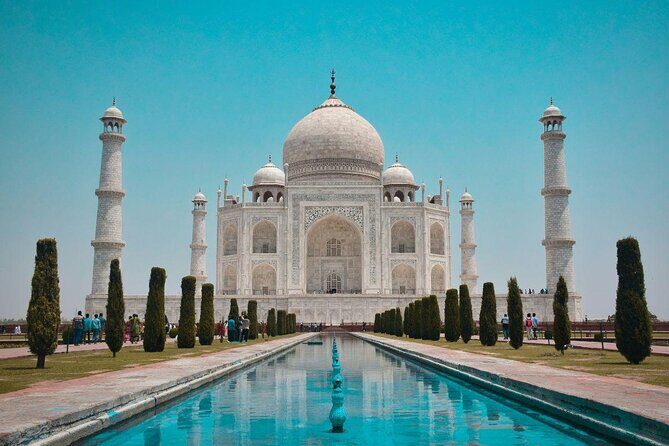
- Sunrise Taj Mahal timing for that first-light mood
- Mehtab Bagh for a river-side Taj view and better photo angles
- Humayun’s Tomb + Qutub Minar UNESCO-class Mughal and Sultanate architecture
- Old Delhi circuit with Red Fort, Jama Masjid, and a quick India Gate pause
- Jaipur lineup that covers forts, palaces, and the observatory in one day
- Trusted logistics with named drivers and easy airport/hotel transfers
Why the Delhi–Agra–Jaipur route feels efficient
This is the classic Golden Triangle—Delhi, Agra, and Jaipur—and that’s not just marketing. These three cities sit close enough to do in one week, but far enough that you actually change scenery and pace each day. In six days, you’re not stuck staring at a single neighborhood all trip.
What makes this version practical is how it compresses the must-sees without pretending you’ll do everything in a calm, slow way. You’ll start early on key days, and you’ll likely spend more time outdoors at forts and viewpoints than in museums. The upside is that you see the places at their best moments: Delhi in daylight, the Taj at sunrise, and Jaipur in a full, structured sightseeing block.
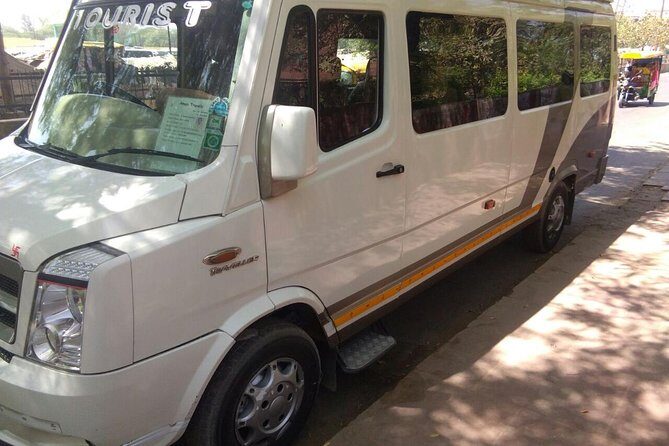
I also like that the tour is described as private for your group, not a cattle-car group march. That usually means less waiting around and fewer awkward “where is everyone?” moments.
A few more New Delhi tours and experiences worth a look


Price and logistics: what the cost really covers

At $1,021 per person for about 5 nights / 6 days, you’re paying for the heavy lifting. Based on what’s included, your money goes toward:
- 5 nights accommodation
- A professional guide
- Hotel/port pickup and drop-off
- Breakfast for 5 days
That matters, because Golden Triangle travel can get expensive fast when you piece everything together: hotels, transfers, a driver, and guiding all add up. Here, most of those moving parts are bundled.
The big extra cost you should plan for is monument fees (not included). On trips like this, entry tickets can be spread across multiple days—Taj Mahal, Agra Fort, Fatehpur Sikri, Amber Fort, and more. The tour is built to include the stops; you just handle the on-site ticketing.
Also worth noting: you get mobile tickets, which is handy if you’re traveling light and want less paper. And there are group discounts, though since it’s private for your group, it’s more about the operator’s pricing structure than you joining strangers.
Day 1 in Delhi: arrive, settle in, and don’t waste the first day
Day one is refreshingly simple. Your driver meets you based on your flight schedule and transfers you from Delhi Airport to your hotel in Delhi. That’s the right move for jet lag—no scavenger hunt for transportation, no guessing where your hotel is relative to traffic.
I’d treat this evening as a buffer. Delhi traffic can be intense, and your first day will feel easier if you don’t overplan. If you’re tired, stay close to your hotel. If you’re ready, take a short walk or grab an early dinner so you’re not scrambling later.
The tour also lists pick-up from hotels or train stations, so if your arrival is different than flying into Delhi, you’re still covered.
Day 2 Delhi circuit: Humayun’s Tomb, Qutub Minar, forts, and mosques
This is the day when Delhi turns into an outdoor walking museum, so the pacing matters. You start with Humayun’s Tomb, then move through the Qutub Minar complex, and later hit Red Fort and Jama Masjid in Old Delhi. You end with a couple of iconic landmarks: India Gate and the Lotus Temple.
Humayun’s Tomb (great if you like the story behind the stones)
Humayun’s Tomb is commissioned in 1569–70 by his first wife and chief consort, Empress Bega Begum. The design is credited to Persian architects Mirak Mirza Ghiyas and his son Sayyid Muhammad. That mix—Mughal rule, Persian influence, and Mughal-era ambition—shows up in the structure and layout.
Why I like this stop: it feels calm and grand without the peak-crowd pressure you sometimes get elsewhere. It also sets you up for the rest of Delhi’s monumental architecture, so the next sites land with more meaning.





Qutub Minar (UNESCO and worth the time)
The Qutb Minar is part of the UNESCO World Heritage Qutb complex. You’ll typically want about an hour here because it’s not just the tower; it’s the surrounding complex and the sense of scale.
Tip: bring sun protection and expect some walking. You’ll be outside, and Delhi can be bright even when the air feels cool.
Red Fort (Old Delhi’s Mughal pivot point)
Red Fort was built in 1648 by Mughal Emperor Sahajhan when the Mughal capital shifted from Agra to Delhi. It’s called Red Fort because of the red sandstone used in construction.
Even if you’re not a history nut, this is a good “big idea” stop: you’re seeing a physical symbol of political change, not just a pretty wall.
Jama Masjid (the largest mosque of India)
Jama Masjid is described as the largest mosque of India, built in the 17th century. This is one of those stops where you should give yourself mental room. It’s active, religious, and monumental at the same time.
If you’re visiting as a sightseeing-only person, it can still feel powerful. Just be respectful with dress and noise level.
India Gate and Lotus Temple (a breather before the evening)
India Gate is a war memorial on Rajpath, the ceremonial axis of New Delhi (once called Kingsway). Then you finish with Lotus Temple, a Bahá’í House of Worship dedicated in December 1986.
The Lotus Temple is designed like a flower-like shape and, importantly, it’s open to everyone regardless of religion. That makes it a good last stop in a long Delhi day because it’s welcoming and visually calming.
Day 3 Mehtab Bagh: the Taj from across the river
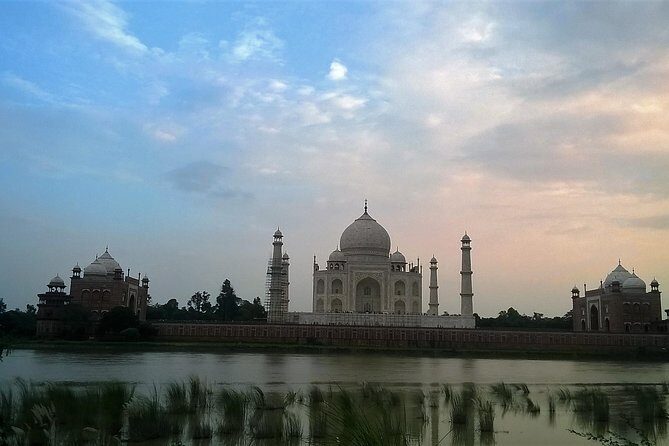
Day three includes a highlight that’s built for views: Mehtab Bagh, visited in the evening. The big promise here is the Taj Mahal viewpoint from the riverside, which is why it’s often ideal for photos.
This is a smart break from the “stand right in front of it” approach. Seeing the Taj from a distance changes the way your brain reads the building. It also gives you a second Taj moment before sunrise Taj, so the iconic sight doesn’t get “used up” too early.
If you’re a photographer, this is also one of the more practical stops for angles. If you’re not, you’ll still enjoy the atmosphere—especially after a day that likely involved city sights and more walking.
Day 4 Sunrise Taj Mahal and Agra Fort: do the big things early
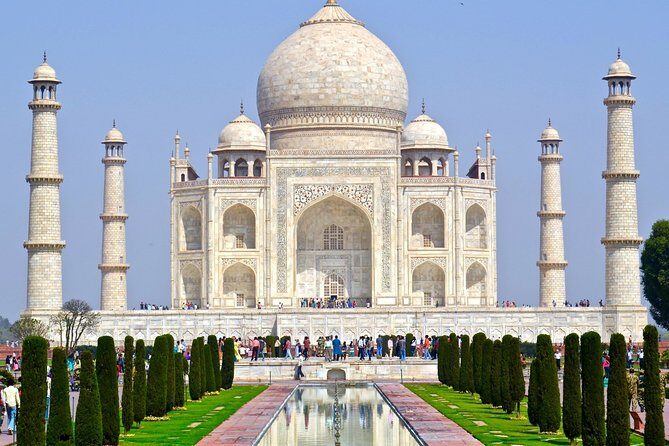
If you’re choosing between several Golden Triangle tours, sunrise Taj Mahal is one of the best reasons to pick this style of itinerary. The tour schedules Taj Mahal at sunrise, and that timing changes everything: fewer crowds at peak hours (you’ll still find people), softer light for marble, and a calmer emotional tone.
Taj Mahal specifics you should know before you go:
- Built by Mughal Emperor Shajahan
- In memory of Mumtaz Mahal
- Construction dates given as 1622–1631
- Made with Makrana marble
That’s a lot of meaning to place on a single monument, but seeing it early helps you absorb it. Don’t rush your photos. Take a few minutes just to look from different angles and distances.
Agra Fort: red sandstone with marble upgrades
After Taj Mahal, you move to Agra Fort, described as the second-largest fort in India. It was built by Akbar in the 16th century, using red sandstone, with white marble additions attributed to Shajahan.
This contrast—red base, white upgrades—helps explain how Mughal architecture evolved over time. It’s also a good reminder that these weren’t static monuments. They were managed, modified, and lived in.
Fatehpur Sikri: Akbar’s dream capital
Then comes Panch Mahal at Fatehpur Sikri. Fatehpur Sikri is described as Akbar’s dream capital built in the 16th century. It also includes the Tomb of Salim Chishti and the Buland Darwaja (victory gate).
What I’d watch for here: the scale. Fatehpur Sikri can make you feel like you’re in a city that was meant to last. Even if parts are less familiar than Taj Mahal, it can be the most interesting place to explore because it doesn’t need big marketing to impress.
Day 5 Jaipur: the fort-and-palace day that covers a lot
Jaipur is your “gear shift” day. Instead of Mughal tombs and forts in Agra, you’re stepping into Rajasthan’s royal architecture and city-planning style. This day is packed: Amber Palace, Jal Mahal, City Palace, Jantar Mantar, and Hawa Mahal.
Amber Palace (Amer Fort): hilltop fort energy
Amber Palace (Amer Fort) sits high on a hill and is about 11 km from Jaipur. It’s described as a principal tourist attraction and, practically, it’s the kind of place that rewards you for wearing comfortable shoes and taking your time.
It’s also one of those sites where views help you understand why it was built there. Forts were not built just for beauty.
Jal Mahal: quick stop, strong photo impact
Jal Mahal is a palace in the middle of the Man Sagar Lake. The palace and surrounding lake area were renovated and enlarged in the 18th century by Maharaja Jai Singh II.
This is not a long stop. It’s described as a short visit, so I’d use it for photos, quick looks, and a break from the fort walking.
City Palace of Jaipur: where the court moved in
City Palace was established when Jaipur was founded and the court moved there in 1727 by Maharaja Sawai Jai Singh II. The building served as the ceremonial and administrative seat of the Maharaja until 1949.
Even if you don’t know the royal timeline, the place makes sense as the center of power. It’s also a good transition point between older fort energy and the scientific swagger of the observatory later.
Jantar Mantar: the stone observatory
Jantar Mantar is a UNESCO World Heritage site featuring nineteen architectural astronomical instruments built by Sawai Jai Singh II and completed in 1734. It includes the world’s largest stone sundial.
I like this stop because it’s not only a pretty monument. It’s a reminder that Jaipur was built by rulers who cared about measurement, prediction, and the practical science behind the night sky.
Hawa Mahal: the wind palace close-up
Hawa Mahal (Palace of Wind) is built of red and pink sandstone. It sits on the edge of City Palace and extends to the women’s chambers (zenana). The structure was built in 1799 by Maharaja Sawai Pratap Singh.
This is a “look longer than you think you will” type of attraction. Even if it’s fast, the façade gives you a sense of design intent.
Day 6 back to Delhi: time your departure without stress

Your final day is straightforward: a driver transfer back to Delhi Airport based on your flight schedule. That’s exactly how you want to end—no last-minute bargaining for transport, no scramble to reach the airport with a sky-high stress level.
If you have a late flight, you might feel tempted to add extra stops. I’d resist that urge unless your schedule is clearly flexible; this tour’s value is that it holds the logistics steady until the end.
What kind of traveler this tour suits best
This itinerary is a strong match if you want:
- Classic Golden Triangle highlights in a single structured week
- A professional guide to explain what you’re seeing
- Pickup and drop-off to reduce Delhi and intercity stress
- A mix of big icons (Taj Mahal) and architecture that rewards attention (Humayun’s Tomb, Jantar Mantar)
It may feel less ideal if you hate early mornings. Sunrise Taj Mahal and a full sightseeing day in Jaipur mean your “slow mornings” probably won’t happen much.
My honest take on value: where it’s strong and where to watch
The best value pieces are the bundled hotel nights, breakfast, guided visits, and transfers. In a region where transport logistics can eat time, having a driver and coordination tends to pay off quickly.
The main thing to watch is spending on your side for monument fees. If you like doing a lot of extra optional stops or want to enter every possible area at each site, your final total may climb. Going in prepared keeps it from feeling like surprise costs.
Also, because this is a tightly packed sightseeing style, plan to travel light. Comfortable shoes and sun protection help you enjoy each stop instead of just surviving it.
Should you book this Delhi–Agra–Jaipur 6-Day Golden Triangle Tour?
I’d book it if you want the Golden Triangle highlights with structured logistics, guided context, and timing designed around the best moments—especially sunrise Taj Mahal and Mehtab Bagh.
I wouldn’t book it if you want an unhurried pace with lots of free time, or if you dislike tours that keep a steady daily rhythm.
If you’re traveling for your first taste of India’s north, this route is a practical way to see the big icons and still come away with more than photos—you’ll have places like Humayun’s Tomb and Jantar Mantar that actually reward your attention.
FAQ
What cities does this tour cover?
It covers Delhi/New Delhi, Agra (Taj Mahal and Agra Fort area), and Jaipur.
How long is the tour?
It runs for about 6 days, with 5 nights accommodation.
Does the tour include pickup from the airport?
Yes. Pickup is offered from Delhi Airport, and also from hotels or train stations.
Is there a guide included?
Yes, the tour includes a professional guide.
Are breakfast and accommodation included?
Yes. It includes 5 nights accommodation and breakfast for 5 days.
Are monument entry fees included?
No. Monument fees are not included.
Is there a cancellation window for a full refund?
You can cancel up to 3 days in advance for a full refund.
Are children allowed, and is there a child fee?
Children below 7 are free, and children must be accompanied by an adult.