REVIEW · JAIPUR
Cooking Class with Indian Family in Jaipur (Pickup & Drop Free)
Book on Viator →Operated by Rajasthan Travel Helpline · Bookable on Viator
A home-cooked meal beats any food tour. This Jaipur cooking class with an Indian family is hands-on, friendly, and practical—right down to learning techniques in the family kitchen and eating what you cook. You’ll likely be taught by Medha (a dentist) while Dr Manish and Mr Gupta join the conversation, making it feel more like dinner at a relative’s house than a show.
Two things I really like about it: first, the class is built around North Indian dishes with step-by-step guidance from the family, not a scripted demo. Second, you share a meal at the table with them, so you get context for what you’re making and why it tastes the way it does. A consideration: you’ll be cooking in a home setting, so it’s not the pick-me-up for people who want zero mess and zero kitchen smells.
In This Review
- What you do, who you meet, and what you eat
- Key points before you go
- A Jaipur home kitchen, taught by Medha and family
- What you cook: North Indian favorites (and a few crowd-pleasers)
- Spices and technique: the part that makes you remember the class
- Dinner table time: why the meal is more than included
- Pickup and the 3-hour pace: what to plan for
- Rajputi dress for women: a fun cultural bonus
- Dietary needs and the alcohol rule you should know
- Price and value in Jaipur cooking terms
- Who should book this (and who should skip)
- Should you book it? My take
- FAQ
- How long is the cooking class in Jaipur?
- Is pickup and drop-off included?
- What’s included in the price?
- Is alcohol included?
- Can the family accommodate vegetarian or vegan diets?
- Is this a private experience or shared with other groups?
- Where do I meet for the ticket redemption?
- Do women get traditional clothing to wear?
- How does cancellation work?
What you do, who you meet, and what you eat
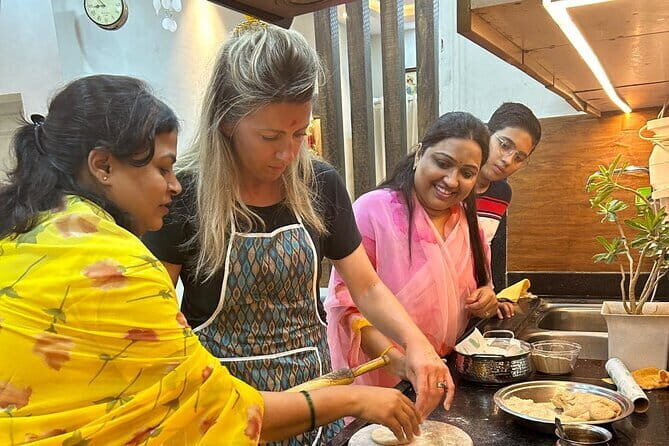
This experience runs about 3 hours and includes pickup, dinner, coffee or tea, snacks, and bottled water—so you’re not scrambling for food plans afterward. If you’re a woman, there’s also the option to wear traditional Rajputi dress for free, which turns an ordinary evening into a photo-worthy cultural moment.
One more heads-up: alcohol is not part of the standard meal plan, and alcoholic drinks are only for people 18+. If that matters to your group, plan your evening accordingly.
Key points before you go
- Family-taught cooking: You learn from Medha in the family kitchen, with Dr Manish and Mr Gupta involved in conversation.
- You eat your own work: The meal is served at the table, and you’re part of the group dinner.
- A real menu mix: Expect items that can include chapathis, pulao, curries, lentils, pakoras, and desserts like semolina pudding.
- Rajputi dress for women: Traditional attire is provided free, adding culture without extra cost.
- Pickup and drop included: You don’t have to wrestle with getting across Jaipur in the evening.
You can also read our reviews of more cooking classes in Jaipur
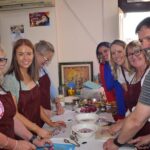
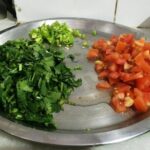
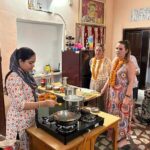
A Jaipur home kitchen, taught by Medha and family
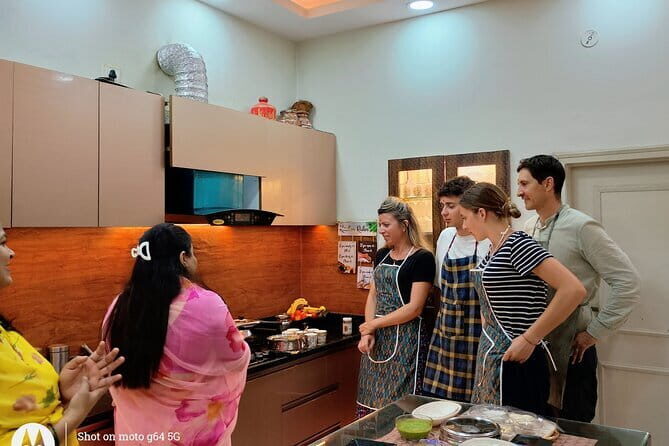
The best part of this cooking class is the setting. You’re not in a classroom with matching aprons. You’re in a real family home, with a family routine happening around you. The teaching style comes from that: you get explanations while ingredients are being handled, and questions come naturally—because the kitchen is shared space.
From the way the class is described and the details that show up in real lessons, Medha is often the main instructor (one review notes her as a dentist). Dr Manish and Mr Gupta are typically around to chat, which matters more than you might expect. Food here isn’t treated like a checklist; it’s tied to daily life, family habits, and spice logic.
A small but important practical point: when you cook in a home kitchen, you should expect tighter space than a cooking studio. You’ll likely stand close to a stove, work surfaces may be more compact, and the rhythm can be fast when food needs timing. It’s not a downside—it’s just the difference between “watching cooking” and doing it.
What you cook: North Indian favorites (and a few crowd-pleasers)
The class focuses on traditional North Indian dishes. Even if every session doesn’t match the exact same menu, the cooking themes are consistent: spices, breads, curries, and at least one dessert-style finish.
Based on the dishes that have shown up in past classes, you might learn to make things like:
- Chapathis (yes, flipping them is the kind of skill that feels simple and then suddenly isn’t)
- Pulao rice
- Lentils (often in curry form)
- Okra preparations
- Vegetable pakoras
- Paneer fritters
- Semolina pudding with vegetables (and other sweet or snack-style course items, depending on the plan)
- Mashed potatoes in some form as part of the cooking flow
The listing also points to options such as spicy curries, biryani, and desserts. I like this menu balance because it gives you “repeatable skills.” You can’t always replicate a family’s exact flavors later, but you can recreate the building blocks: spice roasting, how sauces come together, and how breads should look and feel.
Also note: the experience emphasizes that you use locally sourced ingredients. You won’t get a lecture about supply chains, but you’ll taste the difference when cooking with ingredients that match local standards.
Spices and technique: the part that makes you remember the class
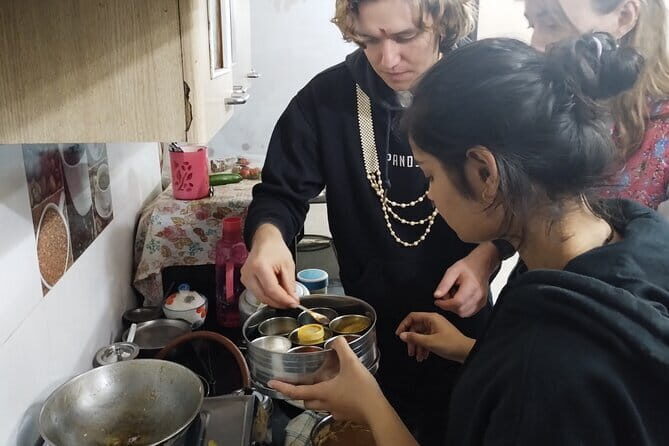
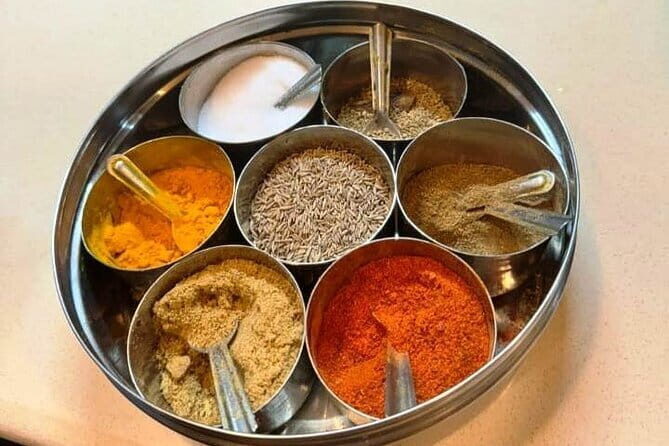
This isn’t just mixing ingredients and hoping for the best. A big chunk of the experience is learning the logic behind flavors—especially spices.
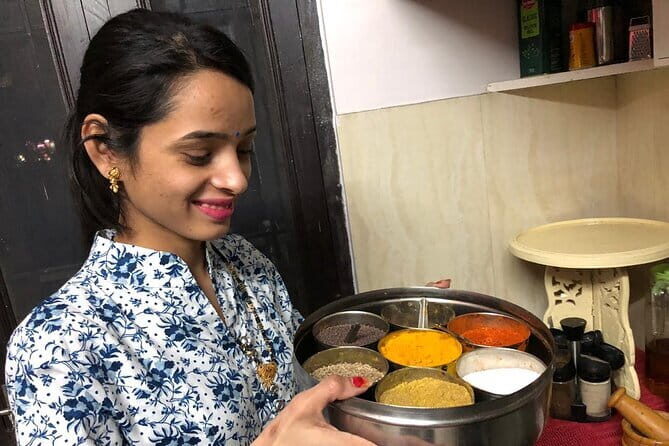
In past classes, the family has walked people through spices used in daily cooking. Expect to learn not only what goes in, but also the practical sequence that keeps spices from tasting raw or burning too early. You’ll also get hands-on instruction while you work at the stove and prep area, and that’s where the value hides.
Here’s what makes the teaching feel personal:
- You’ll get step-by-step guidance while you’re actually doing the work.
- Family members join in with conversation, so you’re not locked into a one-way lesson.
- There’s an easy back-and-forth vibe—questions about texture, timing, or what to swap are usually welcome.
One review mentions Dr Gupta specifically walking through dinner prep. That sort of “watch and then try” approach is ideal for a short class because you get quick correction before small mistakes become big ones.
Dinner table time: why the meal is more than included
Yes, dinner is included, but the way it’s served is the real hook. You eat what you cook as part of the family meal, not in a separate buffet line. That changes everything.
At home, food arrives with commentary:
- What you’re eating is tied to the dish’s role in a typical North Indian meal.
- The family can explain flavor choices as a living tradition rather than a story for tourists.
- Conversations happen while plates are being passed around, which is often where you learn the “how” behind the “why.”
A number of reviews highlight warmth and hospitality—especially the feeling of being welcomed into the house and included at the dinner table. One description even notes marigold necklaces as part of the welcome, which is a small detail, but it sets a tone: you’re not treated as a customer number.
And because this is a private experience (only your group participates), the table time tends to feel calmer and more personal than a shared group class.
A few more Jaipur tours and experiences worth a look





Pickup and the 3-hour pace: what to plan for
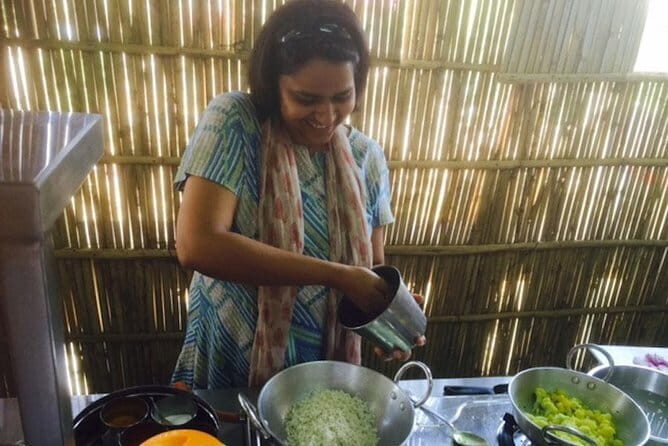
The class lasts about 3 hours and includes pickup and drop. That matters in Jaipur. Even if you’re comfortable navigating the city, the evening stretch can be where plans go sideways.
Your start point is the ticket redemption at:
Rajasthan Mahila Vikas Sanstha Jaipur NGO, B-59 Sikar House, Haji Colony, O/S Chandpole Gate, Jhotwara Road, Subhash Nagar, Jaipur, Rajasthan 302016, India
It’s also described as near public transportation, so you’re not stuck if you need an alternate way to reach the meeting area.
How the time usually feels:
- Arrival and welcome
- Ingredient and spice orientation
- Hands-on cooking for multiple dishes
- Dinner together as the end point (where your work becomes the meal)
A practical tip: keep your expectations realistic. In 3 hours, you won’t learn every cooking skill in India—you’ll learn specific dishes and the key techniques that make them work. That’s a good tradeoff. It’s focused, and you leave fed.
Rajputi dress for women: a fun cultural bonus
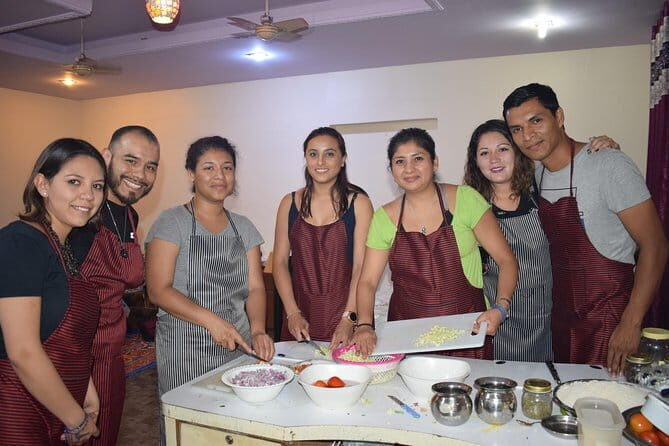
For female participants, there’s a chance to wear traditional Rajputi dress, provided free. That’s not just a costume moment. It helps set the tone for a “you’re part of the household” vibe while you cook and dine.
If you want to make this easy on yourself:
- Wear comfortable layers you can move in while cooking.
- Plan for a little getting-ready time at the start.
- Think about how you’ll manage hair and accessories if you’re taking photos.
This is the kind of add-on I like because it doesn’t feel like a paid prop. It’s included, and it connects to the family’s welcome and setting.
Dietary needs and the alcohol rule you should know
Good news: dietary restrictions can be accommodated—vegetarian, vegan, and others—if you indicate your needs at booking.
That’s important for a home-cooking experience. When the plan accounts for ingredients and cooking methods ahead of time, you get to participate fully instead of watching and eating something separate.
Alcohol is a different story. The listing notes that alcoholic drinks are served only to people 18 years and above. If you’re under 18, non-alcoholic drinks are served instead. Also, alcoholic beverages are not listed as included—so don’t count on it as part of the experience budget.
If alcohol is a must for your group, treat this as a food-first night and confirm what’s available when you arrive.
Price and value in Jaipur cooking terms
At $35.95 per person for about 3 hours, this can feel like a bargain because a lot is included:
- Coffee and/or tea
- Snacks
- Dinner
- Bottled water
- All fees and taxes
- Pickup and drop (promoted as free)
- Traditional Rajputi dress for women
When you compare it to typical Jaipur activities, the big value driver is that you’re paying for a host family’s time plus a full meal. Many cooking classes focus on instruction and leave you to handle dinner separately. Here, your dinner is the endpoint—and you eat what you cooked.
It’s also a smart deal if you care about authenticity. A home setting costs more for the host (food, space, cleaning), so when it’s priced reasonably, it usually means the experience is designed to be accessible, not premium-priced for profit.
The only time the price might feel less “sweet” is if you don’t want a hands-on kitchen role or you’re very picky about textures. Still, the shared dinner is usually a win.
Who should book this (and who should skip)
This class fits best if you:
- Want a hands-on cooking evening, not a lecture
- Enjoy spices and want a practical understanding of how dishes are built
- Like cultural connection where you eat with the people teaching you
- Prefer small, private groups
It may not be ideal if you:
- Need a totally hands-off experience (this is cooking, not observing)
- Have very sensitive mobility needs for working near a stove (home kitchens can be tight)
- Want a heavy nightlife plan right afterward—this is an evening that starts with cooking and ends with dinner, so it’s not built for late departures
If you’re coming to Jaipur mainly for forts and markets, this gives you a different kind of memory: something you can re-create at home.
Should you book it? My take
Book it if you want the kind of Jaipur evening where you learn real food skills, get warm family hospitality, and leave with dinner already handled. The best signs are the consistent highlights: the welcome into the home, teaching by Medha, conversation with Dr Manish and Mr Gupta, and the fact that you eat what you cook.
Skip it only if you don’t want to cook in a home setting or you need an alcohol-forward experience. Otherwise, this is one of those solid, practical activities that turns a short stay into a story you’ll still remember when you’re cooking back home.
FAQ
How long is the cooking class in Jaipur?
The class runs about 3 hours.
Is pickup and drop-off included?
Yes. Pickup is offered, and the experience is described as including pickup and drop free.
What’s included in the price?
Coffee and/or tea, snacks, dinner, bottled water, and all fees and taxes are included.
Is alcohol included?
Alcoholic beverages are not listed as included. Alcoholic drinks are only served to people 18 years old and above, and minors receive non-alcoholic drinks.
Can the family accommodate vegetarian or vegan diets?
Yes. Dietary restrictions such as vegetarian and vegan can be accommodated if you indicate your requirements at booking.
Is this a private experience or shared with other groups?
It’s private. Only your group will participate.
Where do I meet for the ticket redemption?
The ticket redemption point is Rajasthan Mahila Vikas Sanstha Jaipur NGO, B-59 Sikar House, Haji Colony, O/S Chandpole Gate Jhotwara Road, Subhash Nagar, Jaipur, Rajasthan 302016, India.
Do women get traditional clothing to wear?
Yes. For female participants, traditional Rajputi dress is offered for free.
How does cancellation work?
Free cancellation is available, with a full refund if you cancel at least 24 hours before the experience starts. No refund is offered for cancellations within 24 hours.
If you tell me your travel dates and your dietary needs, I can help you sanity-check whether this menu-style class will match what you’re hoping to eat in Jaipur.