REVIEW · NEW DELHI
Haridwar Rishikesh Day Tour from Delhi by Car
Book on Viator →Bookable on Viator
Two rivers, two bridges, one spiritual day. This Haridwar and Rishikesh day tour works because it pairs Har Ki Pauri Ganga Aarti atmosphere with practical door-to-door comfort via an air-conditioned private car pickup/drop-off from Delhi. I like how the route gives you both the big-picture sights and the smaller spiritual spaces. The tradeoff: it’s a long 8 to 12 hour day, so plan for walking time, a full schedule, and possible waits around sacred spots.
What you get for the price feels sensible for this kind of distance. You’re paying for transport, not just sightseeing, and the inclusions add up: bottled water and an all-in-one car plan that drops you back where you started. You also get a mobile ticket, plus group discounts if you’re traveling with friends.
One thing to consider up front: monument entrances fees and lunch/dinner are not included, so you’ll want a cash plan and some meal timing sense. Also, many stops are short, which is great for variety, but you won’t linger the way you might on a slower two-day trip.
In This Review
- Key takeaways before you go
- The Delhi-to-Haridwar-Rishikesh drive: why it’s worth it
- Har Ki Pauri: the Ganga ghats and the Brahma Kund detail
- Catching the aarti: what you should expect at the lamps
- Lakshman Jhula: views, crowds, and a hanging-bridge moment
- Ram Jhula: a different crossing, same river energy
- Sivananda Ashram: the brick-by-brick spiritual architecture
- Parmarth Niketan: the largest ashram feel and daily yoga
- Geeta Bhawan: Swargashram by the river
- Swarg Ashram: a more mixed-use spiritual zone
- Shree Shree Ma Anandamayee Ashram: a quieter final spiritual stop
- The part that can catch you: fees and meals
- Price and value: is $72 per person fair for this day?
- Who should book this tour (and who should not)
- Should you book this Haridwar and Rishikesh day tour from Delhi?
- FAQ
- How long is the Haridwar Rishikesh day tour from Delhi?
- What’s included in the price?
- Are entrance fees included for monuments or ashrams?
- Is lunch or dinner included?
- Is this tour private or shared?
- Do I get a mobile ticket?
- What is the cancellation policy?
Key takeaways before you go
- Door-to-door car comfort from Delhi with an air-conditioned private vehicle and hotel/airport/railway pickup and drop-off
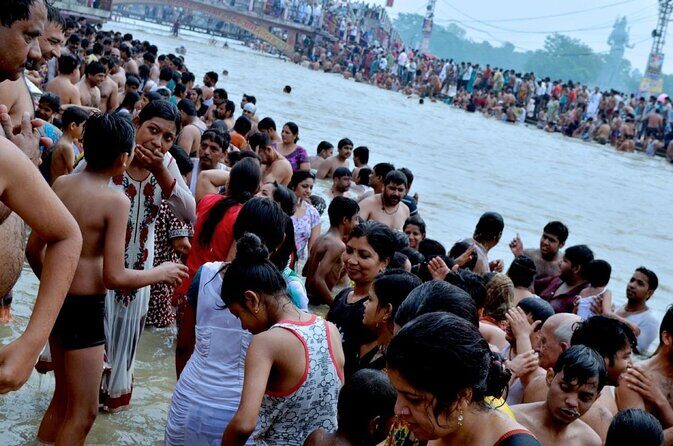
- Har Ki Pauri on the Ganga with time to see the Brahma Kund area and later catch the lamp-lit aarti
- Two signature crossings at Lakshman Jhula and Ram Jhula, both on foot and part of everyday river life
- Ashram time that’s more than photo stops, including Parmarth Niketan’s daily yoga focus
- Short, well-paced segments so you can sample multiple spiritual settings without losing the whole day
The Delhi-to-Haridwar-Rishikesh drive: why it’s worth it
You’re not just “going sightseeing.” You’re using a private car to do a very Indian distance-and-traffic reality check in one day. Haridwar and Rishikesh are close in theory—Rishikesh sits about 25 km north of Haridwar—but the roads, timing, and pedestrian crowding can turn a simple plan into a stressful scramble. A driver-run route solves that.
I also like the way the tour is set up for convenience. Pickup can be from your hotel, airport, or railway station, which matters if you’re arriving from somewhere else or you don’t want to spend the morning figuring out transportation. Bottled water is included, so you’re not hunting for it as soon as you park.
The other practical angle: the day is long, so this kind of car plan helps you protect energy. Your legs do the sightseeing, not your brain. You can spend mental bandwidth on what you’re seeing instead of on logistics.
You can also read our reviews of more tours and experiences in New Delhi.


Har Ki Pauri: the Ganga ghats and the Brahma Kund detail
Har Ki Pauri is one of those places where the setting explains the spirituality. It’s a major ghat on the Ganga at Haridwar, and it’s known for the idea that this is where the river “touches the plains” after the Himalayan ranges. Even if you’re not studying Hindu cosmology, the physical geography makes sense: you feel the shift from higher, wilder terrain to a more settled landscape.
There’s also a very specific detail built into the experience. Har Ki Pauri is associated with Brahma Kund, and you can look out for the stone said to bear an imprint of Lord Vishnu’s foot. That’s the kind of thing that turns a generic riverside stop into an actual story you can keep.
A big plus: the tour includes Har Ki Pauri twice. The first time is for sightseeing time—time to walk, look, and get oriented. Later, you return for the part people remember most: the aarti with lamps on the Ganga.
Catching the aarti: what you should expect at the lamps
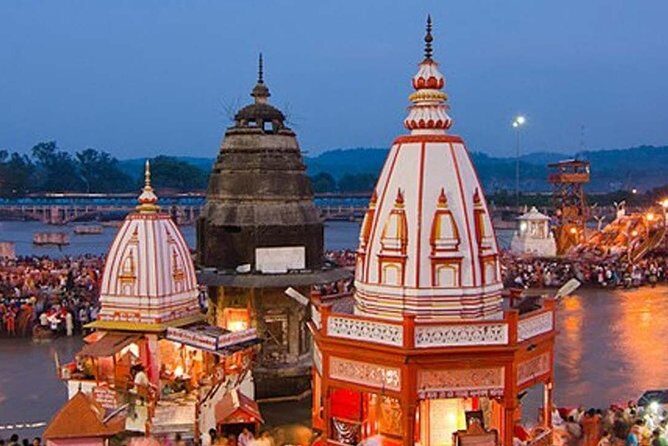
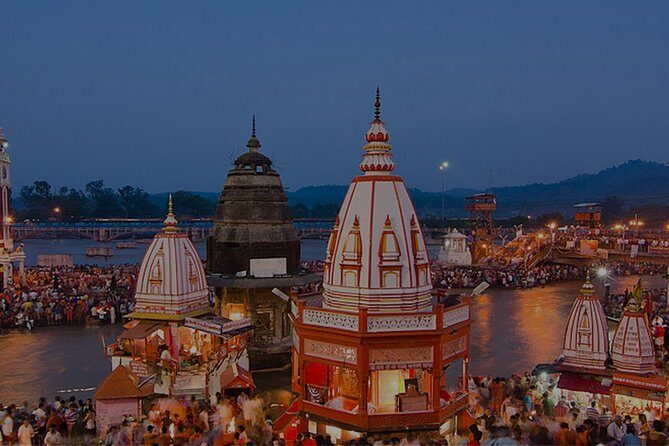
The aarti at Har Ki Pauri is described as a tradition that’s continued for decades. The key practical detail is where you’ll be when it happens. You’ll be on the other side of the banks, which gives you a clear view of the priests lighting lamps and moving them in a clockwise rhythm. The lamps reflect on the water, so your visual impression isn’t just “watching a ceremony.” It’s watching the Ganga itself carry the light.
One more note that helps you be ready: the river current is strong there. That means the visual of movement is part of the experience, not a random factor.
I love this portion because it adds soundless meaning. Even if you don’t speak Hindi, you can follow the rhythm, the spacing, and the sequence. You can also choose how close you want to get—sometimes stepping back is the best way to see the whole pattern.
Lakshman Jhula: views, crowds, and a hanging-bridge moment
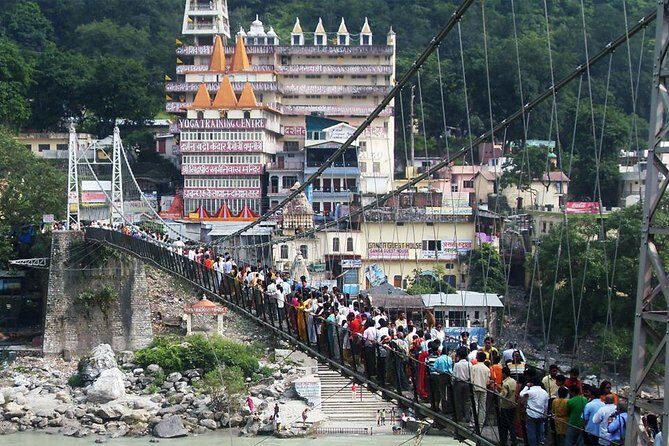
After the ghats, you’ll shift to Rishikesh’s famous river crossings, and Lakshman Jhula is the classic first stop. It’s a hanging bridge across the Ganga, about 450 ft long and roughly 70 ft above the river. It’s also about 3 km from the main town, so you’re getting a riverfront “Rishikesh feeling” rather than staying trapped in market streets.
Why this stop is worth it:
- The bridge is a landmark you can orient around.
- You get a Ganga view that looks different from the ghats.
- It’s part of everyday movement, not just scenery.
The drawback is the practical one: bridges are easy places for crowds to form. You’ll be moving with people, and that can slow your pace if you want lots of photos. If you’re sensitive to tight spaces, aim to go at a calmer moment of day, and keep your planning flexible.
Ram Jhula: a different crossing, same river energy
Then it’s Ram Jhula, another Ganga crossing with a slightly different vibe. It’s an iron suspension bridge connecting Muni Ki Reti and Swargashram. Like Lakshman Jhula, it’s a pedestrian bridge, but there’s an important detail: people also drive bikes on it.
That detail matters. It changes how you walk. You’ll be sharing the crossing with motorcycles, so keep your eyes up and your pace steady. It’s not dangerous if people follow basic caution, but it does mean you can’t treat it like a quiet footpath.
For me, the payoff is the “map feeling.” Seeing both Jhulas helps you understand that Rishikesh is built along the river with multiple spiritual and neighborhood pockets on either side.



Sivananda Ashram: the brick-by-brick spiritual architecture
Next comes Sivananda Ashram, which is described as a major achievement of its founder, His Holiness Sri Swami Sivananda. The story here is part of the value. Construction is tied to year 1936, and the ashram is presented as being built brick by brick on foundations like purity, integrity, nobility, and magnanimity.
Even if you don’t go deep into religious context, this stop helps you understand how Rishikesh grew: spiritual institutions aren’t just tents and chanting spaces. They’re real campuses with ideas built into their structure.
The time is short, so treat it as a “sense check.” Look around, read what you can if signage is available, and notice how the setting feels compared to the bridges and ghats.
Parmarth Niketan: the largest ashram feel and daily yoga
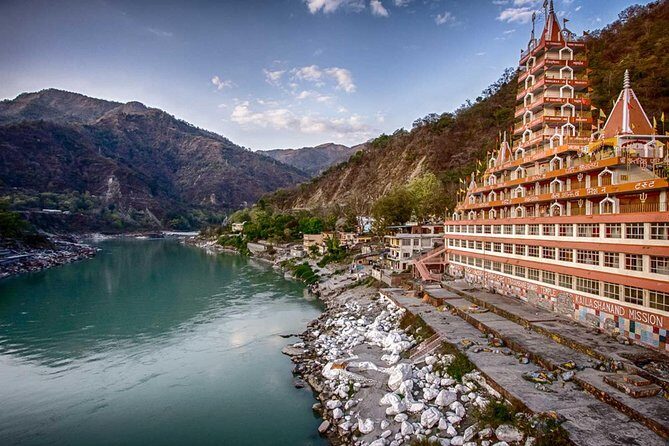
Parmarth Niketan is the biggest ashram stop on the list. It’s described as the largest ashram in Rishikesh, with over 1000 rooms, plus gardens and a clean, pure atmosphere for pilgrims. It also has a daily routine focus—yoga is specifically mentioned as part of the daily activities.
If you’re curious about yoga culture beyond studios, this is one of the best stops in the day because it’s designed for large groups and daily rhythm. You’re not only seeing where people worship; you’re seeing where routines happen.
The practical consideration: with a site this large, there can be moving crowds and staff activity. Since your time here is about 1 hour, you’ll want to prioritize what matters to you—quiet garden time, main campus viewing, or a quick check-in on yoga activity if it’s going on during your visit.
Geeta Bhawan: Swargashram by the river
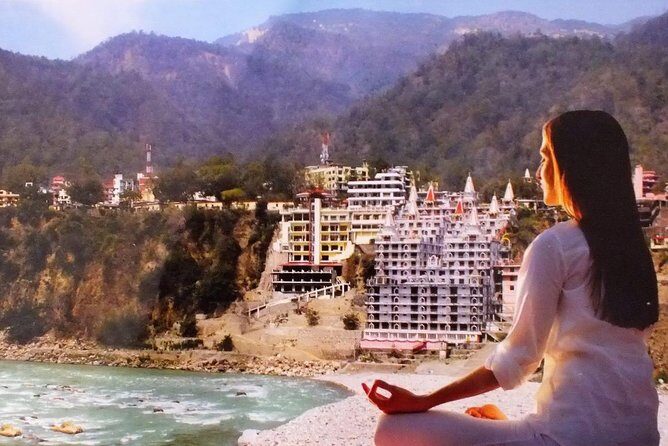
Then you move to Geeta Bhawan, located at the banks of the Ganga in Swargashram. This complex is described as large, with discourse halls and over 1000 rooms for devotees, noted as free. That’s a detail worth noticing: it reinforces the “devotional infrastructure” angle. Places like this function as long-term spiritual support, not just one-off monuments.
This stop lasts about 30 minutes, so again: think of it as a quick look at how Rishikesh organizes spiritual learning and residence. Look for signs of the discourse halls, notice how the campus sits by the river, and connect it to what you saw at the bridges—Rishikesh is a grid built around access to water.
Swarg Ashram: a more mixed-use spiritual zone
Swarg Ashram is described with a surprising amount of everyday infrastructure: bistros, stores, shopping buildings, libraries, parks, contemplation focuses, Ayurvedic dispensaries, eateries, and inns. It’s also described as being among forested slopes, with air described as free from contamination of a mechanized city.
You’ll likely feel the blend: it’s spiritual, but it’s not isolated. That’s one reason I like this stop. It shows what Rishikesh is actually like day-to-day—people living, studying, eating, and resting as part of the spiritual ecosystem.
Time here is short at 30 minutes, so use it to decide what kind of Rishikesh you prefer. If you like the idea of “soft infrastructure” around spirituality, this area makes sense. If you prefer quiet monasteries only, you might treat this as a quick orientation stop.
Shree Shree Ma Anandamayee Ashram: a quieter final spiritual stop
The final ashram-style stop is Shree Shree Ma Anandamayee Ashram. The description focuses less on architecture and more on the personality and compassionate nature attributed to Ma Anandamayee. That makes it more reflective than checklist-based.
With only about 30 minutes, I’d treat this as your decompression space. By now you’ve seen ghats, bridges, and multiple campus settings. This final stop works best when you slow your pace and let the day quiet down a bit.
The part that can catch you: fees and meals
The tour includes transport by air-conditioned private car, bottled water, and hotel/airport/railway pickup and drop-off. That’s the big value piece. But remember: monument entrance fees are not included, and lunch/dinner are not included.
So plan two things:
- Carry some small cash (and/or a payment method you trust) in case any stop charges.
- Have a meal plan before you go. If you don’t eat, a long spiritual day can become a grumpy day, and nobody wants that.
Also, because the schedule includes many short segments, your time may feel tight. That doesn’t mean it’s rushed—it’s just designed to cover a lot. If you’re the type who likes to linger at one location for a long stretch, you may need to mentally choose your favorites and let the rest be “quick impressions.”
Price and value: is $72 per person fair for this day?
At $72.00 per person, you’re paying for a full-day car plan from Delhi with door-to-door pickup and drop-off, plus bottled water. For a route that involves both Haridwar and Rishikesh sights, the cost makes more sense when you think of the driver time and the traffic complexity.
Here’s the value math:
- If you were to arrange separate transport options, you’d likely spend comparable time and money—and still face scheduling headaches.
- The included car means you can keep your day structured around the most time-sensitive parts, like the lamp-lit aarti at Har Ki Pauri.
- The group discount option can improve value for friends traveling together.
The main “not-included” costs are the entrance fees and your meals. Those are normal for religious sites and large campuses. As long as you budget a bit beyond the base price, the day feels like solid value.
Who should book this tour (and who should not)
This tour fits best if you:
- Want a one-day taste of Haridwar and Rishikesh without wrestling with transport.
- Like a mix of major river landmarks and ashram atmosphere.
- Prefer short, well-defined stops rather than hours-long museum-style lingering.
It might not fit if you:
- Want to spend long hours at one single site.
- Don’t handle long days well (8–12 hours is a commitment).
- Expect meals and entrance fees to be covered. They aren’t.
If you want more time, consider using this as a “first visit” day. Then you can return later for the one place you liked most.
Should you book this Haridwar and Rishikesh day tour from Delhi?
I’d book it if you want a practical, spiritual highlights day with minimal hassle. The combination of Har Ki Pauri’s Ganga aarti, both famous Jhula bridges, and multiple ashrams gives you variety without pretending you can see everything deeply in one go.
Just go in prepared: bring money for any entrance charges, plan your lunch/dinner strategy, and wear comfortable shoes because your day includes real walking time at ghats and bridges. If you’re lucky enough to have a driver like Rajeev and the Khera Tour & Travels team, the emphasis on being punctual, speaking good English, and driving in a way that feels safe can make a big difference on a long day.
FAQ
How long is the Haridwar Rishikesh day tour from Delhi?
It runs about 8 to 12 hours (approx.), depending on conditions and timing.
What’s included in the price?
The tour includes transport by air-conditioned private car, bottled water, and hotel/airport/railway station pickup and drop-off.
Are entrance fees included for monuments or ashrams?
No. Monument entrance fees are not included.
Is lunch or dinner included?
No. Lunch and dinner are not included.
Is this tour private or shared?
This is a private tour/activity, so only your group participates.
Do I get a mobile ticket?
Yes, you receive a mobile ticket.
What is the cancellation policy?
Free cancellation is available up to 24 hours in advance for a full refund. If you cancel less than 24 hours before the experience starts, the amount paid is not refunded.