REVIEW · AMRITSAR
Amritsar: Beating Retreat Ceremony, Sadda Pind and Dinner
Book on GetYourGuide →Operated by INDIATOR · Bookable on GetYourGuide
A border ceremony is a weird kind of theater, and Wagah Border delivers. You’ll watch the Indo-Pak parade close with flags lowered, gates thrown open, then slammed shut again, followed by a full day of Punjabi village-style entertainment at Sadda Pind.
I especially liked the big, choreographed clarity of the Beating Retreat at Wagah Border: you see both sides march in, salutes happen, flags get folded, and the trumpet ends it all. The driver-guide team matters too, and I had Amit, who kept things smooth and explained what you were seeing in plain terms.
One thing to weigh: the Sadda Pind experience can feel more like a staged village resort than a lived-in community, and the dinner is decent rather than standout.
In This Review
- Key highlights you should care about
- Wagah Border Beating Retreat: what you’re really seeing
- Timing: 3:00 PM pickup, then flag-down before sunset
- Viewing area and entry rules: VIP vs foreigner gallery
- The Beating Retreat ceremony, step by step
- Sadda Pind after Wagah: Punjabi village resort mode
- Gatka and the performance lineup: what’s worth watching closely
- The dinner: Punjabi favorites, but don’t overpromise
- Guide and transport: what makes the day feel easy
- Price and value: what $71 includes (and what costs extra)
- Who this tour suits best (and who should think twice)
- Should you book this tour?
- FAQ
- What time does the tour start and end?
- Where do we go first?
- How far is Wagah Border from Amritsar?
- Where do we go after the ceremony?
- What viewing areas are available at Wagah Border?
- Is VIP gallery entry allowed for Indian nationals?
- What happens during the Beating Retreat ceremony?
- What performances are included at Sadda Pind?
- What is included in the dinner?
- Are camera fees included?
Key highlights you should care about
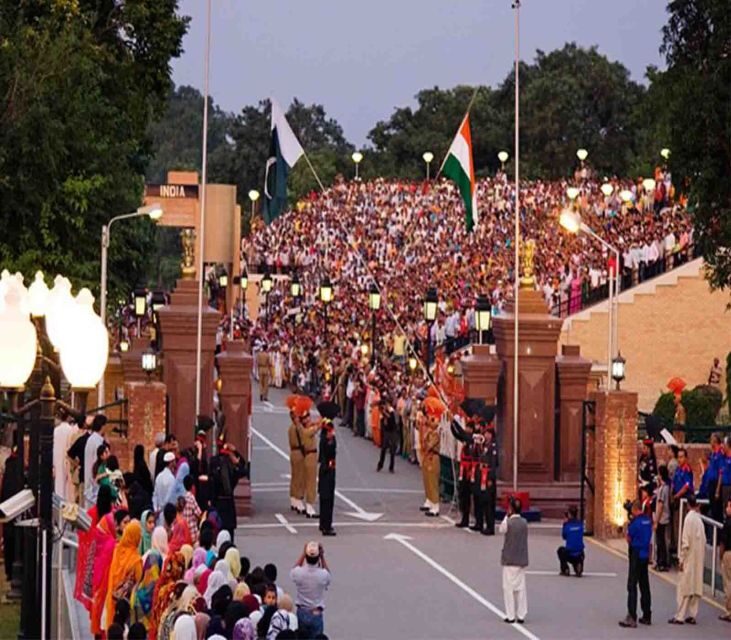
- Wagah Border gate-closing and flag-lowering ceremony, timed before sunset
- BSF and Pakistani Rangers march toward the gates from their respective sides
- Gatka performance, a traditional Sikh martial art you can watch up close
- Rope dancer, puppet show, and lassi being churned, plus games and a horse ride
- Punjabi dinner with dishes like kadhi chawal, makki di roti, and Amritsari naan
Wagah Border Beating Retreat: what you’re really seeing
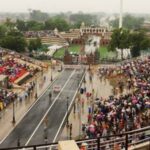
Wagah Border is about drama with choreography. This ceremony, called Beating Retreat, is centered on the end-of-day ritual: gates get closed, flags get lowered, and the two sides carry it out with strict timing and repeatable movements.
The practical magic is that you’re not stuck guessing what’s happening. You can watch the entire flow: marching toward the gates, salutes between soldiers, the moment flags come down, and the final handshake sequence before the gates close for good. It’s a ritual designed for visibility, not subtlety.
And yes, you’ll feel the tension in the air, but the ceremony is more about procedure and showmanship than anger. Think marching band discipline mixed with military precision.
A few more Amritsar tours and experiences worth a look
Timing: 3:00 PM pickup, then flag-down before sunset
This is an afternoon-to-evening plan, not a quick stop. You’re picked up around 3:00 PM from your hotel in Amritsar, then driven roughly 29 kilometers to Wagah Border.
The ceremony itself often starts before sunset. In winter it’s around 4:30 PM, and in summer around 5:30 PM. That matters because you want to arrive with enough buffer to park, pass any checks, and settle into your viewing area without stress.
After the ceremony, you’ll head to Sadda Pind, about 24 kilometers from Wagah Border, where the village-style programming and dinner take over. You’re typically back at your hotel around 9:00 PM.
Viewing area and entry rules: VIP vs foreigner gallery
You’ll watch from either the VIP or foreigner gallery at the ceremony. One important rule: VIP gallery entry is not permitted for Indian nationals.
If you’re coming with Indian nationality, plan on the other gallery option. If you’re not, the VIP section can feel more comfortable and less cramped, but either way, you’re there to see the synchronized march-and-salute sequence, not a museum exhibit.
Also consider this: the best view isn’t always about height. It’s about how well you can see the gates and the line where final handshakes happen. Arrive with enough time and keep an eye on where the key action sits.
The Beating Retreat ceremony, step by step
Here’s how the experience typically unfolds at Wagah Border, so you know what you’re watching.
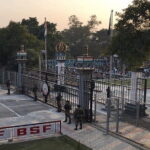
First, soldiers from both sides march toward the gates from their respective sides—BSF on the Indian side and Pakistani Rangers on the Pakistani side. Their movements are part of the script. It’s not random timing; it’s built to reach a crescendo as everything tightens toward the closing moments.
Then comes the gate-and-flag sequence. When the gate is thrown open, the ceremony shifts into the formal exchange of respect: salutes happen, soldiers lower the flags, and the flags are carefully folded and carried away.
The moment most people remember is the end phase. The ceremony reaches its high point with soldiers returning to the border line for the final handshake. After that, there’s no lingering exchange—no back-and-forth looking. Then the gates are slammed shut, and a trumpet signals the end.
It’s theatrical, yes. But it’s also structured enough that you can watch it like a story instead of just a crowd scene.
Sadda Pind after Wagah: Punjabi village resort mode
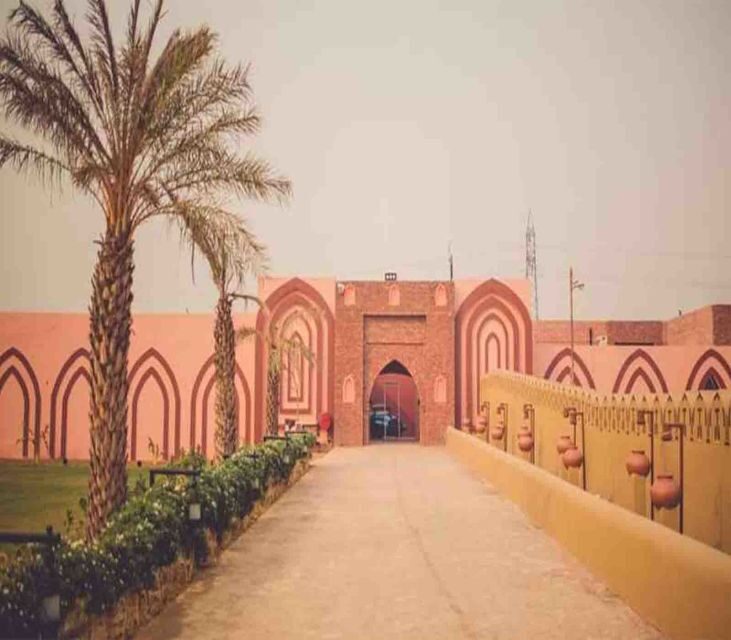
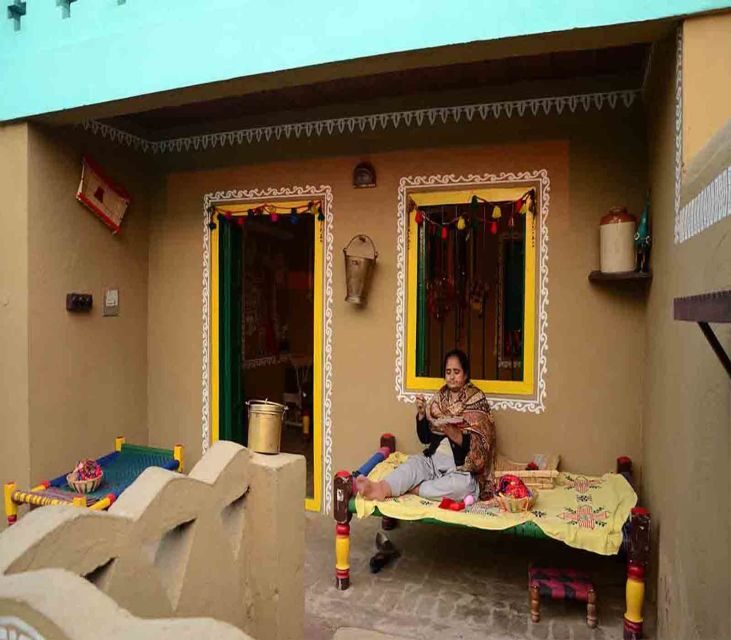
Once the ceremony ends, the day shifts gears. Your driver takes you to Sadda Pind, a Punjabi village resort set up as an interactive entertainment experience rather than an open-ended village wander.
This is where you get the full “Punjab day out” package: performances, mini-attractions, and lots of simple, hands-on moments designed for families and first-timers.
You’ll see things like:
- Gatka, a Sikh martial art performance (this is one of the stronger cultural elements)
- A rope dancer
- A magician
- A traditional puppet show
- Lassi being churned
- Fun games and a horse ride
- Mud houses and browsing handmade items
- Cooling breaks with misting technology
If you’re hoping for a real day inside a local household, set expectations accordingly. The tradeoff is that you get a concentrated, visitor-friendly version of Punjabi village life in a fixed timeframe.
And if you’re traveling with kids or want something lighter after the emotionally charged border ceremony, this stop is a practical breather.




Gatka and the performance lineup: what’s worth watching closely
The Gatka performance is the part I’d prioritize. It’s traditional Sikh martial practice turned into stage-ready display, so you can understand it as both culture and spectacle.
For the rest of the programming, I see it as a mix of skill-show and crowd-friendly fun:
- Rope dancing gives you that “how is that even possible” moment.
- The magician and puppet show add energy for people who don’t want constant cultural depth.
- The lassi-churning moment is quick, but it’s tactile and visual—one of those things that makes food feel less abstract.
If you want to get value, arrive ready to watch in short bursts. The day runs like a schedule, not like a wandering art fair.
The dinner: Punjabi favorites, but don’t overpromise
After the performances, you’ll eat a traditional Punjabi dinner at Sadda Pind. The menu includes classic comfort foods such as kadhi chawal (rice with a spiced gram-flour curry), makki di roti (corn flatbread), and Amritsari naan.
You’ll also find pindi chole (chickpea dish) and desserts like kulfi and rabri. There’s a reason these names get mentioned again and again: they’re hearty, familiar, and built for crowds.
Now for the balanced take. The dinner isn’t always what people expect if they’re imaging a fine-dining Punjab meal in a real village setting. It’s more like a solid, filling included meal inside a resort-style atmosphere. The food usually does the job, but it won’t replace a great local restaurant dinner you’d chase on your own.
If you’re hungry after Wagah and a performance schedule, you’ll likely appreciate it. Just don’t treat it like the main culinary mission of your trip.
Guide and transport: what makes the day feel easy
This kind of outing lives or dies by logistics. You’re moving between Amritsar, Wagah Border, and then Sadda Pind, all within one evening window.
A big plus here is having a guide and driver who keep the flow moving. I had Amit, and he was attentive and professional—exactly the kind of support you want when you’re trying to translate what’s happening at a border ceremony without missing key beats.
Private air-conditioned transport also matters. You’re not spending your day fighting traffic stress or figuring out where to park. You get the ride, the guide explanations, bottled water, and the day stays centered on the sights rather than the logistics.
Price and value: what $71 includes (and what costs extra)
At around $71 per person, this sits in the “reasonable for a full evening” category. Here’s what’s included:
- Entry fees to the ceremonies and performances
- Punjabi dinner at Sadda Pind
- Private air-conditioned vehicle for transport
- A tour guide
- Bottled water and all taxes/service charges
What’s not included:
- Camera fees at ceremonies and performances
- Any unexpected expenses from disruptions like natural calamities or flight delays
So the real value question is this: you’re paying for convenience plus the packed schedule. If you were doing it alone, you’d still need transport, tickets, timing, and a way to understand what you’re seeing at Wagah. For many visitors, that’s where the money goes.
If your priority is just the border ceremony and you already know you’d skip Sadda Pind and its dinner, you may feel the price heavier. But if you want the whole arc—ceremony, cultural performance, then food—it’s easier to justify.
Who this tour suits best (and who should think twice)
This experience is a good fit if:
- You want to see the Beating Retreat without wrestling with timing or transportation
- You’re interested in Sikh cultural performance through Gatka
- You like a structured day where the schedule keeps you moving
- You want an included dinner at the end, so your evening doesn’t dissolve into decision-making
It’s not ideal if:
- You’re hunting for an authentic, everyday village experience and you want to avoid staged environments
- You consider dinner the main event and only want top-tier, standout meals
The border ceremony is the anchor. The rest is the supporting cast. Treat Sadda Pind as an entertainment-focused stop, and the day makes more sense.
Should you book this tour?
If your goal is to see Wagah Border’s closing ritual in a stress-free way, I’d say yes—this tour puts the ceremony first, then fills the gaps with Punjabi performances and a filling dinner. The guide support (Amit in at least one case) is a real comfort because you understand what the ceremony is doing rather than just watching soldiers in motion.
I’d book with the right expectation: Sadda Pind is entertaining and easy, but it may not satisfy anyone hoping for purely authentic village life. If that’s your mindset, you might still enjoy it for the performances and lassi-churning moments, then add a separate dinner elsewhere later if you want a more memorable meal.
If you want one-word guidance: Book for Wagah. Accept Sadda Pind as the bonus.
FAQ
What time does the tour start and end?
Pickup is at your hotel lobby around 3:00 PM, and the activity ends back at your meeting point around 9:00 PM.
Where do we go first?
You go first to Wagah Border for the Beating Retreat ceremony.
How far is Wagah Border from Amritsar?
Wagah Border is about 29 kilometers from Amritsar.
Where do we go after the ceremony?
After the ceremony, you’re taken to Sadda Pind, about 24 kilometers from Wagah Border.
What viewing areas are available at Wagah Border?
You watch from the VIP or foreigner gallery.
Is VIP gallery entry allowed for Indian nationals?
No. VIP gallery entry is not permitted for Indian nationals.
What happens during the Beating Retreat ceremony?
Soldiers march toward the gates, salutes happen, flags are lowered and folded, and the ceremony ends with a final handshake sequence, gates slammed shut, and a trumpet marking the end.
What performances are included at Sadda Pind?
You’ll see Gatka plus other entertainment like a rope dancer, magician, traditional puppet show, and lassi being churned.
What is included in the dinner?
The Punjabi dinner includes dishes such as kadhi chawal, makki di roti, Amritsari naan, pindi chole, and desserts like kulfi and rabri.
Are camera fees included?
No. Camera fees at ceremonies and performances are not included.