REVIEW · NEW DELHI
7 Day Golden Triangle Private Heritage and Varanasi Tour
Book on Viator →Operated by Perfect India Trip · Bookable on Viator
Golden Triangle to Varanasi, with no stress. What makes this tour appealing is the private guide and door-to-door pickup in Delhi, paired with overnight trains and comfy 4-star hotels. I love how the route stacks classic Mughal sights with Jaipur’s palace-and-temple day, and I also like that breakfast is included for six mornings. One consideration: you should budget extra for entrance tickets and the Varanasi boat rides.
This is built for people who want to see a lot without spending their vacation arguing with taxis, maps, and ticket counters. And because it’s private, it’s just your group—so the pacing and stops feel more adjustable than on big group buses.
The plan does move fast between highlights, so it’s best if you’re okay with an on-the-go rhythm rather than a slow, stay-put kind of trip.
In This Review
- Key points before you go
- Why this Delhi–Jaipur–Agra–Varanasi route feels efficient
- Day 1 in Delhi: from Old Delhi landmarks to Qutub Minar height
- Raj Ghat and Old Delhi’s big names
- Jama Masjid: a mosque visit that’s more than a photo stop
- Qutub Minar: going vertical
- Day 2 to Jaipur: Jal Mahal’s calm break from city touring
- Day 3 in Jaipur: palaces, instruments, museums, and temples
- Hawa Mahal: quick, iconic, and good for orientation
- City Palace: the royal center of attention
- Jantar Mantar: astronomy you can walk around
- Albert Hall Museum: a 19th-century pause
- Birla Mandir and Monkey Temple: add spirituality and views
- Day 4 in Agra: Taj Mahal time plus the Mughal layer cake
- Taj Mahal: the reason people plan trips here
- Itmad-ud-Daula (Baby Taj): “jewel box” energy
- Agra Fort: power from ground level
- Mehtab Bagh: the garden across the river
- Day 5 and 6: Varanasi’s Ganges rhythm, from Sarnath to Aarti
- Sarnath: a morning start with museum-level meaning
- Ganga Aarti: sunset cruise, grandstand view
- Dawn boat cruise: the “before the crowds” feel
- Dasaswamedh Ghat: the familiar focal point
- Bharat Kala Bhavan: art and archaeology indoors
- Day 7 in Delhi: Humayun’s Tomb, India Gate, and Lotus Temple
- Humayun’s Tomb
- India Gate: a memorial with numbers that stick
- Lotus Temple: modern design, award-winning style
- Price and value: what $76 per person really covers
- How to get the most from a guide-led private schedule
- Should you book the 7-day Golden Triangle and Varanasi tour?
- FAQ
- What cities does this 7-day tour include?
- Do I get hotel pickup and drop-off in Delhi?
- Is this tour private or shared with other groups?
- Are overnight trains part of the trip?
- Is breakfast included?
- Do I need to pay for entrance tickets and Varanasi boat rides?
- How do I receive tickets?
- What’s the booking and cancellation approach?
Key points before you go
- Door-to-door pickup and drop-off in Delhi, so you’re not hunting transportation on day one
- Golden Triangle highlights plus Varanasi, mixing palaces, forts, and holy Ganges moments
- 4-star hotel nights and overnight trains, which helps you cover distance without losing whole days
- Guide support people remember, including Mohammad kadir (praised as friendly, honest, funny, and responsible) and Irfan Ali (praised as cooperative and friendly)
- Breakfast included for six days, a real value when sightseeing starts early
- Costs to plan for up front, since entry tickets and Varanasi boat rides are not included
Why this Delhi–Jaipur–Agra–Varanasi route feels efficient
A Golden Triangle trip already saves time by grouping Delhi, Jaipur, and Agra. The twist here is adding Varanasi, which turns the whole journey from “monuments and photos” into “monuments plus meaning.”
You get guided time at major sites across four cities, with private transfers that keep you out of the worst parts of public-transport stress. The private format matters more than you think: when you’re paying for a guide, you want them to handle timing, entry flow, and the constant little questions that pop up. This tour is designed for that.
You’re also sleeping in a mix of 4-star hotels and overnight trains. That combo can be a lifesaver for a short trip because you’re not burning daylight on travel. Just know it also means your comfort depends a lot on how well you handle train travel.
You can also read our reviews of more private tours in New Delhi


Day 1 in Delhi: from Old Delhi landmarks to Qutub Minar height
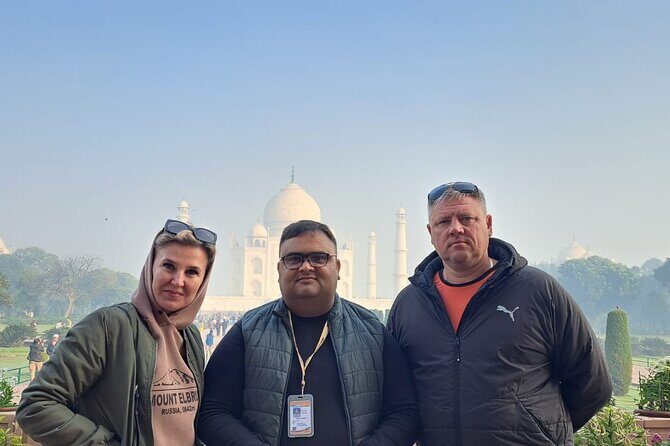
Delhi day one is a guided walk through layers of the city—religious, imperial, and ceremonial—without wasting time.
Raj Ghat and Old Delhi’s big names
You start with a pickup from your hotel or the airport, then head toward the city’s key Old Delhi stops. Raj Ghat is on the schedule for about 30 minutes, with admission listed as free. It’s a good first touch because it sets a reflective tone before you jump into grand architecture.
Next comes the Red Fort (Lal Qila). The tour gives you about 30 minutes here, with admission included. Built on May 12, 1638 under Emperor Shah Jahan (commissioned in the description), the fort is the kind of place that makes the word Mughal feel concrete. You don’t need to be an architecture nerd to appreciate the scale and the “capital-era” feel.
Jama Masjid: a mosque visit that’s more than a photo stop
You’ll then visit Jama Masjid, also included, with about 1 hour on the site. The guide-led time matters because this is one of the largest mosques in India, built by Shah Jahan between 1650 and 165* (the text is truncated, but the period is clearly part of the point). With that kind of scale, you’ll get more out of the visit if someone helps you read what you’re looking at.
Qutub Minar: going vertical
To close out the day, Qutub Minar is scheduled for about 1 hour, with admission included. This is the 73-meter-tall tower of victory, built in 1193 by Qutab-ud-din Aibak, with five distinct storeys. If you like seeing how engineering and design send messages across centuries, this stop pays off fast.
My practical take: day one is intense. If you wear yourself out early, later days can feel rushed. Pace yourself: hydrate (a water bottle is included) and save your best energy for Qutub Minar, where the visual payoff is huge.
You can also read our reviews of more historical tours in New Delhi






Day 2 to Jaipur: Jal Mahal’s calm break from city touring
After breakfast, you check out and drive to Jaipur. You’re looking at a long-ish transfer—about 5 hours driving, arriving around 2:00 p.m.
Jal Mahal is the first scheduled stop back in the city: around 30 minutes, and it’s listed as free admission. This is a nice “decompression” stop. Even if you only view it from the right angles the schedule allows, it gives your eyes a change of pace from forts and dense old-city streets.
Day 3 in Jaipur: palaces, instruments, museums, and temples
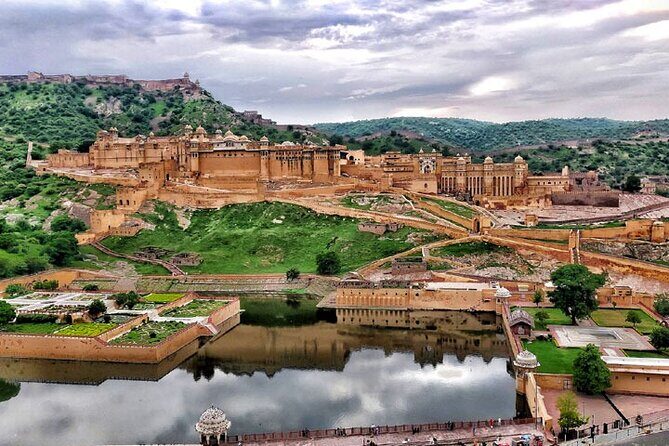
Jaipur is a full day, and it’s packed in a smart mix: a showpiece palace, royal residence time, science-in-stone, a museum, and then temples for variety.
Hawa Mahal: quick, iconic, and good for orientation
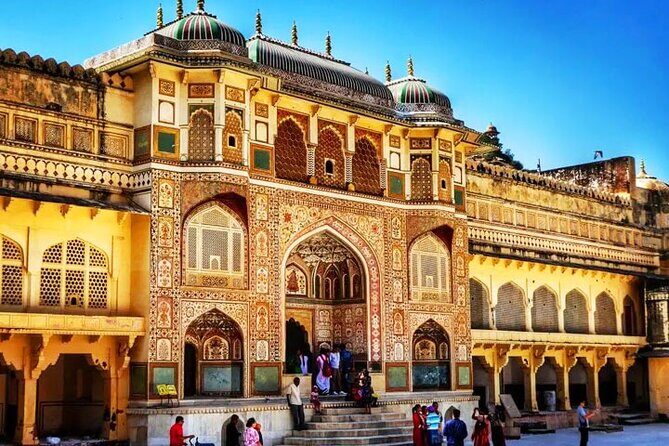
You start with Hawa Mahal (Palace of Wind), about 30 minutes, listed as free. The description notes it’s built in the form of Krishna’s crown, and that’s a useful detail because it helps you recognize the palace’s design logic instead of treating it like a random famous building.
City Palace: the royal center of attention
Then it’s City Palace, about 1 hour, with admission included. This is where Jaipur feels like a lived-in seat of power, not just scenery. You’ll get more value from the time if your guide explains what parts are functional vs. ornamental, but even without that, it’s an easy stop to absorb because so much looks deliberately composed.
Jantar Mantar: astronomy you can walk around
Next is Jantar Mantar for about 1 hour, included. The description says it’s a collection of 19 astronomical instruments built by Rajput king Sawai Jai Singh II, completed in 1734. This is a great stop when you want something different from “another palace/another fort.” It also makes a good break from crowds because you can move around and take it step by step.
Albert Hall Museum: a 19th-century pause
Albert Hall Museum gets about 1 hour with admission included. It was built in 1876 as a concert hall, and the museum name is tied to Victoria and Albert Museum in London because of architecture similarity (again, the description’s key idea). If you prefer indoor time after intense outdoor sightseeing, this fits well.
Birla Mandir and Monkey Temple: add spirituality and views
You also get two temple moments on the schedule. Birla Mandir (Lakshmi Narayan Temple) is about 30 minutes and listed as free admission. The text highlights white marble and that it was built by the B.M. Birla Foundation in 1988.
Finally, Monkey Temple (at Galta) is about 30 minutes, admission included. The description calls it a peaceful retreat with views over the Aravali Hills and a green, serene setting. Practical reality: it’s a nature-and-temple stop, so bring a little patience. If you want photo time and a calmer atmosphere, it’s a good match for that.
My practical take: Jaipur day is the “variety day.” Don’t try to treat every stop as the main event. Let one or two be your deep focus, and enjoy the rest as different flavors of the city.
Day 4 in Agra: Taj Mahal time plus the Mughal layer cake
Agra day is anchored by the Taj Mahal, but it’s not just one monument. You’ll also visit Itmad-ud-Daula, Agra Fort, and Mehtab Bagh, which helps you understand how Mughal power expressed itself in multiple forms.
Taj Mahal: the reason people plan trips here
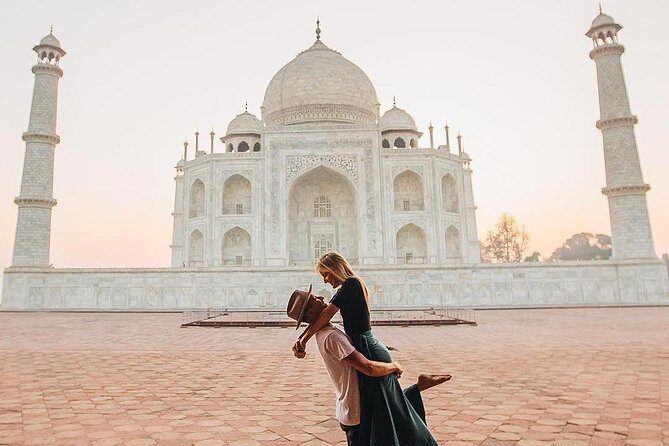
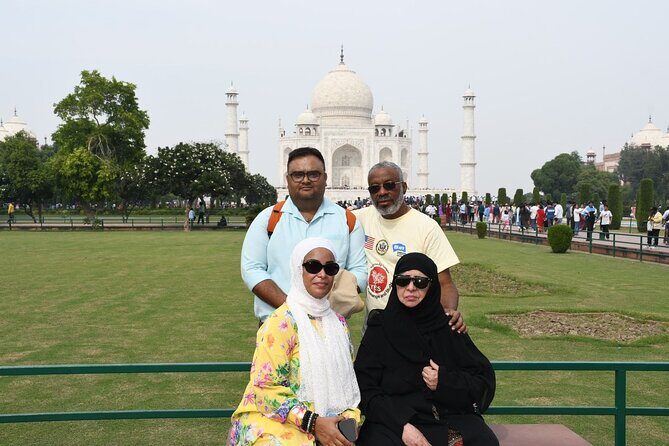
Taj Mahal is scheduled for about 2 hours with admission included. The description calls it the most photographed monument in the world and notes it stands in splendor. Since your time is limited, you’ll get more value if you go in with a plan for what you want to see: wide views, close details, and then a quiet moment to simply take it in before the crowds change the vibe.
Itmad-ud-Daula (Baby Taj): “jewel box” energy
Next is Itmad-ud-Daula for about 30 minutes, included. It’s described as a Mughal mausoleum, often called the jewel box, and nicknamed Bachcha Taj or Baby Taj. This is a good counterbalance to the Taj: smaller, more intimate, and still deeply decorative.
Agra Fort: power from ground level
Agra Fort is about 1 hour, included. Built between 1565 and 1573 for Mughal Emperor Akbar, it was the main residence of the Sikarwar clan of Rajputs until the Mughals occupied (per the description). Even if you don’t memorize dates, the structure helps you “place” the Mughal story.
Mehtab Bagh: the garden across the river
Mehtab Bagh is about 30 minutes, included. The description says it’s a charbagh complex north of the Taj Mahal complex and across the Yamuna River, in flood plains. If you like symmetry and calm viewpoints, this stop gives you a different angle on the Taj area without requiring another long indoor visit.
Day 5 and 6: Varanasi’s Ganges rhythm, from Sarnath to Aarti
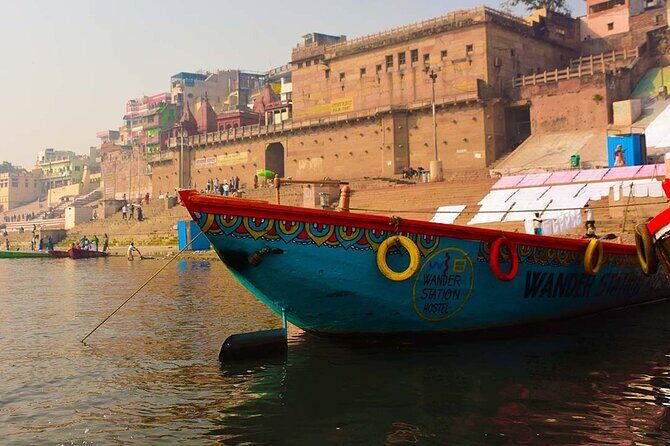
This is where the tour changes tone. Delhi, Jaipur, Agra can be about empire and design. Varanasi is more about daily life, faith, and water.
Sarnath: a morning start with museum-level meaning
On day five, you arrive in the morning and get met at the Varanasi Railway station. Then you go to your hotel for check-in. Sarnath is on the schedule for about 1 hour with admission included. Even with limited time, this stop gives you a historical-and-spiritual anchor before you move fully into river rituals.
Ganga Aarti: sunset cruise, grandstand view
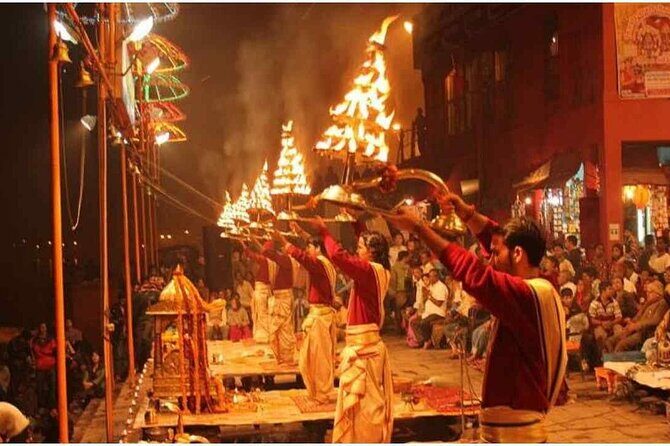
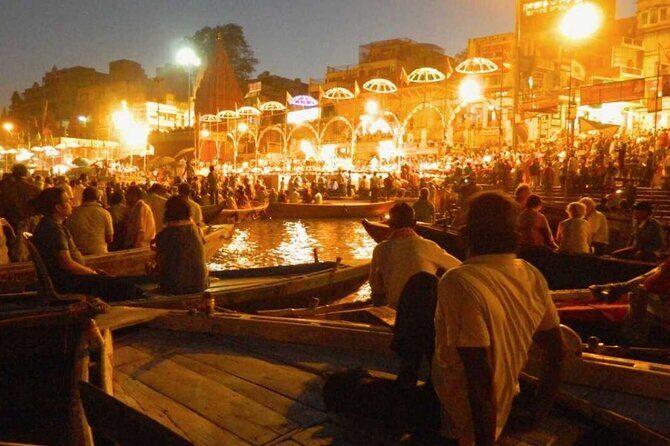
Ganga Aarti is a sunset cruise on the Ganges for about 1 hour. The listing notes it’s a grandstand view to witness the ancient prayer and oil lamp ceremony. This is one of the reasons to do Varanasi with a guided plan. Watching from the right spot at the right time can make a huge difference, and you’re not left guessing how to find it.
Dawn boat cruise: the “before the crowds” feel
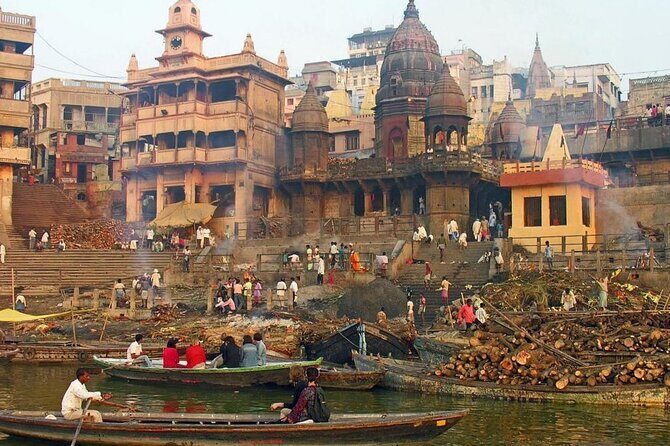
Day six starts early with a Ganges boat cruise at dawn. The schedule says the best time to visit the ghats is dawn when pilgrims take their morning dip, and you’ll get about 2 hours on the water with admission included. This is where the tour’s pacing earns its keep: you’re doing Varanasi at the moment that makes Varanasi feel most alive.
Dasaswamedh Ghat: the familiar focal point
Next is Dasaswamedh Ghat for about 1 hour, listed as free admission. The description calls it the most well-known of the ghats and points you toward watching people on the steps, including young men doing yoga poses and people preparing for religious moments. Even without extra explanation, it’s the kind of place where your eyes keep finding new details.
Bharat Kala Bhavan: art and archaeology indoors
Then you visit Bharat Kala Bhavan for about 1 hour, included. The description says it’s an art and architecture museum with paintings, Hindu and Buddhist sculptures, and archaeological materials. This is a smart “cool-down” after the intense sensory input of the river.
After that, you travel back to Delhi by train and do an overnight stay.
My practical take: if you’re the type who likes to see every detail, Varanasi might feel like information overload in the best way. If you prefer quiet, you’ll want to balance the river time with the museum break so you don’t run out of mental energy.
Day 7 in Delhi: Humayun’s Tomb, India Gate, and Lotus Temple
Your final day in Delhi is three very different sights, which is a nice way to close the loop.
Humayun’s Tomb
Humayun’s Tomb is scheduled for about 1 hour with admission included. The description calls it a splendid mausoleum built in memory of Emperor Humayun. It’s another architecture-focused stop, and it complements the earlier Qutub Minar visit by offering a different style of monumental burial architecture.
India Gate: a memorial with numbers that stick
India Gate gets about 30 minutes with admission included. The text notes it stands as a memorial to more than 70,000 soldiers who died in the First World War and the Third Anglo-Afghan War. This is a sobering pause after days of grand monuments.
Lotus Temple: modern design, award-winning style
Lotus Temple is next for about 1 hour, with admission listed as free. The description says it’s famous for its lotus structure and has won awards and recognitions for its style of building and the concept of religion. It’s a good final stop because it shifts you from historical empires to modern spiritual design.
Price and value: what $76 per person really covers
At $76 per person, the headline price is low enough that it’s worth looking closely at what’s included vs. what you’ll pay separately.
What you do get:
- Pickup and drop-off anywhere in Delhi
- A private tour guide matched to the itinerary
- Breakfast for six days
- All parking fees, tolls, fuel, and taxes
- A complimentary water bottle
- Mobile ticket
- Private-only group format
What’s not included:
- Entry tickets (even if some stops are marked as included/free on the site, the overall tour description flags entrance tickets as extra)
- Boat rides in Varanasi
- Gratuities (optional)
So the value is in the logistics and guidance. You’re paying for someone to drive you, manage the schedule, and keep you moving between major sights in Delhi, Jaipur, and Agra, then into the river-focused core of Varanasi. If you’re comfortable spending extra on entry fees and the Varanasi boat component, this kind of packaged structure can be a strong deal. If you prefer to control every cost tightly and you’re price-sensitive about entrance fees, you’ll want to estimate those extras before booking.
How to get the most from a guide-led private schedule
A private guide is only “worth it” if you use them as more than a driver with a clipboard. Here’s how I’d make it work.
- Ask for short context at each stop. The tour is packed with big names (Red Fort, Jama Masjid, Qutub Minar, Taj Mahal). A good guide turns those into stories you can track.
- Use the guide for timing decisions. When you have dawn river time and a sunset Aarti cruise, the order matters. Let your guide help you pick what you can skip if you feel tired.
- Expect a mix of indoor and outdoor. You’ll get museum time in Jaipur and Bharat Kala Bhavan in Varanasi, plus long outdoor architecture days. Plan clothing for sun and calm indoor air.
- If you want names, here’s what to watch for. Mohammad kadir is praised as friendly and honest and as taking responsibility for the group, while Irfan Ali is praised for being cooperative and friendly. If either style fits how you travel, that’s a good sign.
Should you book the 7-day Golden Triangle and Varanasi tour?
I’d book this if you want a private route that strings together Delhi, Jaipur, Agra, and Varanasi with minimal transport headaches. You’ll enjoy it most if you like moving between highlights and you’re open to an early dawn start and a sunset river ritual.
I wouldn’t book it if you’re trying to keep costs tightly predictable, since entry tickets and Varanasi boat rides are extra. And if you need a slow pace with lots of free time, this itinerary-style flow may feel a bit full.
If your travel style is “let someone else handle the route” and you’re excited for both Mughal monuments and Ganges ceremonies, this is a solid pick.
FAQ
What cities does this 7-day tour include?
It starts in New Delhi, then includes sightseeing in Jaipur and Agra, and finishes with Varanasi. It also returns you to Delhi for final sightseeing.
Do I get hotel pickup and drop-off in Delhi?
Yes. The tour includes pickup and drop-off to anywhere in Delhi, plus pickup from your hotel or the airport to begin day one.
Is this tour private or shared with other groups?
It’s private, meaning only your group participates.
Are overnight trains part of the trip?
Yes. The tour includes on overnight trains and also stays in comfortable 4-star hotels.
Is breakfast included?
Yes. The package includes breakfast for 6 days.
Do I need to pay for entrance tickets and Varanasi boat rides?
Yes. The tour description notes that entry tickets and boat rides in Varanasi cost extra.
How do I receive tickets?
You’ll receive a mobile ticket.
What’s the booking and cancellation approach?
You get confirmation at booking time, and there is free cancellation up to 24 hours in advance for a full refund. The experience also requires good weather, and if it’s canceled due to poor weather, you’ll be offered a different date or a full refund.