REVIEW · NEW DELHI
All Inclusive: 3 Day Golden Triangle Tour with Taj Mahal Sunrise
Book on Viator →Operated by Agra Taj Visit · Bookable on Viator
Sunrise at the Taj makes the whole trip click. This Golden Triangle tour feels interesting because you get a dedicated guide, private transport, and city-to-city pacing without the hassle of planning. I especially liked the sunrise Taj Mahal moment and the comfort of a private, air-conditioned ride with attentive drivers like Ali and Akhatar. One consideration: the day-by-day notes say admission tickets aren’t included, but the package also lists monument entrance fees—so confirm what’s actually covered before you go.
If you want classic landmarks without living out of taxis, this is set up for you. You get 2 nights in 3–5 star hotels (twin sharing, usually), bottled water, breakfasts each morning, and two dinners, plus private local guides for the key sites in Delhi, Agra, and Jaipur.
In This Review
- Key highlights worth caring about
- How this Golden Triangle tour works in real life (and why it’s good value)
- Day 1 in Delhi: Qutub Minar, Humayun’s Tomb, Lotus Temple, and India Gate
- Qutub Minar and Humayun’s Tomb: more than postcard stops
- Lotus Temple and India Gate: faith and city identity
- Drive past government buildings: President’s House and Parliament
- Shopping time before the Agra transfer
- Early morning Taj Mahal: what you’re really buying with sunrise timing
- Sunrise isn’t just romantic; it’s practical
- Then comes Agra Fort, a UNESCO must-do
- Lunch and shopping: keep your energy for Jaipur
- Jaipur highlights: Amber Fort, City Palace, Hawa Mahal, Jal Mahal, and Jantar Mantar
- Jal Mahal and Hawa Mahal: photos first, questions later
- City Palace: royal residence with a guide’s help
- Jantar Mantar: bring your curiosity
- Shopping time and the return to Delhi
- Guides, drivers, and the solo-friendly comfort factor
- Hotel nights: 3–5 star comfort with twin sharing (and a smart check)
- Price check: does $399 feel fair?
- What could trip you up? (The realistic considerations)
- Who should book this tour (and who might prefer something else)
- Should you book the 3 Day Golden Triangle with Taj Mahal Sunrise?
- FAQ
- What’s included in the tour price?
- Is pickup included?
- What’s the exact duration?
- Are admission tickets included for the monuments?
- Which monuments are part of the sightseeing?
- Are there any closures to be aware of?
- What meals are included and what’s not?
- What’s the cancellation policy?
Key highlights worth caring about
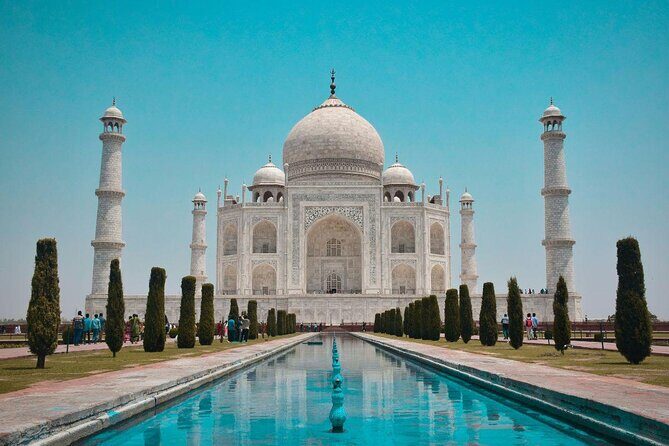
- Sunrise Taj Mahal timing that gives you the best shot at a calm start
- Private driver + air-conditioned vehicle for the long transfer days
- Hands-on city guidance at Qutub Minar, Humayun’s Tomb, Jantar Mantar, and more
- Two hotel nights in 3–5 star comfort with twin sharing
- Planned photo stops at Jal Mahal and Hawa Mahal, not just quick bus looks
How this Golden Triangle tour works in real life (and why it’s good value)
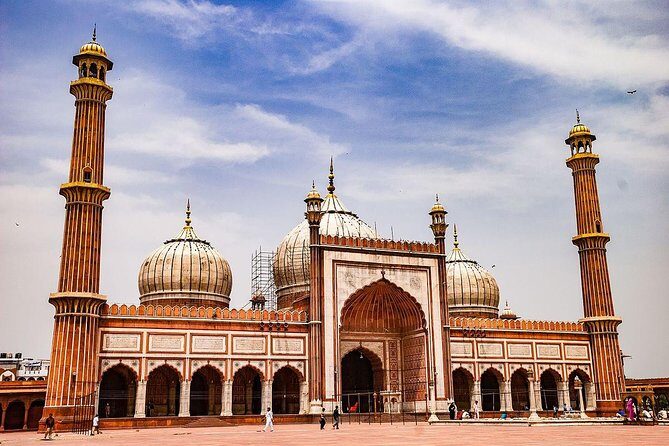
A Golden Triangle tour is supposed to connect three famous cities: Delhi, Agra, and Jaipur. The smart part here is that you’re not doing it in a chaotic group scramble. You get private transportation and professional guides, so the big sites come with context instead of a blur.
Now, the value question matters because $399 per person isn’t just “transportation.” In your package, you’re paying for the practical stuff that adds up fast in India: a dedicated driver, guided sightseeing in each city, and comfortable hotel nights. Add in bottled water plus breakfast and two dinners, and you’re reducing the amount of decision-making you have to do mid-trip.
You do still need to plan for meals not listed as included. Lunch is consistently on your own, and that can be either a fun chance to taste local food or a hassle if you’re tired. If you like flexibility and don’t mind choosing lunch each day, that works well.
Also, watch the ticket detail. The inclusions mention monument entrance fees, but the day notes also say admission tickets are not included. That inconsistency is fixable—just confirm what you’ll be paying for on the ground.
A few more New Delhi tours and experiences worth a look



Day 1 in Delhi: Qutub Minar, Humayun’s Tomb, Lotus Temple, and India Gate
Day one begins with pickup in Delhi—hotel or airport or another agreed location. Then you set out for a half-day tour that mixes UNESCO sites, government landmarks, and a couple of iconic city scenes.
Qutub Minar and Humayun’s Tomb: more than postcard stops
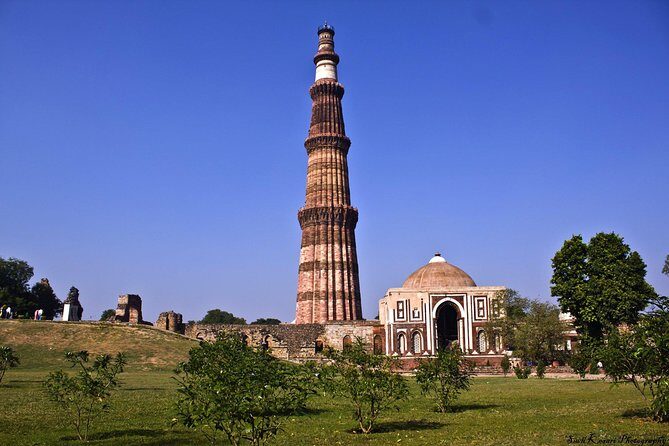
You’ll see Qutub Minar, a 11th-century UNESCO World Heritage Site tied to Qutub-ud-din Aibek of the Slave Dynasty. It’s the kind of landmark that feels even better in person because you notice the details up close: the height, the stonework, and the scale. It’s a strong opening because it instantly tells you this trip isn’t just about one monument.
Next comes Humayun’s Tomb, another UNESCO World Heritage Site. This is where you get a sense of how Mughal architecture developed—again, better with a guide than with guesswork.
Lotus Temple and India Gate: faith and city identity
The Bahai Temple (Lotus Temple) also makes the list, though it’s closed on Mondays. If your trip lands on a Monday, your guide should adjust the plan, but you’ll want to keep that closure in mind.
You’ll also visit India Gate, a classic Delhi stop that anchors the city’s modern identity. It’s not the same kind of monument as the tombs and towers, but it’s useful for orienting yourself.
Drive past government buildings: President’s House and Parliament
You’ll drive by the President’s House and the Parliament House (plus Secretariat buildings). It’s not a long walkthrough, but it’s a nice perspective moment—Delhi is a living capital, not a museum city.
A few more New Delhi tours and experiences worth a look





Shopping time before the Agra transfer
After the Delhi touring portion, there’s time for shopping in New Delhi. Then you’ll drive about three hours to Agra on the expressway, check in, and relax.
This pacing is a plus if you’re trying to recover from travel. It’s also realistic: Agra is where the big emotional hit happens on day two.
Early morning Taj Mahal: what you’re really buying with sunrise timing
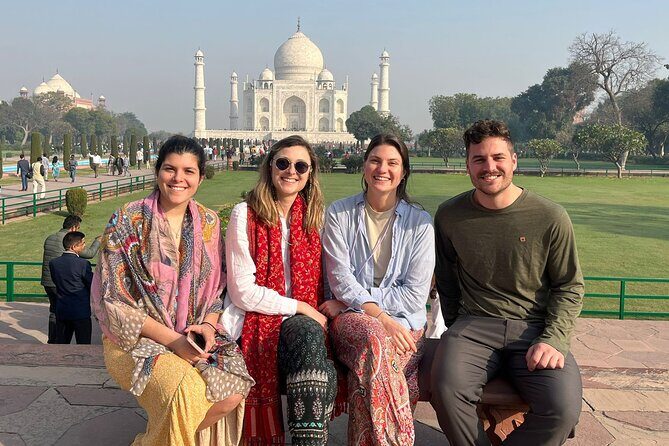
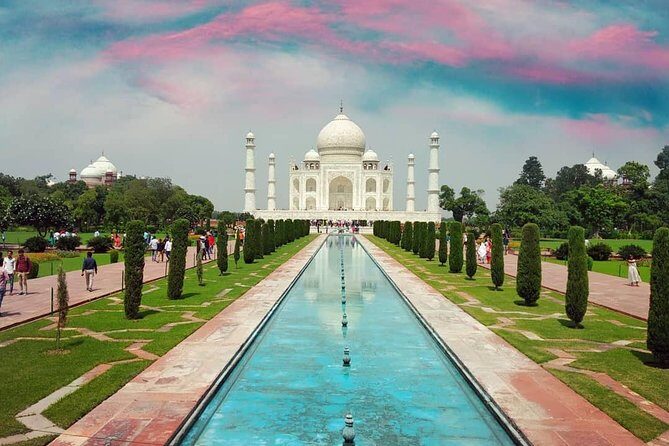
Day two starts with the star of the show: the Taj Mahal at sunrise. The monument is UNESCO-listed, and the tour notes say it’s closed on Fridays—so your travel dates matter more here than for most stops.
Sunrise isn’t just romantic; it’s practical
Sunrise timing helps because light is softer and crowds often feel less intense than later in the day. You also get calmer energy for photos. If you’ve ever tried to photograph a major site under harsh midday sun, you know why this matters.
Then comes Agra Fort, a UNESCO must-do
After breakfast, you’ll visit Agra Fort, another UNESCO World Heritage Site. This is one of those places that rewards attention. It’s connected to the history around the Taj without replacing it.
One thing to know: Agra Fort can feel bigger than you expect. A guide helps you keep your footing—what to look at first, what the layout means, and how it connects to what you’ve already seen.
Lunch and shopping: keep your energy for Jaipur
You’ll have free time for shopping in Agra and then lunch in a local restaurant is on your own expense. After lunch, you transfer to Jaipur and check in.
The Jaipur arrival day tends to feel lighter: you’re not cramming in another major multi-hour monument after dark. The goal is to get you rested enough for day three.
Jaipur highlights: Amber Fort, City Palace, Hawa Mahal, Jal Mahal, and Jantar Mantar
Day three is where Jaipur shifts the trip from Mughal grandeur to royal city design and famous landmark geometry.
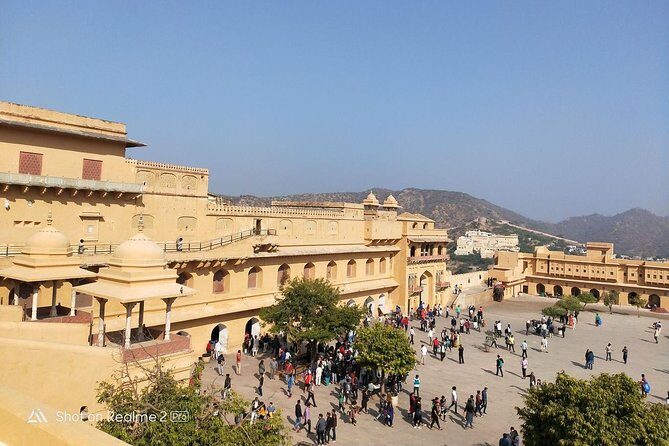
The overview for this tour includes Amber Fort, Maharajah’s City Palace, the observatory Jantar Mantar, and the photo stops at Jal Mahal and Hawa Mahal. The day’s flow emphasizes quick, high-impact stops rather than a slow museum day.
Jal Mahal and Hawa Mahal: photos first, questions later
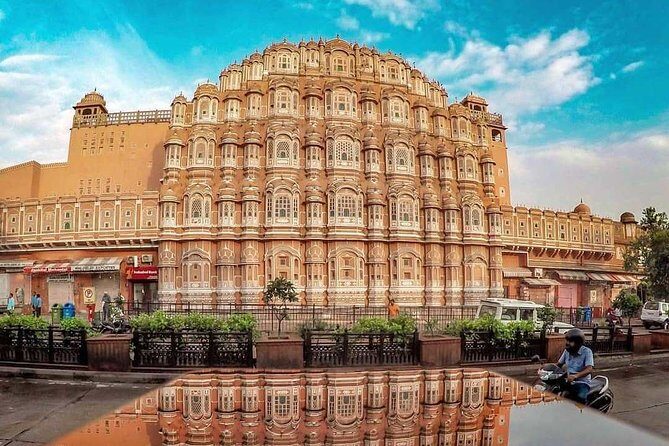
You’ll go for photos at Lake Palace (Jal Mahal) and Hawa Mahal (Palace of Winds). The way this is framed matters: you’re stopping to capture the look of these landmarks, not necessarily lingering for long interior time.
Jal Mahal is especially photogenic because it appears to float above the water. Hawa Mahal is dramatic in shape—so even from a distance, it reads as uniquely Jaipur.
City Palace: royal residence with a guide’s help
Next is Maharaja’s City Palace, the royal residence of the erstwhile King of Jaipur. A guide helps here because palace layouts aren’t obvious if you’re just walking through as a tourist. You’ll get better meaning from the rooms and courtyards once someone explains the purpose and timeline behind them.
Jantar Mantar: bring your curiosity
You’ll visit Jantar Mantar Observatory, an 18th-century UNESCO World Heritage Site. This is the kind of stop where you can either rush past the instruments or actually start understanding what you’re looking at. With a guide, you can get your bearings fast—especially if you enjoy how science and design connect.
Shopping time and the return to Delhi
After lunch on your own, you’ll have free time for shopping in Jaipur. Then in the afternoon you drive back to Delhi with drop-off at the airport, railway station, your hotel, or another desired location in Delhi.
That last leg can be long, so it’s good that the day’s sightseeing is front-loaded.
Guides, drivers, and the solo-friendly comfort factor
What really makes this type of tour feel smooth is the human side. The private driver experience isn’t just convenience; it affects how much you can enjoy each stop instead of constantly thinking about timing.
In real terms, I like that the tour leans on private guidance and private transport. One solo female traveler specifically called out a driver named Ali for making sure she felt comfortable the whole time. Another traveler highlighted Akhatar as a fantastic driver, and multiple accounts praised punctuality and professionalism from Mr Singh Jee. Names like Rajesh also came up as part of the team that kept things running well.
When these roles are handled well, your day becomes predictable. That’s how you end up with a trip that feels like sightseeing instead of logistics.
And yes, air-conditioned transport matters in India. One review mentioned the car staying spacious and cool during hot travel days. That’s exactly the kind of practical detail that can make or break your mood.
Hotel nights: 3–5 star comfort with twin sharing (and a smart check)
You’ll get 2 nights accommodation in 3, 4, or 5 star hotels on twin sharing. The tour notes also say you typically get twin-sharing rooms, and in a booking of 3 people, rooms are provided on triple-sharing basis by default.
This setup tends to work well for couples and friends. If you’re traveling solo, you’ll want to confirm whether you’ll be placed with a roommate or arranged differently, since the provided details don’t spell out solo-room options.
One more practical point: because you’re in transit between cities, your hotel matters for recovery. You’ll want a place that’s comfortable for that post-taj fatigue and ready for an early start the next morning.
Price check: does $399 feel fair?
At $399 per person for about three days, you’re paying for a bundled package that includes private guiding, private transport, hotel nights, and a chunk of meals. That’s the core reason this can be good value: you’re not trying to piece together guides, drivers, and multiple city bookings yourself.
However, the exact money you’ll spend beyond the package depends on two things:
1) Ticket coverage: monument entrance fees are listed under inclusions, but admission tickets are also marked not included in the day breakdown. Confirm what’s included for the Taj Mahal, Agra Fort, Qutub Minar, Humayun’s Tomb, and Jantar Mantar.
2) Lunch choices: lunch is on your own expense each day.
If you’re comfortable with eating lunch locally and you confirm ticket coverage upfront, this price can feel very fair for what you get.
What could trip you up? (The realistic considerations)
This is the balanced part, so you can decide with your eyes open.
- Monument closures on specific days: Lotus Temple is closed Mondays, and Taj Mahal is closed Fridays. If your dates hit those, your guide may adjust, but it’s still worth planning around the possibility.
- Ticket confusion: entrance fees are listed both ways (included vs not included in the day notes). Don’t assume. Confirm with the operator before payment or before you arrive.
- Lunch not included: if you hate deciding where to eat after a full day of sightseeing, you may want to budget extra time and energy.
Who should book this tour (and who might prefer something else)
This tour fits best if you want:
- A guided Golden Triangle with private transport
- Strong landmark coverage in a short time
- Comfort and structure, especially if you’re traveling solo or as a small group
You might prefer a different style if you want lots of free, unstructured time in each city or if you already have guides lined up and want to self-drive or DIY everything.
If you like sunrise starts and you want the big sights done with minimal stress, this is a sensible match.
Should you book the 3 Day Golden Triangle with Taj Mahal Sunrise?
Yes—if sunrise Taj Mahal is a priority for you and you want the trip to run like a well-managed route. The combination of private guiding, air-conditioned driving, and hotel nights makes the itinerary feel efficient without being rushed every minute.
I’d book it especially if you:
- prefer clear planning and not having to coordinate between cities
- want a guide for sites like Qutub Minar, Humayun’s Tomb, Agra Fort, and Jantar Mantar
- like the idea of photo-focused stops at Jal Mahal and Hawa Mahal
Before you confirm, do one quick check: ask what’s covered for monument admissions, given the mixed notes. Once that’s clarified, you’re set up for a classic, high-impact India route done the comfortable way.
FAQ
What’s included in the tour price?
The package includes 2 nights of accommodation in 3, 4, or 5 star hotels on twin sharing, a private driver with an air-conditioned vehicle, professional private tour guides for excursions, bottled water, monument entrance fees, dinner (2), and breakfast (2).
Is pickup included?
Yes. Pickup is offered from your hotel, airport, or other desired place in Delhi.
What’s the exact duration?
It’s listed as 3 days (approx.), with day one beginning in Delhi and the last day returning you to Delhi in the afternoon.
Are admission tickets included for the monuments?
The information provided is mixed: the inclusions mention monument entrance fees, but the day-by-day notes say admission ticket is not included. Confirm with the operator so you know what you’ll pay for on the ground.
Which monuments are part of the sightseeing?
In Delhi you’ll cover Qutub Minar, Humayun’s Tomb, Bahai Temple (Lotus Temple), India Gate, and you’ll drive past major government buildings. In Agra you’ll visit the Taj Mahal at sunrise and Agra Fort. In Jaipur you’ll see Amber Fort, Maharaja’s City Palace, Jantar Mantar, and you’ll have photo stops for Jal Mahal and Hawa Mahal.
Are there any closures to be aware of?
Yes. The Lotus Temple is listed as closed on Mondays, and the Taj Mahal is listed as closed on Fridays.
What meals are included and what’s not?
Breakfast is included on the two mornings. Dinner is included for 2 evenings. Lunch is described as own expense on the day-by-day plan.
What’s the cancellation policy?
You can cancel up to 3 days in advance for a full refund. If you cancel less than 3 days before the start time, the amount paid will not be refunded.
If you tell me your travel dates (day of week) and whether you’re solo or a couple, I can flag the closure risk and help you plan what to prioritize.