REVIEW · AGRA
Agra Historical City Tour By Car
Book on Viator →Operated by Ajay Day Tours · Bookable on Viator
Mughal monuments in one long, guided sweep. This Agra day trip by car strings together the big names along the Yamuna, with admission tickets, lunch, and hotel pickup so you can focus on the sights instead of logistics.
I really liked how multiple ticketed monuments are handled in one go. The day is built around real Mughal-era landmarks—Taj Mahal, Agra Fort, Itimad-ud-Daulah, and Mehtab Bagh—so you’re not just checking boxes.
One thing to consider: it’s a 10-hour schedule with several stops, so your time at each site is limited. Add in Agra heat and walking between points, and you’ll want to dress smart and pace yourself.
In This Review
- Quick hits before you go
- Agra by car: the value of a ticket-included day
- Morning start: 8:00 am pickup and why the schedule helps
- Ajay Day Tours: how the guide turns monuments into stories
- Taj Mahal in 2 hours: what to focus on
- Agra Fort: ramparts, residence, and power shifts
- Itimad-ud-Daulah: the small tomb that people compare to the Taj
- Mehtab Bagh: a garden aligned with the Taj
- What’s included (and what you’ll still pay for)
- Group discounts and private pacing: how it affects your day
- Who should book this tour, and who might skip it
- Should you book Agra Historical City Tour By Car?
- FAQ
- How long is the Agra Historical City Tour By Car?
- What time does the tour start?
- Where does the tour start and end?
- Is hotel pickup and drop-off included?
- Are admission tickets included for the stops?
- Is lunch included?
- Is bottled water included?
- Are drinks included?
- Is this a private tour?
- What is the cancellation policy?
Quick hits before you go
- Ajay Day Tours logistics: hotel pickup and drop-off plus bottled water and a buffet lunch keep the day smooth.
- Taj Mahal time with tickets included: you get a solid 2 hours at the main monument.
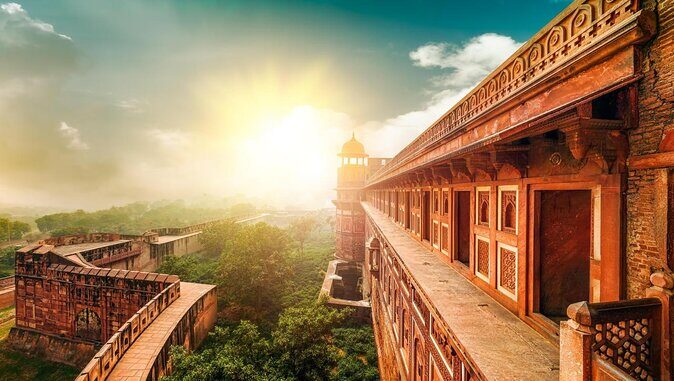
- Agra Fort + palace layers: you see the fortress first built for defense, then reshaped in Shah Jahan’s era.
- Itimad-ud-Daulah’s “jewel box” reputation: a smaller tomb that’s often treated like a rehearsal for the Taj.
- Mehtab Bagh’s alignment across the Yamuna: a squared garden complex laid out to line up with the Taj Mahal view.
- Guide value beyond facts: Ajay’s friendly, chatty style helps the history land, and he may share practical food-view ideas.
Agra by car: the value of a ticket-included day
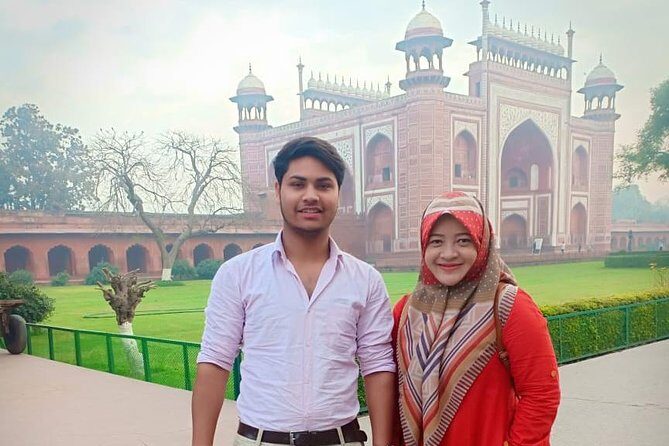
Agra can be a lot to manage on your own. With this tour, the core pieces are packaged together: round-trip hotel transfer, a professional guide, a buffet lunch, and entrance tickets for every major stop. That matters because Agra isn’t just one attraction—you’re moving between different sites that each demand time, tickets, and on-the-ground navigation.
The price—$71.47 per person—makes more sense when you think about what’s included. You’re not paying separately for admission, and you’re also not spending extra money and energy trying to coordinate transport while you’re in the heat. Drinks aren’t included, so you’ll still want to budget for water beyond what’s provided, but the big-ticket items are already covered.
This is also listed as a private tour/activity, meaning only your group participates. That usually translates to less waiting around with strangers and more flexibility in how your guide times things.
You can also read our reviews of more city tours in Agra



Morning start: 8:00 am pickup and why the schedule helps
The tour starts at 8:00 am, which is a real advantage in Agra’s climate. You’ll be out earlier rather than fighting the day’s worst heat. You also avoid the awkward timing problem where you show up late at one monument and then scramble to catch the others.
You’ll begin in Agra and then spend the day moving by car between the sites. The tour ends back at the meeting point, so you don’t end up stranded far from your hotel at the end of the day.
One practical tip: since the itinerary packs several locations, plan your day like a local would—water on hand, sun protection, and comfortable walking shoes. This tour gives you bottled water and lunch, but you’ll still feel better if you show up ready to walk and stand in a hot sun.
Ajay Day Tours: how the guide turns monuments into stories
A guided day is only worth it if the guide actually makes the places make sense. In this case, the standout theme is the guide’s personality and help level—Ajay comes across as friendly, informative, and easy to chat with. You’re not just hearing dates. You’re getting the why behind the buildings.
The history isn’t random either. The day connects the Mughal story through key rulers and how their tastes changed what you see in Agra. That makes the tour feel less like a checklist and more like a timeline you can walk through.
You’ll also appreciate the practical side: when the weather is intense, a good guide helps your day feel manageable. The guidance here includes attention to comfort—especially when it’s hot—so you’re not feeling ignored while you stand in sunlight.
And yes, there’s an extra layer of usefulness: Ajay may share ideas like a good rooftop restaurant with a view. That’s the kind of suggestion that can make your evening better without costing you time or energy.
Taj Mahal in 2 hours: what to focus on
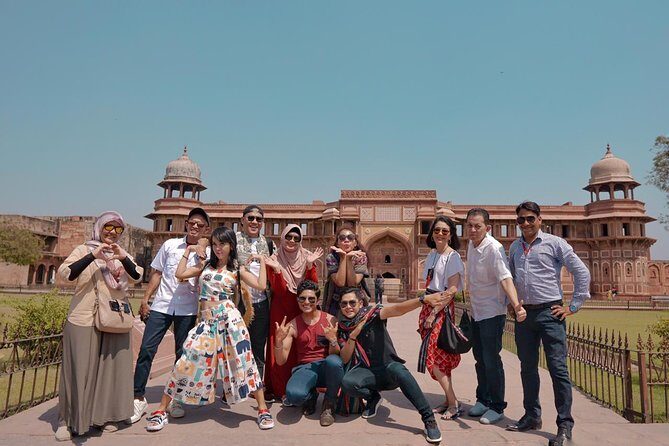
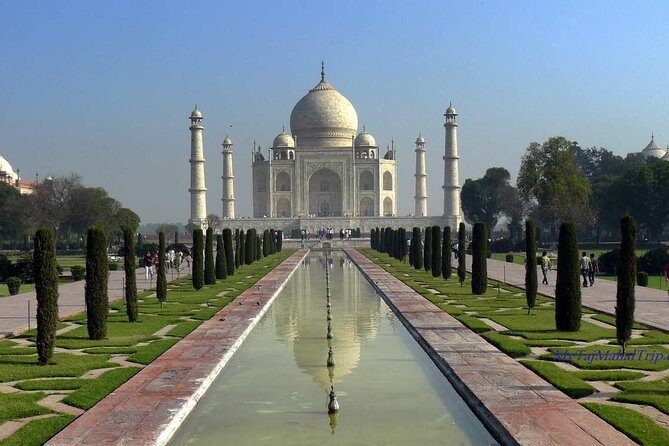
The star of the day is the Taj Mahal, an ivory-white marble mausoleum on the south bank of the Yamuna. It was commissioned in 1632 by Mughal emperor Shah Jahan as a tomb for his favourite wife, Mumtaz Mahal—and it also houses Shah Jahan’s tomb.
Before you go in, it helps to know the name story. You’ll likely hear that the origin of Taj Mahal isn’t crystal clear. Court histories from Shah Jahan’s reign reportedly referred to it as the rauza, or tomb, of Mumtaz Mahal. The common interpretation is that Taj Mahal is linked to an abbreviated form of Mumtaz Mahal—sort of Crown Palace or Crown of the Palace, depending on translation.
So in those two hours, don’t just stare at the big picture. Instead, use your time to notice how the monument works:
- The mausoleum’s defining white marble presence and the way it looks different as light shifts.
- The symbolic meaning, since this wasn’t built as an abstract art piece—it was commissioned to be a monumental memorial.
- The connection to the river setting, because the Yamuna’s presence shapes how the Taj reads visually.
Two hours is enough for a strong experience, but it’s not a leisurely all-day visit. Treat it like a focused sprint: take the major views, then spend your remaining time returning to your favourite angles.
Agra Fort: ramparts, residence, and power shifts
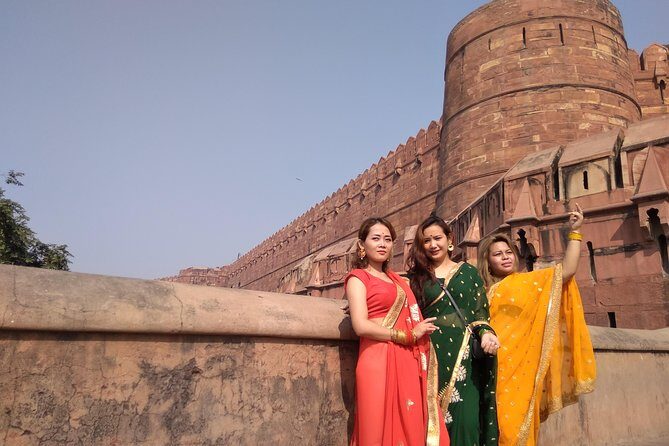
Next up is Agra Fort, built principally as a military establishment by Akbar in 1565. During Shah Jahan’s time, parts of the fort were converted into a palace, which is why the site feels different from a pure defensive structure. You’re looking at power that evolved into comfort and ceremony.
Agra Fort served as the main residence of Mughal emperors until 1638, when the capital shifted from Agra to Delhi. Later, the fort was captured by the British, but before that, the last Indian rulers to occupy it were the Marathas.
In about an hour, your goal is to get the big concept: this is not just a wall and towers site. It’s a place where rule changed over time, and you can feel the layers. Even if you’re not a “fort person,” the brief time works because the story is clear and you’re not stuck for half a day.
Practical note: forts usually mean uneven ground and lots of standing. If you’re heat-sensitive, keep water close and don’t let fatigue trick you into rushing.
You can also read our reviews of more historical tours in Agra






Itimad-ud-Daulah: the small tomb that people compare to the Taj
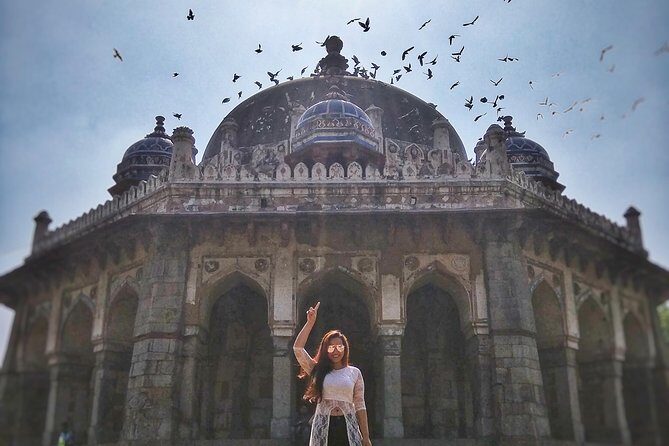
Then you’ll visit Tomb of I’timād-ud-Daulah, often described as a “jewel box,” and sometimes nicknamed the Bachcha Taj. The nickname isn’t official, but the comparison is common because people see it as a kind of draft of what came later with the Taj Mahal.
This stop lasts about an hour. That’s a good window for taking your time with the details without losing the rhythm of the overall day. If you only have time to pick one “detail stop,” this is a strong candidate. Smaller mausoleums can be easier to really look at—less scale to fight, more surfaces and craftsmanship to notice.
What you should look for conceptually: the tomb’s refined style within a compact footprint. It’s a reminder that Mughal architecture wasn’t only about mega-monuments. It was also about precision and elegance in scaled-down works.
Mehtab Bagh: a garden aligned with the Taj
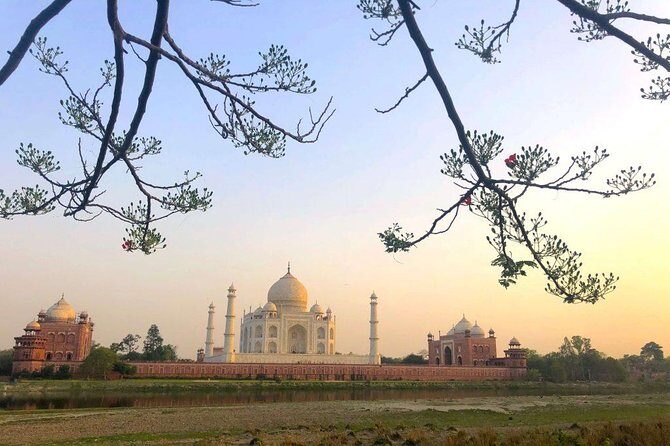
Mehtab Bagh is a charbagh complex—a type of garden layout that you’ll often hear described as a square division pattern—located north of the Taj Mahal complex. It sits across the Yamuna River in the flood plains.
What makes it especially interesting is the planning detail: the garden measures about 300 by 300 metres and is described as perfectly aligned with the Taj Mahal across the water. That means it’s not just a place to walk. It’s a view designed to frame what’s across the river.
This stop is about an hour, which is enough time to:
- get that aligned perspective,
- look for how the river setting changes the Taj’s feel,
- and enjoy a bit of garden calm compared with marble and fort walls.
If you’re someone who loves compositional photography, Mehtab Bagh can feel like a quiet payoff. Even if you’re not chasing photos, it helps break up the day and reset your eyes after big-ticket monuments.
What’s included (and what you’ll still pay for)
This tour covers a lot of the everyday cost friction. Included are:
- Admission ticket(s) for every listed stop
- Bottled water
- Buffet lunch
- Professional guide
- Hotel pickup and drop-off
- All taxes, fees, and handling charges
Not included is drinks—so you’ll probably want to budget for whatever beverages you choose beyond the water provided.
The lunch being a buffet is useful in this context. When you’re doing a long day of sightseeing, you want a meal you can access quickly without turning lunch into a second major outing. If you have dietary needs, you might find it helpful to plan ahead with a light stomach strategy: eat, hydrate, then get back to walking.
Group discounts and private pacing: how it affects your day
This experience notes group discounts, while also stating it’s a private tour/activity with only your group. That combination usually means the pricing can improve if you’re travelling as a group, but you’re not sharing the day with a random crowd of strangers.
For you, that often means the guide can pace the route based on your group’s comfort level. You still won’t have unlimited time at each monument—because the itinerary is built for a full day—but the “private” element can make it feel less rushed.
In practice, your group will get a smoother flow between stops. That matters most in a city like Agra, where moving efficiently can be the difference between a relaxed experience and a strained one.
Who should book this tour, and who might skip it
I’d steer most first-time Agra visitors toward this kind of day plan. It hits the core Mughal sights that define the city, and it’s built to reduce friction: tickets, lunch, guide, and transport are taken care of.
You’ll especially like it if:
- you want a single-day framework instead of piecing together multiple tickets and hires,
- you care about context and want a guide who explains more than facts,
- you appreciate comfort perks like pickup and bottled water,
- and you’re okay with a busy schedule.
You might want a different approach if you:
- prefer very slow museum-style pacing at fewer sites,
- hate walking and standing outdoors for long stretches,
- or want to spend extra time specifically on one monument without the pressure of the next stop.
Should you book Agra Historical City Tour By Car?
Book it if you want a guided, ticket-included Agra day that connects the Taj Mahal story to other Mughal landmarks without making you coordinate the details yourself. With Ajay Day Tours, the guide experience is a highlight—informative, helpful in heat, and genuinely easy to enjoy.
I’d hold off if you’re chasing a very relaxed pace. This is a 10-hour plan with multiple stops, so it’s built for seeing a lot, not for lingering for hours in just one place.
If you’re going to Agra with limited time, this is a strong use of it. You’ll come away with the main visuals plus a clearer sense of how rulers and design choices shaped the city you’re standing in.
FAQ
How long is the Agra Historical City Tour By Car?
It’s approximately 10 hours.
What time does the tour start?
The start time is 8:00 am.
Where does the tour start and end?
It starts in Agra, Agra District, Uttar Pradesh, and ends back at the meeting point.
Is hotel pickup and drop-off included?
Yes, hotel pickup and drop-off are included.
Are admission tickets included for the stops?
Yes, admission tickets are included for Taj Mahal, Agra Fort, Tomb of I’timād-ud-Daulah, and Mehtab Bagh.
Is lunch included?
Yes. A buffet lunch is included.
Is bottled water included?
Yes, bottled water is included.
Are drinks included?
No, drinks are not included.
Is this a private tour?
Yes, it’s listed as private, and only your group will participate.
What is the cancellation policy?
You can cancel for free up to 24 hours in advance for a full refund. If you cancel less than 24 hours before the start time, the amount paid is not refunded.