REVIEW · NEW DELHI
7 Days Private Tour of Taj Mahal, Tigers, Palace and Forts of India
Book on Viator →Operated by EXPERT TOURS & TRAVELS · Bookable on Viator
Seeing India’s highlights beats wandering solo. This private Delhi–Agra–Ranthambore–Jaipur route is built for two big wins: the early timing for sunrise Taj Mahal and the real-chance wildlife focus with two Ranthambore safaris. I also like how the plan threads major Mughal sites, major Rajasthan forts, and a couple of local-feeling cultural stops through the same week so you’re not just collecting landmarks. One thing to weigh: some timing is weather- and schedule-dependent (sunrise visits and weekly closures), so you’ll want to stay flexible when the day plan shifts.
Price is $790 per person, and yes, that’s a real budget number. But for a private 7-day tour, you’re getting A/C car service the whole time, guides, entrance fees for listed sites, plus two shared-jeep safaris with an English-speaking naturalist. The possible drawback is that this is a packed itinerary—great if you like moving and seeing a lot, less great if you want long, slow afternoons.
In This Review
- Key things that make this tour worth your attention
- Why the Delhi–Agra–Ranthambore–Jaipur combo makes sense
- Delhi Day 1: Humayun’s Tomb, Old Delhi icons, and Chandni Chowk
- Delhi Day 1 continues: Bangla Sahib, India Gate, and Qutub Minar after hours
- Akshardham plus Agra Fort: Delhi’s religious grandeur to Mughal power in one day
- Agra’s riverfront: Mehtab Bagh and how it frames the Taj
- Taj Mahal at sunrise: why this timing is worth planning around
- Fatehpur Sikri: a powerful stop that won’t steal your whole day
- Ranthambore National Park: two safaris that give you a real tiger shot
- Ranthambore Fort: the calm counterpoint to tiger country
- Jaipur Day 5: Chand Baori, City Palace, Jantar Mantar, and a temple stop
- Jaipur Day 6: Amber Fort, Hawa Mahal, Jal Mahal, and museum time
- Galta Ji Monkey Temple on Day 7, then a straight drive back to Delhi
- Price, value, and who should choose this tour
- Should you book this Taj Mahal and tiger safari private tour?
- FAQ
- How many days is the tour?
- What cities and areas does the tour cover?
- Is pickup included?
- Are tiger safaris included, and how many?
- Is Taj Mahal sunrise included?
- Is Akshardham Temple included?
- What entrance fees are included?
- What meals are included?
- What is the cancellation rule?
Key things that make this tour worth your attention
- Sunrise-first approach to Taj Mahal: your day is timed for the best light, with backups when schedules don’t cooperate.
- Two Ranthambore tiger safaris: morning and late afternoon game drives with an English-speaking naturalist.
- Real fort-and-palace focus in Jaipur: Amber, City Palace, Hawa Mahal, and more, not just photo stops.
- Comfort extras that matter day to day: bottled water and Wi-Fi in the vehicle, plus battery bus/golf cart returns at key sites.
- Local culture stops, not just monuments: Gandhi at Raj Ghat, free community food at Bangla Sahib, and temple time at Galta Ji.
Why the Delhi–Agra–Ranthambore–Jaipur combo makes sense

This week is built around India’s “big four” that most first-timers want: Delhi for Mughal and modern power points, Agra for the Taj Mahal, Ranthambore for tigers, and Jaipur for forts, palaces, and shopping. The payoff is momentum. You see a lot of famous places, but the route also connects them in a logical arc—from imperial architecture to wildlife to Rajput grandeur.
The private touring setup also matters. You’re not stuck waiting for strangers or getting shuffled into a group pace. Your guide and driver handle the flow, and you get mobile tickets and car-based transfers that keep the day practical.
You can also read our reviews of more private tours in New Delhi


Delhi Day 1: Humayun’s Tomb, Old Delhi icons, and Chandni Chowk

Day 1 is a strong start because it covers two very different Delhis: the planned Mughal elegance near Humayun’s Tomb, then the older city energy around Jama Masjid and Chandni Chowk.
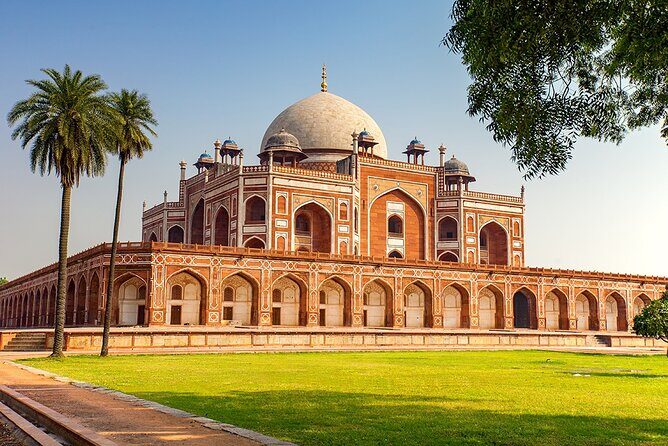
You begin at Humayun’s Tomb (around 1569–70), a UNESCO site and one of the best Mughal-influenced architecture primers you’ll get. Even if Taj Mahal is the main event later, this is the place where you can see how Mughal building traditions matured—especially through the Persian-style garden layout. It’s also one of those stops where the gardens and the symmetry make photos feel easy.
From there, the tour shifts to civic memory with Raj Ghat, Mahatma Gandhi’s memorial with a black marble platform marking the cremation spot and an eternal flame. It’s brief, but it sets a tone beyond monuments.
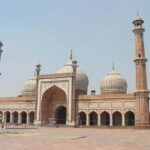
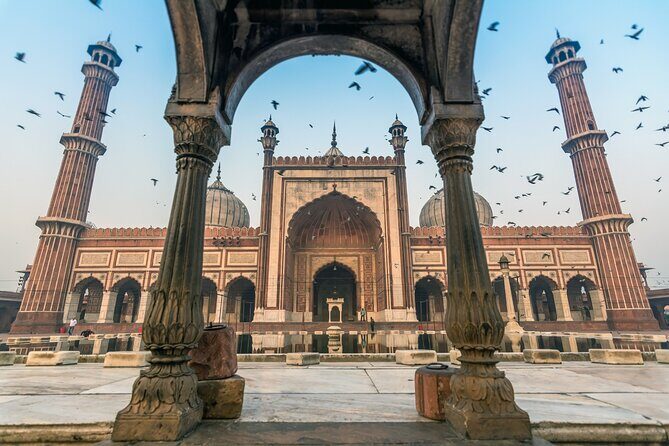
Old Delhi gets the full treatment next: you pass the Red Fort but focus on a more intact fort visit later in Agra, then move into Jama Masjid, built by Shah Jahan between 1644 and 1656. Practical tip: this is one of those sites where clothing rules are real. Plan for full trousers for men and full sleeves (covering arms) for women.
Then comes Chandni Chowk, a market that’s been around for centuries, with narrow lanes full of spices, dried fruits, jewelry, and everyday goods. You can walk through the side streets or do a rickshaw ride—either way, it’s designed to let you experience the crush without having to navigate it alone.
Delhi Day 1 continues: Bangla Sahib, India Gate, and Qutub Minar after hours
After the Old Delhi sprint, you head toward central Delhi landmarks. The standout here is Gurudwara Bangla Sahib. It’s a beautiful white complex with a golden dome and a sarovar (pool) inside. The tour also nudges you into the daily routine of the place: volunteering to make chapati/roti is possible, and the community kitchen serves free food to visitors of all religions.
If you like experiences that feel human instead of just scenic, this is one of them.
Next is India Gate, a 1931 war memorial. It may not be the first stop on your imagination list, but it gives you a real sense of the layers of modern India built on earlier empires.
You also pass major government buildings on the way to Qutub Minar, a UNESCO World Heritage Site and a 73-meter tall minaret. The best timing tip from the plan is to visit in the early evening and stay a bit late, because Qutub Minar is illuminated from 7:00 pm onward. If you hate crowds, this still works because the lighting changes the vibe without needing you to rush.
Akshardham plus Agra Fort: Delhi’s religious grandeur to Mughal power in one day
On Day 2, the schedule starts with Swaminarayan Akshardham, a major Hindu temple complex known for its pink stone and white marble and for being a big spiritual and architectural draw. There’s one key calendar detail: it remains closed every Monday. If your schedule lands on a Monday, the plan provides a swap so you still get the visit.
Then you check in at your pre-booked Agra hotel and move into another “power site” stop: Agra Fort on the Yamuna. This is a massive fort complex with royal pavilions, halls, and mosques. It’s also loaded with Mughal drama—Shah Jahan was imprisoned here before later dying while watching the tomb of Mumtaz Mahal across the river.
Agra’s riverfront: Mehtab Bagh and how it frames the Taj
Day 2 adds Mehtab Bagh (Moonlit Garden). This garden sits across from the Taj Mahal and is aligned for view corridors. If you’re thinking about how photographers get that postcard framing, this is where it clicks: the plan gives you the perspective that complements the Taj views you’ll get later in the week.
There’s also an optional style add-on mentioned in the schedule: Mohabbat-e-Taj at Kalakriti Cultural & Convention Center. It’s a live show with sound and light effects and runs only between September and April. It’s not included, so treat it as a nice extra if it matches your dates.
A few more New Delhi tours and experiences worth a look




Taj Mahal at sunrise: why this timing is worth planning around
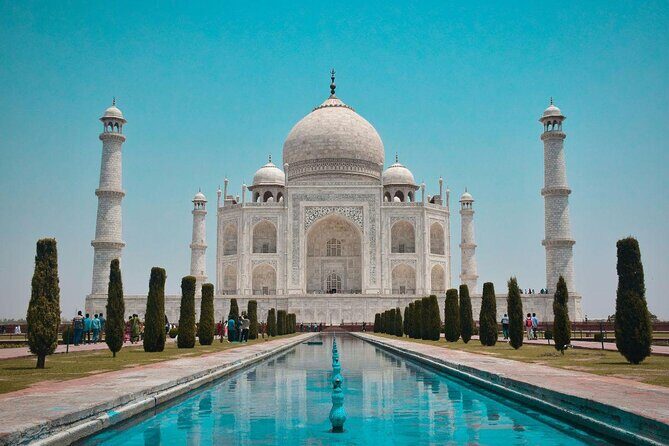
Day 3 is built around the big one: Taj Mahal. You’ll start with a guide meet-up, have tea/coffee in your room, and head out early. Sunrise is the star timing because the marble shifts with the sky, and the monument looks almost different as the light changes.
Two practical notes matter:
- Taj Mahal sunrise visit is subject to weather conditions, so keep your expectations flexible.
- Taj Mahal remains closed every Friday. If your scheduled visit lands on Friday, the plan moves Taj Mahal to the day before.
Also, the tour includes a battery bus/golf cart return ride at Taj Mahal. That’s a small thing until you’re standing in queues and walking is starting to feel longer than you planned.
If you want a simple mental checklist for this visit: look for the way the symmetry pulls you in, then notice the garden layout and the way the marble surfaces react to the light. It’s not just a building—it’s a timed visual experience.
Fatehpur Sikri: a powerful stop that won’t steal your whole day
After Taj Mahal, the plan sends you to Fatehpur Sikri on the way west to Jaipur. This former Mughal capital was founded by Akbar in 1571, and it sits in a walled city filled with major palace buildings and architectural set pieces like Diwan-E-Khas, Diwan-E-Am, Panch Mahal, Anup Talao, and Buland Darwaja.
You’ll spend about an hour, and that’s exactly the right amount here. It’s easy to want more time, but even at this pace, you get the “wow” factor of a city built to project control and belief.
Admission is free on this stop, and the schedule includes the kind of practical convenience that helps: a battery bus/golf cart return ride at Fatehpur Sikri as well.
Ranthambore National Park: two safaris that give you a real tiger shot
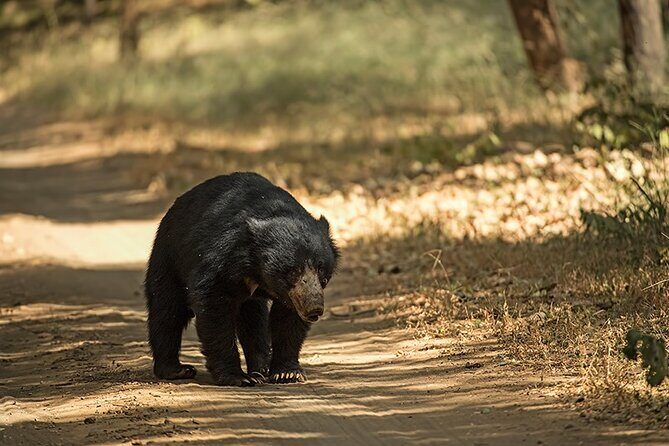
Now for the wildlife part. Ranthambore is scheduled as the centerpiece wildlife experience, and the plan makes sense: you get two shared-jeep game drives with an English-speaking naturalist—one early morning and one late afternoon.
That timing is your best friend. Tigers are more active when it’s cooler, and the naturalist helps you read the landscape and animal behavior instead of just hoping for luck.
One important reality check: your safari is in a “zone allocated by Forest department,” so the exact route can’t be controlled by your tour. Still, with two drives, your chances are better than a single attempt.
Also note the season rule: Ranthambore National Park is not open from July 1 to September 30 each year.
Ranthambore Fort: the calm counterpoint to tiger country
Between safaris, the tour includes Ranthambore Fort, also inside the broader park area. It’s used historically as a hunting lodge by the royal family and includes several Hindu temples dedicated to Ganesha, Shiva, and Ramlalaji, built from red Karauli stone.
This stop is about contrast. The forts-in-the-mountains mood is very different from the drive-and-scan rhythm of a safari. It’s also a nice way to add meaning beyond the wildlife goal, especially if you like context while you’re waiting for animal sightings.
Jaipur Day 5: Chand Baori, City Palace, Jantar Mantar, and a temple stop
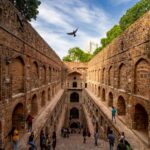
Day 5 shifts to Jaipur with a classic “on the way” detour: Chand Baori in Abhaneri. This stepwell is one of those places that makes you stop mid-step. It was constructed in the 8th century and has 3,500 stairs descending around 20 meters through 13 floors. Even if you only have 45 minutes, you’ll understand why it became famous.
Then Jaipur starts in earnest with City Palace. You’ll get the fusion of Rajasthani and Mughal architecture, and you’ll see it’s still a living royal space—parts of the complex remain home to the royal family of Jaipur. It’s built starting in 1727 when Sawai Jai Singh II shifted the capital from Amer to Jaipur.
You also get Jantar Mantar, the stone observatory and UNESCO site. The tour notes that 19 stone instruments were used to calculate exact time and position, predict eclipses, and check the sun’s incidence against astrological signs. This is one of those stops where you’ll either love the science angle or at least respect the brainpower behind it.
Finally, there’s Birla Mandir. It’s a white marble temple with intricate latticework and is dedicated to Lord Vishnu. The schedule points out that being there during evening arti can be special.
Jaipur Day 6: Amber Fort, Hawa Mahal, Jal Mahal, and museum time
Day 6 is heavy on “royal visual hits,” starting with Amber Palace (Amer Fort). The plan gives you the four-level layout and the major named spaces: Diwan-e-Aam, Diwan-e-Khas, Sheesh Mahal (mirror palace), and Sukh Niwas (with a cooling setup using winds across a water cascade). It also mentions vegetable dyes used for wall paintings, which tells you this was made for both drama and comfort.
If you don’t want to walk up, there’s a private jeep to/from Amer Fort option in the included setup. That’s a huge quality-of-life detail, because Fort days can chew up energy fast.
Then there’s Jal Mahal, a photo stop at the Water Palace sitting in Man Sagar Lake. It’s intentionally brief: 15 minutes is enough to get a clear lake-and-hills framing from the viewpoint area.
Next: Hawa Mahal, the Palace of Wind, famous for 953 small windows (jharokas) with latticework. The explanation in the plan is the real reason for the design: royal ladies could observe street life and festivals without being seen, matching the public-life customs of the era.
After that, you get Albert Hall Museum in Ram Niwas Gardens. It’s in an Indi-Saracenic style building, with lots of art and artifacts and an Egyptian mummy listed as a main attraction. The plan also points out that the building looks stunning at night due to yellow illumination, which makes this stop feel less like a lecture and more like a timed visit.
The day rounds out with Patrika Gate, Bapu Bazar shopping time, and a fun cultural add-on: Raj Mandir Cinema. The schedule describes it as an experience with local energy—songs, dances, and collective cheering. If you like a break from historical sites, this is your palate cleanser.
Galta Ji Monkey Temple on Day 7, then a straight drive back to Delhi
Your last day ends with a softer, more spiritual stop: Galta Ji (Monkey Temple). The schedule calls it a 15th-century temple complex with multiple temples in a ring around hills, plus sacred water tanks (kunds) fed by a natural spring.
Then you drive back to Delhi/New Delhi/Gurugram/Noida for about 5 hours. If you have onward connections, the tour’s wording suggests you can also be dropped at Jaipur airport or station if you’re continuing your trip.
Price, value, and who should choose this tour
At $790 per person, the best way to judge value is not just the sticker. It’s what you’re avoiding: separate bookings, entrance-fee hassles across four cities, and the stress of trying to time sunrise Taj Mahal plus two safaris in a short window.
Here’s what you’re paying for in practical terms:
- Private A/C transport from Day 1 through Day 7
- Guides for the sightseeing stops as listed
- English-speaking naturalist in Ranthambore
- Two shared-jeep safaris in the park
- Entrance fees for the named monuments and national park
- Convenience add-ons like battery bus/golf cart returns at Taj Mahal and Fatehpur Sikri
- Some included meals (breakfast 6, lunch 2, dinner 2), plus bottled water and Wi-Fi
Hotel stays are included only if you choose the option that includes hotels (the plan lists 6 nights on twin sharing). If you’re traveling as a couple and want a smoother experience, double-check which option you’re taking.
Also, keep one realistic budget item in mind: camera fees at monuments/national park are not included. If you love photos, this is worth planning for.
Who this tour fits best:
- First-time India travelers who want the headline sights with good pacing
- Wildlife lovers who want two real chances for tigers
- People who like history in a guided format, including daily explanations rather than map-only self-guiding
Should you book this Taj Mahal and tiger safari private tour?
If you want a one-week route that hits the big icons without making you wrestle logistics, I’d say this is a strong fit. The standout advantage is the combination of sunrise Taj Mahal timing plus two Ranthambore safaris, supported by guides and an English-speaking naturalist.
I’d pass or adjust expectations if you hate packed days. This plan moves. You’ll see plenty—old Delhi lanes, Mughal forts, Jaipur palace architecture, then safaris that require early starts and patience.
One more soft factor: service quality comes through in the way the tour operator responds to feedback, including credits to Kapil and his team and praise for sunrise planning and helpful suggestions. That’s the kind of attention that matters when a closure or weather issue forces a change.
If you like a fast, structured week—and you’re serious about giving yourself the best odds for Tigers and Taj light—this is the kind of private tour you’ll appreciate for its focus.
FAQ
How many days is the tour?
It runs for about 7 days, from Delhi through Agra and Ranthambore to Jaipur, then back to Delhi.
What cities and areas does the tour cover?
You’ll visit New Delhi/Delhi, Agra, Ranthambore National Park (for tiger safaris), and Jaipur, plus stops in surrounding areas like Fatehpur Sikri and Abhaneri.
Is pickup included?
Yes. The tour offers pickup and your guide will meet you at your desired location in Delhi/Gurugram/Noida at the start.
Are tiger safaris included, and how many?
Yes. You get two safaris by shared jeep in Ranthambore National Park, in the zone allocated by the Forest department, with an English-speaking naturalist.
Is Taj Mahal sunrise included?
The plan includes a sunrise visit to Taj Mahal, but it’s subject to weather conditions. Also, Taj Mahal is closed every Friday, and if that happens it will be visited on a different day per the schedule.
Is Akshardham Temple included?
Yes, with an important note: Akshardham Temple remains closed every Monday. If your day falls on Monday, the plan provides a swap so you can still visit.
What entrance fees are included?
Entrance fees for the mentioned monuments and Ranthambore National Park are included. Camera fees are not included.
What meals are included?
Breakfast is included for 6 days, with lunch included for 2 days and dinner included for 2 days, as specified in the itinerary. Other meals and snacks are not included.
What is the cancellation rule?
You can cancel up to 3 days in advance for a full refund. If you cancel less than 3 full days before the start time, the amount paid isn’t refunded.