REVIEW · NEW DELHI
7 Days Golden Triangle Tour with Ranthambore: Delhi Agra Jaipur
Book on Viator →Operated by Agra Trip · Bookable on Viator
In This Review
- Delhi–Agra–Jaipur plus tigers is a wild combo
- Key things that make this tour work
- The big-picture plan: a classic triangle, then Ranthambore
- Delhi in one day: old markets, big monuments, and a Qutub Minar finish
- Agra with a purpose: fort first, then a sunrise Taj Mahal
- Ranthambore tiger safari: how to maximize your chances
- Jaipur’s Pink City day: stepwell stop plus major sights with photo time
- Hotels, meals, and what you should expect on the ground
- Price and value: where the $599 goes on this route
- Who this tour is best for (and who should rethink it)
- Should you book this Golden Triangle with Ranthambore?
- FAQ
- What’s included in the tour price?
- Are monument entrance fees included?
- What safari experience is included in Ranthambore?
- How early do I need to wake up for the Taj Mahal?
- What’s the dress code?
- Is there a refund if I cancel?
Delhi–Agra–Jaipur plus tigers is a wild combo
This 7-day private route stitches together the Golden Triangle landmarks with Ranthambore National Park for two tiger safaris, so you get both monument wow and real wildlife energy. I like that the pacing is built around key morning moments like sunrise Taj Mahal and early park drives, not just random sightseeing hours. I also appreciate the human factor: a private guide and a responsive on-the-ground team, with names like Arum (booking help), Rajesh Singh (support), and driver Akhtar Ali (reliable pickup and guiding) standing out in feedback.
One possible drawback: you’ll be in shared jeeps (Canter) for the safaris, so your view depends on where you land in the vehicle, and monument entry fees are not included—so budget for tickets and cameras.
Key things that make this tour work

- Sunrise Taj Mahal timing: you start early with a private guide to catch the marble at its best.
- Two Ranthambore safaris: one morning drive (about 6–9 AM) plus an evening drive starting around 2:30 PM.
- Private, door-to-door transport: you travel by private A/C vehicle between cities and sights.
- Local guiding in each city: professional guides for Delhi, Agra, and Jaipur to keep you moving smart and not lost.
- Hotels across 3/4/5-star tiers: 6 nights on twin sharing, based on the category you book.
A few more New Delhi tours and experiences worth a look


The big-picture plan: a classic triangle, then Ranthambore
This tour makes sense if you want a first-timer-friendly India route without the usual “figure it out yourself” stress. You’ll move from Delhi to Agra to Ranthambore to Jaipur and back to Delhi, with a private vehicle handling the long transfers and local guides handling the sightseeing.
The best part of the structure is that it doesn’t treat Ranthambore as an afterthought. You get a dedicated day in the park with both morning and afternoon/evening wildlife drives, which gives you more than one shot at seeing tigers and other animals.
The tradeoff is that 7 days is still a lot of motion. City-hopping by road between stops is long—think hours on the highway—so if you hate being in a vehicle for extended stretches, you’ll feel it more than someone who’s used to Indian travel rhythms.
Delhi in one day: old markets, big monuments, and a Qutub Minar finish
Delhi Day 1 is a smart hit list of places that explain how the capital became what it is today: old faith and old commerce, then the formal government-and-empire vibe.
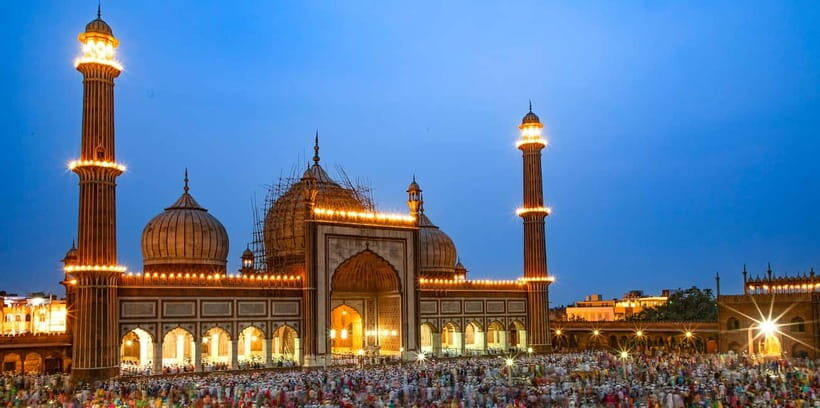
You start with pickup and meet your guide, then go straight to Jama Masjid, the large and imposing mosque. From there, you ride a rickshaw through Chandni Chowk, which is one of Delhi’s oldest markets—great for street-level energy and people-watching without needing to plan a route yourself.
After that, the tour slows down for Raj Ghat (a respectful stop honoring the father of the nation), then you drive past grand central landmarks like India Gate, the President’s House, and Parliament House. The day closes with Qutub Minar, the 12th-century victory tower—an excellent “time travel” moment when you want history you can actually see.
Practical tip: wear comfortable shoes. This day mixes vehicle time with walking and uneven market surfaces, so plan for feet-first travel.
Agra with a purpose: fort first, then a sunrise Taj Mahal
Agra is the “dramatic on purpose” city of this itinerary. Day 2 focuses on the fort and evening Taj, and Day 3 is built around morning timing—because Taj Mahal photos and your experience are both better earlier.
Agra Fort is the heavy hitter for Mughal-era architecture. You’ll explore it with your guide after arriving from Delhi. It’s a big complex with a lot of meaning, and you’ll get the context on how it served as a residence for Mughal emperors until 1638.
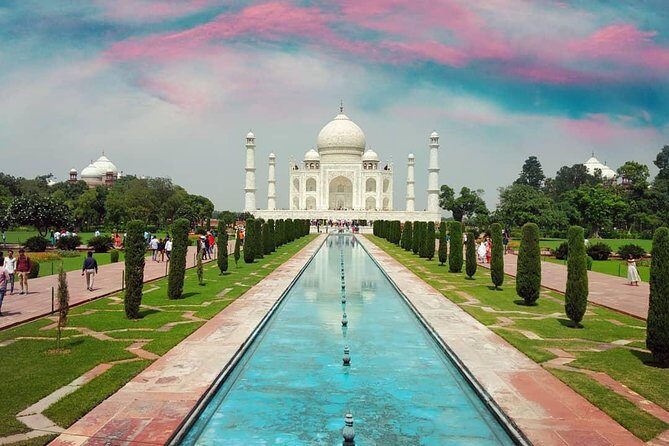
Then comes the Taj Mahal—first on Day 2 at sunset, and again on Day 3 as sunrise (meeting around 5:45 AM). That early start can feel demanding, but it’s one of the few “worth it” wake-ups on this whole route. The light is softer, the marble looks different, and the crowds are typically less chaotic than later in the day.
On Day 3, you’ll return to the hotel, freshen up, have breakfast, and check out before heading to Agra Fort again. After the Agra portion, you drive to Ranthambore (about 6 hours / 270 km).
If you like your sightseeing in chronological order, this mix might feel slightly repetitive—but it’s also a built-in way to see the Taj as a mood, not just a monument.
Ranthambore tiger safari: how to maximize your chances
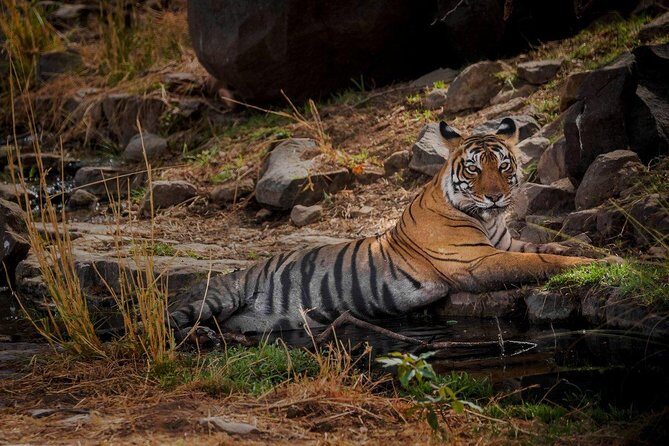
Ranthambore is where this tour earns its keep. The schedule is built around the park’s best viewing windows: an early morning game drive (6–9 AM) and an evening drive starting around 2:30 PM for another 3–4 hours.
You’ll go out in shared jeeps (Canter), not private vehicles. That means you’re not alone, but it also usually means you’re part of the rhythm of how safaris operate in the reserve. You’ll have an English-speaking naturalist during the safari, which is a big value point—someone local can help you read the habitat, not just point at things.
What about tigers specifically? The tour frames Ranthambore as Bengal tiger habitat with a strong tiger sanctuary reputation, and it’s designed so you have enough time in the right parts of the day to spot wildlife. You might also see other animals, since the park hosts a range of wildlife species beyond tigers.
Real talk: tiger sightings aren’t guaranteed. But this format improves your odds because it gives you two drives and a guide who can interpret what you’re looking at.
Packing tip: safari days call for layered clothing. Early mornings can feel cool, and afternoons can shift fast.






Jaipur’s Pink City day: stepwell stop plus major sights with photo time
You arrive in Jaipur after a long-ish highway day from Ranthambore, and the route builds in one very “Rajasthan” stop before you even check into your hotel.
First up on the way is Abhaneri Stepwell (Chand Baori), described as an 8th-century water-saving structure with 3,500 narrow steps across 13 floors. It’s the kind of place that instantly tells you how engineering and water management shaped daily life.
In Jaipur, your guiding continues on Day 6 with the main royal-and-science stops. You’ll see:
- City Palace, with its blend of Mughal and Rajput architecture
- Jantar Mantar, an observatory featuring the world’s largest stone sundial (as described on the tour)
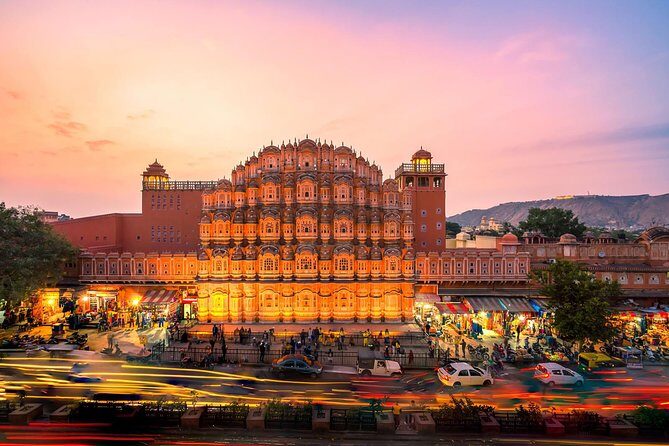
- Photo stops for Jal Mahal (water palace) and Hawa Mahal (Palace of Wind)
- Time to explore the local market area in the Pink City
This is a practical way to do Jaipur: you get the signature monuments, plus a little time to experience the street life. The main limitation is time. Jaipur’s sights can sprawl, and you’re only here for about a day’s worth of guided coverage, so keep your expectations focused: you’ll see the highlights rather than every nook.
Hotels, meals, and what you should expect on the ground
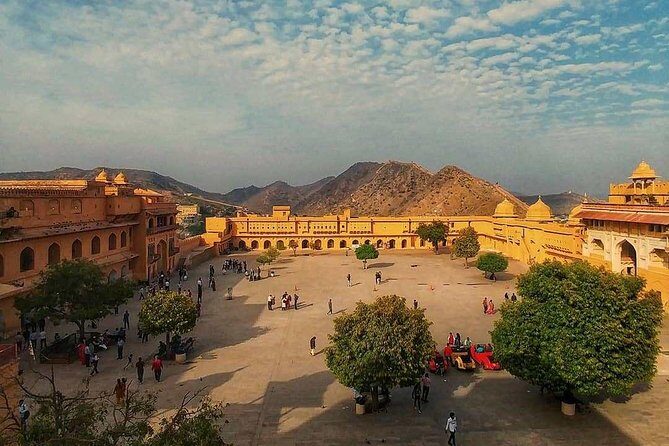
Hotel quality in this trip varies by the category you book, but you’re covered across 3/4/5-star hotels for 6 nights on twin sharing. The tour includes breakfast every morning (6 breakfasts), plus lunch and dinner on specific days (2 dinners listed).
There’s also a note that a vegetarian meal option is available, which matters if you’re choosing food carefully in India. Still, I’d treat meals as “included within the itinerary,” not as a guarantee of special diet changes at every single stop unless you confirm ahead.
Also included: bottled water and transportation in a private A/C vehicle between cities. That A/C time is not a luxury on this route—it’s a survival tool, especially between Delhi–Agra and Agra–Ranthambore.
What’s not included is just as important: monument entrance fees and camera fees are excluded. Bring cash and cards for tickets, and assume some photo fees might apply depending on the site.
Price and value: where the $599 goes on this route
At $599 per person, the value comes from bundling the big cost drivers: hotels, private transport, guides, and the wildlife safaris. This isn’t a DIY plan where you only pay for transit and then buy everything else individually.
Here’s what you’re realistically paying for:
- 6 nights of accommodation (3/4/5-star range)
- Private A/C transfers between Delhi, Agra, Ranthambore, Jaipur, and back to Delhi
- Professional local guides for the sightseeing days
- Two Ranthambore safaris in shared jeeps plus a naturalist
- Core meals: lunch and two dinners, plus 6 breakfasts
The biggest “value check” for you is the safari. Two drives with a naturalist included is not just a ticket—it’s guided interpretation time. If you were planning Ranthambore independently, you’d likely end up stitching together drivers, park logistics, guides, and two separate safari bookings anyway.
The one thing that could surprise your budget: entrance fees. Since monument tickets aren’t included, you’ll want to set aside extra money for sites where fees apply.
Who this tour is best for (and who should rethink it)
This tour is a strong fit if you want:
- A first-time India route with clear logistics and guided context
- The “Golden Triangle” highlights plus real wildlife time in Ranthambore
- A comfortable hotel base with private city-to-city transport
- Early starts that are actually tied to payoff moments (sunrise Taj and early tiger drives)
It may be less ideal if:
- You dislike long road transfers (there are multiple half-day driving blocks)
- You hate waking up very early (the sunrise Taj is scheduled around 5:45 AM meeting)
- You need guaranteed private safari vehicles (this uses shared jeeps/canters)
If you like structure, this itinerary gives you it. If you prefer pure spontaneity, you might find the schedule a bit tight.
Should you book this Golden Triangle with Ranthambore?
I’d book this if your priority is: see the icons of Delhi–Agra–Jaipur without chaos, then add two Ranthambore safari drives with trained wildlife guidance. The combination is efficient, and the included transport plus guides remove the biggest friction points for many visitors.
Before you pull the trigger, do two things:
- Budget for monument entrance and camera fees so you don’t get stuck at ticket counters.
- Pack for early mornings and safari layers, since the schedule is built around sunrise and park drive windows.
If you want an India intro that balances structure with unforgettable moments—marble at dawn, a historic fort, and a real wildlife day—this one fits.
FAQ
What’s included in the tour price?
The tour includes lunches (as per itinerary), hotel accommodation for 6 nights in 3/4/5-star properties on twin sharing, private air-conditioned vehicle transport, professional local tour guides, two Ranthambore jungle safaris in shared jeep/canter, an English-speaking naturalist during safaris, bottled water, and 6 breakfasts plus 2 dinners. It also offers pickup and includes a mobile ticket.
Are monument entrance fees included?
No. The tour lists monuments entrance fees and camera fees as not included.
What safari experience is included in Ranthambore?
You get two jungle safaris at Ranthambore Tiger Reserve in shared jeeps/canters, plus services of an English-speaking naturalist. The schedule includes an early morning game drive (about 6–9 AM) and an evening jungle safari that begins around 2:30 PM and lasts about 3–4 hours.
How early do I need to wake up for the Taj Mahal?
For the sunrise Taj Mahal, you meet your private guide in the hotel lobby at around 5:45 AM.
What’s the dress code?
The tour lists dress code as smart casual and formal. Plan to have appropriate clothing for both.
Is there a refund if I cancel?
Yes. You can cancel up to 3 days in advance of the experience for a full refund. If you cancel less than 3 days before, the amount paid is not refunded.