REVIEW · NEW DELHI
10-Days Rajasthan & Agra tour from Delhi Includes Hotels,Transportations & Guide
Book on Viator →Operated by Holiday Tours And Travels · Bookable on Viator
One sunrise makes the whole trip click. This 10-day Rajasthan & Agra package stacks Taj Mahal sunrise and Delhi’s Mughal sights with air-conditioned transport, and you’ll save real time compared with planning each leg yourself. The main thing to watch is that monument entrance tickets aren’t included, so your final cost depends on how many sites you actually enter.
I like how this route is built around classic landmarks, not just long drives. In the feedback I reviewed, driver Amit came up for very good English, and Mr. Shokat was noted for fast responses on WhatsApp when questions popped up. You also get a private-group setup, so you’re not fighting the timing of a huge crowd.
For $350 per person, you’re buying the “moving parts” of the trip: hotels on twin/triple sharing, AC vehicle transport, tolls/parking/fuel, and breakfast on 9 mornings. You’re not buying every ticket and meal, so you’ll want a little cash and patience for pay-at-the-site moments.
In This Review
- Key highlights you’ll feel on the trip
- Price and value: what $350 per person really covers
- Day 1 in Delhi: airport pickup and a reset night
- Delhi Day 2: Jama Masjid to Qutub Minar, with stops that actually make sense
- Agra Day 3: Agra Fort, Itmad-ud-Daula, and a view-aligned garden moment
- Taj Mahal sunrise on Day 4: the moment that justifies the whole trip
- Jaipur Day 5: palaces, instruments, and views that never stop
- Day 6 from Jaipur to Jodhpur: long drive, strong payoff
- Day 7 in Jodhpur and on to Udaipur: Mehrangarh and then the lake city mood shift
- Udaipur Day 8: City Palace, Jagdish Temple, and the Lake Pichola set-piece
- Day 9 to Pushkar: sacred water and a hill temple with big views
- Day 10: back to Delhi for your onward journey
- Hotels and breakfasts: what to expect and how to protect your trip quality
- Driver and guide support: why English-speaking service matters on this route
- Who this tour suits best
- Should you book this Rajasthan and Agra tour from Delhi?
- FAQ
- What is the duration of this tour?
- Does the tour include pickup in Delhi?
- Which places are included in the itinerary?
- Are entrance tickets for monuments included?
- What meals are included?
- What about transportation and comfort?
- Is there anything included for phone access and connectivity?
- Is this a group tour?
- How does cancellation work if plans change?
- Is the tour suitable for most people?
Key highlights you’ll feel on the trip
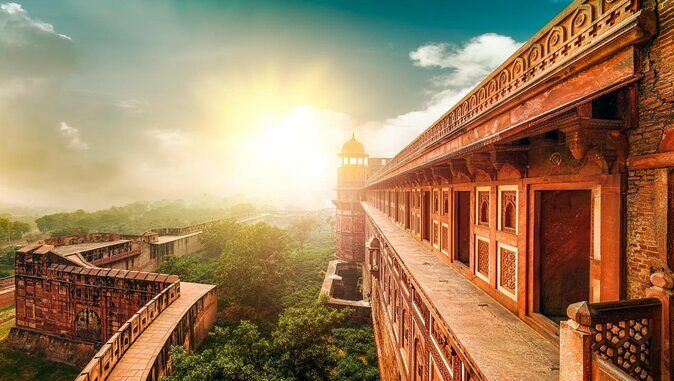
- Taj Mahal before the crowds with a sunrise visit that sets the tone for Agra
- AC transport plus an English-speaking driver to keep the long days from turning into chaos
- Phone SIM with internet included so you can navigate and message your team easily
- Fort-heavy Rajasthan route: Agra Fort, Amer, Mehrangarh, plus cenotaphs and clock towers
- Lake and palace time in Udaipur (Lake Pichola and Jagmandir are part of the core day)
- A steady hand from the team with driver Amit and quick WhatsApp support noted in past trips
Price and value: what $350 per person really covers
This price is best understood as a package deal for logistics. You get hotels (double/twin and triple sharing), AC transportation, and a driver who handles the driving and timing, plus all tolls/parking/fuel. There’s also a phone SIM with internet for the trip, and breakfast is included for 9 days.
What you should budget separately are the entrance tickets. The tour lists monument entries as not included for many of the big names (think forts and major tombs). That doesn’t make the trip bad—it just means you’re choosing value in organization, not “everything is prepaid.”
You can also read our reviews of more guided tours in New Delhi

Day 1 in Delhi: airport pickup and a reset night
Day 1 is the soft landing. You arrive in Delhi, meet a representative, and transfer straight to your hotel for the night. It’s simple on purpose: a long day in India is easier when you’re not also scrambling to find your ride.
The tour also builds in a start time of 8:00 am, so you should aim to recover and sleep well. If you’re coming from an overnight flight, treat Day 1 as your time to get your bearings, not your time to “cram” sights.
Delhi Day 2: Jama Masjid to Qutub Minar, with stops that actually make sense
This is the best kind of Delhi day: a mix of old-city and imperial-era landmarks that tell one story in different styles. The itinerary starts in Old Delhi at Jama Masjid, a massive Mughal mosque built between 1644 and 1656 under Shah Jahan. Then you move to Red Fort, the Mughal residence until the 1800s, and along the way you pause at Raj Ghat, the Gandhi memorial.
From there, you shift to New Delhi’s monumental axis with India Gate and Rashtrapati Bhavan at the western end of Rajpath. The day keeps flowing with Mughal and modern contrasts, including Humayun’s Tomb and the peaceful geometry of the Lotus Temple.
You finish with the UNESCO-listed Qutub Minar and then a Hindu temple stop at Birla Mandir (Lakshmi Narayan). Even if you’re not a “temple person,” this is a good stretch because it’s not one-size-fits-all. You’ll see different faith spaces and architectural styles without it feeling like random sightseeing.
Practical tip: build in time for walking and photo stops. Even when the listed visit times look short, Delhi traffic and crowding add up.
Agra Day 3: Agra Fort, Itmad-ud-Daula, and a view-aligned garden moment
Agra works because it compresses “power, romance, and craft” into a small area. After breakfast, you check in and start at Agra Fort, the Mughal main residence until the early 1600s shift. It’s the kind of fort that makes you picture court life, guards, and daily routines behind the walls.
Next is Itmad-ud-Daula, often called the Baby Taj. The comparison is easy to understand: it’s a jewel-like mausoleum, and it’s frequently described as a step toward the style that later becomes the Taj Mahal.
Then you get a Mehtab Bagh stop (listed under Agra), a charbagh garden north of the Taj Mahal across the Yamuna River. This is one of those “worth it even if you’re tired” moments because the alignment is the point. You’ll feel the layout and symmetry right away.
Taj Mahal sunrise on Day 4: the moment that justifies the whole trip
This day starts early: Taj Mahal before breakfast, with a sunrise visit. If you’ve ever wondered whether sunrise Taj is hype, treat this as the deciding day. The light is different in the morning, and the experience is calmer than later slots.
Afterwards, you return to the hotel for breakfast, then you check out and head to Jaipur with a quick stop at Fatehpur Sikri. Fatehpur Sikri is a 16th-century Mughal city founded by Akbar, built around a cluster of red sandstone buildings. You’ll pass the Buland Darwaza entrance to Jama Masjid, see the marble tomb of Salim Chishti, and get to Jodha Bai’s Palace with its Hindu-Mughal blend. The day includes Panch Mahal, a multi-story structure overlooking the site.
This is a smart pairing: Taj Mahal gives you romance and monument scale, while Fatehpur Sikri gives you the “how the empire built and governed” angle. Both are Mughal-era, but they feel completely different.





Jaipur Day 5: palaces, instruments, and views that never stop
Jaipur is where your eyes start collecting details. The tour gives you a full sightseeing day, with stops that cover fort architecture, royal residences, and a science/geometry stop that many people skip.
You start with Amer (Amber) Palace, a fort high on a hill. This is the practical version of Jaipur that rewards your walking shoes. From there you can spot Jal Mahal, the palace in the middle of Man Sagar Lake. Even though it’s not always a long stop, it’s a great “picture moment” that breaks the palace-and-fort grind.
Next is City Palace, the royal seat of the Maharajas of Jaipur, including Chandra Mahal and Mubarak Mahal. After that, you get Hawa Mahal (Palace of Winds), the iconic five-story red and pink sandstone façade built in 1799.
Then the day pivots to Jantar Mantar, the UNESCO-listed set of astronomical instruments built by Sawai Jai Singh II, completed in 1734. It includes the world’s largest stone sundial, and the whole place is a reminder that these weren’t just decorations. They were tools.
I love this mix because it prevents Jaipur from becoming only selfies. You leave with shapes, functions, and stories connected to real daily life.
Day 6 from Jaipur to Jodhpur: long drive, strong payoff
The route from Jaipur to Jodhpur is a full travel day. You check out after breakfast, then drive to Jodhpur (the itinerary lists about 6 hours), check in, and you’re done with the hard part: getting there.
In Jodhpur, you visit Umaid Bhawan Museum. The palace itself is one of the world’s largest private residences, and part of it is run as a museum. You’ll get a sense of how the royal home and modern use can overlap in one building.
This is a good day for pace control. You’re not cramming three major forts; you’re getting oriented in Jodhpur and saving the heavier fort work for the next morning.
Day 7 in Jodhpur and on to Udaipur: Mehrangarh and then the lake city mood shift

Day 7 begins with Mehrangarh Fort, one of the largest forts in India, built around 1459 by Rao Jodha. It sits above the city, enclosed by thick walls, which gives it that “fortress looking down” feeling right away. You can wander and still feel the scale.
Next is Jaswant Thada, a cenotaph built in 1899 in memory of Jaswant Singh II. It’s a quieter stop, but it adds emotional weight after the stone power of Mehrangarh. Then you see Ghanta Ghar, the clock tower that dominates the market area.
After sightseeing, you drive to Udaipur (about 3 hours) and check in for the night. This transfer matters. Udaipur’s energy is slower, and the next day’s sites match that mood.
Udaipur Day 8: City Palace, Jagdish Temple, and the Lake Pichola set-piece
Udaipur is built for a different kind of travel rhythm. The day includes City Palace, built over nearly 400 years by rulers of the Mewar dynasty. It’s not only about the palace building—it’s about layers of power across centuries.
Then you visit Jagdish Temple, a major Hindu temple in continuous worship since 1651, near the royal palace area. Even if you don’t plan to go inside, the temple gives you a sense of living culture, not just a photo stop.
The heart of the day is Lake Pichola and Jagmandir. Lake Pichola is an artificial fresh water lake created in 1362, and it’s the setting that makes Udaipur feel like a “water city.” Jagmandir is a palace on an island in the lake, sometimes called the Lake Garden Palace, credited to three Maharanas.
This is the day where the tour shifts from forts and courtyards to reflections and stillness. It’s a nice balance after two consecutive days of heavy monument viewing.
Day 9 to Pushkar: sacred water and a hill temple with big views
On Day 9, you check out and drive to Pushkar, then check in. The itinerary focuses on the core Pushkar spiritual sights: Pushkar Lake and a pair of temples.
You start with Pushkar Lake (Pushkar Sarovar), a sacred lake for Hindus. Then you visit Brahma Mandir, one of the few Hindu temples dedicated to Brahma, located close to the lake. Finally there’s Shree Savitri Mata Mandir on a hilltop, with access described as possible via cable car or trekking ascents.
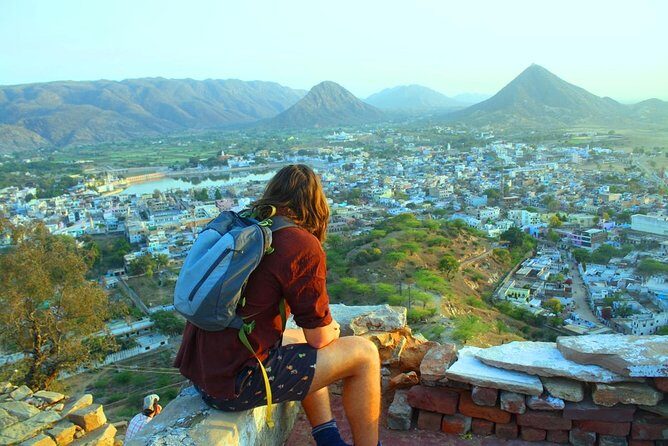
The hill temple is where you’ll appreciate why this part of India attracts people beyond sightseeing. The views over the lake and valleys are part of the point, so you’ll want shoes for uneven ground if you choose the trekking option.
Day 10: back to Delhi for your onward journey
The final day is a return drive to Delhi after breakfast and check-out. The tour ends once you’re back in Delhi for your onward journey.
Because travel days can eat time, plan your departure timing with cushion. The itinerary lists a total time (about 7 hours for the return drive), but real roads and traffic can stretch things.
Hotels and breakfasts: what to expect and how to protect your trip quality
Hotels are included on double/twin and triple sharing. That’s great for value, but the tradeoff is you don’t control the exact property in advance unless your operator confirms details clearly.
Breakfast is included for 9 mornings, but it’s also the most likely place where expectations can clash. I’d treat the included breakfast as fuel, not as a reason to wake up excited. If you care about coffee or specific breakfast preferences, bring your own coping strategy (a small snack, or a morning habit that doesn’t rely on the hotel menu).
One positive theme in the feedback: support responsiveness. The operator is described as quick to answer messages, and the driver Amit is noted for helping with questions and issues. In practical terms, that means if you need something at the last minute, you’re not alone.
Driver and guide support: why English-speaking service matters on this route
On a route like this, timing is everything. You’ll hit multiple sites per day, and the distances between Delhi, Agra, Jaipur, Jodhpur, Udaipur, and Pushkar mean you’ll feel every delay.
That’s why the included English-speaking driver (and the presence of a guide/representative support) is a real value add. When driver Amit is singled out for very good English, that’s not trivia. It usually translates into fewer misunderstandings, better explanations at stops, and smoother navigation when you’re tired.
It also helps for small problem-solving: where to stand for a view, what time to arrive, or how to handle ticket counters once you get to the monument entrances.
Who this tour suits best
This is a strong match if you want classic Rajasthan and Agra without the stress of arranging each city yourself. You’ll like it if you’re okay with a tight loop of major monuments, and you enjoy forts, temples, and palace architecture.
It’s also a good fit for couples or friends traveling together who want a private-group feel but still want the cost savings of shared tours (and triple sharing hotel options).
If you’re the type who hates early mornings, sunrise Taj Mahal will force a compromise. If you’re extremely picky about hotel area or breakfast style, be extra careful to confirm what you’re getting.
Should you book this Rajasthan and Agra tour from Delhi?
I’d book it if your priority is smooth logistics and classic highlights in a single sweep. The sunrise Taj Mahal, Agra Fort, Fatehpur Sikri, Amer and Hawa Mahal, Mehrangarh, Udaipur’s Lake Pichola and Jagmandir, plus Pushkar’s sacred lake make a lot of box-checking feel satisfying rather than exhausting.
Skip or reconsider if you can’t handle entrance ticket costs on top of the package price, or if you need hotel standards guaranteed down to the exact property and room. In that case, ask for clear confirmation before you pay, and set your breakfast expectations to “good enough,” not “perfect.”
Overall, this is the kind of trip that rewards you for being flexible: you’ll see the big names, ride comfortably between cities, and rely on an English-speaking team to keep the day-to-day workable.
FAQ
What is the duration of this tour?
The tour is listed as approximately 10 days.
Does the tour include pickup in Delhi?
Yes. Pickup is offered, and you will be met at Delhi airport for transfer to the hotel on Day 1.
Which places are included in the itinerary?
The route includes Delhi, Agra, Jaipur, Jodhpur, Udaipur, Pushkar, and then returns to Delhi.
Are entrance tickets for monuments included?
No. Entrance tickets are not included, and you’ll pay at the sites based on each monument.
What meals are included?
Breakfast is included (9 breakfasts). Other meals are not listed as included.
What about transportation and comfort?
You’ll travel in air-conditioned vehicles with an English-speaking driver, plus tolls, parking, and fuel are included.
Is there anything included for phone access and connectivity?
Yes. There’s complementary use of a phone SIM card with internet during the trip.
Is this a group tour?
It’s private in the sense that only your group participates.
How does cancellation work if plans change?
You can cancel up to 6 days in advance for a full refund. If you cancel 2–6 days before, you get a 50% refund. Less than 2 days before means no refund. The tour also requires a minimum number of travelers, and if it doesn’t meet that minimum, you’ll be offered a different date or a full refund.
Is the tour suitable for most people?
The tour notes that most travelers can participate and that it’s near public transportation.