REVIEW · NEW DELHI
6- Days Private Heritage Golden Triangle Tour
Book on Viator →Operated by BOUT INDIA TOURS · Bookable on Viator
Three cities. No logistics headaches.
This 6-day private Golden Triangle tour knits together Delhi, Agra, and Jaipur with a clear plan: hotel stays, English-speaking guides at major sites, and private air-conditioned transfers so you can focus on what you came for. You’ll hit big-name UNESCO landmarks like the Taj Mahal and also several Old Delhi and Jaipur highlights that are easy to miss if you’re planning on your own.
What I like most is how door-to-door pickup and drop-off keeps the day moving. I also appreciate that monument entrance passes are covered for the sites on the itinerary, plus you get guided time with the details explained in plain English.
The only real catch is the pace. With private driving time built in between cities and sightseeing blocks packed into each day, you’ll want comfy shoes and a mindset for lots of moving—not a slow, laid-back vacation.
In This Review
- Key things to know before you go
- Price and logistics: what you’re really paying for
- Day 1 in Delhi: India Gate first, then a calmer introduction to the capital
- Day 2 in Delhi: Jama Masjid, Chandni Chowk rickshaw ride, then Humayun’s Tomb and Qutb Minar
- Day 3 to Agra: the move south, Agra Fort, and a more local evening
- Day 4: Taj Mahal early morning, then Chand Baori en route to Jaipur
- Day 5 in Jaipur: Hawa Mahal, Jantar Mantar, City Palace, Jal Mahal, and Amber Fort
- Day 6: drive back to Delhi and end with a flexible drop-off
- Where the best moments really come from
- Who this tour suits (and who might want a different style)
- Should you book this 6-day private Golden Triangle tour?
- FAQ
- What’s included in the tour for meals and entrances?
- Is this a private tour or a group tour?
- Where does the tour start and end?
- Do you get a rickshaw ride in Delhi?
- Is the Taj Mahal visit part of the schedule?
- If I need to cancel, how does the refund work?
Key things to know before you go
- Private AC car with driver for transfers, so you’re not coordinating taxis or trains on your own
- UNESCO sites included (Taj Mahal, Humayun’s Tomb, Qutb Minar, etc.) with entry passes covered
- Old Delhi experience with a rickshaw ride in Chandni Chowk
- Guided walk-tour in Pink City markets in Jaipur for street-level orientation
- 4/5-star hotel stays mentioned or similar, with breakfast most mornings
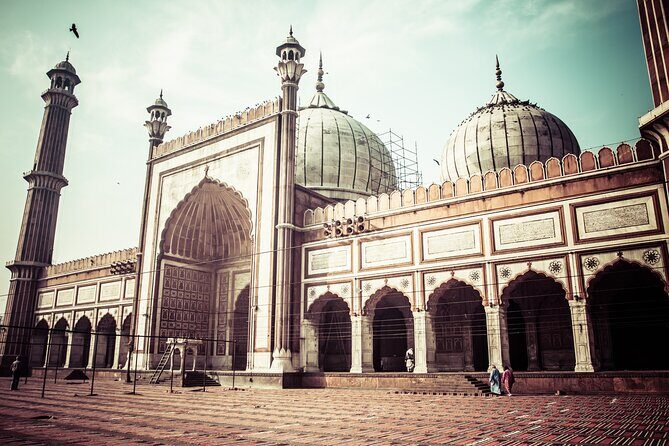
- Religious site etiquette: you’ll need conservative clothing at places like Jama Masjid
Price and logistics: what you’re really paying for
At $1,224 per person, this isn’t a budget sprint. You’re paying for the stuff that usually steals time and mental energy on trips in India: airport pickup, confirmed hotel bases for 5 nights, and private car transfers with a driver at your disposal.
What makes this good value is that the tour isn’t just transportation. You also get English-speaking guides for the monuments, plus entry passes for the sites listed. That matters because entrance tickets and guide time are exactly the costs that add up fast when you plan independently. Even the smaller logistics—like using a mobile ticket—are designed to reduce friction once you land.
One more practical note: this is a private tour, limited to your group only. And it runs on a set schedule (April to September in the listed season). If you’re traveling with just two adults, the tour requires a minimum of two adults to book, which is standard but worth keeping in mind.
Finally, your comfort level will depend on what you want from the trip. If you want a “hit the highlights fast” heritage route with minimal negotiating, this works. If you want maximum downtime and long unstructured evenings, you may find the daily rhythm a bit tight.
You can also read our reviews of more private tours in New Delhi


Day 1 in Delhi: India Gate first, then a calmer introduction to the capital
Your trip starts at Indira Gandhi International Airport with a private car transfer to your Delhi hotel for check-in. After that reset time, you head out for sightseeing with a gentle starter: a drive past Rashtrapati Bhavan and then India Gate.
India Gate is a memorial to 82,000 soldiers of the Indian Army who died in 1914–21 during the First World War. It’s not just a photo stop. Standing there helps you understand how central monuments in Delhi can carry layers of meaning—military sacrifice, colonial-era memory, and the way public space works in the city today.
Because this is day one, it’s a smart choice. You get bearings fast, without cramming in Old Delhi chaos right away. If you arrive on a flight that already wipes you out, you’ll likely appreciate the “settle in first” flow.
Practical tip: bring light layers. Delhi mornings and evenings can feel very different from mid-day, and you’ll be outside around monuments.
Day 2 in Delhi: Jama Masjid, Chandni Chowk rickshaw ride, then Humayun’s Tomb and Qutb Minar
Day two goes straight to Old Delhi, and that’s where the Golden Triangle starts feeling real.
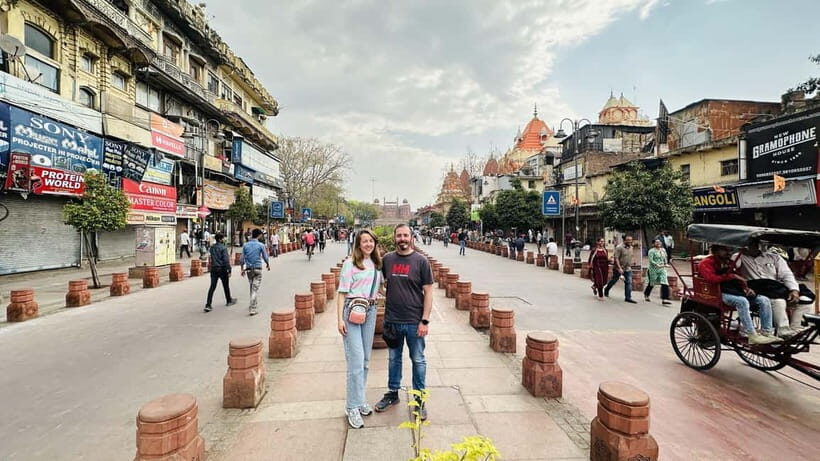
You’ll visit Jama Masjid, described as the largest mosque in India. It’s an impressive site visually, but the bigger value is how it anchors the neighborhood’s rhythm. Then you head to Chandni Chowk, one of the oldest and busiest markets in Old Delhi.
The itinerary includes a rickshaw ride through Chandni Chowk. This is one of those activities that sounds touristy until you actually do it. It helps you understand the market’s shape and movement without spending hours walking through dense lanes. It’s also a quick way to get your bearings in a place where the streets can feel like a maze.
After lunch, you shift to two UNESCO World Heritage stops:
- Humayun’s Tomb: built in 1570, and noted as the first garden-tomb on the Indian subcontinent. That detail matters because it explains why the structure became a model for later Mughal architecture.
- Qutb Minar (Qutub Minar area): a 73-metre tapering tower of five storeys, completed in the early Sultanate era. It’s a classic Delhi landmark, and the guide time helps connect the dots between the tower, the surrounding complex, and the early Delhi Sultanate.
This day is long—about 7 hours of sightseeing is listed. That’s normal for Delhi, but it’s also the day you’ll feel most of the “I’m in a car, then I’m walking, then I’m back in a car” rhythm.
Drawback to plan around: you’ll be switching environments fast—big religious site, tight market lanes, then formal monument complexes. It helps to wear shoes you can trust and bring something for dust and sun.
Day 3 to Agra: the move south, Agra Fort, and a more local evening
After breakfast, you check out and travel to Agra. The itinerary doesn’t give an exact drive time, but it notes that you reach Agra by afternoon.
When you arrive, you’ll check in, have lunch, and then visit Agra Fort. This fort served as a major residence for the Mughal emperors until 1638, when the capital moved from Agra to Delhi. That single timeline detail gives the fort a stronger context than just “it’s a big stone building.” It was lived-in power, not just a monument.
In the evening, you’re set up with free time to “hang out at the local market” to get a truer feel of Agra. The inclusion here is subtle but useful: it gives you a moment to breathe and observe without always having a scripted stop.
Why this day matters: Agra can otherwise turn into a one-morning experience focused only on the Taj Mahal. Adding Agra Fort and an evening market block helps you understand how Taj Mahal tourism sits inside a functioning city.
Practical tip: if you plan to do any evening shopping, keep your energy for one focused block rather than trying to do everything at once. Fort mornings and Taj sunrise mornings can be tiring.
Day 4: Taj Mahal early morning, then Chand Baori en route to Jaipur
Today is the day the Golden Triangle earns its reputation.
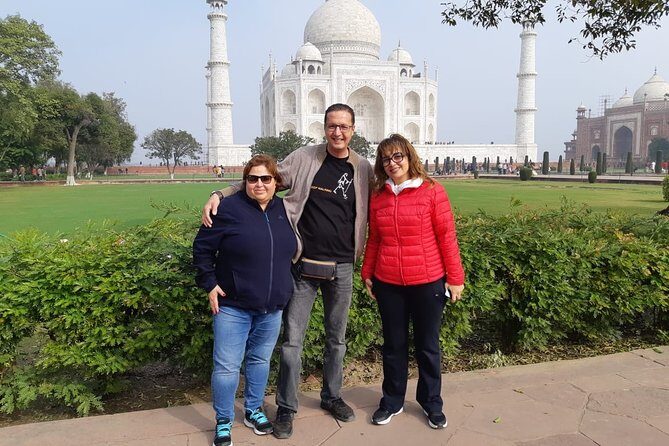
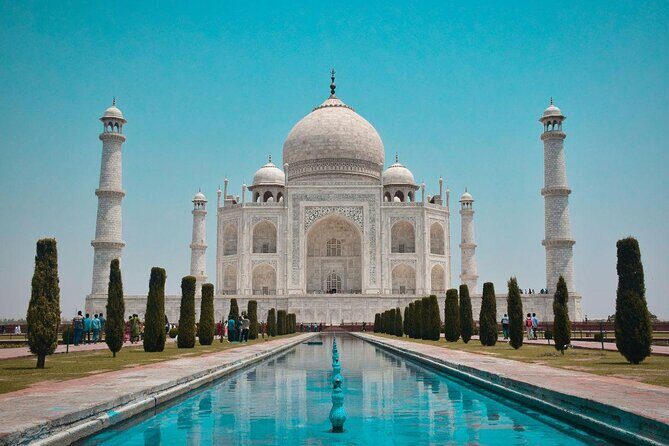
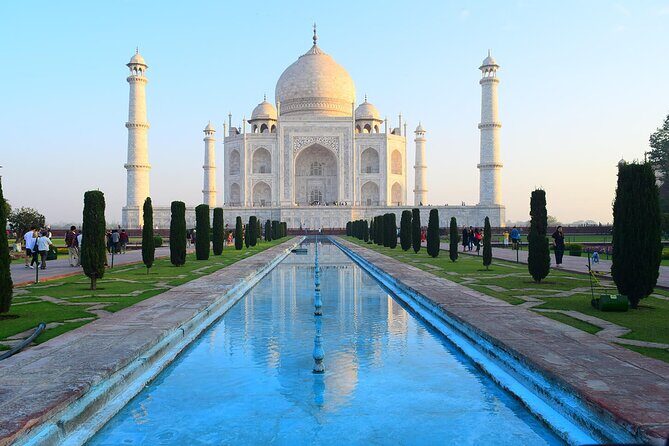
You start early to visit the Taj Mahal, a UNESCO World Heritage site built by Shah Jahan in 1560 in memory of Mumtaz Mahal. Even if you’ve seen pictures before, the Taj is one of those places where scale and symmetry hit differently once you’re standing close. Since it’s early morning, you’re more likely to experience it in a calmer window, and that helps with photos and simply taking it in without feeling rushed.
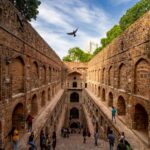
After breakfast, you check out and drive to Jaipur, the Pink City. En route you visit Chand Baori, a stepwell in Abhaneri. It’s described as a 13-floor stepwell built over a thousand years ago, and it’s one of the largest stepwells in the world. Stepwells might not be on everyone’s must-do list, but this one earns its fame because the geometry is stunning and the scale is hard to grasp until you’re there.
You reach Jaipur by afternoon and check in. In the evening, there’s a guided walk-tour of the Pink City market.
Why this matters for your trip: the Taj Mahal can dominate your attention, so the Chand Baori stop gives you a different flavor of northern India—water architecture, community engineering, and a more unusual UNESCO-style landmark. Then Jaipur’s market walk helps you reset your eyes for Rajasthan’s colors and street life.
You can also read our reviews of more historical tours in New Delhi





Day 5 in Jaipur: Hawa Mahal, Jantar Mantar, City Palace, Jal Mahal, and Amber Fort
Day five is your full Jaipur history and viewpoints day.
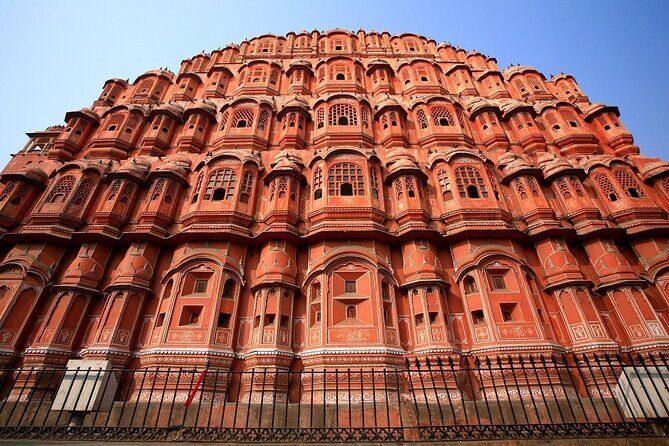
You begin with Hawa Mahal, the Palace of Winds. Even if you just know it from its iconic facade, it’s worth seeing because the building is meant for breezes and street-level spectacle. It’s a great stop for understanding why Jaipur’s architecture feels designed for both royal life and public-facing show.
Next is Jantar Mantar, a UNESCO site with nineteen architectural astronomical instruments, completed in 1738. This stop can feel abstract at first, but a guide helps you translate what you’re looking at into why it mattered: this was science expressed through architecture, using instruments built for observation.
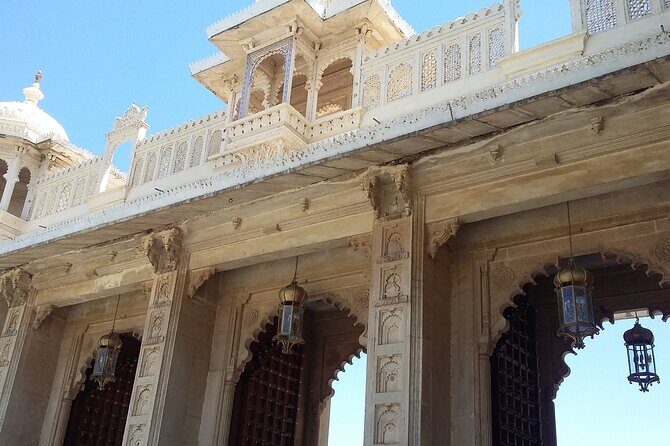
Then you visit City Palace, a complex of courtyards, gardens, and buildings in the center of Old City. It’s not one single building—it’s a whole royal pocket of Jaipur life. The guide time is helpful here because you’re moving from structure to structure in a way that can otherwise feel like a lot of walls.
After that, you see Jal Mahal, the palace in the middle of the lake. It’s a quick visual stop, but it balances the day with a scenic contrast.
You finish with Amer Fort (Amber Fort), also a UNESCO World Heritage site. The current structure dates to the period when Rajput power shaped the region, and the fort is the principal tourist attraction in Jaipur. This is one of those places where the “wow” comes not just from the scenery, but from the way the fort layout shows defense, court life, and imperial presence all at once.
This day is long (about 7 hours). It’s also the day where fatigue can creep in. If you’re the type who stops for every photo, build in your energy budget.
Practical tip: plan to take your time at Amber Fort highlights rather than trying to see every corner. If you’re tired, the later sections will feel like a blur.
Day 6: drive back to Delhi and end with a flexible drop-off
On day six, after breakfast, you check out and drive back toward Delhi. The car drops you in Delhi at your desired location, and the tour ends back at the meeting point area.
This is a nice way to end because it’s not a hard “we dump you at the airport” scenario. Your day can end where you actually need to be, which helps if you have dinner plans, another hotel, or a later flight out.
Important reality check: you’ll still have driving time and a check-out morning. For flights the same day, you’ll want to plan carefully and allow buffer time, even though the tour offers the car service.
Where the best moments really come from
A tour like this can feel like a list. But the difference is in how the logistics are handled.
The best moments tend to be the ones where you don’t lose time. Here, your private AC car removes the constant re-planning that drains people on multi-city tours. It also gives you predictable transitions between sites—especially on Delhi days where you’d otherwise spend time figuring out transport through traffic.
The other standout is the mix of famous and less obvious UNESCO stops:
- Taj Mahal for the headline moment
- Humayun’s Tomb and Qutb Minar to show what influenced later Mughal style
- Chand Baori for a different kind of heritage that isn’t just a monument facade
- Jantar Mantar for the science angle that changes how you think about Rajput-era priorities
And then there are the experiences that feel human-scale:
- Rickshaw ride in Chandni Chowk, which helps you understand market texture fast
- The guided Pink City market walk, which makes Jaipur feel like a place you can navigate, not just a backdrop
Who this tour suits (and who might want a different style)
This Golden Triangle tour fits best if you want:
- A structured, private route with minimal planning
- English-speaking guides and entry fees handled
- A classic “Delhi–Agra–Jaipur” first India trip with UNESCO highlights
You might not love it if you prefer:
- Lots of unscheduled free time in each city
- A slower travel pace with fewer back-to-back stops
- Deep exploration of one city rather than three cities in six days
If you’re traveling as a couple or small group and you like the idea of being driven door-to-door, this is a strong match.
Should you book this 6-day private Golden Triangle tour?
I think you should book if you want a low-stress first trip that still covers the big landmarks correctly—especially with private chauffeured transfers, hotel stays for 5 nights, and guided monument visits with entrance passes included.
I’d hesitate if you’re the type who gets cranky from long days and tight schedules. Day five and day two are the ones most likely to test your stamina, and the trip moves city-to-city quickly.
One smart strategy: treat each day like a curated highlight package. Don’t try to “also see everything else.” If you do that, the value becomes clear: you spend your energy on the sites themselves, not on figuring out how to get there.
FAQ
What’s included in the tour for meals and entrances?
The tour includes breakfasts for 5 mornings and lunch for 2 days. Entrance passes for the monuments listed in the itinerary are included, along with English-speaking guides for those monuments. Transfers are provided in a private AC car with a driver.
Is this a private tour or a group tour?
This is a private tour/activity. Only your group will participate.
Where does the tour start and end?
It starts at Indira Gandhi Intl Airport, New Delhi and ends back at the meeting point, with a drop-off in Delhi at your desired location on the final day.
Do you get a rickshaw ride in Delhi?
Yes. The itinerary includes a rickshaw ride at Chandni Chowk in Old Delhi.
Is the Taj Mahal visit part of the schedule?
Yes. You’ll visit the Taj Mahal early in the morning on day four.
If I need to cancel, how does the refund work?
You can cancel up to 6 days in advance for a full refund. Cancel 2–6 days before for a 50% refund. Cancel less than 2 days before and the amount paid will not be refunded.