REVIEW · NEW DELHI
Delhi Diaries: Chaos, Culture & Charm
Book on GetYourGuide →Operated by Crystal India Holidays · Bookable on GetYourGuide
Delhi can feel like sensory overload—fast. That is exactly why this private day tour works so well, pairing Old Delhi street life with major Mughal monuments and a guide who makes it all make sense.
What I especially like is the rickshaw ride through Chandni Chowk and the stop at Asia’s largest spice market, Khari Baoli, where you’ll see how Delhi shopping and eating culture really operates. I also like how the route strings together world-famous landmarks without wasting time—Jama Masjid, Qutub Minar, and Humayun’s Tomb in one smooth arc. The only real catch: it’s a packed 5–8 hour plan, and if it’s Monday, Gandhi Smriti and Lotus Temple are closed, so those pieces get adjusted.
You start with pickup in a private air-conditioned vehicle, then keep moving with bottled water and a government-approved professional local guide. Entrance tickets aren’t included, but your guide helps you buy them, which matters in a city where lines can eat up your day.
In This Review
- Key Things That Make This Tour Worth Your Day
- A 5–8 Hour Plan That Actually Feels Doable
- Hotel Pickup, Air-Conditioned Transport, and a Guide Who Keeps It Clear
- Old Delhi on Foot and by Rickshaw: Chandni Chowk and Khari Baoli
- Jama Masjid: Mughal Scale and How People Experience It
- New Delhi Power Spots: Qutub Minar and Humayun’s Tomb
- Agrasen ki Baoli: A Photo Stop With a Surprising Atmosphere
- Lotus Temple or Bangla Sahib: Two Ways to Feel Peace
- The Drive-By Layer: India Gate, Parliament, and Rashtrapati Bhavan
- Lunch, Water, and Entrance Tickets: The Little Things That Save Your Day
- Who This Tour Suits Best (And Who Might Want a Different Day)
- Should You Book This Delhi Diaries Tour?
- FAQ
- How long is the Delhi Diaries tour?
- Is this a private tour?
- What locations can you be picked up from?
- Which main sights are included?
- Is the rickshaw ride included?
- Are entrance tickets included in the price?
- Is lunch included?
- Are any attractions closed on certain days?
- What languages is the live guide available in?
- Is free cancellation available, and can I reserve without paying now?
Key Things That Make This Tour Worth Your Day
- A true private setup: just your group, with a private guide and driver.
- Old Delhi by rickshaw: Chandni Chowk lanes, plus Khari Baoli’s spice market.
- Big architecture, explained: Jama Masjid, Qutub Minar, and Humayun’s Tomb.
- Spiritual choice: Lotus Temple or Bangla Sahib, depending on the day’s schedule.
- Comfort built in: air-conditioned transport, bottled water, and mid-day rest time when scheduled.
- Guide helps with tickets: less waiting, more sightseeing time.
A 5–8 Hour Plan That Actually Feels Doable
Delhi is huge. Even with a plan, it can be hard to stop thinking about logistics—traffic, distances, and whether you’re going to lose your whole morning in transit. This tour helps because it’s designed as a single loop: hotel or airport pickup, concentrated sightseeing, then drop-off back where you started.
At about $4.12 per person, the value isn’t that it’s cheap. The value is that you’re buying the basics that normally cost you time and energy: a private car, a professional local guide, and help with ticket purchase. You also get WhatsApp support during the tour, which is handy if anything feels off with timing or meeting points.
The duration varies (5–8 hours), so you’ll want to treat the day like an active city day. Comfortable shoes help. You’ll be walking at multiple sites, moving between Old Delhi and New Delhi, and taking quick photo breaks even when the main emphasis is guided time.
You can also read our reviews of more tours and experiences in New Delhi.



Hotel Pickup, Air-Conditioned Transport, and a Guide Who Keeps It Clear
This is the kind of tour that starts strong because you’re not forced to figure out transit on your first day. Pickup can be arranged from your hotel, airport, railway station, or another location in Delhi, Noida, or Gurugram. The vehicle is private and air-conditioned, so you can cool down between stops instead of arriving hot, tired, and distracted.
Your guide’s job is to connect the dots. Delhi doesn’t just have monuments; it has layers—different empires, different building styles, different religious traditions—stacked in the same city. A good guide helps you notice what you’d otherwise walk past.
One practical bonus: bottled water is provided during the journey. And while meals aren’t included, your schedule may include a lunch stop at a local restaurant (when included), which gives you a break mid-tour.
Old Delhi on Foot and by Rickshaw: Chandni Chowk and Khari Baoli
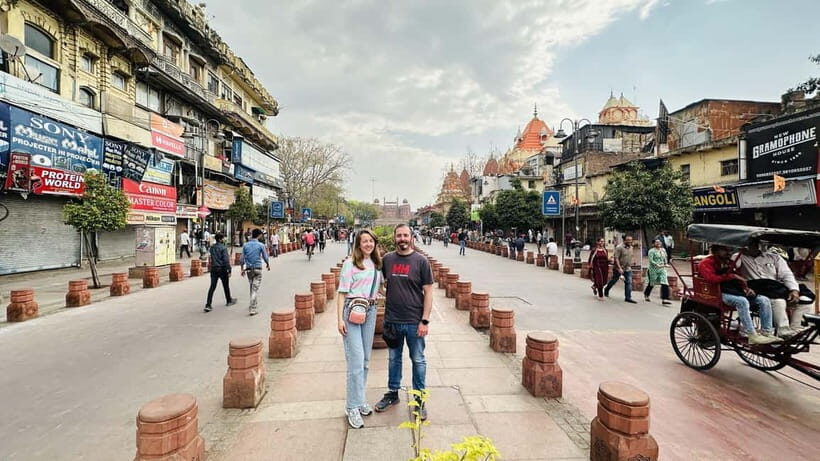
If you only see Delhi’s big monuments, you miss the city’s daily pulse. Old Delhi is where you feel the city working. Chandni Chowk is famous for a reason: narrow lanes, constant motion, vendors calling out, and a sense that people are shopping, eating, and bargaining with purpose.
What makes this stop more than just a walk-by is that you get guided time at Chandni Chowk, plus a photo stop so you can capture the scene without constantly stopping and starting. Expect lots of sensory input—smells from street food and spices, visual clutter from stalls, and the close-up rhythm of everyday life.
Then comes the star ingredient: Khari Baoli, described here as Asia’s largest spice market. This is where Delhi’s food culture becomes visual. Your guide can explain local culinary traditions in a place where spices are the main language. It’s colorful, aromatic, and intensely practical—spices are sold here the way they are used in homes and restaurants across the city.
After Chandni Chowk, you switch vehicles for something more old-school: a cycle rickshaw ride. You’ll glide through the lanes while passing historic havelis and street-food stalls. The idea isn’t to make this a theme ride; it’s to show you how the Old Delhi street layout works when you’re not stuck in a larger vehicle.
Jama Masjid: Mughal Scale and How People Experience It
After the chaos energy of Old Delhi, Jama Masjid gives you a different kind of wow. This is a 17th-century Mughal mosque built by Shah Jahan, and the architecture has weight. Even when you don’t know the background, you can feel how the design draws you in—courtyards, massive prayer spaces, minarets that visually anchor the whole complex.
You’ll get a photo stop plus a guided tour time (about 30 minutes). That’s long enough to understand what you’re looking at without turning it into a rushed checklist. Your guide can explain the mosque’s architectural grandeur and why it remains culturally important.
Practical note: religious sites often have rules about dress and behavior. You’ll be moving through working spaces, so keep your phone use respectful and follow your guide’s instructions on what’s allowed.
New Delhi Power Spots: Qutub Minar and Humayun’s Tomb
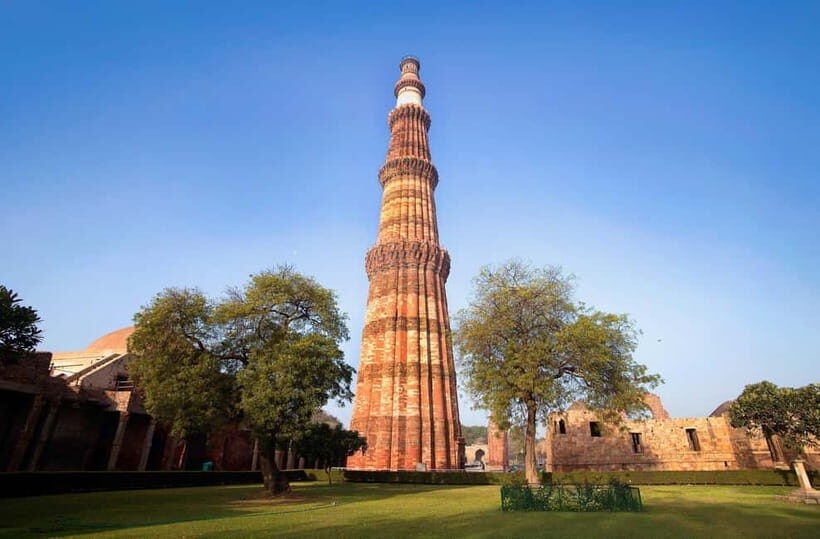
Old Delhi gives you the lived-in city. New Delhi gives you the monumental skyline—stone, geometry, and a sense of planning.
Qutub Minar is next, and it’s hard to overstate how different it feels compared to Old Delhi lanes. This towering minaret is described as the tallest brick minaret in the world, and its surface is carved with Qur’anic verses. Your guide’s historical story helps you see it as more than a tall structure: it’s a marker of an era and a statement of engineering.
You’ll also visit Humayun’s Tomb, an early Mughal masterpiece set in peaceful charbagh gardens. That phrase matters because the setting is part of the design. The gardens help you slow down after the street-energy. The visit time is generous (about 105 minutes with photo stop, guided time, and space to take it in). It’s enough to step out of the heat, watch other visitors, and feel the contrast between the tomb’s grandeur and its calmer surroundings.
In other words: this portion of the route helps you balance out the day. If Old Delhi is the loud chapter, these sites are the slower chapter—where you can actually process what you’re seeing.






Agrasen ki Baoli: A Photo Stop With a Surprising Atmosphere

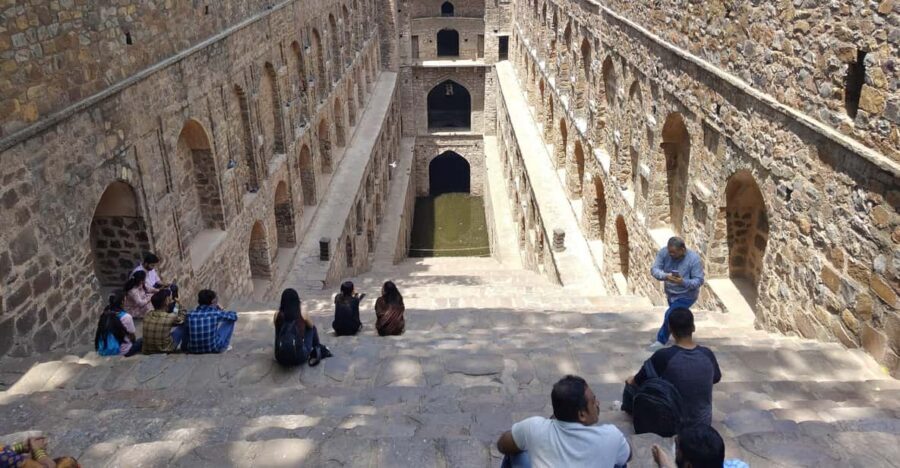
Between the biggest-name monuments, you’ll make a stop at Agrasen ki Baoli in New Delhi. It’s listed here as a photo stop plus guided time. Even if you treat it as a shorter visit, it’s one of the better chances on the day to notice Delhi’s more human scale.
Baolis—stepwell structures—are often quieter than the major forts and tombs. Your guide’s explanation can help you understand why these places mattered for daily water needs and community life, long before tourism made them famous.
If you like getting a side character moment in your itinerary (not just the main cast), you’ll appreciate having a stop like this inserted into the flow.
Lotus Temple or Bangla Sahib: Two Ways to Feel Peace
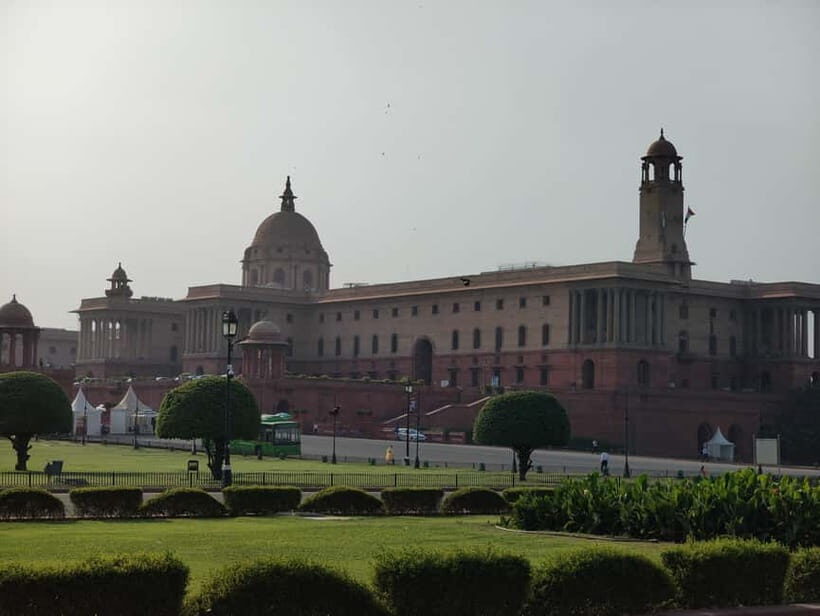
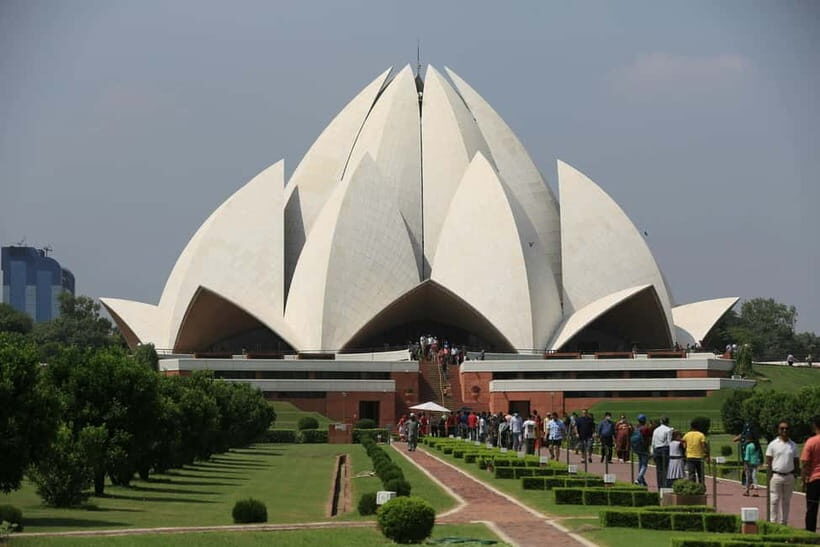
One of the nice things about this tour is the built-in choice at the end of the day’s main landmark run. You’ll either continue to the Lotus Temple or pause at Bangla Sahib, a Sikh gurudwara.
Lotus Temple is known here for its calm setting and lotus-shaped design, with guided time (about 30 minutes). Bangla Sahib is also about calm and devotion—another way to experience Delhi’s spiritual life without it feeling like a history lecture only. The tour gives you time for reflection, and that matters if you’re spending the rest of the day moving through architecture and crowds.
There’s one scheduling rule to know: Gandhi Smriti and Lotus Temple are closed every Monday. If your travel dates land on a Monday, don’t stress—just know the route can shift so you’re not waiting outside a closed site.
The Drive-By Layer: India Gate, Parliament, and Rashtrapati Bhavan
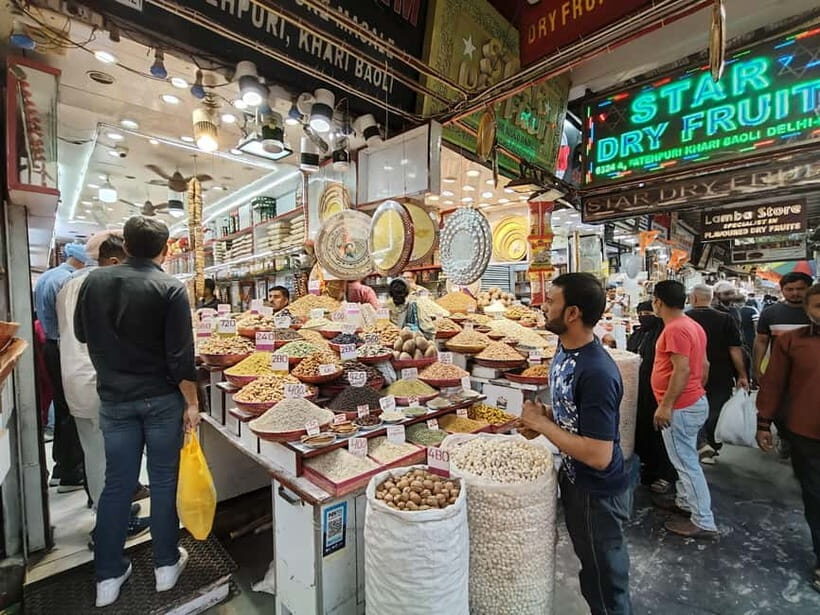
Not every stop in Delhi needs a long walk. Some of the best context comes from driving past key landmarks, letting your guide place them in the story of the city.
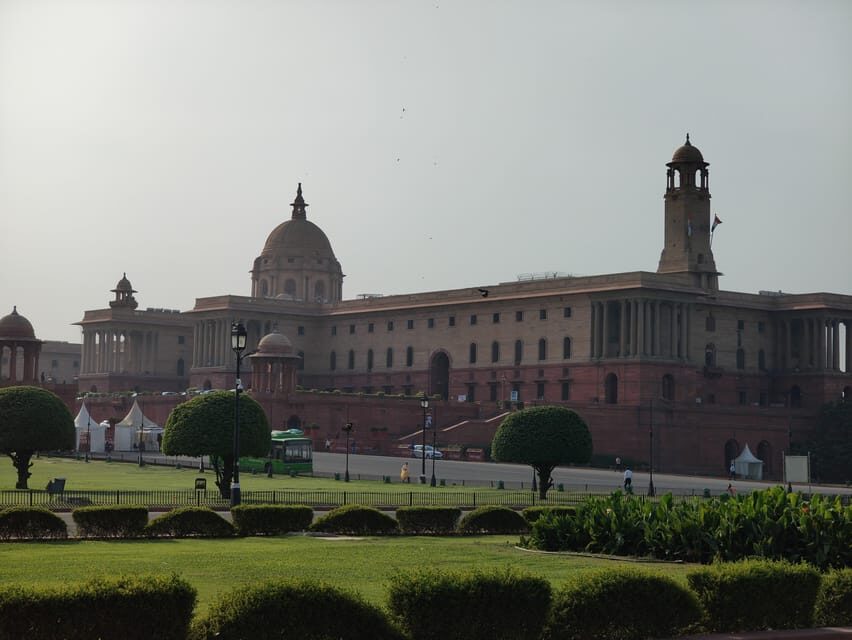
You’ll drive past India Gate, described as a WWI memorial, plus Parliament House and Rashtrapati Bhavan, the President’s residence. Expect photo opportunities and quick guided interpretation (short stops like 5–15 minutes depending on the location).
This portion is valuable because it gives you a feel for modern Delhi’s political geometry. It also breaks up the day when you need to sit for a few minutes and reset before the next monument.
Lunch, Water, and Entrance Tickets: The Little Things That Save Your Day
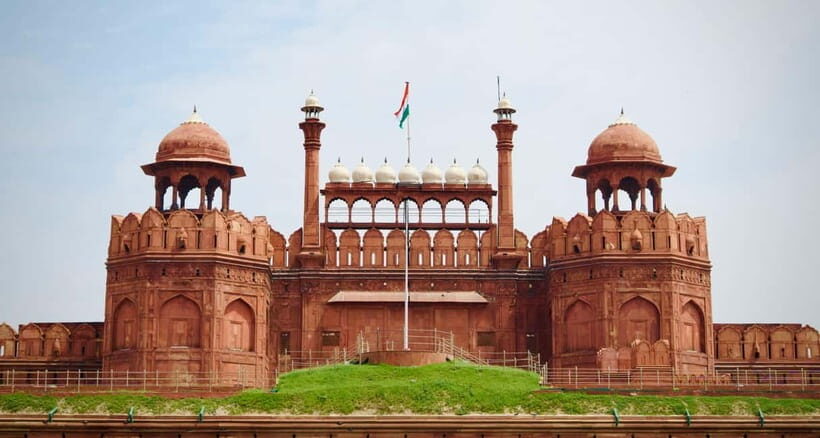
Delhi can punish the unprepared. That’s why the “small” logistics here matter.
- Bottled water is provided during the journey, so hydration isn’t something you have to negotiate on the fly.
- Meals aren’t included, but a lunch stop at a local restaurant may be part of the schedule (when included).
- Entrance tickets are not included, but your guide assists you in purchasing them. That’s the key part. Instead of figuring out ticket counters and lines yourself, your guide helps you keep the day moving.
There’s also mention of choosing to skip or add shopping. That’s a real advantage if you want the tour purely for landmarks and photos, or if you want a controlled amount of time to look for spices, textiles, or small souvenirs without losing the schedule.
Who This Tour Suits Best (And Who Might Want a Different Day)
This tour is a strong fit if:
- you’re seeing Delhi for the first time and want both Old and New Delhi highlights in one day
- you prefer a private guide who explains what you’re looking at (not just dropping you at gates)
- you want comfort between sites—private air-conditioned transport plus water
It may be less ideal if:
- you hate a busy schedule and want only one or two major sites
- you’re traveling with limited tolerance for walking at multiple stops
- you’re visiting on a Monday and really want Lotus Temple or Gandhi Smriti specifically (those are closed every Monday, so you’ll need to accept substitutions)
The rickshaw portion is a highlight, but it’s also the part where you’re more exposed to the lane rhythm. It’s described as safe through bustling lanes with experienced drivers, but you still want to be comfortable with close quarters and frequent movement.
Should You Book This Delhi Diaries Tour?
I’d book it if your goal is a smart first-day Delhi overview with real variety: spice-market energy, a major Mughal mosque, and New Delhi’s iconic monuments plus a spiritual stop. The private setup, air-conditioned transport, bottled water, and guide ticket help are the kind of practical details that turn a stressful city into a day you can actually enjoy.
Hold off or choose a different option if you want a slow, low-walking day or you’re set on specific Monday closures. But if you can work around that, this is the kind of tour that gives you perspective fast—without turning Delhi into one long headache.
FAQ
How long is the Delhi Diaries tour?
It runs for 5 to 8 hours, depending on the starting time and the day’s flow.
Is this a private tour?
Yes. It is a 100% private tour for your group, with a private guide and driver.
What locations can you be picked up from?
Pickup is available from your hotel, airport, railway station, or another preferred location in Delhi, Noida, or Gurugram.
Which main sights are included?
You’ll cover Old Delhi highlights like Jama Masjid, Chandni Chowk, and Khari Baoli, then New Delhi stops such as Qutub Minar and Humayun’s Tomb, with Lotus Temple or Bangla Sahib depending on the schedule.
Is the rickshaw ride included?
Yes. A cycle rickshaw ride through Chandni Chowk is a listed highlight, paired with guided time.
Are entrance tickets included in the price?
No. Entrance tickets are not included, but your guide assists you with purchasing them.
Is lunch included?
Meals are listed as not included overall, but a relaxing lunch at a local restaurant is mentioned as included when included on the schedule.
Are any attractions closed on certain days?
Yes. Gandhi Smriti and Lotus Temple are closed every Monday.
What languages is the live guide available in?
The guide is available in English, French, German, Hindi, Russian, and Spanish.
Is free cancellation available, and can I reserve without paying now?
Yes. There is free cancellation up to 24 hours in advance for a full refund, and you can reserve now and pay later.